














It can be overwhelming and downright frightening to have your period twice a month, especially if you’ve never had it before. It may sound strange, but that doesn’t necessarily mean that you lose your mind.
Aside from being irritating and painful, having your period twice a month is unexpected. Combined with that, if you do not anticipate this to occur, you may think that something is critically wrong in your body.
There are many reasons why this may occur, some of them entirely harmless and others that may require treatment by a physician.
Stress, birth control changes, hormonal shifts, or some medications can disrupt your regular cycle. However, thyroid disease, fibroids, or polycystic ovarian syndrome (PCOS) could also be involved.
We shall examine the possible causes of having two periods in a month in this article. Also, we will explain how to determine if you are experiencing a second period, spotting, or breakthrough bleeding.
Read More: Can Heavy Periods Be a Sign of Something Serious?
Is It Two Periods? Or Something Else?
It’s crucial to think about whether the second bleed could be something else entirely before presuming you’re experiencing two periods in a single month.
According to a study, a woman’s menstrual cycle can last anywhere from around 15 to 45 days, with her period typically lasting three to seven days.
Nonetheless, a woman may occasionally experience bleeding that isn’t precisely her period during her cycle. It may happen at any time—right before your period begins, during menstruation, or even after the bleeding has ended.
The amount of blood is the primary distinction between spotting and your period. A tampon or pad is necessary to limit your flow during a period, which might persist for many days. Spotting, on the other hand, usually doesn’t require the use of these products and produces a lot less blood.
The timing of bleeding also provides an indication of whether it’s spotting or your actual period. If you observe bleeding off cycle, but it’s not as heavy as your regular period, it’s probably spotting because most women usually know when and how long their period will last. Additionally, the blood’s hue varies. Menstrual blood typically appears darker in color compared to the lighter shade of blood seen during spotting.
You should make an appointment to see your doctor if you frequently notice bleeding. To diagnose the cause of irregular bleeding, your doctor will review your symptoms, perform a physical examination, and probably order additional tests, such as a pelvic exam, Pap smear, pregnancy test, or vaginal or abdominal ultrasound.
If an infection causes the issue, your doctor may prescribe an antibiotic; if a hormone imbalance is responsible, they may prescribe birth control or hormone therapy to regulate your cycle. If you have fibroids or polyps, your doctor will have to remove them surgically.
Common Reasons for Two Periods in One Month
a. Shortened Menstrual Cycle

A naturally brief menstrual cycle, particularly if it’s less than 24 days, is a typical reason for two periods in a month. Even though the mean menstrual cycle is close to 28 days, the majority of individuals tend to have variations, particularly at puberty or upon hormonal change.
Your next cycle can come sooner if you ovulate sooner than you expect, creating the illusion of two periods within one month. If it is not causing concern or other problems, such as heavy bleeding, this inconsistency may be typical.
b. Hormonal Imbalance
Your hormone levels affect the frequency of your periods, the number of days they last, and the amount of blood that you bleed throughout each period. Throughout your life, these levels will fluctuate constantly.
On average, a woman’s menstrual cycle lasts for 30 days. A regular variant, on the other hand, can be as short as around twenty-four days, which means that it is statistically conceivable to have more than one in a single month. If a person’s cycle is on the low end of the usual range, they can experience 15 periods in a year.
Read More: Why Your Periods Might Stop: Understanding Amenorrhea
c. Perimenopause

When you are approaching menopause but have not yet attained it, you are said to be in perimenopause. (When you miss a period for around 12 consecutive months, you are entering into menopause.)
Your estrogen levels decrease throughout this period. Your period frequency may increase or decrease as a result, potentially leading to two cycles in a single month. Additionally, your blood flow may vary in both intensity and duration.
This stage often begins for those with female reproductive organs in their late 30s to mid-40s. Before menopause starts, the process usually lasts eight to ten years.
Some people experience an early or premature menopause before the age of forty-five. You may be approaching one of these phases if your menstrual frequency changes.
Abnormal menstrual bleeding, including numerous periods, is reported by about 70% of perimenopausal and postmenopausal women.
d. Stress or Major Lifestyle Changes
Stress can lead to irregular periods, including periods that occur frequently. Individuals who suffer from anxiety disorder are more likely to have menstrual periods that are shorter than twenty-four days.
Several conditions can induce irregular periods, including bipolar disorder, depression, eating disorders, and substance use disorders. Physical stress can also cause alterations to your menstrual period. Irregular periods may occur if you exercise excessively and rapidly lose weight.
e. Birth Control or IUD Use

Breakthrough bleeding, often known as spotting between periods, may be caused by your birth control prescription.
It is not a sign that your birth control is not functioning; rather, it is natural. Individuals who smoke or who inconsistently use birth control may have a higher risk of experiencing breakthrough bleeding.
Additionally, you can experience breakthrough bleeding if you do not remove your birth control ring or if you skip the week of birth control tablets that serve as a placebo regimen.
Read More: Causes of Butt Cramps During Periods – Effective Relief and Solutions!
f. Thyroid Disorders
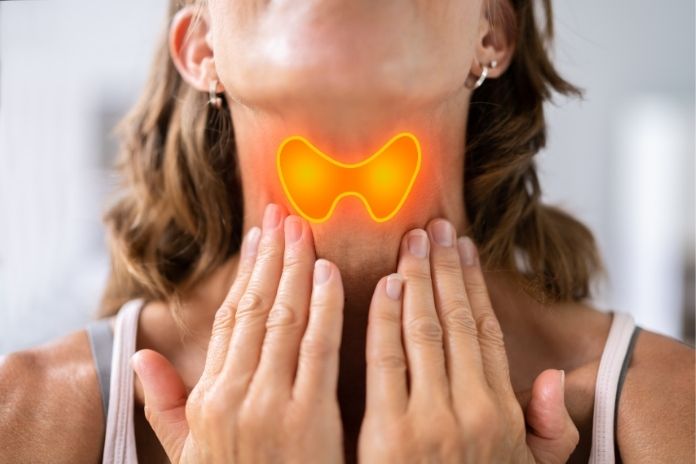
Your thyroid, known as a butterfly-shaped gland in the neck, may impact your menstruation by producing hormones that aid in controlling metabolism. Period irregularities may be a symptom of thyroid illness. If you have hypothyroidism (an underactive thyroid), you may experience severe menstrual bleeding.
You might need to double up your protection (e.g., using a pad and tampon) or change your cup, tampon, or pad every hour. You might get periods that are longer than a week.
Hyperthyroidism causes less frequent and lighter periods. But the luteal (post-ovulation) phase can potentially be shortened by an excess of thyroid hormone. You can get two periods in a month as a result of this.
g. Uterine Fibroids or Polyps
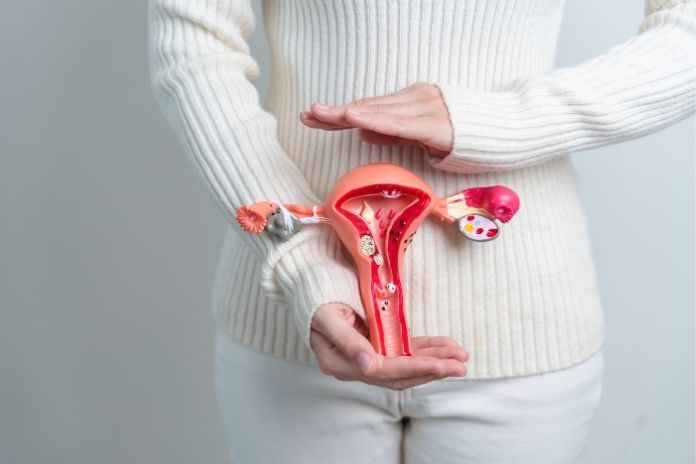
Non-cancerous growths on the uterus include fibroids and uterine polyps. Endometrial polyps, also known as the uterine polyps, are the soft growths in cervix or uterus. They can range in size from can be said a golf ball to a sesame seed. One or more polyps, which are often not malignant, may be present. They are uncommon in those under 20 and more prevalent as people age.
Instead of growing in the endometrium, uterine fibroids are growths in the muscle tissue. They are also known as myomas or leiomyomas. The uterus may have fibroids inside or outside of it. It’s possible to develop either a single polyp or multiple polyps at once.
Fibroids and polyps can both interfere with your menstrual cycle. You might experience longer, heavier periods, bleeding in between periods, and more frequent periods—even two in a single month. Growths in the uterus can affect your ability to conceive and may also increase the risk of miscarriage.
h. Polycystic Ovary Syndrome (PCOS)

One of the conditions that involves an imbalance of hormones is known as polycystic ovarian syndrome (PCOS). Other typical symptoms include weight gain, acne, skin problems, unwanted hair growth or loss, and irregular periods. Irregular periods are also a common symptom.
Many people who have PCOS struggle with their fertility. Because PCOS produces an irregular period, or it is possible that you will not have periods, that your current cycle will vary, or that you will have more than one period in the same month.
Read More: What To Eat (And Avoid) During Periods—And How to Stay Comfortable Throughout
i. Gaining Weight or Being Obese

Gaining weight quickly can disrupt your cycle. It is because it has an impact on the hypothalamus, the area of your brain that controls hormones. Hormonal changes resulting from this could result in sporadic periods or two periods in a single month.
Menstruation and obesity have a complicated relationship. Excess estrogen can result from a disturbance in the sex hormone balance caused by high quantities of fat (adipose tissue). An excess of estrogen can cause more periods and shorter menstrual cycles.
During your period, hormonal imbalances can also result in increased cramps, heavier bleeding, and more persistent pain. Menstrual alterations related to weight become more noticeable when excess fat concentrates around the abdomen.
When Is It Time to See a Doctor?
There are several types of warning signs you shouldn’t overlook, even though having occasional irregular bleeding or two periods in a month does not necessarily indicate any significant problem.
“A ‘normal’ interval between your menstrual cycle, or period, is 24 to 35 days from the first day of one period and the first day of the next,” Dr. Melinda Hansen, MD, says. “Some people have the same interval every month, and for others, it varies. The average cycle is 28 days, with the average length of bleeding usually five to seven days.”
Stress, dietary adjustments, travel, or physical activity may bring on inconsistencies. Periods occurring frequently, or less frequently than once per 24 hours, may indicate that you need to consult a doctor.
To determine if your periods are irregular, monitor them by noting the start of each period, the flow’s heaviness, the duration, and any associated symptoms, such as severe cramps. To determine the cause, a medical professional can examine your symptoms and conduct diagnostic tests.
Read More: 26 Things You Should Avoid During Periods – Experts’ Advice!
What You Can Do About It
The most important thing to do when you see two periods in one month is to start tracking your menstrual cycle. Record the beginning and ending dates, heaviness of flow, symptoms, and irregular spotting in a simple notebook or using a period tracking app. You and your physician can use what you find to search for patterns and potential causes.
Discuss hormonal testing for thyroid, progesterone, or estrogen with your doctor if the abnormal bleeding starts happening on a regular cycle. Stress management, good sleep, good eating, and maintaining a healthy weight are all supportive life changes that may influence hormonal balance and normativity.
Speak with your gynecologist about what you are currently using for birth control, if you have any type of birth control.
Conclusion
While two cycles a week may be alarming, it is most likely nothing serious. While at times it may feel like it is the sign of some underlying medical condition, such as PCOS, thyroid, or fibroids, the most common reason is short cycles, stress, normal variation in hormones, or switching birth control.
The trick is to listen to your body. Keep a regular cycle chart of your cycle, such as its flow, length, and symptoms. Record changing that is persistent or increasing.
Do not delay consulting a doctor if there is abnormal bleeding regularly or with warning signs such as heavy clots, bad cramps, or postmenopausal bleeding. They can refer you to the proper treatment or lifestyle changes and help to determine the cause.
Read More: 18 Effective Home Remedies For Irregular Periods That You Need To Be Aware of
References
- https://www.healthline.com/health/womens-health/two-periods-in-one-month#potential-causes
- https://www.health.com/condition/menstruation/two-periods-one-month
- https://www.womenshealthaz.com/two-menstrual-periods-in-one-month/
- https://www.orlandohealth.com/content-hub/spotting-vs-periods
- https://flo.health/menstrual-cycle/health/period/two-periods-in-one-month
- https://jamanetwork.com/journals/jama/article-abstract/337826
- https://kidshealth.org/en/teens/plus-periods.html
- https://www.unitypoint.org/news-and-articles/irregular-periods-when-to-see-a-doctor
- https://www.womenshealthaz.com/two-menstrual-periods-in-one-month/
- https://www.unitypoint.org/providers/Melinda-Hansen-1166862
In this Article