















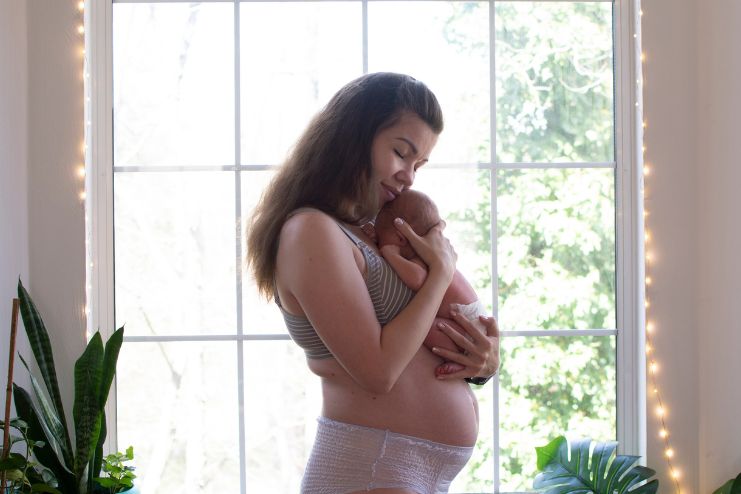
One day, I had thick, glossy pregnancy hair, the kind that made me feel effortlessly radiant. And then, almost overnight, it started falling out in handfuls. Clumps in the shower, strands covering my pillow, a hairbrush that seemed fuller than my scalp. If you’re standing over your bathroom sink, staring at shed strands with rising anxiety, I see you. I was you. And I remember exactly how helpless it felt.
I went into postpartum ready for sleepless nights, diaper explosions, and emotional swings. But what caught me off guard was the hair loss, relentless, visible, and deeply personal. It felt like a cruel joke at a time when I was already running on empty. With my body healing, my mind stretched thin, and my confidence fragile, the sight of thinning hair felt like one more piece of me slipping away. And I had no idea if it would ever stop.
This is my honest story, what postpartum hair loss looked like for me, what helped (and what didn’t), and most importantly, how I navigated it without spiraling into full-blown panic. If you’re walking through this right now, I want you to know two things: you’re not alone, and your body is not broken. There is hope, and there are ways to cope with both the hair loss and the fear that comes with it. Let’s talk about it.
When I First Noticed the Hair Loss
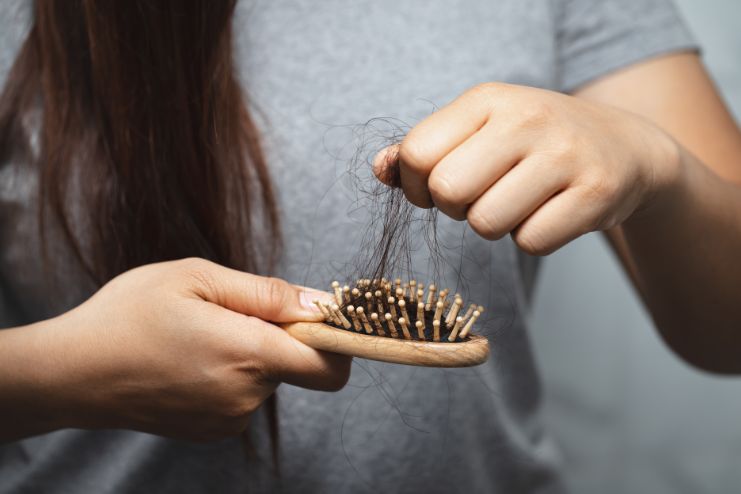
It started around three and a half months postpartum, right when I thought I was finally settling into a rhythm. One morning, I brushed my hair and noticed the bristles were coated with strands. Later that day, I spotted a thick clump stuck in the shower drain. Then there were loose strands on my pillow, scattered across the bathroom floor, tangled in my baby’s tiny fists. It felt relentless, like no matter how much I lost, there was always more falling out.
At first, panic kicked in. I was convinced something was wrong, an iron deficiency, a thyroid problem, maybe something worse. My mind spiraled through worst-case scenarios faster than I could hit “search” on Google. But after a quick consult with Dr. Google and a reassuring chat with my OB-GYN, I learned something that eased my fears: this was normal. Common, even.
Postpartum shedding is a well-documented (but rarely talked about) phenomenon called telogen effluvium. It’s a temporary shift in your hair cycle triggered by hormonal changes after childbirth. Almost every new mother experiences it to some degree, but no one really tells you about it until you’re knee-deep in strands, wondering if you’re going bald. Knowing it had a name and an explanation made all the difference.
Why Postpartum Hair Loss Happens (The Science in Simple Terms)
During pregnancy, estrogen levels skyrocket, and with that surge comes one unexpected beauty perk: incredible hair. That hormonal boost keeps your hair in its growth phase (called the anagen phase) much longer than usual. Fewer strands fall out, more keep growing, and suddenly you’re walking around with thicker, shinier, fuller locks that make you feel like you’ve just stepped out of a shampoo commercial.
But after childbirth, things shift dramatically. Estrogen levels drop fast, almost like pulling the rug out from under your hair cycle. That sudden dip signals a large number of hair follicles to enter the telogen phase, the natural shedding stage. And when a big batch of hair hits that phase all at once, the result is exactly what many of us experience: a sudden, noticeable loss of hair that often peaks between 3 to 6 months postpartum.
For most women, the shedding gradually slows down between 9 to 12 months after birth. Your hair cycle resets, and things start to balance out. But here’s the hard truth: even knowing it’s biologically normal doesn’t always make it easier emotionally. Watching your hair fall out day after day can shake your confidence and make you feel like you’re losing a piece of yourself.
How I Managed It (Without Losing My Mind)
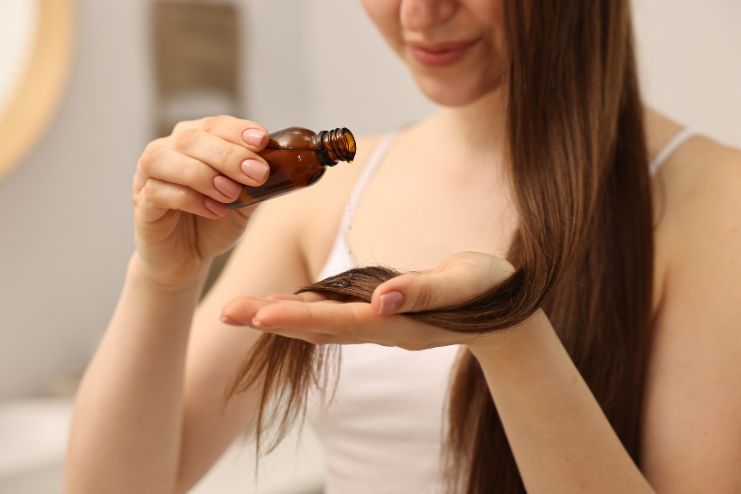 Let’s be honest, postpartum hair loss isn’t just physical. It messes with how you see yourself, especially when your reflection already feels like someone else’s. Here’s exactly how I navigated it, without spiraling into panic.
1. I Nourished from Within
Because healthy hair starts from the inside, not just the bottle.
- Kept up with my prenatal vitamins; I didn’t stop just because pregnancy was over. Iron, biotin, vitamin D, and folic acid gave my body what it needed to rebuild.
- Prioritized iron-rich foods, spinach, lentils, chickpeas, and red meat (in moderation). Iron supports red blood cells, which carry oxygen to your scalp and follicles.
- Increased my protein intake, hair is made of keratin (a protein), so eggs, cottage cheese, yogurt, and lean meats became daily staples.
- Added healthy fats, walnuts, flaxseeds, avocados, and oily fish like salmon to nourish follicles and combat dryness.
- Drank more water than ever, especially while breastfeeding. Hydration plays a quiet but crucial role in scalp and hair health.
- These weren’t quick fixes. But fueling my body felt proactive, and that mindset shift helped me stay patient.
Read More: Biotin for Hair Loss & Growth: Does it Really Work for Hair Loss
2. I Switched to Gentle Hair Care
Your hair is fragile right now. Treat it like silk, not rope.
- Traded my fine-tooth comb for a wide-tooth comb, detangled gently, starting from the ends upward, never yanking from the roots.
- Choosing sulfate-free shampoos and hydrating conditioners, less harsh cleansing meant less irritation on my already-sensitive scalp.
- Washed only twice a week, over-washing strips natural oils, so spacing it out reduces unnecessary stress.
- Cut out tight hairstyles and heat styling, loose braids, claw clips, scrunchies, and air-drying became the norm.
- Slept on a satin pillowcase, which reduces friction overnight, meaning fewer strands on my pillow in the morning.
- Got a lightweight, layered haircut, which gave the illusion of more volume and made styling less of a chore.
- My mantra was simple: “Nourish and nurture”, not neglect or overcorrect.
3. I Let Go of Guilt and Comparison
Healing wasn’t just about hair care; it was about headspace, too.
- I caught myself constantly comparing to pre-baby photos and to moms online whose hair looked untouched. It drained me.
- I reminded myself: My body had just done something extraordinary, growing, birthing, and nourishing a human. This was part of the process, not a failure.
- I took photos anyway, even on bad hair days. I wanted to remember all of motherhood, not just the polished parts.
- I unfollowed accounts that triggered comparison and followed supportive, honest postpartum voices instead.
- I spoke kindly to myself aloud if needed. “This is temporary. Your body is recalibrating. Progress is happening, even if it’s invisible.”
- Shifting the narrative from “I’m falling apart” to “I’m healing” changed everything.
4. I Trusted Time and My Body
Regrowth is slow, but steady and sure.
- Around month 7, I noticed the telltale baby hairs sprouting along my hairline. Soft, fine, and fuzzy, but they were there.
- I celebrated small signs, fewer hair in the drain, and less shedding in my brush. Tiny victories mattered.
- I stopped obsessively tracking every strand and started focusing on how much stronger and more energized I felt overall.
- I accepted that my “old hair” might take 12 months or more to return fully, and that was okay.
- Trusting my body’s timeline instead of rushing it gave me the peace I didn’t know I needed.
When to See a Doctor or Specialist
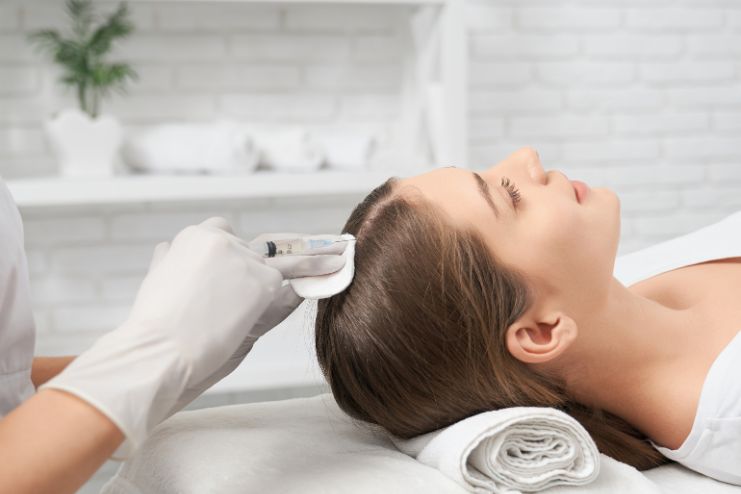
Because sometimes, it’s more than just “normal shedding,” and it’s okay to ask for help
For most of us, postpartum hair loss is temporary and self-correcting. But your intuition matters just as much as Google searches. Here’s when it’s smart to loop in a medical professional:
1. If Shedding Persists Beyond 12 Months
Normally, shedding tapers off between 6 and 12 months postpartum. If your hair loss continues past a year with little or no sign of regrowth (like baby hairs or new sprouting strands), it’s worth checking in. Your body may need extra support.
2. If You Notice Bald Patches or Widespread Thinning
Postpartum shedding typically causes diffuse hair loss, meaning evenly spread, not patchy. Suppose you see visible bald spots, widening part lines, or areas where your scalp feels noticeably sparse. In that case, it might indicate conditions like alopecia areata or androgenic alopecia (especially if there’s a family history). Early intervention matters here.
3. If Your Scalp Feels Inflamed or Uncomfortable
Shedding alone shouldn’t hurt. If you’re dealing with itching, burning, redness, flakiness, or tender spots on your scalp, it could signal a scalp condition like seborrheic dermatitis, psoriasis, or even fungal infections that need treatment.
4. If You Have Other Physical Symptoms
Hair loss sometimes flags underlying deficiencies or hormonal shifts that go beyond postpartum norms. Pay attention if you’re also noticing:
- Extreme fatigue that doesn’t improve with rest.
- Brittle nails or dry, flaky skin.
- Sudden weight gain or loss.
- Mood swings, anxiety, or depression.
Who to Consult
Your OB-GYN, dermatologist, or even a trichologist (hair specialist) can guide you. They might recommend:
- Blood tests to check iron, thyroid, vitamin D, and hormone levels.
- Topical treatments or oral supplements tailored to your needs.
- Expert reassurance that what you’re seeing is normal (sometimes, that’s all you need).
Bottom line: Trust yourself. If something feels off, ask. Postpartum bodies are complex, and getting clarity early can save you unnecessary worry.
What I’d Tell Every New Mom Struggling With This
Because I wish someone had said this to me, too
First things first, you’re not shallow or vain. It’s okay to care. Hair is more than just strands. It’s tied to how we see ourselves, how we feel in our skin. Watching it fall can feel like losing a piece of identity. But please remember this: You are still you. Always have been. Always will be.
Here’s what I wish someone had whispered in my ear when I needed it most:
1. Your Body is Still Healing
Give yourself credit. You just grew and birthed a whole human. That takes every ounce of strength your body has, and it’s still recalibrating. Healing is not linear, and it takes longer than we think.
2. Your Hair Will Grow Back (And So Will Your Confidence)
Yes, the regrowth will come. First, the wispy baby hairs, then fuller strands. It may not happen overnight, but it will happen. And with it, your confidence will quietly rebuild itself too.
3. Take Photos Anyway
Even on the days you don’t feel your best, show up in your own memories. Messy bun, thinning hair, tired eyes, and all. These photos will remind you of your strength, not your strands.
4. Be Gentle With Yourself
You are so much more than your hair. Motherhood is messy, raw, beautiful, and yes, sometimes a little hairy (literally). But you’re doing better than you think. And you’re stronger than you know.
You’ve got this. And this season will pass.
Conclusion
Postpartum hair loss can feel like an invisible burden at a time when you’re already carrying so much. But let this be your reminder: it’s not a flaw, it’s a phase. Your body isn’t betraying you, it’s recalibrating, restoring, and quietly working to return to balance.
Yes, your hair may thin. Your ponytail might feel smaller. Your reflection might look a little unfamiliar. But you are not diminished. You are not less. You are evolving.
Be patient with the process. Nourish your body, care gently for your hair, and speak to yourself with the same tenderness you offer your newborn. Because just as they are growing day by day, so are you.
And soon, in the soft regrowth along your hairline and the quiet return of your strength, you’ll see it clearly: You never lost anything that truly made you whole.
References
- https://my.clevelandclinic.org/health/diseases/23297-postpartum-hair-loss
- https://www.hopkinsmedicine.org/health/wellness-and-prevention/postpartum-hair-loss
- https://www.aad.org/public/diseases/hair-loss/insider/new-moms
- https://www.webmd.com/baby/what-to-do-if-you-have-postpartum-hair-loss
- https://www.healthline.com/health/parenting/best-postpartum-hair-products
- https://www.thefooddoula.com/blog/postpartum-foods-for-hair-care
- https://aanmc.org/natural-remedies/natural-remedies-for-postpartum-hair-loss/
In this Article