















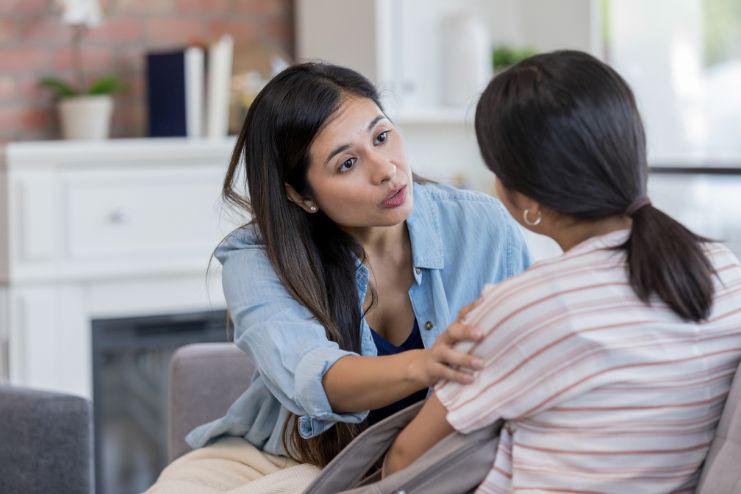
If you, like me, grew up in a household where periods were whispered about, quickly covered up, or avoided altogether, you’re not alone. For decades, menstruation has been shrouded in silence, even though it’s one of the most normal aspects of the human body.
When I was growing up, there was a lot of confusion in my mind about periods. Especially because people around me considered it ‘weird’ to have an open discussion about it, which only made me more curious and confused. The only time I discussed periods was when I got them, and only with my mother. Although the right time to have the discussion would have been before I got them. Since we are aware of it in some way or the other, the whispers only add to the confusion.
However, for today’s teenagers, the game is different. They’re bombarded with information on the internet, some true, some outrageously false. They’re also growing up in a world where body image, identity, and mental health are all linked. That’s why discussing menstrual health with your teenager isn’t just a biology lesson—it’s a self-esteem-boosting, stigma-busting, trust-building experience.
When parents make period talk normal, it sends teenagers the following message:
“Your body is not weird. Your experiences are valid. You can always come to me.”
In this article, let’s discuss this subject without shame, embarrassment, or that infamous eye roll.
Read More: 26 Things You Should Avoid During Periods – Experts Advice!
When Is the Right Time to Talk About Periods?
Start Before Puberty Hits
One of the most frequent mistakes of parents is waiting for the first period to start. By that time, however, the adolescent might already be stressed, confused, or surprised. The optimal time to start discussing puberty and menstruation is at age 8–10, before breasts and pubic hair appear.
Watch for clues:
- They ask for deodorant or body odor.
- They see commercials for pads or tampons.
- Friends or peers begin talking about puberty.
These are your gentle clues to start the conversation—not with a lecture, but with curiosity.
You can start with something like this – “Hey, I noticed a TikTok discussing periods—do you ever hear people mention that at school?”
Use Age-Appropriate Language:
Talking is essential; however, using the right language about periods is all the more important. Here’s how you use the right ‘lingo’:
- Under 10: “Your body will undergo some cool changes soon.”
- Ages 10–12:“Let’s discuss how periods work so it won’t feel scary or weird when it happens.”
- Ages 13+: “Notice any mood or energy changes around about the same time each month?”
Keep it casual, open, and regular—not a one-time cringe-worthy sit-down.
What Teens Need to Know About Menstrual Health
The more your teen knows what’s happening in their body, the less scary it becomes.
Read More: 20 Best Foods to Eat During Periods and 11 Foods to Avoid
The Basics of the Menstrual Cycle
Make the science of the menstrual cycle easy to understand in a friendly manner:
- The uterus creates a lining every month in preparation for pregnancy.
- In the absence of pregnancy, the lining is shed as blood and tissue.
- This process recurs about every 28 days (though 21–35 is still okay)
- Most girls have periods that last between 3–7 days.
You could say:
“It’s something like your body’s monthly reboot. Nothing gross or strange about it—it’s just biology in action.”
Pro Tip: You can also use pictures, illustrations, or even educational videos if your teen learns better visually.
What’s Normal and What’s Not
Help your teen understand what to anticipate—and what could be a warning sign.
What’s normal:
- Irregular cycles during the first year
- Light spotting before or following periods
- Mild cramps, tiredness, and mood changes
- A bit of clotting or stringy bits in the flow
What’s not:
- Bleeding through a pad in less than 2 hours
- Skipped periods for more than 3 months
- Severe pain or dizziness
- Dizziness or nausea all the time
Normalizing seeking help:
“If something ever feels too overwhelming or off, it’s completely fine to check in with a doctor. That’s why they exist.” This assurance helps your teen hesitate less and become more confident in the whole process. Seeking help does not always mean there’s trouble or an issue; it means we get the right guidance.
Addressing the Emotional Side of Periods
That is where many parents fall short, not being aware of how enormous the emotional burden of menstruation can be for an adolescent.
It’s Not Just Pads and Tampons:
Hormonal shifts can turn even the most calm and level-headed teen into a stranger in their own body. They might find themselves feeling:
- Quickly irritated
- Suddenly emotional
- Extremely drained
- Withdrawn socially
Rather than writing it off as “PMS,” make it real.
“It makes sense that you feel off right now, your body is using a lot of energy to handle changes.”
Remind them they can talk about it without judgment. If they tell you, “I hate my period,” don’t correct or downplay. Just hear them.
How to Create an Open, Shame-Free Conversation
Period talks mostly revolved around shame and embarrassment. However, we must change it to a positive and open-ended discussion. Here are a few quick tips to have an open conversation around menstruation with your kids:
Begin with Empathy and Curiosity
- Don’t advise seeking out what they already know.
- “What have they said that you should know about periods in school or on the internet? Do you feel prepared for your first period, or is it something that still confuses you?”
- Listen without fixing immediately. Explain softly and fill in the gaps.
Then you can say:
“I didn’t have much warning before mine, and it was terrifying. That’s why I want to make it feel more relaxed and understandable for you.”
Speak Clearly and Include Everyone

- Speak about menstruation, not “that time of the month” or “lady issues.”
- Say “menstruation” or “period”
- Use words like “vulva” and “uterus.”
Be mindful of teens who are transgender or non-binary—ask what language they prefer.
Normalize words like “blood,” “cramps,” and “cycle.” When you model comfort, they feel safe being curious.
Read More: Why You Should Try Seed Cycling for Hormonal Balance
Practical Period Prep: What Teens Need
Knowledge is power, but so are the right tools.
Help Them Explore Product Options:
Not every teen feels comfortable asking for help with this, so make it easy:
“Let’s choose some gear so you feel prepared, want to browse together online or go to the store?”
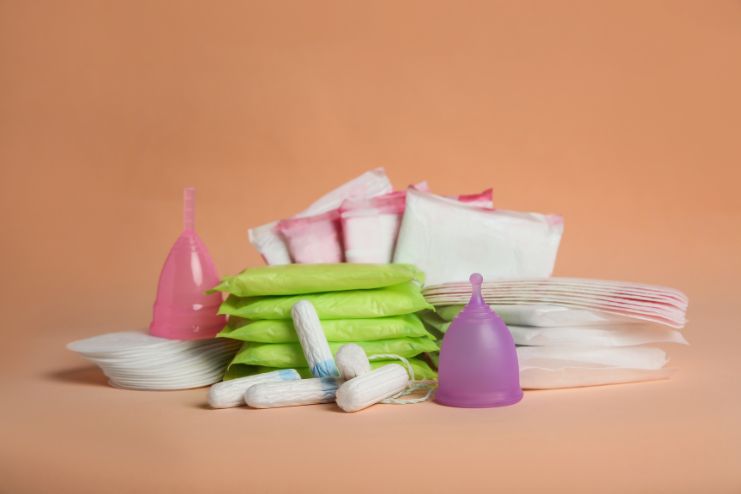
Provide options such as:
- Pads: Simple to begin with, available in various lengths
- Tampons: Describe how they work, but no pressure to use them straight away
- Period Underwear: Reusable and low-key for school or sports
- Menstrual Cups: Green, but may require getting used to
Create a Personalized Period Kit:
A personalized period kit is an answer to many questions that your teen might have. This kit will have all the things that help her get through her period smoothly. Remember, make it enjoyable and not too clinical.
Add:
- 2–3 pads or tampons
- Unscented wet wipes
- Spare underwear
- A small pouch or case
- Pain reliever (ask their pediatrician)
Get them to keep one in their school backpack or locker—”just in case.”
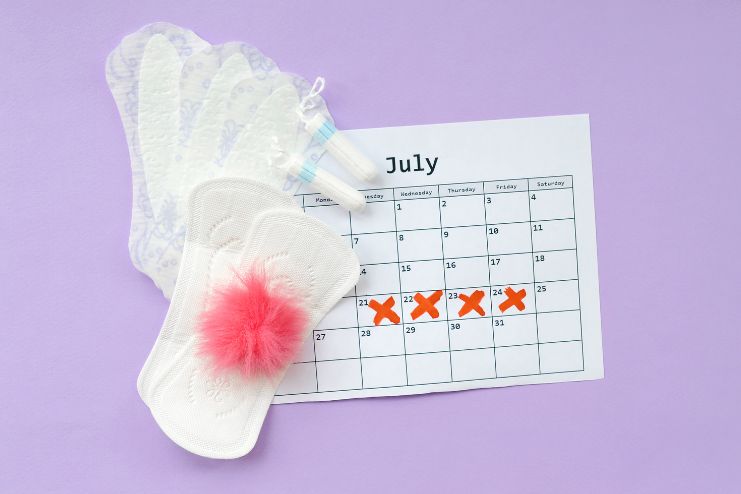
Teach Them to Track Their Cycle:
Cycle tracking has become so much easier now. Here are a few ways your teen can track her cycle hassle-free:
- Apps: Flo, Clue, or Period Tracker (with privacy features!)
- Bullet Journal: Have them decorate it, if they’re good with crafts
- Wall Calendar: Basic, visible one for in-home use
Tracking allows them to spot emotional or physical patterns and feel more in control.
Common Period Myths to Debunk Together
Teenagers hear a lot of inaccurate information. Sort it out together.
“You can’t exercise on your period”.
→ Not right. Gentle movement helps relieve cramps and increase endorphins.
“All girls get their period at 12.”
→ Wrong. The age of puberty starts from 9 years of age. There’s a big range from 9 to 16. Everyone is different.
“You can’t get pregnant on your period.”
→ It’s unlikely but possible, especially if ovulation is not regular.
“Periods are dirty.”
→ Incorrect. Period blood is not dirty. It’s only the uterine lining and blood, not trash.
Use these myths as icebreakers and chuckle at the ridiculous ones together. That’s how you make period talk normal.
How to Support Boys Learning About Period Health

Do you still believe that it is right to keep your boy away from the period conversation? Periods are not something that is limited to just girls. Yes, boys need to learn about periods, too. Why?
- They will have menstruating partners, friends, and coworkers when they grow up.
- It decreases teasing or ridicule in school.
- It develops empathy and emotional maturity.
You can say:
“Learning about periods isn’t only for girls, it’s also being an empathetic and educated human.”
Get schools to include health education as part of co-ed classes, and introduce videos or books about periods in an age-friendly, neutral, and clear manner.
When to Seek Medical Advice

As mentioned earlier, medical advice can help make the menstrual journey smoother. Always listen to your teen if they complain of any of the below:
- Bleeding that fills/soaks pads/tampons every hour
- Periods exceeding 8 days
- Severe cramps that interfere with everyday life
- Severe mood swings or symptoms of depression
- No periods after 16 years of age or after over 3 months of regular cycles
- Diseases such as PCOS, endometriosis, or iron-deficiency anemia are more prevalent than most people know, and timely treatment can transform lives.
Final Thoughts
The way you discuss periods lays the groundwork for the way your teen will feel about their body for years to come. Do you want them to feel secretive and ashamed, or informed and empowered?
This isn’t a single conversation. It’s a recurring conversation full of honesty, curiosity, and respect.
So the next time you find yourself thinking, “Should I talk to them about it again?”—the answer is yes. Since the more we speak, the less there is to hide.
References
- https://www.unicef.org/parenting/health/talking-about-periods-at-home
- https://www.ujaas.in/blogs/how-to-explain-or-have-an-open-conversation-with-a-child-about-menstruation-2
- https://ecofemme.org/whats-normal-whats-not-part-1-understanding-your-menstrual-cycle/
- https://www.betterhealth.vic.gov.au/health/conditionsandtreatments/menstrual-cycle
- https://www.betterhealth.vic.gov.au/health/conditionsandtreatments/menstrual-cycle
In this Article