













Picture this: you’re excited about a clean aromatherapy purchase, maybe a bottle of lavender to calm your nerves or peppermint to clear your head. You scroll through dozens of options, all claiming to be “100% pure”, “therapeutic grade”, or “premium quality.” But here’s what nags at the back of your mind: how many of these bottles actually contain what they say they do?
The truth is, not many. The global essential oils market, valued at over US $23 billion in 2023 and still growing rapidly, operates with minimal regulation. According to reliable sources, up to 75% of commercial samples of certain oils are adulterated, mixed with cheaper substitutes, synthetic fragrances, or even contaminated with harmful solvents.
That means your “pure lavender oil” might actually be a cocktail of unknown chemicals. And while that sounds dramatic, it’s the everyday reality of this industry.
The good news? You don’t need a chemistry degree or a lab setup to protect yourself. You just need to know what to look for. Think of it as your shopping defence system, a checklist of nine simple, verifiable criteria that can help you separate genuine, high-quality oils from the impostors.
Once you know what these are, you’ll start seeing red flags instantly, and buying essential oils will feel less like a gamble and more like a confident, informed choice.
Read More: Boost Your Mood Naturally: 7 Essential Oil Diffusers for Stress Relief
Criterion 1 – Verify Both Common and Botanical Names
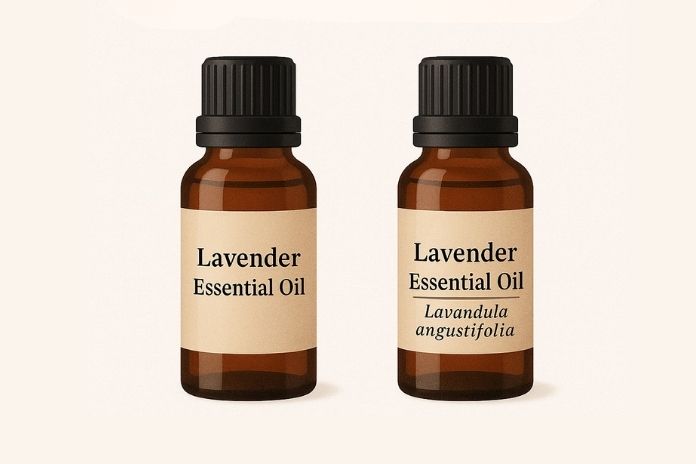
First, check the label for the botanical (Latin) name. The common name alone isn’t enough.
- Why it matters: Many plants share common names but have different species, and that means different chemical profiles and safety. For example, several kinds of eucalyptus exist with varying safety or fragrance profiles.
- What you want to see: A label that includes something like Lavandula angustifolia (for true lavender), not just “Lavender essential oil”. If the botanical name is missing, that’s a red flag.
- What this means: The botanical name is your plant’s “passport”. Without it, you can’t verify what exactly the oil is from, and that means you don’t know its chemical makeup or how safe/effective it might be.
Criterion 2 – Confirm Plant Part and Extraction Method
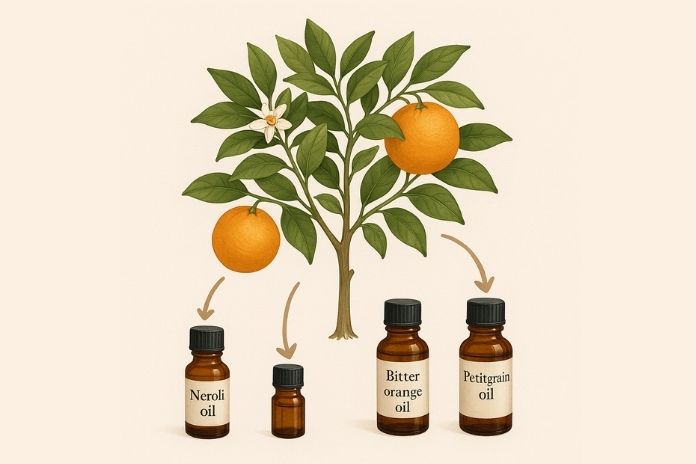
Knowing which part of the plant was used and how it was processed is the next step.
- What to check: The label should say something like “Plant part: leaves”, “Plant part: flowers”, or “Plant part: peel”, plus “Extraction method: steam distillation” (or “cold expression” for citrus).
- Why it matters: The part of the plant (flowers, bark, peel, resin) changes what you get chemically. For example, a bitter orange tree might yield different oils from its peel vs its flowers. Also, “essential oil” should come via distillation or expression, not solvent extraction (which produces absolutes or aroma compounds, not true essential oils).
- What this means: This is your “source verification” step. If the label is vague about part or method, you’re not getting full transparency, and that lowers your trust in the product.
Criterion 3 – Check Country of Origin and Growing Conditions

Where the plant grew and how it was cultivated matter a lot.
- What to see: The label or website should specify a country or region (e.g., Bulgarian lavender, French Alpine lavender), and ideally include information about growing conditions (organic, wild-crafted, etc.).
- Why it matters: Soil, climate, and altitude (terroir) change the plant’s chemical profile. A lavender grown in the French Alps may differ significantly from one grown elsewhere.
- What to look for: Country/region named, batch or lot numbers (traceability), cultivation standards.
- What this means: Think of the region as the “flavour profile” of the oil. If the brand hides or omits its origin, you lose a key indicator of legitimacy.
Criterion 4 – Demand GC-MS Testing and Certificate of Analysis
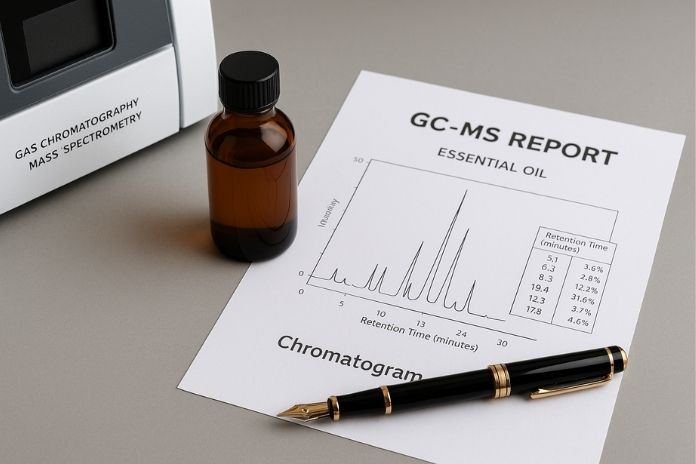
This is your technical verification, lab proof.
- What GC-MS is: Short for Gas Chromatography–Mass Spectrometry. It separates and identifies the compounds in the oil, showing percentages of each.
- What a COA is: Certificate of Analysis, batch-specific, showing the results of GC-MS testing (and possibly other tests).
- What to do: Ask for the COA. Ensure it’s for the lot number you’re buying. Check that the brand posts its reports publicly (or makes them available on request). See if the testing lab is third-party (independent) rather than in-house.
- Why it matters: Many oils are adulterated by blending in cheaper oils, adding synthetic components, or diluting them. GC-MS helps detect those practices. For example, adulteration with cheaper oils or synthetics is common.
- What this means: Consider this your “DNA test” for essential oils. If the brand can’t or won’t provide a batch-specific COA with GC-MS, you’re buying blind.
Criterion 5 – Inspect Packaging Quality and Bottle Features
If everything above checks out, packaging lets you assess how well the oil is protected.
- What to check: The bottle should be made of dark glass (amber, cobalt blue, or violet), have a proper closure, possibly an orifice reducer for drop-by-drop dispensing, and a minimal headspace (to minimize oxygen exposure). Avoid clear glass or plastic bottles.
- Why it matters: Essential oils are volatile and degrade with light, heat, and oxygen. Plastic can leach chemicals or allow oxidation. UV exposure will change the chemical profile and potentially the safety of the oil.
- What this means: The bottle is your oil’s “protective armour”. Cheap packaging = higher risk of compromised quality, even if the oil inside was good. If the packaging looks like an afterthought, you might question the care taken throughout the entire supply chain.
Kathryn Fritze, an integrative nurse at the University of Maryland Medical Center, emphasizes that marketing phrases like “natural,” “therapeutic grade,” or “100% pure” have no legal definition and can easily mislead consumers. She advises buyers to verify a company’s quality claims directly, checking whether they disclose how their oils are tested and confirmed to be authentic.
Criterion 6 – Evaluate Realistic Price Points
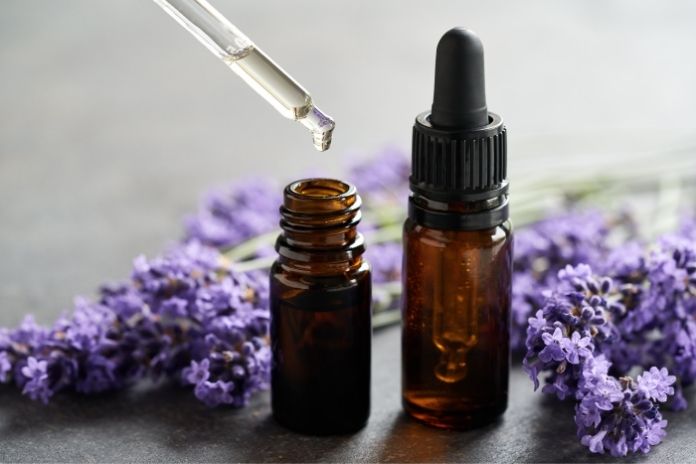
Price says a lot. You’re not looking for the cheapest possible, nor the insanely expensive for no reason.
- Why price matters: Some plants yield very little essential oil; for example, roses might require thousands of pounds of petals to produce one pound of oil. That cost must be reflected. Also, if all oils from a brand cost exactly the same, that’s a red flag.
- Sample benchmarks (approximate as of 2025/2026):
- Lavender (15 ml): US $8-15
- Peppermint (15 ml): US $7-12
- Rose (15 ml): US $150-300 (or more) depending on grade and origin.
- What to watch: If something like rose oil is priced at what you’d expect for peppermint, or if a brand’s 15 ml lavender and rose both cost the same, that’s a warning sign. Also, brands that are visibly MLM or heavily mark-up may charge 3-5× the typical market retail without necessarily better quality.
- What this means: Think of price as your “quality detector”. Real yield and processing costs must be reflected. If the price is too low or too uniform across widely different oils, buyer beware.
Criterion 7 – Conduct the Sensory Evaluation Test
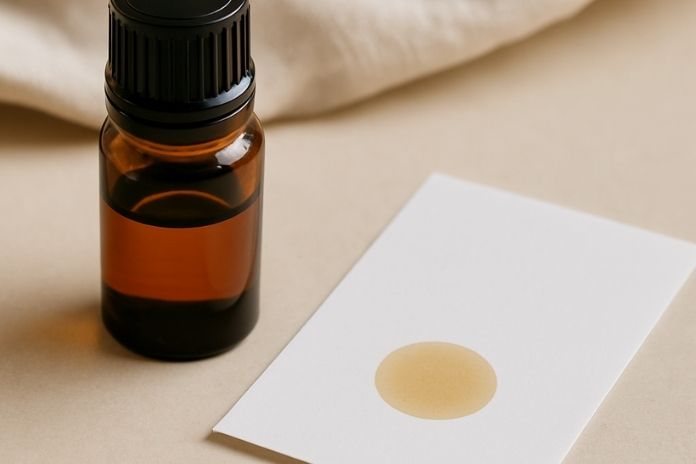
Yes, your senses still matter. After you’ve done all the background checks, your nose and evaluation can confirm.
- What to do:
- Smell the oil (open the bottle briefly). A pure, unadulterated oil will smell complex and plant-derived, not overly perfume-like, chemically sharp, or generically “nice.” It also won’t linger too long, as natural oils evaporate faster than synthetic fragrances and fade sooner on the skin.
- Do a paper test: Place a drop of oil on clean white blotting paper and observe how it behaves as it evaporates. The scent should evolve naturally, not turn sharply chemical or artificial.
Keep in mind that some oils, like heavier base notes, may leave a slight ring due to their natural viscosity, so focus more on how the aroma develops than the residue itself.
- Note variation: Real oils from different batches willsmell slightly different (more on this in Criterion 8). If it smells exactly like something you’ve smelled many times, and the brand claims consistency, that could mean synthetic or “fragrance oil”.
- Red flag smells: Strong alcohol/perfume smell, overly sweet candy-like scent, no dimension to the aroma.
- What this means: Your nose is your “first-line defence”. Technical data matters, but if something smells off, it usually is
Criterion 8 – Understand Batch Variability Explained
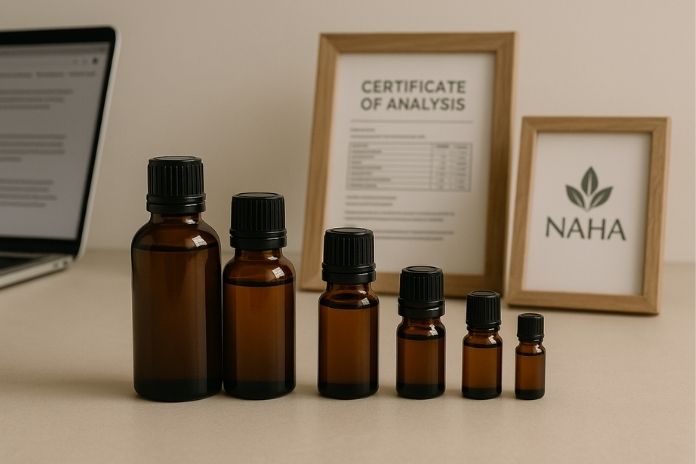
Here’s what many shoppers don’t realise: even genuine essential oil batches vary. That’s natural.
- Why variation occurs: Differences in growing season, weather, soil, harvest time, plant part, and distillation conditions. These all affect the chemical profile slightly, even for the same botanical species.
- Why this is good: If a brand claims zero variation batch-to-batch, that’s suspect; they might be sourcing synthetic ingredients or mixing them. Genuine oils vary somewhat.
- What to look for: Brands that mention “may vary slightly by batch”, or provide lot-specific COAs. Good brands may show the chemical profile of each batch.
- What this means: Understanding natural variability means you aren’t surprised when the oil you buy today smells slightly different from the one you bought six months ago. It’s part of authenticity, not a defect.
Criterion 9 – Verify Proper Labeling and Storage Information
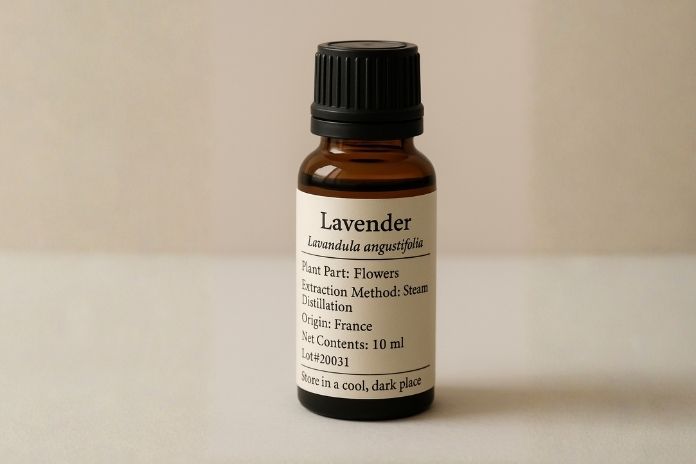
Finally, what’s on the label and how you (or the supplier) store the bottle after purchase will influence the oil’s real-world effectiveness.
- Label checklist:
- Common name and botanical name
- Plant part used
- Extraction method
- Country or region of origin
- Net contents (volume)
- Lot or batch number
- Storage instructions (cool, dark place, out of direct sunlight)
- Safety warning (“Keep out of reach of children”, or similar)
- Storage/shelf life guidelines:
- Citrus oils: ~1-2 years
- Most oils: ~2-3 years
- Heavy woods/resins (sandalwood, vetiver, patchouli): 4-8+ yearswith proper care.
- What this means: Proper labeling shows the brand has nothing to hide. Correct storage instructions and realistic shelf-life expectations ensure you’re buying something built to last, not built to degrade quickly.
Red Flags – What to Avoid When Shopping
Let’s summarize the quick red-flag list. If you spot any of these, you should reject the product or at least proceed with caution.
- Plastic bottle (or clear glass) instead of dark glass.
- Missing botanical name on the label.
- Label says “fragrance oil”, “perfume oil”, or is vague about source.
- All oils from the brand are exactly the same price despite huge yield differences.
- Oil is suspiciously cheap (more than ~50% below the typical market price).
- No lot/batch number or no COA provided.
- Brand makes medical/curative claims (this often breaks regulatory rules).
- No GC-MS testing or third-party lab verification.
- Uniform smell across vastly different oils with different plant sources.
- No safety guidance from the brand – no mention of dilution, phototoxicity (especially for citrus oils), or age-appropriate use.
These are deal-breakers, plain and simple.
Read More: Essential Oils vs. Synthetic Fragrances: Which One Is Actually Safer?
Beginner’s First Purchase Guide
If you’re just stepping into the world of essential oils, the sheer variety can feel overwhelming. The good news? You don’t need a shelf full of rare and pricey bottles to begin. A small starter set of trusted, affordable, and versatile oils is enough to help you learn the basics, appreciate the scent and texture of good oils, and recognize genuine quality on a label or certificate of analysis.
Here are three excellent starting points:
- Lavender (Lavandula angustifolia): Lavender is often called the “gateway oil,” and for good reason. It’s gentle on the skin, blends beautifully with other products, and works for everything from stress relief and sleep support to minor skin irritations. Its wide availability also makes it easier to find brands with full transparency and test reports.
- Peppermint (Mentha piperita): Peppermint packs a punch. Its strong, refreshing aroma helps with alertness, focus, and even mild headaches when used correctly. High-quality peppermint oil is relatively inexpensive, making it a great way to experiment with dilution, diffusion, and scent strength without incurring high costs.
- Lemon (Citrus limon) or Sweet Orange (Citrus sinensis): Both are bright, cheerful citrus oils that instantly lift the mood. They’re perfect for diffusing, creating cleaning blends, or mixing with carrier oils to achieve a refreshing scent. Because citrus oils are commonly produced, they’re easy to source and often come from brands that openly share purity data.
Why Start Here? These oils are:
- Affordable– You can learn without worrying about cost or waste.
- Widely available– Easier to find genuine, well-tested options.
- Multi-purpose– Ideal for diffusing, topical blends, or mood support.
Start simple. Focus on understanding how real, pure oils behave, their scent profile, texture, and how they’re labeled. Once you’ve mastered these basics, you’ll have the knowledge and confidence to explore rarer or more expensive oils without falling for marketing traps or counterfeit products.
Read More: 6 Invigorating Orange Essential Oils to Uplift Your Mood
FAQs
Q1: Are expensive essential oils always of better quality?
A: Not necessarily. The price should reflect the plant’s yield and rarity; rose and sandalwood are naturally expensive, while citrus oils are more affordable. However, extremely high prices (3-5x market rate) often indicate MLM markups rather than superior quality. Compare prices across reputable suppliers.
Q2: What should essential oil labels include?
A: Quality labels include: common and botanical (Latin) plant name, plant part used, extraction method, country of origin, net contents, lot/batch number, dilution status (if applicable), proper storage instructions, and safety warnings. Missing any of these suggests questionable quality.
References
- https://www.takingcharge.csh.umn.edu/how-do-i-determine-quality-essential-oils
- https://www.elixens.com/en/news/essential-oils-buying-guide
- https://arezou.in/blog/top-3-factors-to-choose-the-high-quality-essential-oils/?srsltid=AfmBOoq0BysAsrStbynK4-8XMO2bLG1eGXV4Ju8GakiZiluH8JiaRc3G
- https://www.pureoilsindia.com/blog/different-grades-of-essential-oils
- https://sivaromanaturals.com/an-ultimate-guide-to-buying-pure-and-high-quality-essential-oils/
- https://www.vedaoils.com/blogs/news/5-best-grades-of-essential-oils-the-grading-system
- https://bleulavande.com/en/blogs/news/huiles-essentielles-comment-reconnaitre-les-produits-de-qualite?srsltid=AfmBOopB8fynN66AAyC6FI0N3_FzsSldJRBVjATfQ5wkVQC1XfrpFpnV
- https://sanabio.bio/news/how-to-choose-the-right-essential-oils/
- https://www.greenplantation.com/a/how-to-recognize-a-quality-essential-oil?srsltid=AfmBOooYs43Q4lNWWAp4Mf8ih-Ao6Wqf_ZIm-GoTJBdAwhfiTic_2io1
- https://willowandsage.com/how-to-select-high-quality-essential-oils/
- https://www.takingcharge.csh.umn.edu/how-do-i-choose-and-use-essential-oils
- https://www.isabellasclearly.com/blog/the-ultimate-guide-to-choosing-high-quality-essential-oils?srsltid=AfmBOooxdJxUA_3ofBuvmwxfyXuAy5itKFS1iYo3m_NjCASPKR1nmBZF
- https://www.naturesnaturalindia.com/blog/trusted-essential-oil-manufacturer/
- https://www.baseformula.com/blog/choosing-quality-essential-oils
- https://blog.landema.com/en/technical/professional-applications/responsible-use-essential-oils/
- https://ppsheth.com/how-to-check-essential-oil-quality-bulk-buying/
- https://www.forbes.com/sites/nomanazish/2021/08/31/your-essential-guide-to-essential-oils/
- https://www.virtued.in/blog/choosing-the-right-essential-oils-a-guide-to-aromatherapy-selection
- https://www.essenceofthyme.com/blog/how-to-choose-high-quality-essential-oils
In this Article