












A thyroid condition can strike anyone at any age or gender. Your thyroid gland is a small, butterfly-shaped gland located at the base of your neck. It regulates your metabolism, energy, heart rate, and much more. When it ceases to function normally, it can cause a multitude of problems. Though medical advice is important, adding yoga and meditation to your life can do a lot to support your thyroid health and lower stress levels.
Types of Thyroid Disorders
There are two main forms of thyroid dysfunction:
Hypothyroidism: This results when the thyroid gland fails to produce sufficient thyroid hormone. Typical signs are:
- Fatigue and lack of energy
- Cold intolerance
- Sudden weight gain
- Constipation
- Dry skin
- Slowed heart rate
Hyperthyroidism: This results when the thyroid gland secretes excessive amounts of hormone. Signs can include:
- Unexplained weight loss
- Increased heartbeat
- Irritability or nervousness
- Diarrhea
- Heat intolerance
In both disorders, enlargement of the neck—called a goiter—can develop as a result of abnormal thyroid function.
Read More: Unexplained Fatigue? It Could Be a Thyroid Issue
Why Yoga Helps with Thyroid Disorders
Yoga is not only a physical form of exercise—it is a systemic practice that stabilizes body, mind, and endocrine system. Some yoga postures tend to stimulate and regulate the thyroid gland by enhancing circulation, alleviating stress, and enhancing hormonal equilibrium.
Benefits of yoga for thyroid health:
- Stimulates the thyroid gland with stretching, compression, and twisting postures
- Improves circulation in the neck area
- Encourages relaxation and lowers cortisol levels (stress hormone)
- Enhances metabolism and energy levels naturally
- Helps in regulating weight changes and digestive disorders
Yoga Asanas for Thyroid
1. Sarvangasana (Shoulder Stand Pose)

Sarvangasana is among the best yoga poses to activate the thyroid gland. Reversing blood flow towards the head and neck, this pose is said to nourish the thyroid gland and regulate hormone secretion. It also enhances circulation, increases energy, and soothes the nervous system.
How to Do Sarvangasana (Step-by-Step):
- Lie on your back with straight legs and arms at your sides.
- Slowly raise your legs to 90 degrees.
- Push your hands into the ground and lift your hips off the mat.
- Place your hands under your lower back and bring your elbows near together.
- Lift your torso and legs straight up to create a vertical line.
- Keep your chin tucked in towards your chest and look at your toes.
- Breathe softly and hold for 10–30 seconds.
- To release, slowly lower your legs and spine back down by using your hands to support you.
- Rest on the mat in Savasana.
Note: Practice under supervision if you’re a beginner.
2. Halasana (Plough Pose)

Halasana presses on the neck region, activating the thyroid and abdominal glands. It calms the mind, alleviates stress, elongates the spine, and aids in fat burning around the stomach.
How to Do Halasana:
- Lie on your back with arms by your sides, palms down.
- Slowly raise your legs to 90 degrees.
- Lift your hips off the ground using your hands for support.
- Slowly bring your legs over your head, trying to touch your toes to the ground.
- Keep your legs extended and your chin to your chest.
- Hold and take slow, deep breaths for 15–30 seconds.
- To come out of the pose, slowly roll your spine back up and lower your legs down to the ground
Note: Practice under supervision if you’re a beginner.
Read More: Fuel Your Body Right: Top Foods to Break Your Fast and Boost Vitality
3. Matsyasana (Fish Pose)
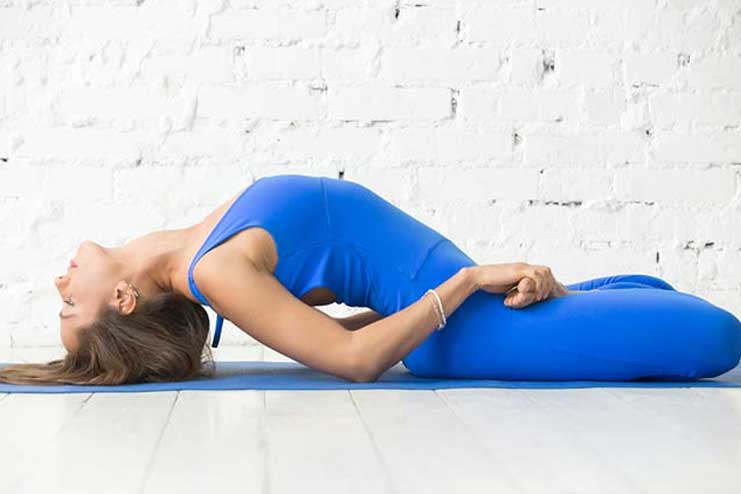 Matsyasana gently stretches the neck and stimulates the thyroid gland. It reduces muscle stiffness, straightens posture, and calms anxiety associated with thyroid imbalances.
How to Do Matsyasana:
- Lie on your back with legs straight and arms alongside your body.
- Move your hands beneath your hips, palms facing downwards.
- Pressing down on the floor with your elbows, push your chest upwards.
- Drop your head back so that the crown of your head is touching the floor.
- Keep your legs loose and together.
- Breathe deeply and retain for 15–30 seconds.
- To release, raise your head, depress your chest, and relax on your back.
Note: Practice under supervision if you’re a beginner.
4. Setubandhasana (Bridge Pose)

Bridge Pose flexes the neck and strengthens the posterior while stimulating the thyroid. It also relaxes the mind, reduces anxiety, and aids digestion.
How to Do Setubandhasana:
- Lie on your back with knees bent and feet hip-width apart.
- Keep your arms at your sides, palms downward.
- Press down through your feet and lift your hips toward the ceiling.
- Use your thighs and keep your chin forward slightly.
- As an option, place your hands behind your back and stretch.
- Hold for 15–30 seconds while exhaling slowly.
- Slowly lower your hips to the mat to release.
5. Bhujangasana (Cobra Pose)

Cobra Pose stretches and strengthens the back as well as enhances blood circulation to the thyroid. It also increases spinal flexibility, tones the belly, and reduces fatigue.
How to do Bhujangasana:
- Lie on your belly with legs straight and toes pointing towards the back.
- Put your palms near your chest, elbows near your body.
- Inhale and push your chest upwards from the floor with the help of your back muscles.
- Keep elbows lightly bent and shoulders away from ears.
- Contract your core and push your pelvis onto the mat.
- Gaze slightly upwards and maintain for 15–20 seconds.
- Exhale and return your chest to the ground.
6. Sirsasana (Headstand Pose)
 Sirsasana is a pose that inverts the flow of blood and can regulate thyroid function. It enhances concentration, balances metabolism, and aids circulation.
Warning: This pose must be learned under expert supervision.
How to do Sirsasana (Beginner-Friendly Method):
- Kneel on the mat and link your fingers together in a triangle base.
- Position your head between your hands, the crown of the head touching the ground.
- Make your knees come off the ground and walk your feet towards your head.
- Lift your legs up gently—use the wall for support if required.
- Maintain your body straight and engage your core.
- Hold the pose for 30 seconds to 2 minutes, breathing steadily.
- To release, slowly lower your legs and rest in Child’s Pose.
Note: Practice under supervision if you’re a beginner.
The above yog asanas are a great tool in reducing thyroid issues, and have been used extensively for the same. However, apart from these stretches, a few other changes, including diet, help in the treatment of thyroid.
Dietary Tips for Thyroid Conditions
A balanced diet is an integral part of maintaining thyroid health. Combined with daily yoga practice, the inclusion of suitable food helps in controlling thyroid symptoms and overall well-being. Below are some of the effective dietary tips for thyroid care:
- Boost High-Fiber Foods: Foods high in fiber, such as fruits, vegetables, legumes, and whole grains, aid digestion and regulate weight, two key factors for thyroid balance.
- Limit Processed Fats and Refined Carbs: Steer clear of foods cooked in deep oil, sweet snacks, and products containing white flour that can exacerbate inflammation and interfere with hormonal function.
- Consume Leafy Greens: Spinach, kale, fenugreek leaves, and other leafy greens are high in antioxidants and nutrient-dense compounds that nourish thyroid function.
- Add Ginger to Your Diet: Ginger has been shown to enhance thyroid hormone function and combat inflammation. Drink ginger tea or chew raw ginger slices.
- Add Black Walnuts (In Moderation): High in natural iodine, black walnuts may support the nourishment of an underactive thyroid. Just be careful and note to your doctor if you take thyroid medication.
- Eat Iodine-Rich Foods: Iodine is necessary for making thyroid hormones. Good food sources are:
- Curd or yogurt
- Fish (ocean fish in particular)
- Radishes
- Oatmeal
- Seaweeds (such as nori or kelp)
- Pumpkin and carrots
- Spinach and sprouts
- Daily Sunlight Exposure: Spend 10 to 15 minutes daily in the morning sun. It will help your body make vitamin D, which is crucial for immune and thyroid health.
- Think Wheatgrass and Sprouts: These are full of vital enzymes and micronutrients that cleanse the body and nourish the thyroid.
Read More: The Best (and Worst) Cooking Oils for Hormonal Balance and Fertility
Conclusion
Thyroid imbalances can disrupt your daily life. However, with a few easy asanas, you can regain control and promote your overall health. Additionaly, you can opt for certain dietary and lifestyle changes that help regulate thyroid levels.
Gaining control over the thyroid is easy; all you need to do is stretch!
References
- https://www.bajajfinserv.in/insurance/health-benefits-of-shirshasana
- https://www.yogajournal.com/poses/cobra-pose-2/
- https://www.bajajfinserv.in/insurance/health-benefits-of-sarvangasana
- https://www.yogajournal.com/poses/cobra-pose-2/
- https://www.webmd.com/women/understanding-thyroid-problems-basics
In this Article