















You know that feeling when you finally get up after sitting for hours – that slow, creaky, “oh my knees!” moment?
Yes, that one. Feels like your body forgot how to move, right?
It’s not just you. These days, almost everyone – from people working on laptops all day to travellers stuck on long rides – complains of stiff joints after sitting too long. But here is one more important part: this ache is never just about getting old or being unfit. It’s more about how we live, how we sit, and even how little we move.
Let’s dig into what’s really happening inside your body, why your joints start protesting after long hours of sitting, and how you can make them calm down – without turning your life upside down.
Why Joints Ache After Sitting – What’s Going On Inside You
So, your joints are like small hinges. Every time you move, a special fluid coats those hinges with – synovial fluid – and that synovial fluid keeps them smooth.
But those hinges don’t move whenever you sit for a long time. The fluid also just sits there, just like stagnant water. It gains thickness, circulation slows, and your muscles start tightening around the joint. That’s when you feel that “rusty” stiffness when you stand up.
Also, when you sit still for hours, blood flow to your lower body reduces. Less oxygen, less nutrient supply – so tissues become cranky. Your muscles, especially the glutes and hips, become less active. So the minute you even try to move, they take time to respond and become less efficient.
The result? Those creaky knees, stiff hips, as well as tight lower back.
Sitting is never bad by itself – the only bad thing is to stay still for so long that it does damage. Your joints are just like kids – if you don’t allow them to play for hours, then they get irritable.
So, What are the Common Causes of Joint Pain After Sitting
Some common reasons that can make you feel stiffness or pain after staying seated for too long are:
1. Poor Posture and Ergonomics

Most of us think we sit “normally.” But look closer – shoulders slouched forward, spine curved like a ‘C’, one leg crossed over the other for hours.
This position pulls on your hip joint, compresses the lower back, and can even put unnecessary pressure on your knees.
Along with this, if your chair is too low or your laptop too high, then your whole body adjusts weirdly. With time, this type of repeated posture can strain the muscles that are supposed to support your joints.
And when they get tired, the joints start aching.
Simple fix:
Adjust your chair height so your feet touch the floor flat, hips slightly above knees, and screen at eye level. It sounds basic, but it’s half the battle.
2. Muscle Imbalance and Weakness
Sitting is the easiest thing you can ever do to make your glutes lazy and your hip flexors tight. It’s just like turning off the muscles that help in stabilizing your joints.
When your glutes don’t work properly, then your knees and lower back have to overwork to compensate for that. And this is why even short walks start feeling painful.
Your body always works like a chain – when something breaks one link, then the others get overloaded.
Quick tip:
Try simple “wake-up” moves – glute squeezes, leg raises, standing hip circles – every few hours. You don’t need a gym. Just give your muscles a reminder that they still exist.
3. Joint Inactivity and Reduced Circulation
Your body movements work like oil for your joints. When you don’t move, the lubrication stops circulating.
And your blood flow – the thing that delivers oxygen and carries away waste – also slows down. That’s when those dull aches creep in.
Ever felt your knees pop when you finally stand after a long meeting? That’s your joint fluid getting back in motion.
Why it matters:
Poor circulation also means inflammatory chemicals can build up around joints, which makes them more painful.
As long as you sit still, the more your body keeps forgetting about how to flush these out.
Read More: Best Exercises to Strengthen Your Joints Without Stressing Them: Low-Impact Moves That Work
4. Inflammatory Conditions
Now, not all stiffness is just lifestyle-related. If you already have arthritis, early joint degeneration, or an autoimmune issue like rheumatoid arthritis, then sitting too long can make the inflammation worse.
You might notice the pain is stronger after rest and improves a bit when you start moving. That’s classic inflammation behavior.
If you see swelling, redness, or morning stiffness lasting longer than half an hour, don’t ignore it. That’s a signal to see a doctor, not just stretch it out.
Read More: How to Build an Anti-Inflammatory Morning Routine
5. Weight and Lifestyle Factors

Extra body weight puts extra pressure on the joints, especially the knees and hips.
Even a small weight can increase your problem – your knees have to bear up to four times the force of your body weight when you walk or climb stairs with this heavy weight.
In addition to that, dehydration (which makes joint cartilage drier), processed foods, and zero movement, and your joints start feeling like old door hinges.
Tiny changes help:
Drinking enough water, some anti-inflammatory foods like turmeric, omega-3s, green veggies – all these small things may help you more. Your joints are composed mostly of water and collagen; they require not only movement but also proper nutrition.
Read More: Strength Exercises to Make Your Daily Walks More Powerful (and Protect Your Joints)
How to Relieve Joint Pain After Sitting
To get rid of this pain, you don’t need to quit your job or become a yoga expert. Just build small habits that break your sitting pattern.
1. Move Every 30–45 Minutes
Even 2–3 minutes of movement resets everything – your blood flow, muscle tone, and joint fluid.
Walk to refill your water, stretch your arms, and stand while taking a call.
If you forget, set a phone reminder or use your smartwatch. Some people even place their bottle far from their desk, so they have to stand to drink. Smart trick, right?
2. Correct Your Sitting Posture
It’s not about sitting straight like a robot; it’s about balanced sitting.
- Keep both feet flat on the ground.
- Shoulders relaxed, not hunched.
- Hips slightly above knee level.
- Use a small cushion or rolled towel for lumbar support.
And please, avoid sitting on one leg or leaning on one side. It may feel comfortable for a few minutes, but it quietly twists your spine and hips.
Read More: 7 Exercises to Fix Hunchback Posture and Straighten Your Spine Naturally
3. Stretch and Strengthen Regularly
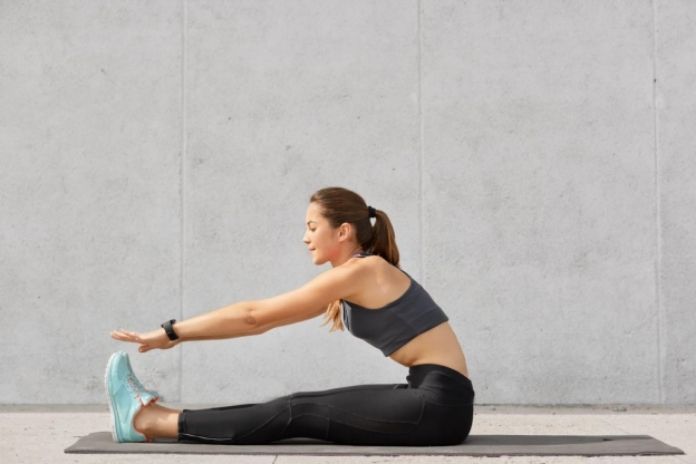
No fancy yoga required. These few basic moves are magic for stiff joints:
- Hip flexor stretch: Step one leg back, press hips forward.
- Hamstring stretch: Straighten one leg, lean gently forward.
- Calf raises: Stand up and lift heels up and down – boosts circulation.
- Glute bridges: Lie down, knees bent, and lift hips. Great for lower back and knees.
Do these before bed or during short breaks. Consistency beats intensity here.
Read More: Best Stretches for Tired or Swollen Feet After Work
4. Use Warm Compress or Gentle Massage
After sitting for hours, your joints and muscles are like cold dough – stiff and tight. A warm compress or gentle self-massage helps bring blood flow back.
Use it before sitting long or after a tiring day. It’s especially helpful around the hips and lower back.
Even rubbing your knees in small circles while watching TV makes a difference – don’t underestimate small habits.
5. Maintain a Healthy Weight and Diet
You don’t have to become a health educator. Just start with small food swaps.
Replace fried snacks with nuts, include one colorful salad daily, and drink more water.
Joints love hydration – the cartilage inside them is like a sponge; it needs water to stay cushioned.
Add omega-3 foods (like fish, flaxseed), and spices like turmeric or ginger. They help calm inflammation naturally.
Read More: 8 Everyday Habits That Are Secretly Damaging Your Joints
When to See a Doctor
Most of your stiffness will fade when you start moving regularly and fix your posture. But see a doctor if:
- Pain or swelling remains for more than a few days
- You get redness, feel heat, or you can’t move the joint fully
- Morning stiffness lasts longer than 30 minutes
- Pain wakes you up at night or worsens despite rest
Sometimes, joint pain is not just mechanical – it might be early arthritis or bursitis. Early diagnosis can save your joints from long-term damage.
Read More: Psoriatic Arthritis: Symptoms, Causes, and Treatment Options You Should Know
Key Takeaway
Joint stiffness after sitting isn’t about “getting old” – it’s about how modern life keeps us still.
Our bodies are built to move, stretch, and shift weight around. But when we hold it in one position for a long time, then they fight back.
So move often, sit smartly, strengthen those weak muscles, and give the right food to your joints.
These daily habits, even if small – like stretching during calls, a walk after taking food, or fixing chair height – can make your body feel better and younger than it really is.
Your joints are not asking for much. Just don’t ignore them when they whisper – because if you do, they start shouting later.
FAQs
Q1. Why do my knees get hurt whenever I stand after sitting for so long?
Whenever you sit for a long time, the fluid in your knee joint stops circulating properly, and your thigh muscles tighten. And when you stand, then this sudden movement puts pressure on an unprepared joint – that’s the ache you feel in your knees.
Q2. How can I stop the stiffness in my hips, which I get from sitting for long?
Take regular breaks – then stand up, stretch your hip flexors, and strengthen your glutes. Do not sit cross-legged for long periods – it usually locks your hip joints in a single position.
Q3. Will exercise help me reduce joint stiffness?
Absolutely! Gentle, regular movement will help move synovial fluid, and it will also strengthen muscles around your joints. In fact, walking, swimming, and light strength training may be best.
Q4. Do I have arthritis if I get joint pain after sitting?
No! Not always. Many people experience stiffness when they are inactive or maintain poor posture. However, if you experience stiffness that lasts over half an hour in the morning, or if the stiffness is accompanied by swelling, it’s best to consult a doctor.
Q5. What are the best stretches for desk workers?
Hip flexor stretch, seated spinal twist, shoulder rolls, hamstring stretch, and ankle rotations. If you do them at a regular period, then you will get better results.
References
- https://www.betterhealth.vic.gov.au/health/healthyliving/the-dangers-of-sitting
- https://health.clevelandclinic.org/health-effects-of-poor-posture
- https://www.mayoclinic.org/diseases-conditions/claudication/symptoms-causes/syc-20370952
- https://www.mayoclinic.org/diseases-conditions/rheumatoid-arthritis/symptoms-causes/syc-20353648
- https://www.niddk.nih.gov/health-information/weight-management/adult-overweight-obesity/health-risks
In this Article