













Seeing white spots on your nipples or areola can be alarming. You may be concerned if it’s an innocent rash or something worse, particularly when you’re pregnant, breastfeeding, or experiencing other symptoms. Fortunately, most underlying causes are innocuous. But understanding the difference between harmless spots and red flags is important for reassurance and proper treatment.
In this article, let’s understand the reasons behind white spots on nipples and what you can do about them.
Read More: Breast Health Essentials: 7 Products for Breast Care and Comfort
What Do White Spots on the Nipples Look Like?
White spots on nipples may vary in appearance:
- Whitehead-type pimples: Tiny, raised, pus-filled lesions that look like acne.
- Tiny dots or bumps on the tip of the nipple: Flat or very slightly raised, 1–5 mm in diameter.
- Milk bleb or blisters: Translucent or white to yellowish blister-like lesions, may be tender.
- Spots may be on the tip of the nipple or over the areola (pigmented ring around the nipple).
Common Causes of White Spots on Nipples

Knowing why there are white dots on your nipples can help you decide if it need to be treated by a doctor or not.
1. Montgomery Glands (Montgomery’s Tubercles)
They are little glands that secrete oil on the areola. They are for lubricating and cushioning the nipple, particularly during pregnancy and lactation. When they become more active, they may appear as tiny, white or yellowish bumps.
- Causes: Hormonal shifts during pregnancy, lactation, puberty, or menstruation.
- Symptoms: Pain-free, dome-shaped lesions on the areola.
- Treatment: None, unless inflamed or infected.
2. Blocked Pores/Milk Blebs/Milk Blisters
A milk bleb is when milk or keratin clogs a nipple pore. It traps fluid beneath the skin and produces a painful or pressure-filled white or yellow bump on the nipple.
- Who it affects: Primarily breastfeeding women.
- Symptoms: A Blister that’s as small as a pinpoint, either white or yellow in color; a hard pimple sensation; pain when feeding or pumping.
- Causes: Poor latch, tight shirts, overproduction of milk, or milk blocking the pore.
- Treatment: Warm compress, frequent feeding, and gentle rubbing or application of olive oil.
3. Clogged Milk Ducts
This condition arises when deeper milk ducts get clogged, causing the breast to become swollen and tender. Although the clog is inside, a white speck will appear on the nipple opening where milk cannot flow freely.
- Symptoms: Breast lump in a localized area, pain, redness, and white dot on the tip of the nipple.
- Complication: Can cause mastitis if left untreated.
- Relief/ Treatment: Massage, warm compresses, frequent feeding, and lecithin supplements.
4. Fungal Infections (Thrush)
Thrush is an infection caused by Candida albicans yeast, which frequently involves breastfeeding mothers and infants. It may result in white patches, stinging pain of the nipple, and burning.
- Symptoms: Shiny or flaky nipple skin, burning after or during feedings, white film that won’t wipe off.
- Spread: May be passed from mother to baby.
- Treatment: Antifungal cream or oral medication for mother and baby.
5. Viral Infections (Herpes Simplex Virus)
Herpes may lead to painful blisters on the nipple that can be white, yellow, or fluid-filled.
- Symptoms: A Group of painful blisters, crusting, and occasionally fever.
- Risk: Transmitted to the infant through breastfeeding.
- Care: Antiviral drug and potential interruption of breastfeeding from the involved breast.
6. Friction or Contact Dermatitis
Ill-fitting bras, sports bras, or nursing pads may lead to friction that irritates, creating white blister-like spots or bumps.
- Symptoms: White spots with redness or irritation.
- Cause: Allergic reactions, tight clothing, or rubbing.
- Treatment: Change to soft, air-permeable fabric; apply soothing ointments.
7. Skin Conditions (Psoriasis, Eczema, or Vitiligo)
Chronic skin diseases may appear on the nipple and areola in the form of white or scaly patches.
- Psoriasis: Silvery-white thick scales with redness.
- Eczema: White, inflamed, dry patches with itching.
- Vitiligo: White patches without scales or pain, depigmented.
- Treatment: Topical steroids, moisturizers, and consultation with a dermatologist.
8. Rare but Serious Conditions (Paget’s Disease or Breast Cancer)
Although uncommon, white or crusty nipple lesions may signal underlying malignancies like Paget’s disease.
- Symptoms of Paget’s Disease: Crusting, oozing, redness, flaking, potential bloody discharge.
- Other Symptoms: Nipple inversion, hard lump, lymph node enlargement.
- Treatment: Needs immediate medical assessment, imaging, and potentially a biopsy.
Read More: Say Goodbye to Breast Pain with These 10 NATURAL Remedies!
Symptoms to Watch and When to Worry

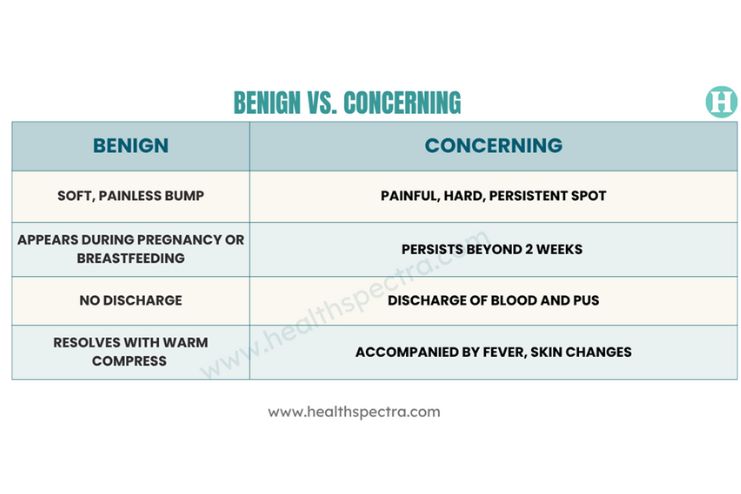
Here are a few red flags that you must be careful of when you see a white spot on nipples:
- Pain and inflammation
- Abnormal discharge, pus, blood, or greenish/yellow fluid
- Spread of redness or heat
- Fever or chills
- Changes in skin texture that include crusting, oozing, and the formation of ulcers.
- Persistent mass under the nipple or areola
 What to Do if You See a White Spot

Noticing a white bump on the nipple can be alarming, but in many cases, it is something you can take care of at home, provided there are no threatening signs such as pain, fever, or discharge. Begin with basic hygiene and care. Clean the area gently using warm water and a fragrance-free, mild soap to cleanse it and prevent infection. Don’t use strong cleansers or rub the area, as this can irritate the delicate skin around the nipple.
Using a warm compress for 5–10 minutes several times a day can open plugged pores or soften any milk blisters. It also promotes natural drainage and can relieve distress. After a warm shower or when using a compress, you may also gently massage the area towards the nipple to relieve tension, especially if the white spot is firm or tender.
Avoid squeezing, popping, or picking at the area. This may cause the skin to break, allow bacteria into the area, and increase inflammation, which could result in an infection or even an abscess.
If you’re a breastfeeding mother, check your baby’s latch and feeding position more closely. A shallow latch or improper alignment can cause repeated milk blebs and nipple trauma. Nursing from the infected breast first is sometimes suggested, as a hungry baby will suck harder, potentially dislodging the blockage naturally. A few drops of olive or coconut oil massaged onto the nipple by some mothers have been found to soften the skin and ease nursing.
For repeated white spots or clogged ducts, try taking a lecithin supplement daily. Lecithin could decrease milk viscosity and prevent future clogging. If things are still tough even with these efforts, contacting a lactation consultant can help. They can assist with identifying latch problems, adjusting feeding methods, and helping throughout the journey.
The key is to monitor how the spot responds over a few days. If it shrinks, softens, or resolves with gentle care, it’s likely nothing serious. But if it worsens or becomes painful, it’s time to check in with a healthcare provider.
Read More: How to Treat Itchy Breasts
When to See a Healthcare Provider
Here’s when it becomes necessary to consult a healthcare provider:
- Persistent white spot lasting more than 2 weeks
- Discharge that’s bloody, pus-filled, or foul-smelling
- Lump or thickened area in the breast
- Skin changes: flaking, crusting, open sores
- Fever or signs of systemic infection
Treatment and Management Options
At-Home Remedies:
- Warm compress: 5–10 minutes several times a day
- Gentle exfoliation: remove keratin or dead skin buildup
- Keep the area dry and clean: prevent fungal growth
- Loose-fitting bras: reduce friction and discomfort

For Breastfeeding Mothers:
- Enhance the latch, as a poor latch can lead to frequent blebs
- Apply oils to lubricate milk blisters and make them less painful
- Use Lecithin,1,200 mg up to 4 times a day for frequent plugged ducts
- Seek a lactation consultant’s help to resolve the position or oversupply
Medical Treatment:
- Antibiotics for mastitis or abscess due to bacterial infections
- Antifungal creams or tablets for thrush
- Antivirals in case of suspected herpes
- Minor procedures, including needle drainage of persistent milk blebs or abscesses
- Further testing, such as imaging or biopsy, if suspected malignancy
Final Thoughts
White spots on the nipples are common and not always dangerous, particularly in lactating women or during periods of hormonal fluctuation. But if a white spot persists, is painful, or has other symptoms such as discharge or lumps, seeking medical input is the best option.
Early diagnosis can eliminate serious conditions and offer relief through the right treatment. Whether one has a clogged pore, milk bleb, or an infection, treating it early ensures better results and one’s peace of mind.
References
- https://kellymom.com/nutrition/vitamins/lecithin
- https://www.nhsinform.scot/illnesses-and-conditions/cancer/cancer-types-in-adults/pagets-disease-of-the-nipple
- https://pmc.ncbi.nlm.nih.gov/articles/PMC10086167/
- https://www.parents.com/herpes-on-nipple-8654436
- https://www.nhs.uk/conditions/baby/breastfeeding-and-bottle-feeding/breastfeeding-problems/thrush
- https://www.health.com/condition/skin-conditions/montgomery-tubercles
In this Article