













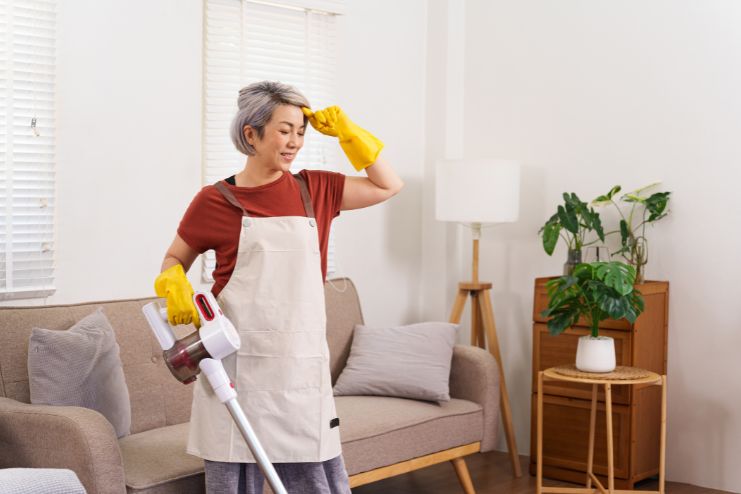
Weight loss discussions begin and end with cardio exercises and calorie-deficient diets. But another player quietly operates behind the scenes: NEAT. This stands for Non-Exercise Activity Thermogenesis, or the calories you burn doing everything that’s not sleeping, eating, or exercising.
You don’t have to do intense cardio workouts to lose fat. NEAT (Non-Exercise Activity Thermogenesis) shows that you can boost your daily energy expenditure with small, effortless lifestyle changes—like pacing while on calls, fidgeting, or opting for stairs over the elevator.
What Is NEAT, Exactly?

NEAT is the calories lost from everyday, unorganized physical activity. In contrast to formal exercise (such as jogging or lifting weights), NEAT includes activity that you naturally perform during the day, walking to your car, washing dishes, cleaning the house, tapping your foot, or even changing your seating position at your desk.
The overall number of calories burned using NEAT varies widely across different individuals. Dr. James Levine, a leading researcher on NEAT, discovered that leaner people spend two more hours per day involved in NEAT activities compared to those who are obese, and that could mean burning up to 2,000 more calories on a daily basis.
That is to say that two individuals with the same diet and exercise can have different energy expenditures, merely because one is more active during the day, even without realizing it.
Read More: Cycling vs. Running: Which One Burns More Calories?
How NEAT Impacts Calorie Burn
NEAT is subtle but has a significant impact. Depending upon your lifestyle, NEAT contributes anywhere from 15–50% of your Total Daily Energy Expenditure (TDEE). While set workouts normally last an hour, NEAT is distributed throughout your entire day, from the time you wake up until bedtime.
Here’s how NEAT compares calorie-wise:
- Standing vs. Sitting: A person weighing 150 lbs burns about 174 calories per hour while standing, compared to just 102 calories while sitting. That’s a difference of 72 calories per hour—multiply that over an 8-hour workday, and you’re burning nearly 600 extra calories by standing more frequently.
- Taking the Stairs: Climbing stairs burns significant calories, more than taking an elevator. You can burn over 500 calories by climbing steps continuously for 35-40 minutes, depending on your body weight and fitness level.
- Walking on the Phone: Pacing during a 30-minute telephone call burns 100–120 calories, depending on the speed and weight. This is equivalent to a light jog.
- Fidgeting: Amazingly, involuntary movements such as tapping your foot or changing chairs can burn an additional 100–800 calories a day, depending upon the individual.
It’s not about a single major movement—it’s about low-level, persistent activity all day long. These little pulses of energy expenditure add up over weeks or months. They have a powerful impact on weight control, metabolic health, and energy levels.
NEAT vs Exercise: Why Both Matter
Let’s set the record straight: NEAT doesn’t replace exercise, but it nicely complements it. Consider exercise to be the “peak” and NEAT to be the “foundation” of your daily movement.
Here’s a comparison between NEAT and other exercises:
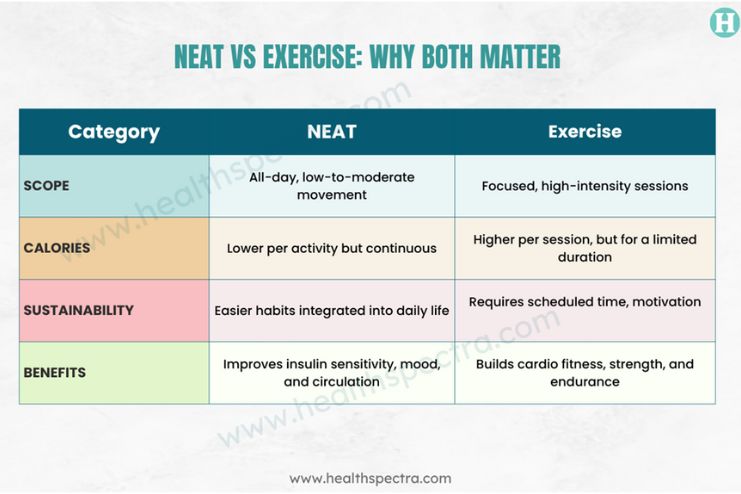 For individuals with active lives, sitting jobs, or limited mobility, NEAT offers a simple means of remaining active. You don’t have to take an hour out for the gym; NEAT is working in the background, keeping your metabolism running with little effort.
NEAT Activities That Burn More CaloriesThan You Think
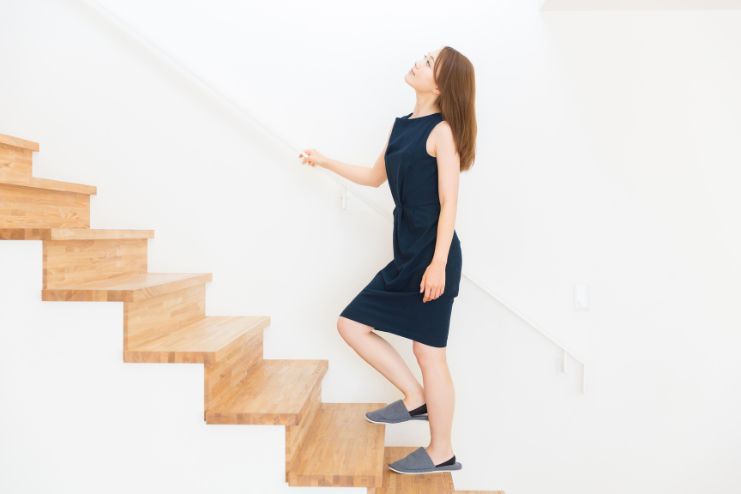
NEAT isn’t just limited to chores. It encompasses a broad array of daily activities that go unrecognized as minor but add up to a huge calorie burn. Let’s examine some examples of everyday activities, along with estimates of how many calories they can burn:
- Walking While on the Phone (150–200 kcal/hour): Take every work call to work as a light walk. Even for a 15-minute call, you burn approximately 50–60 calories.
- Standing Desks and Desk Cycles (100–150 kcal/hour): Changing to a standing desk or using a mini pedal machine can boost NEAT substantially. By alternating standing during half your workday, you might burn 300–500 additional calories.
- Housework (200–300 kcal/hour): Vacuuming, mopping, folding laundry, or restocking shelves all qualify. A one-hour good old-fashioned deep cleaning can burn up to 200 calories per hour.
- Gardening and Yard Work (250–350 kcal/hour): Raking leaves, planting flowers, or weeding are all calorie-burning activities that help you burn up to 350 calories per hour.
- Cooking and Food Prep (100–150 kcal/hour): Making a meal from scratch, especially when it involves standing, chopping, stirring, and washing up, can add up to a surprising amount of calorie burn.
- Playing with Children or Animals (200–250 kcal/hour): Running around the backyard or playing tug-of-war is usually strenuous and fun. Not just fun, but it helps you burn up to 250 calories per hour.
- Going Shopping (150–250 kcal/hour): Retail therapy not just soothes your mind, but is a great calorie burner as well. Getting around the mall, using a cart, bagging groceries, every bit helps burn at least 150-250 calories per hour.
- Walking Upstairs (7–10 kcal/min): Walking up the stairs is an excellent method of increasing your heart rate and NEAT without much time or effort.
These scenarios illustrate that NEAT is in plain sight. By paying attention to where movement occurs in your daily routine, you can optimize calorie burn without having to make too many lifestyle changes.
Read More: Wearable Tech: Monitoring Performance and Recovery in Real-Time
Science-Backed Benefits of Increasing NEAT
NEAT is not only about weight management—it has far-reaching benefits for your general health. Here’s what the science says:
- Helps with Weight Management and Fat Loss:
NEAT bridges the energy intake and energy expenditure gap. Research indicates that individuals with high levels of NEAT are generally leaner, regardless of diet and exercise, compared to others. In one Mayo Clinic study, it was discovered that those who naturally fidget or move more during the day expend an extra 2,000 calories per day compared to those who tend to be sedentary.
- Improves Insulin Sensitivity and Blood Sugar Control:
Regular movement, no matter how small, regulates blood glucose. Breaking up prolonged periods of sitting with even light walking or standing has been proven to enhance postprandial glucose (after-meal blood sugar) and insulin sensitivity. This is particularly significant for individuals with type 2 diabetes or prediabetes.
- Reduces Risk of Cardiovascular Disease:
NEAT increases blood flow, aids in the regulation of blood pressure, and supports healthy cholesterol levels. A study published in Diabetologia discovered that extended periods of sitting were linked to the risk of cardiovascular disease, even among individuals who exercised regularly. Frequent NEAT breaks significantly reduced that risk.
- Helps with Mental Health and Mood:
Even small movements activate blood flow to the brain, releasing endorphins that improve mood and concentration. Individuals who are more active throughout the day have lower depression and anxiety rates, improved concentration, and better energy.
- Protects Muscle and Joint Health:
NEAT activities, particularly standing and walking, support muscle tone, joint lubrication, and functional mobility. This is essential for older adults who are attempting to stay independent and not frail.
- Boosts Overall Metabolic Resilience:
NEAT makes your body more metabolically flexible, capable of flipping between burning carbs and fats effectively. It maintains a boosted metabolism even at rest and can help avoid metabolic declines that typically accompany weight loss.
Tips to Boost Your NEAT Throughout the Day
Here are functional strategies to improve NEAT without changing your life:
- Set a timer to get up and move every 30–60 minutes.
- Have walking meetings or walk while on a phone call.
- Use a standing desk or balance board.
- Squat, stretch, or calf raise while watching TV.
- Walk or cycle for quick errands.
- Use the stairs rather than the elevator.
- Park in a spot farther from your destination on purpose.
- Use a pedometer or fitness tracker to get more steps.
- Break up chores into small intervals throughout the day.
- Play with kids or pets more actively.
Read More: Outdoor Cardio Gear: Essential Accessories for Running and Cycling
Who Can Benefit Most From NEAT?
- Desk workers or remote professionals. They can transform a sedentary day into an active one by taking purposeful breaks and changing postures.
- Individuals who don’t like intense workouts. NEAT provides a low-key alternative to burning extra calories without the pressure of competence.
- People recovering from illness or injury. Light, NEAT-based activity can help recovery and avoid deconditioning.
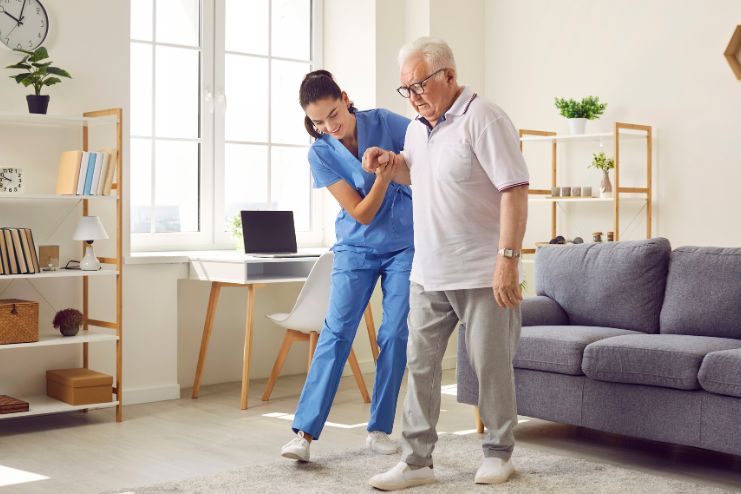
- In older adults, NEAT will preserve mobility, balance, and metabolic function.
- For anyone attempting to sustain weight loss, NEAT maintains their active metabolism and avoids weight regain.
Conclusion
NEAT may appear to be minor in comparison to a 45-minute exercise session, but its collective strength is anything but diminutive. It’s the quiet, persistent, background fuel your body engages to remain on the move, metabolically active, and robust.
If you’re looking for a health-enhancing, calorie-burning, mood-boosting way to move more, without logging extra hours at the gym, start with NEAT. With a few easy changes, you can make your whole day a calorie-burning, health-giving habit.
No need for the gym. No need for equipment. Just move more—naturally.
That’s the NEAT trick.
References
- https://pmc.ncbi.nlm.nih.gov/articles/PMC11427223
- https://m.economictimes.com/news/web-stories/8-everyday-activities-that-burn-more-calories-than-you-think/slideshow/121706040.cms
- https://www.webmd.com/parenting/features/calorie-burners
- https://timesofindia.indiatimes.com/life-style/health-fitness/fitness/walking-vs-household-chores-which-exercise-burns-more-calories/articleshow/117547780.cms
- https://www.goodhousekeeping.com/health/fitness/a47008/calories-burned-from-walking
- https://www.restaurantindia.in/article/the-industry-should-focus-on-wine-education-says-sonal-holland.13289?page=67
- https://timesofindia.indiatimes.com/life-style/health-fitness/health-news/does-standing-burn-more-calories-than-sitting/photostory/106510428.cms
- https://pmc.ncbi.nlm.nih.gov/articles/PMC6058072
In this Article