














New year, new fitness resolutions! We kick off the ‘new year, new you’ trend, but by February 15th, that gym membership card is already gathering dust. Sound familiar? Studies show that over 80% of New Year’s resolutions fail by February, following a predictable cycle: enthusiasm, burnout, shame, and eventual stopping.
The problem isn’t you. It’s the approach. Traditional fitness programs focus on extremes: intense workouts, strict diets, and rigid schedules that ignore the mental and emotional aspects of exercise. This leads to frustration, demotivation, and ultimately, giving up.
But there’s good news: a science-backed approach that actually works long-term. By focusing on sustainable principles, you can create a routine that fits into your life, supports your mental health, and prevents burnout. The benefits (improved mood, reduced stress, better sleep, and increased energy) create a positive feedback loop that keeps you going.
Your Starting Point: A Quick Self-Assessment
Before diving in, take a moment to assess three key areas:
- Your fitness level: Are you a total beginner, returning after a break, or irregular in your routine? Understanding where you are allows you to set realistic targets and avoid burnout.
- Time availability: Do you have 20-30 minutes or 45-60 minutes a day for exercise? Clarifying this helps create a fitting regimen.
- Your underlying “why”: Is health, energy, mental clarity, longevity, or something else that’s driving you? Being certain of your underlying reasons makes it simpler to stay compliant even when motivation waxes and wanes.
What Makes a Fitness Routine Sustainable?
Sustainable fitness means having a routine that can last months and years, not days and weeks. It’s more about developing habits and identity, rather than goals. An adaptive routine changes as life does and prioritizes process over outcome, staying consistent without losing fun.
Think of it this way: your workout should fit your life, not the other way around. Consistency and flexibility are the secrets to longevity in fitness.
Why Most Fitness Programs Fail (And How to Avoid It)

Research reveals several common pitfalls that derail even the most determined people:
Starting too intense: Jumping into 2-hour training sessions creates burnout by weeks 2-3. Most beginners underestimate recovery needs, which increases fatigue and lowers motivation.
All-or-nothing thinking: Believing one missed session equals total failure. This mentality breeds guilt, reduces self-efficacy, and significantly increases dropout rates. Research shows all-or-nothing thinkers are far more likely to quit in the first month.
Ignoring enjoyment: When you hate your routine, building a lasting habit becomes nearly impossible. People who enjoy their workouts are 3× more likely to remain committed long-term.
Skipping recovery: Overtraining syndrome reduces motivation and increases injury risk. Without adequate rest, performance suffers, and mental burnout follows.
Shame-based motivation: Exercising as punishment creates a negative loop. Studies show shame-based motivation accounts for 70% of first-time exercise dropout, while self-compassion increases adherence by 85% at six months.
Comparison syndrome: Comparing yourself to others—especially on social media, where results are often exaggerated—kills joy and creates feelings of inadequacy.
Perfectionism: Waiting for the “perfect” time or conditions only leads to procrastination. Imperfect action beats perfect planning every time.
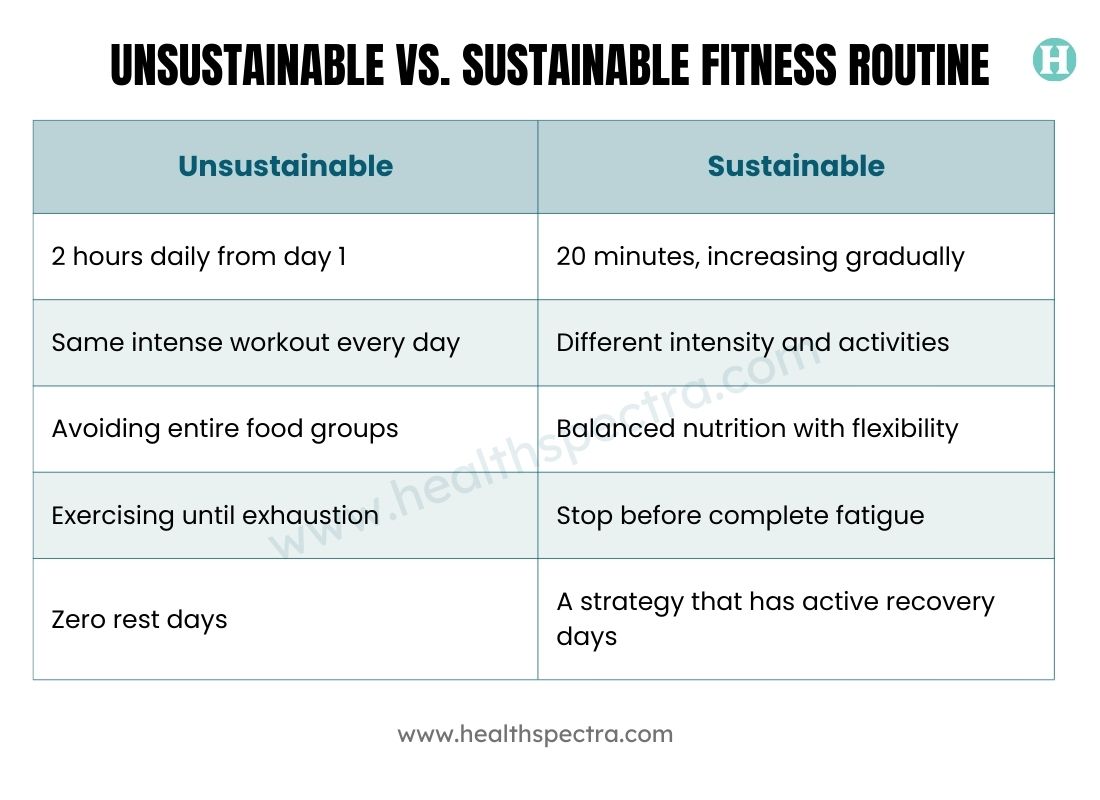
The solution? Shift your mindset and approach using proven principles. Differences between sustainable vs. unsustainable fitness routines:
The 5 Pillars of Sustainable Fitness
1. Progressive Overload
Gradually increase intensity, volume, or complexity to achieve long-term gains without injury. Dramatic jumps lead to burnout. Instead, increase workout intensity by just 5-10% each week. Add a few reps, slightly more weight, or shorten rest periods.
Result: Consistent progress, increased confidence, and reduced risk of giving up.
2. The Enjoyment Factor
Enjoyment is linked to adherence. People who have fun during their workouts are 3× more likely to remain committed in the long run.
Try different activities: strength training, cardio, group classes, yoga, dance, or sports. Experiment until you find what you genuinely like. Exercise should feel like a fun part of life, not a chore to stress about.
Result: You’ll stick with it naturally rather than forcing yourself through willpower alone.
3. Flexibility & Adaptation
Life happens. Your plan must accommodate the unexpected without derailing everything. Use the 80/20 rule: aim for 80% compliance and leave slack for life’s curveballs. Missing a session isn’t failure—it’s normal.
Set tiered workout goals:
- Primary: 45-minute strength or cardio session
- Backup: 20-minute bodyweight workout
- Minimal: 10-minute walk, stretching, or yoga
Even 10 minutes counts toward your weekly goals and maintains the habit.
Result: Reduced stress, sustained motivation, and actual consistency.
4. Strategic Recovery
Recovery is where muscles grow and adapt, not during training. Include 1-3 rest days weekly with active recovery options like yoga or light walking. Prioritize 7-9 hours of sleep and balanced nutrition to support your efforts.
Result: Stay injury-free, reduce fatigue, and improve long-term performance.
5. Accountability & Social Support
Those exercising with accountability are significantly more consistent. Find a workout buddy, join classes, or participate in online fitness communities. Track progress with apps or a simple journal to create tangible accountability.
Result: Social reinforcement strengthens habit formation, adds enjoyment, and provides motivation when energy is low.
Read More: How Many Steps Do You Really Need? A Science-Based Guide to Walking for Fitness
Building Your Personalized Schedule

Creating a routine that’s appropriate to your fitness level, preferences, and schedule is vital. Making a customized or personalized routine helps in consistency without burnout.
Beginner Schedule (3×/week, 20–25 min)
- Monday: Aim for a 20-minute brisk walk to start cardiovascular fitness, improve mood, and increase metabolism.
- Wednesday: Opt for a 15-minute bodyweight strength and 5-minute stretch to develop basic strength and flexibility.
- Friday: 20 minutes of low-intensity cardio to develop strength without unnecessary fatigue.
Intermediate Schedule (4×/week, 30–40 min)
- Monday: Engage in upper body strength training, focusing on muscle-building compound exercises and posture correction.
- Tuesday: A 30-minute cardio can be a good way to support cardiac health and energy levels.
- Thursday: Do some lower-body strength training to improve mobility, balance, and strength.
- Saturday: Take up your favorite fun activity (cycling, dancing, or swimming) to sustain interest and motivation.
- Rest days: Active rest, like walking, stretching, or yoga, to allow muscles and mind.
Where to Work Out
- Home: At home, there’s limited equipment like dumbbells or resistance bands; that’s when bodyweight workouts come in handy for maintaining flexibility and convenience.
- Gym: Some social interaction and selecting the right gym equipment can make all the difference.
- Hybrid: You can alternate between gym and home workouts for ultimate flexibility, reducing the risk of boredom or burnout.
Read More: Your Guide to Beginner Strength Training: How to Build a Sustainable Fitness Routine
Overcoming the 7 Most Common Barriers

Barrier #1: “I Don’t Have Time”
Reality: You need only 20-30 minutes per session, 3 times per week (about 1 hour total weekly).
Solutions:
- Break workouts into 10-minute chunks, 3 times daily
- Wake up 30 minutes earlier for a quick routine
- Use lunch breaks for a walk or gym circuit
- Add activity to daily life: bike to work, take stairs, play actively with kids
- Stretch during TV time
Research shows “weekend warriors” who exercise 1-2 times per week gain similar health benefits as daily exercisers.
Barrier #2: “I’m Too Tired”
The paradox: Exercise actually boosts energy levels.
Solutions:
- Start with just 10 minutes. Most people feel energized once they begin
- Choose low-intensity sessions on high-fatigue days
- Move workouts to morning before energy dips
- Prioritize sleep and investigate persistent tiredness with a healthcare provider
Regular exercise increases mitochondrial density, improving your cells’ ability to produce energy efficiently.
Barrier #3: “I’m Too Out of Shape / It’s Too Late”
Reality: The best time to start was yesterday. The next best time is today.
Solutions:
- Start exactly where you are, without judgment
- Focus on consistency over intensity
- Celebrate small wins. Even a 5-minute walk is success
- Try age-appropriate or adapted exercises like chair workouts
Research proves significant fitness improvements happen at any age, even in adults in their 80s.
Barrier #4: “I Feel Judged at the Gym”
Reality: Other gym members are focused on themselves, not you.
As Dr Rhonda Cohen, a registered sport and exercise psychologist, explains: “A fear of being judged can lower our self-esteem and affect how we feel about ourselves.”
She adds, “We may feel that others are judging our lack of fitness or even our old sports clothes, and this can make us feel unsure about ourselves and question our behavior,” she adds. “It can also prevent us from adhering to an exercise program as we lose our confidence in being able to present ourselves in front of others.”
Solutions:
- Start at home to build confidence
- Work with a trainer for a few sessions to master form
- Take beginner-friendly classes or visit during off-peak hours
- Bring a friend for support
- Remember: everyone started somewhere
Barrier #5: “It’s Too Expensive”
Reality: Fitness doesn’t require a big budget.
Solutions:
- Use outdoor exercise: walking, jogging, park workouts
- Access free online workout videos or trial periods
- Try bodyweight exercises, community center classes, or free apps
- Check out library fitness DVDs
Barrier #6: “I Have an Injury or Condition”
Reality: Consult a healthcare provider first, but movement is often still possible.
Solutions:
- Work with a physical therapist for guidance
- Choose low-impact activities like swimming or water aerobics
- Target unaffected muscle groups
- Try chair exercises, seated strength training, gentle yoga, or stretching
- Stay within pain-free ranges. Proper exercise can help reduce chronic pain
Barrier #7: “Weather or Seasonal Changes”
Reality: You can’t control weather, but you can adapt.
Solutions:
- Keep indoor options ready: home workouts, mall walking
- Explore seasonal alternatives like indoor climbing or skating
- Subscribe to online classes or temporary gym memberships
- Have a backup plan for inclement weather days
Read More: How to Break Through a Fitness Plateau: 7 Strategies That Actually Work
Monitoring Progress & Accountability

Monitoring your journey keeps you motivated and helps you see improvements that might not be immediately visible.
What to Track
Performance: Sets, reps, distance, or weights to monitor strength and endurance gains.
Wellness: Mood, energy levels, and sleep quality to gauge overall progress.
Body Metrics: Measurements and progress photos for visual feedback (optional).
Health Markers: Heart rate, blood pressure, or lab work to measure physiological impact.
Tools That Help
Apps: MyFitnessPal, Strava, or similar platforms provide structure and feedback.
Wearables: Fitbit, Apple Watch, or other devices offer real-time data and motivation.
Analog methods: Simple calendars or journals work just as well. Choose what you’ll actually use.
Accountability Systems
- Exercise with a buddy or join group classes for built-in support
- Review goals weekly or monthly to stay on track and adjust as needed
- Share your commitment with friends or family
- Join online fitness communities for encouragement and advice
Conclusion & Action Plan
Remember, long-term fitness is based on habits, mental strength, kindness to oneself, and enjoyment instead of pure drive.
Take Action This Week:
- Select 1-2 activities you enjoy and can commit to
- Schedule three sessions and tell someone to create accountability
- Complete at least two sessions and note how you feel afterward
First Month Goals:
- Focus on habit formation over performance metrics
- Track improvements in mood, energy, and overall well-being
- Remember that consistency matters more than perfection
- Accept that progress isn’t always linear
Patience, reflection, and willingness to adapt will lead you to a fulfilling lifestyle that serves both a fit body and a happy mind.
Frequently Asked Questions
Q: How long does it take to see results from exercising?
Results vary by individual and exercise type:
- Energy/mood improvement: 1-2 weeks
- Strength gains: 3-4 weeks
- Visible physical changes: 8-12 weeks
- Habit formation: 66 days on average
Remember: internal changes happen before external ones.
Q: Is working out 3 days a week enough?
Yes. Three 30-minute workouts provide significant health benefits and meet WHO’s 150-minute weekly recommendation. Consistency matters more than frequency.
Q: What if I miss a week of exercise?
Missing workouts is completely normal. Don’t try to “make up” missed sessions. Just resume your routine. Missing 2 weeks isn’t failure; quitting is.
Q: What’s the best time of day to exercise?
The best time is when you’ll actually do it. Morning workouts have better adherence rates, afternoon (3-6 PM) offers peak physical performance, and evening provides stress relief. Choose based on your energy patterns and schedule.
Q: Can I build muscle while losing weight?
Yes, especially for beginners. This requires adequate protein (0.7-1g per pound of body weight), strength training 2-3 times weekly, and a modest calorie deficit. More advanced exercisers may need to focus on one goal at a time.
References
- Johnson, H. (2025, September 27). More protein for older adults. Discover Strength. discoverstrength.com
- Sayer, A. M., & Armitage, M. (2025, September 11). How many rest days should you take each week for workout recovery? GoodRx. GoodRx
- Davis, A. (2017, July 11). Is there a best time of day to exercise? CNN. fitness1556.rssing.com
- Insightful.io. (n.d.). The 80/20 rule. S’more Fitness & Wellness, LLC
- Medium. (n.d.). Why 80% of people quit their New Year’s resolutions: New research.
In this Article