














Feeling intimidated by gym weights or unsure whether you’ll “get bulky”? You’re not alone.
Most beginners walk into the weight section feeling like everyone else knows exactly what they’re doing, but here’s the truth: everyone starts clueless, and that’s perfectly fine.
Strength training isn’t about chasing size or becoming a bodybuilder. It’s about learning to move better, build real-world strength, and create a body that supports you for decades. That might mean lifting groceries without strain, standing taller with better posture, or simply aging with confidence.
This guide breaks it all down for you. What beginner strength training actually is, why it’s the most powerful investment you can make in your long-term health, and how to start without fear or burnout.
You’ll learn what to do on day one, how to progress safely, and how to stay consistent even when motivation dips.
You don’t need fancy equipment or endless hours in the gym, just a smart plan, a bit of patience, and a willingness to show up. By the end, you’ll have a clear, actionable roadmap to start lifting with confidence and build a body that feels as strong as it looks.
What is Beginner Strength Training?

Strength training simply means working your muscles against resistance, whether that’s your bodyweight, dumbbells, resistance bands, or machines, so they grow stronger over time. For most beginners, the first changes are internal: stronger bones, a faster metabolism, better posture, and easier everyday movement.
What makes it powerful is its accessibility; anyone can start, at any age or fitness level, with just a few basic movements. Think of it as the foundation of lifelong fitness, not a passing trend. It builds the kind of functional strength that protects your joints, improves balance, and keeps you active and independent as you age.
Read More: Monday Motivation: Full-Body Strength Training Routine
Essential Benefits of Strength Training for Beginners
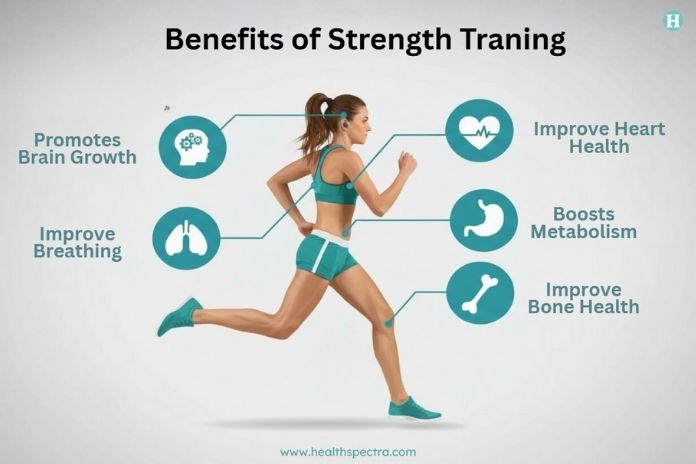
Strength training is more than a way to “get toned”; it’s one of the most powerful tools for lifelong health. Studies show regular resistance training can increase bone density by up to 8% in just a year, significantly reducing osteoporosis risk. It also boosts resting metabolism by roughly 7%, meaning you burn more calories even at rest, making weight management easier without crash diets.
Beyond the physical, strength training improves functional fitness; you’ll notice that climbing stairs, lifting bags, or even maintaining good posture feels smoother. Mentally, it’s a proven mood lifter: research links consistent resistance training to lower anxiety, sharper focus, and higher confidence.
Over time, these benefits compound. You’re not just building muscle; you’re building resilience, balance, and a body that supports you for life. With these powerful benefits in mind, you’re probably wondering how often you actually need to train to see results.
How Often Should Beginners Do Strength Training?

For beginners, the sweet spot is 2 to 3 sessions of strength training per week, focusing on full-body workouts each time. According to the American College of Sports Medicine (ACSM), novices should train at least twice weekly to build strength safely and effectively.
Here’s the simple logic: When you work your muscles, stress causes tiny micro-tears. Recovery happens during rest, letting your muscles rebuild stronger.
For most beginners, allowing 48-72 hours of recovery between sessions ensures you’re actually gaining strength rather than accumulating fatigue.
That said, you don’t need to jump straight into 3 sessions a week. Starting with 1 session per week is totally valid if that’s what your schedule allows. The key is consistency and quality over quantity. As your body adapts and you get stronger, you can progress toward 2 or 3 sessions.
In terms of workout structure, early on, full-body routines (working legs, back, chest, core in one session) make more sense than split routines (upper body one day, lower body another). Splits can come later when you’re more comfortable and experienced.
Weekly scheduling example:
- Option A (2-day): Monday (full body), Thursday (full body).
- Option B (3-day): Monday, Wednesday, Friday (each full body).
- If starting with 1: Wednesday only, then gradually add another day once you feel comfortable.
What this really means: you don’t need to train every day. Less = more at first. Let your body adapt, build the habit, and avoid burnout. Before scheduling your first session, let’s determine what equipment, if any, you’ll need to get started.
The 7 Best Beginner Strength Training Exercises
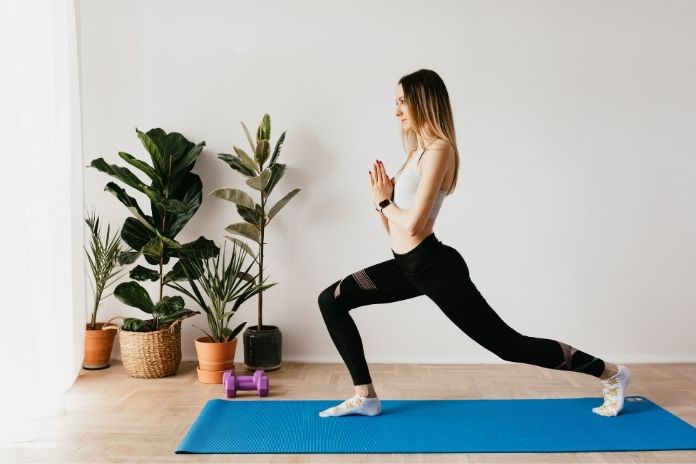
If you’re new to strength training, start simple. These seven moves cover every major muscle group and teach your body how to move with control and power. You don’t need fancy equipment, just focus on form and consistency.
Each exercise below builds strength, coordination, and body awareness while reducing your risk of injury. Think of these as your “starter toolkit”; once you master them, you’ll have the foundation for every other exercise that comes later.
For Lower Body
- Bodyweight Squats
- Why it’s essential: Builds strength in legs and core while teaching proper movement mechanics.
- How to do it: Stand with feet shoulder-width apart, chest tall. Push hips back as if sitting into a chair, keeping knees over toes. Lower until thighs are parallel, then push through heels to stand.
- Avoid: Rounding your back or letting your knees cave inward.
- Lunges
Targets quads, glutes, and balance.
- How to do it: Step forward with one leg, lowering both knees to 90°. Keep your torso upright and front knee above your ankle. Push through the front heel to return.
- Variations: Forward, reverse, or walking lunges.
- Modify: Hold a wall or chair for balance support.
For Upper Body
- Push-Ups
Engages chest, shoulders, triceps, and core.
- Progression: Start with wall push-ups, knee push-ups, and full push-ups.
- Form tip: Keep your body in a straight line, lower your chest (not your hips) toward the floor, and push back evenly.
- Avoid: Flaring elbows or collapsing your lower back.
- Dumbbell Rows
Strengthens the upper back and improves posture.
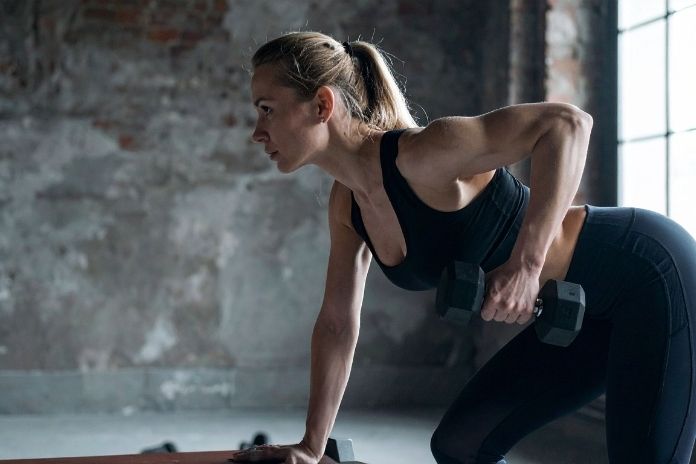
- How to do it: Hold a dumbbell in one hand, hinge slightly forward, and pull the weight toward your ribcage. Keep your back flat and elbow close.
- Tip: Choose a weight you can lift for 10–12 reps with good control.
For Full Body
- Deadlifts (Bodyweight or Light Dumbbell)
Teaches the hip hinge, the foundation for safe lifting.
- How to do it: Stand tall, hinge your hips back with a flat spine, and lower your weight (or hands) toward mid-shin. Squeeze glutes to stand tall.
- Avoid: Rounding your lower back. Start light until the movement feels natural.
- Planks
Core stability is essential.
Start with 20 seconds and build up to 60+. Keep elbows under shoulders, body straight, and abs tight.
Variations: Side planks or high planks for progression.
- Glute Bridges
Strengthens glutes and core, easy on joints.
- How to do it: Lie on your back, knees bent, feet hip-width apart. Press through heels to lift hips, squeeze glutes, and lower slowly.
- Progression: Add a band around the knees or place a dumbbell on your hips for extra resistance.
You’ve learned the exercises, now let’s put them together into your first structured workout program.
Sample Beginner Strength Training Workout Plan
Starting out is easiest when you have a plan you can follow without overthinking. This simple 4-week full-body program builds strength safely while teaching proper form. You’ll train twice a week, rest in between, and focus on consistency, not perfection.
Week 1–4 Full-Body Routine (2x per week)
Warm-Up (5–10 minutes): Light cardio (brisk walk, jump rope, or marching in place) + dynamic stretches (arm circles, hip rotations, bodyweight squats).
Workout Circuit – 3 Sets of 8–10 Reps Each
- Bodyweight Squats
- Push-Ups (any variation)
- Dumbbell Rows (one arm at a time)
- Lunges (alternating legs)
- Glute Bridges
- Plank (hold 20–40 seconds)
Rest: 60–90 seconds between sets or exercises.
Cool-Down: 5 minutes of light stretching, focus on hamstrings, chest, shoulders, and hips.
This structure hits every major muscle group twice weekly, perfect for beginners following ACSM’s recommendation of at least 2 strength sessions per week for muscle and bone health.
How to Progress Your Workouts
Progressive overload is the key: your body adapts only when challenged a bit more over time.
- Add reps: If you can easily do 10 reps with good form, aim for 12 next session.
- Add weight: Once you hit 12 reps comfortably for all sets, increase the weight slightly.
- Add a day: After 4–6 weeks, add a 3rd weekly session if recovery feels good.
- Track progress: Note reps, weights, and how you feel after each workout. It helps you see progress clearly and stay motivated.
As you begin following this plan, watch out for these common mistakes that can derail progress or cause injury.
Read More: How to Structure Your Strength Training Program for Optimal Results
Beginner Strength Training Equipment: What You Need
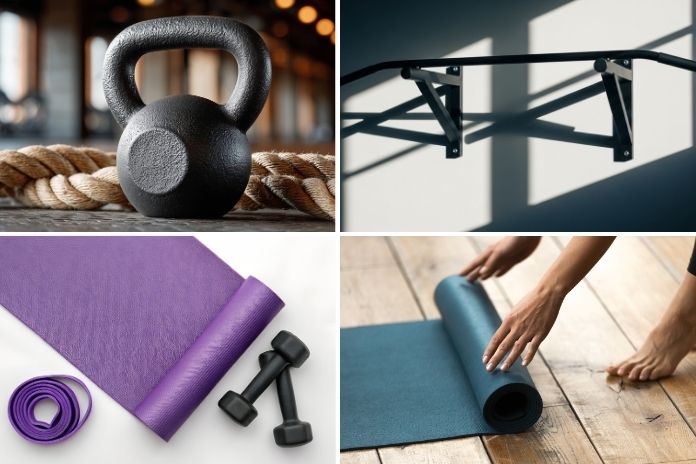
You don’t need a packed gym or expensive machines to start building strength. The truth is, your own body is enough to get going, and most beginners make great progress with minimal or even zero equipment. As you grow stronger, a few simple tools can make workouts more challenging and versatile without breaking the bank.
Whether you plan to train at home or in a gym, this guide shows you exactly what you need (and what you can skip) to build an effective setup that fits your goals and comfort level.
Starting with Bodyweight (No Equipment)
Bodyweight exercises can be done anywhere, your bedroom, living room, or park bench, and they bring serious benefits. For example, studies show bodyweight training improves muscle endurance, power, and fitness in untrained individuals.
“Don’t underestimate the power of moving and lifting your body weight against the force of gravity and resistance,” says Robert Correia, a physical therapist assistant with Harvard-affiliated Spaulding Rehabilitation Hospital. “You can get an all-around workout by using only your body, and the results are often comparable to using weights and workout machines.”
Start with moves like squats, push-ups, lunges, and planks. As you get stronger, you can make them harder: change the angle (inclined push-up to regular), slow the movement (take 3-4 seconds to lower), or increase reps or sets. Only when you’ve outgrown the challenge should you consider adding equipment.
Essential Equipment for Home Training
Once you’re ready to level up, these are smart additions for a home setup:
- Fit Simplify Resistance Loop Bands: A highly rated loop-band set on Amazon.com, great for bodyweight + resistance band exercises at home.
- Heavy Resistance Bands Set for Working Out 300lb: A tube/band set that offers a wider resistance range, useful for strengthening and progression.
- TheFitLife Resistance Bands: Another band kit on Amazon U.S., designed for American bodies, includes different resistance levels and travel-friendly gear.
- LifePro Adjustable Dumbbells Set 5‑25 lb Pair: A smaller adjustable dumbbell variant, good if you’re just starting and don’t need very heavy weights yet.
- Manduka PRO Yoga Mat: A premium yoga mat with thousands of reviews, excellent durability, high-density cushioning, and professional-level grip built for serious home practice.
- AmazonBasics Cast Iron Kettlebell: Strong cast-iron build, and good weight options, great for foundational kettlebell work at home.
- Ally Peaks Pull-Up Bar for Doorway: Heavy-duty steel frame, rated for up to 440 lb, with multi-grip positions for diverse upper-body workouts.
Read More: Top 10 Essential Strength Training Equipment for Home Workouts
What to Expect at the Gym
If you join a gym, you’ll encounter two broad equipment zones: free weights and machines.
- Free weights: dumbbells, barbells, kettlebells give you full-body and multi-joint movement.
- Machines: guided movements, easier for beginners to keep form and control.
Which should you pick? For now: start with machines and basic free weights under trainer supervision so you nail form. As you get confident, free weights give you more flexibility and functional carry-over into daily life.
The goal: don’t feel intimidated. The equipment is just a tool; your consistency and technique matter more.
What this really means is: you can begin immediately with no equipment, build confidence, then gradually invest in one or two pieces as you progress. It’s about scaling you, not the gear.
Now that you know what equipment you need (or don’t need), let’s learn the fundamental exercises that form the foundation of any strength program.
Common Beginner Strength Training Mistakes to Avoid
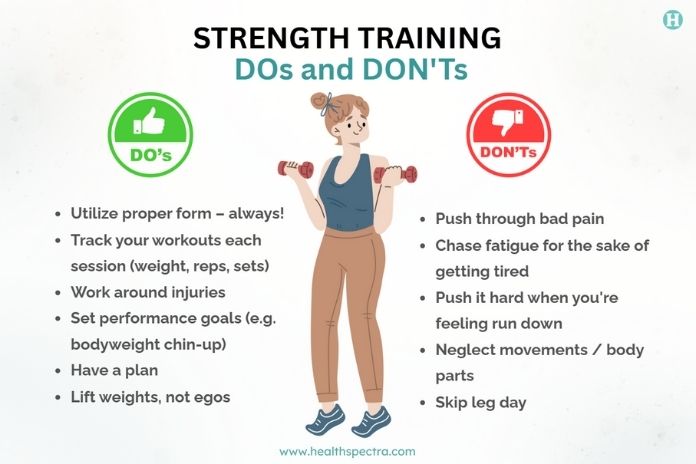
Everyone makes mistakes when starting out. The goal isn’t perfection, it’s awareness. Catching these early keeps you injury-free, consistent, and progressing faster. Here are the most common beginner pitfalls and how to fix them:
- Starting with too much weight – Lifting heavy too soon strains joints and increases injury risk. Start light, focus on form, then gradually increase weight.
- Skipping warm-ups and cool-downs – Cold muscles are stiff and prone to tears. Spend 5–10 minutes warming up and stretching afterward to recover better.
- Poor form – Prioritizing weight over technique leads to bad habits and potential injury. Master form before adding resistance.
- Not allowing recovery – Muscles grow when resting, not training. Allow 48–72 hours between full-body sessions.
- Neglecting nutrition and hydration – Your body needs fuel and fluids to repair muscle. Eat protein-rich meals and drink water consistently.
- Inconsistent schedule – Sporadic training resets progress. Pick two consistent days each week and treat them as non-negotiable.
- Comparing progress to others – Everyone’s body adapts differently. Track your own growth instead of competing with others.
“A big part of avoiding weightlifting injuries is about letting go of the ego,” says Dr. David Braunreiter, a sports medicine specialist at Houston Methodist. “It’s also important to know what proper form looks like and that the goal should always be to perform to a level of fatigue, never pain.”
By avoiding these pitfalls and staying consistent, here’s the realistic timeline for when you’ll start seeing and feeling results.
When Will You See Results from Beginner Strength Training?
Most beginners start feeling changes before they see them, and that’s a good thing. Within 2–4 weeks, your nervous system adapts, helping you lift more efficiently and with better control. This is known as “newbie gains”, rapid early progress as your brain and muscles learn to work together.
By 6–8 weeks, you may notice visible muscle definition, better posture, and firmer tone, especially if your nutrition and sleep are on point. Around 8–12 weeks, real body composition changes kick in: increased lean muscle, reduced fat, and improved energy throughout the day.
Results vary depending on factors like consistency, protein intake, recovery, and overall stress. Studies show beginners can increase strength by 20–40% in the first two months of consistent training.
The key? Stay patient and consistent. The early weeks build your foundation; what follows is lasting transformation. Understanding these timelines helps you see strength training not as a quick fix, but as a sustainable pillar of overall wellness.
Building Strength Training into Your Sustainable Fitness Routine
The best fitness routine isn’t about going all in; it’s about showing up consistently. A balanced week might include 2–3 days of strength training and 2–3 days of cardio, with one rest or active recovery day. Scheduling workouts at the same time each week helps build rhythm and accountability.
Pair your training with supportive habits: adequate protein intake, hydration, and 7–9 hours of sleep to enhance recovery and muscle growth. Find ways to make it enjoyable, alternate between workouts you love, lift with a friend, or join a community for shared motivation. Celebrate small wins like an extra rep or better form; these keep you going when progress feels slow.
What this really means is that sustainability comes from consistency and enjoyment, not perfection. Understanding this turns strength training from a phase into a lifelong habit.
Conclusion
Here’s the thing: strength training doesn’t need to be complicated. Start simple, focus on proper form, and stay consistent. The results come from steady effort, not shortcuts. Whether you’re lifting a dumbbell or using your body weight, every rep builds strength, confidence, and discipline.
Don’t wait for the “perfect time.” Start with Week 1 of your workout plan today and build from there. What matters most is showing up and trusting the process. You’ve got everything you need to begin; stronger days are ahead, and they start with your very first workout.
FAQ: Beginner Strength Training
How should a beginner start strength training?
Start with 2 sessions per week using bodyweight exercises like squats and push-ups. Focus on learning proper form before adding weights. After 4–6 weeks, you can progress to light dumbbells or resistance bands as your strength improves.
What is the best beginner strength training workout?
A full-body routine works best. Focus on compound exercises such as:
- Squats
- Push-ups
- Rows
- Lunges
- Planks
Do 2–3 sets of 8–10 reps for each move.
How many days a week should a beginner do strength training?
Begin with 2 non-consecutive days per week to allow recovery. Gradually increase to 3 days weekly after your first month. Always include at least one rest day between sessions.
Can you build muscle with beginner strength training?
Yes. Beginners often see “newbie gains”, rapid early progress. Expect around 0.5–2 pounds of muscle per month with consistent training and adequate protein intake.
Do I need a gym membership for strength training as a beginner?
Not at all. You can start at home using just bodyweight or resistance bands. A gym simply offers more equipment options once you’re ready to level up.
What should I eat before beginner strength training workouts?
Eat a balanced snack or meal with carbs and protein:
- 2–3 hours before: oatmeal with fruit or eggs on toast.
- 30–60 minutes before: banana with nut butter or Greek yogurt.
Stay hydrated throughout the day.
How long should a beginner strength training workout last?
Aim for 30–45 minutes total, including warm-up and cool-down. Focus on good form and controlled movements over long sessions. As your fitness improves, you can extend duration or intensity.
Is it normal to be sore after beginner strength training?
Yes, mild soreness (DOMS) is normal; it peaks 24–48 hours post-workout. It’s a sign your muscles are adapting. The soreness will lessen over time, but sharp or lingering pain isn’t normal. Rest or see a professional if it persists.
References
- https://www.verywellfit.com/complete-beginners-guide-to-strength-training-1229585
- https://www.healthdirect.gov.au/strength-training-for-beginners
- https://hydrow.com/blog/12-beginner-strength-training-exercises-to-add-to-your-workout-routine/
- https://www.health.harvard.edu/healthbeat/use-strength-training-to-help-ward-off-chronic-disease
- https://www.independent.co.uk/health-and-fitness/weight-training-workout-plan-strength-b2850849.html
- https://www.menshealth.com/fitness/a44929530/how-many-days-a-week-work-out/
- https://www.girlsgonestrong.com/blog/articles/strength-training-for-beginners-everything-you-need-to-know/
- https://www.health.com/fitness/how-many-days-work-out
- https://www.self.com/story/heres-what-a-perfect-week-of-working-out-looks-like
- https://www.jeraifitness.com/blog/beginners-guide-choosing-fitness-equipment
- https://hydrow.com/blog/your-guide-to-the-best-strength-training-equipment-for-home/
- https://www.runnersworld.com/uk/training/cross-training/a43155365/7-best-strength-moves/
- https://www.guardian.in/blogs/livewell/the-best-strength-training-exercises-for-beginners
- https://www.mayoclinic.org/healthy-lifestyle/fitness/in-depth/strength-training/art-20046670
- https://journals.lww.com/acsm-csmr/fulltext/2012/07000/resistance_training_is_medicine__effects_of.13.aspx
- https://pubmed.ncbi.nlm.nih.gov/19702936/
- https://www.paulogentil.com/pdf/
- https://pmc.ncbi.nlm.nih.gov/articles/PMC10630871/
- https://honehealth.com/edge/newbie-gains/
In this Article