











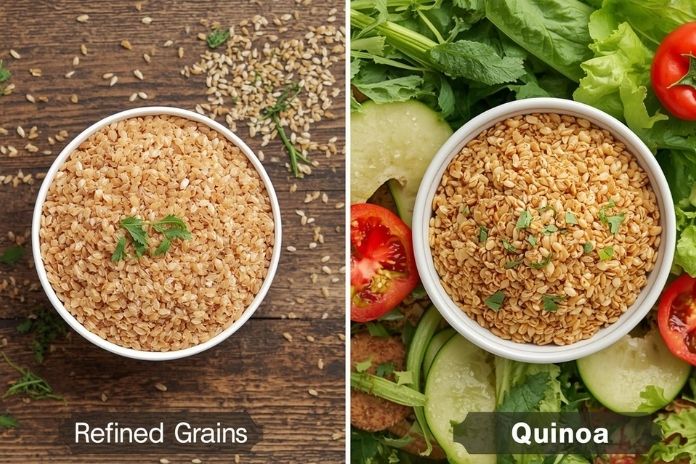
Most people eat grains without really thinking about it. Pasta, white rice, a slice of toast—they feel like basic foods, nothing special, just fuel. However, substituting quinoa for those processed grains involves more than just switching up the source of carbohydrates. They are subtly reducing a type of “hidden inflammation” that affects heart health over the long run.
There’s no sharp pain or obvious warning sign. Instead, it’s slow and quiet. Over time, it damages your artery walls, disrupts your cholesterol levels, and affects your blood vessels. Before you know it, this silent process becomes one of the hidden reasons behind heart disease.
Surprisingly, the grain you consume regularly might either support or hinder the process. This article explains what hidden inflammation is, why refined grains can worsen it, and how quinoa can serve as a potent anti-inflammatory substitute.
Read More: Quinoa vs. Couscous: Nutrition, Health Benefits, and Which One’s Better for You?
What “Hidden Inflammation” Means for Your Heart
Think of your arteries as a little, lingering brush fire. Not enough to give you noticeable effects. Not enough to be detected by a routine physical examination. Just enough to gradually erode the blood vessel’s inner lining, transforming the smooth artery walls into rough, sticky surfaces that allow cholesterol-rich plaques to form.
That is the silent, decades-long work of low-grade, chronic inflammation. This process eventually leads to atherosclerosis, the hardening and narrowing of arteries.
Consider the gradual formation of rust inside a pipe. Over time, the pipe weakens or clogs, but you don’t notice it every day. In your arteries, hidden inflammation functions similarly.
This technique is particularly risky because it is invisible. Even if blood inflammatory markers increase slightly, people may still feel quite well. Harm may have progressed by the time symptoms manifest.
Your body uses food for both information and fuel. Biochemical cues from each meal can either reduce inflammation or increase it. Consuming a lot of foods that cause the body to become inflamed over time may increase your risk of cardiovascular disease.
According to a Harvard research team’s study, which was published in the Journal of the American College of Cardiology on Nov. 10, 2020, those who consumed more foods that cause inflammation, such as processed and red meat, sugary drinks, and refined carbohydrates, had a 38% higher risk of developing cardiovascular disease than those who followed a diet that reduced chronic inflammation.
These spikes set off a series of events:
- Blood sugar levels spike.
- The body releases insulin to regulate blood sugar levels.
- Oxidative stress is experienced by cells.
The “Hidden Inflammation” Test—Refined Grains Under the Microscope
What Happens When Grains Are Refined
Three components are naturally present in whole grains:
Bran: The outermost layer rich in fiber.
Germ: The vitamin- and healthy-fat-rich center is called the germ.
Endosperm: The middle layer of starch is called endosperm.
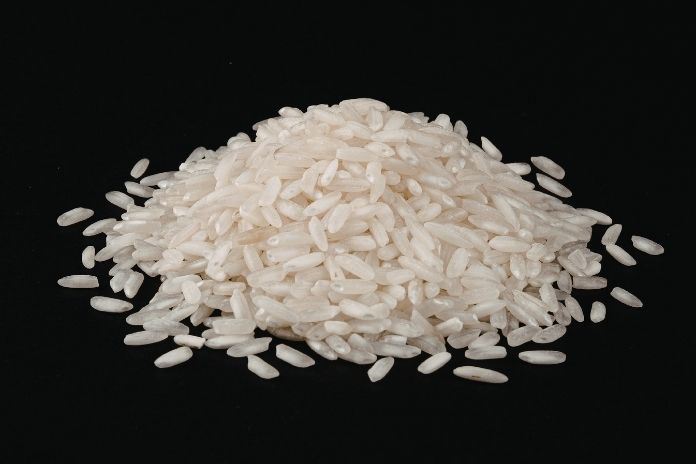
When one or more of the three essential components of grains, bran, germ, or endosperm, are absent, the grain is referred to as “refined grain.” For example, white rice and white flour qualify as refined grains because processing removes the bran and germ, leaving only the endosperm.
When manufacturers refine a grain, they strip away about 25% of its protein and at least 50% of its nutritional value, leaving it only a shadow of what it once was. Refined grains digest rapidly in the absence of minerals and fiber. They provide a quick spike of glucose into the bloodstream in place of consistent energy.
It’s similar to turning on a candle that burns slowly, then suddenly flares. The energy is there in a flash, yet it’s gone as swiftly.
How Refined Grains Trigger Heart Inflammation
White bread, pasta, sugary cereals, and processed snacks all fall under refined grains. Yeah, they’re quick and taste good, but eating them all the time just isn’t good for your heart.
Increases Your Blood Sugar and Diabetes Risk
Since they don’t have any fiber, your body digests them very fast. That spikes your blood sugar and bumps up your risk of diabetes.
Low Fiber, High Cholesterol
Soluble fiber, found in whole grains, lowers LDL (bad) cholesterol and maintains healthy arteries. Refined grains also push up your cholesterol and let plaque build up in your arteries, all because they’re missing that fiber.
Linked to Weight Gain
Why do people put on weight and end up with more belly fat? Refined grains don’t fill you up the way whole grains do. So, it’s easy to eat more than you actually need.
Eating more food piles on extra calories, and before you know it, those pounds start showing up mostly around your waist. That kind of weight gain goes hand-in-hand with bigger problems, like metabolic syndrome and heart disease.
Facilitates Inflammation and High Blood Pressure
Refined grains fire up inflammation in your body, and that’s a big problem. Inflammation drives heart disease, stiffens arteries, and raises your blood pressure. Foods like white bread, crackers, and chips aren’t just low in nutrients; they also pack in a lot of salt, which makes high blood pressure even worse.
Read More: Diabetes-Friendly Quinoa and Vegetable Stir-Fry: A Low-GI Delight
Everyday Sources to Watch
Most people are unaware of how many foods include refined grains.
Typical sources consist of the following:
- White rice
- White bread
- Ordinary pasta
- Baked products and pastries
- Sugary cereals for breakfast
- Snack snacks and crackers
Although these meals are familiar and convenient, repeated use can have unintended inflammatory effects.
Quinoa—The Anti-Inflammatory “Pseudocereal”
Why Quinoa Is Not Just a Grain Substitute
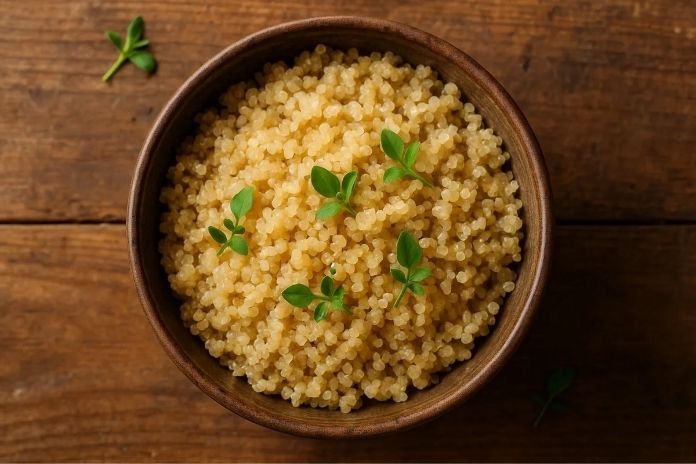
Quinoa is a member of the spinach, chard, and beet families. However, it is frequently served like a cereal grain and is generally thought of as a grain. Chenopodium, a green, leafy plant that produces many blooms, is the source of quinoa.
Quinoa seed is not a grain; rather, it is a pseudocereal. Plants known as pseudocereals produce seeds and fruits that resemble grains and serve the same purposes. Although not true grains, pseudocereals are generally gluten-free and are regarded as whole grains because they are high in protein, minerals, and vitamins.
The Science Behind Quinoa’s Heart Benefits
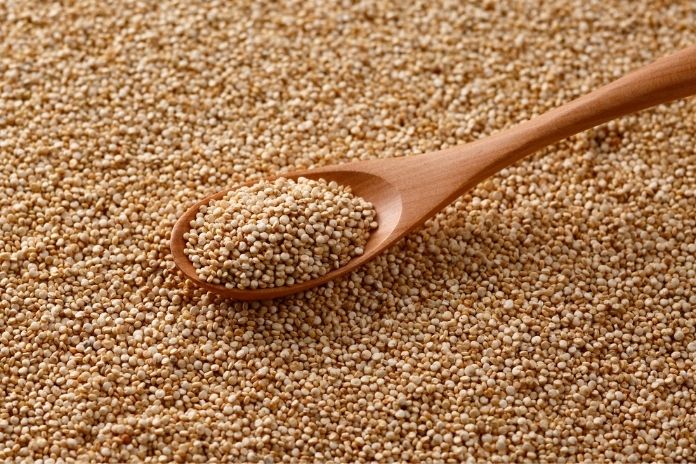
According to their recently published study in Current Developments in Nutrition, even a small amount of quinoa daily can lower the risk of cardiovascular disease.
After consuming 50 grams, or around 4½ teaspoons, of quinoa as part of their regular diet, a group of overweight and obese participants in the study showed noticeably lower serum triglyceride levels after 12 weeks. One form of fat or lipid associated with heart disease is triglycerides, which are measured as part of a lipid profile.
Additionally, the group reduced their risk of metabolic syndrome by 70%. A group of conditions known to raise the risk of type 2 diabetes and cardiovascular conditions like heart disease and stroke is called metabolic syndrome.
Cholesterol and Lipid Balance
One of the most important factors in controlling cholesterol levels is the fiber in quinoa. Soluble fiber can lower LDL cholesterol, also known as “bad” cholesterol, while simultaneously increasing HDL cholesterol, also known as “good” cholesterol.
According to a study published in the American Journal of Clinical Nutrition, people who ate whole grains, such as quinoa, had lower cholesterol levels than those who ate processed grains.
Nutrient Density That Protects the Heart
A grain rich in minerals, quinoa offers a variety of healthful nutrients, such as fiber, potassium, magnesium, and antioxidants. These nutrients have been linked to a lower risk of cardiovascular illnesses.
Quinoa is also an effective source of dietary fiber, both soluble and insoluble. By decreasing the absorption of LDL (bad) cholesterol in the bloodstream, soluble fiber helps lower LDL cholesterol levels. Consequently, this may lower the chance of developing heart disease.
How to Make the Switch Without Losing Flavor or Texture
It’s not necessary to completely change your diet to switch from processed grains to quinoa. The changeover can go smoothly with minor, useful adjustments.
- Quinoa works great as a base for salads, stir-fries, or grain bowls.
- Try mixing cooked quinoa with oats, fresh fruit, seeds, and nuts for a filling breakfast.
- If you want something loaded with protein, toss quinoa with lentils, chickpeas, and black beans.
Experiment: Red and black quinoa have a harder texture and higher antioxidant content, which makes them perfect for salads and filling meals.
Read More: Arthritis-Friendly Quinoa Stuffed Bell Peppers: Ease & Flavor Combined
Conclusion
The grains you pick every day might not look like a big deal, but they actually shape your heart health in very quiet ways. When you eat a lot of refined grains, your body digests them fast.
That spikes your blood sugar and sparks a low-level inflammation, nothing dramatic you can see or feel, but it slowly damages your arteries.
Quinoa provides a straightforward yet effective substitute. It helps balance blood sugar, lower cholesterol, and promote healthier blood vessels with its full protein, fiber, heart-healthy minerals, and anti-inflammatory plant chemicals. It doesn’t strain the body as refined grains do; rather, it nourishes it.
References
- CardioVascular Health Clinic. (2025, December 4). What are some ignored or unknown causes of heart disease?
- National Heart, Lung, and Blood Institute. (2023, October 10). Heart inflammation
- Harvard Health Publishing. (2021, February 1). Eating foods that trigger inflammation may lead to cardiovascular disease
- Whole Grains Council. What’s a whole grain? A refined grain?
- My Heart Healthy Diet. (2025, February 1). Why refined grains are bad for your heart (and what to eat instead).
- American College of Cardiology. (2022, October 3). Which grains you eat can impact your risk of getting heart disease earlier.
- Harvard T.H. Chan School of Public Health. Quinoa.
- Bob’s Red Mill Natural Foods. (2017, February 21). Is quinoa a grain?
In this Article