














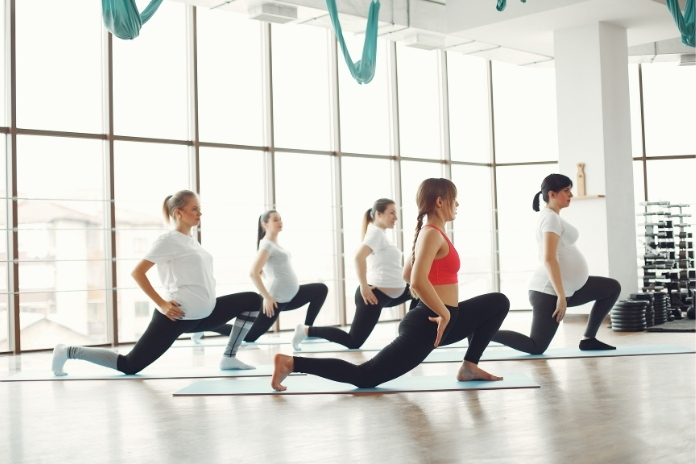
When done correctly, exercise may be both safe and very beneficial throughout pregnancy and after giving birth. Every stage of life benefits from exercise, including pregnancy and the postpartum period.
In the past, experts advised against doing a lot of activity before or after pregnancy, but that has since changed. According to recent studies, exercise benefits both the developing infant and the mother.
A doctor would usually advise you to continue being active after confirming your pregnancy. Each expecting woman may have a varied degree of activity.
A 2015 study found that over 60% of expectant mothers don’t exercise at all. The primary cause? According to this 2021 study, about 50% of respondents said they did not receive enough information and guidance from medical providers.
However, for expectant mothers or those who have recently given birth, determining which exercises to perform and how frequently to do them may often feel overwhelming. What exactly does an effective pregnant exercise program entail?
Mothers may benefit from exercise without sacrificing their health before, during, and after labor by understanding pregnant workout safety, recognizing which motions to avoid, and adjusting intensity according to each stage.
Read More: 9 Barre Workout for Post-Pregnancy Weight Loss
Benefits of Exercise During Pregnancy and After Birth

Beyond only improving health, regular activity throughout pregnancy actively promotes a more seamless transition into parenthood.
- By strengthening the muscles that support the spine, gentle, safe exercises for mothers can help prevent back discomfort. Improved posture also reduces strain on joints and ligaments as the abdomen grows.
- Lowers the chance of gaining too much weight while pregnant.
- Helps reduce the risk of gestational diabetes during pregnancy.
- Lessens postpartum depression symptoms.
- Regular exercise promotes healthy weight growth, enhances circulation, and helps the body get ready for labor by increasing flexibility and stamina.
- Women who maintain an active lifestyle frequently report better sleep, fewer pains, and increased self-confidence in their evolving bodies.
- The advantages don’t end with delivery. Benefits of well-planned postnatal exercise include increased strength, pelvic floor engagement, and a quicker recovery via reestablishing muscle tone.
- While movement creates feel-good endorphins that improve mood and lessen postpartum stress, light cardio and core exercises increase energy levels.
“For most women, exercising safely during pregnancy is a big yes,” says Eziamaka Obunadike, MD, an Emory Healthcare sports medicine doctor with a special interest in women’s musculoskeletal health. “It promotes healthy gestational weight gain and decreases the risk of gestational diabetes, preeclampsia, and depression.”
General Safety Guidelines for Prenatal and Postnatal Exercise
Being active is essential, but taking sensible safety measures protects both mother and child.
- Before beginning or continuing any regimen, start by speaking with your healthcare practitioner; each pregnancy is unique, so tailored guidance is crucial. You may walk with confidence if you follow these safe pregnancy exercise guidelines.
- Avoid overheating your body by, for instance, soaking in hot spas or exercising until you start perspiring profusely. On hot or muggy days, cut back on your workout. Drink plenty of water.
- When weight training, steer clear of large weights entirely and go for medium to high repetitions with light weights.
- Don’t work out on a particular day if you don’t feel like it! To prevent needlessly using up your energy stores, it’s critical to pay attention to your body.
- When pregnant, avoid increasing the intensity of your exercise regimen and always work out at less than 75% of your maximal heart rate.
Regarding the postpartum phase:
- The majority of healthcare professionals advise delaying organized exercise for at least six weeks (or more) following a cesarean section; nevertheless, professional approval is more important than the timetable.
- As strength returns, increase the intensity of your pelvic-floor exercises and mild walks.
Read More: 10 Gentle Workouts Safe for the Postpartum Body
Safe Prenatal Workout Routines (Trimester-Wise)
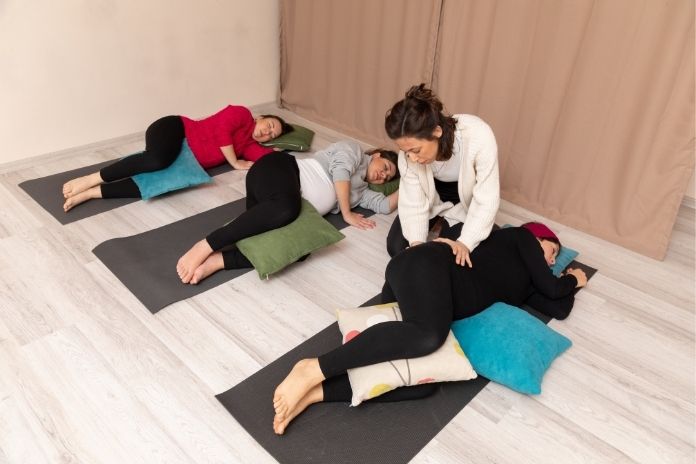
- Exercise Program for the First Trimester of Pregnancy
You can continue to perform many of these exercises throughout all three trimesters. However, keep in mind that every expectant mother will have unique requirements and limits, particularly as the pregnancy goes on, so always check in with your doctor.
Exercises for the Pelvic Floor
Bridges: One of the most crucial muscles to build throughout pregnancy is the pelvic floor. You can train your lower back, pelvic floor, and glutes all at once with bridges. For additional pelvic floor strengthening, you can perform a Kegel at the top of the bridge.
Leg Workouts for the Hamstrings Curls on a Stability Ball: NASM-certified Aaptiv trainer Jade Alexis recommends leg exercises for pregnant women to build strength in the lower body. For this workout, you’ll require a mat and a stability ball. However, make sure you get your doctor’s approval before doing it.
Cardio Exercises: Maintaining a healthy weight and blood pressure, as well as lowering tension and anxiety, are all crucial during pregnancy and may be achieved through cardiovascular exercise. Naturally, getting your doctor’s approval before beginning any cardio is vital.
- Workout Schedule for the Second Trimester of Nursing
The most important thing to keep in mind when following a maternity fitness regimen is your body. You must pay attention to your requirements as you progress through the trimesters.
Kegels: Not just for the first trimester of pregnancy, Kegel exercises are excellent for the duration of your pregnancy. You may still be permitted to perform the bridges lying on your back in your second trimester, but make sure you check with your healthcare provider.
Diaphragmatic Breathing: One of the finest exercises for pelvic floor strength is this one. Additionally, it’s a great technique to ensure that you’re focusing on your breathing, which is what will help you deliver.
Lunges: Lunges are an excellent way to build lower-body strength and improve balance. As with any workout, ensure your doctor approves before you try this exercise.
- Exercise program – third trimester pregnancy exercise
You should take extreme care during the third trimester, as you may find yourself facing some limitations you were not aware of during the first trimester.
Pelvic Floor Exercises: You should avoid lying on your back during the third trimester. Even if you might no longer be able to perform bridges, you can still perform Kegel exercises while sitting or standing.
Calf raises: According to Alexis, calf raises are another excellent, low-impact method of increasing strength since they help you develop stability in addition to strengthening your calves.
Side Plank with Knee Down: This low-impact core strengthening exercise is a version of the side plank. The workout, often referred to as kneeling side plank lifts, requires a mat.
Read More: Exercising Safely During Pregnancy: Guidelines and Best Practices
Safe Postnatal Workout Routines

It takes time and the appropriate strategy to regain strength after giving birth. Following medical permission, these safe postpartum exercises prioritize healing before introducing progressive development.
Exercises for the Pelvic Floor (Kegels): If you did what your doctor advised during pregnancy, likely, your body is already capable of doing a Kegel. Continuing these kinds of exercises after childbirth will help strengthen your pelvic floor muscles.
Diaphragmatic Breathing: You can start practicing diaphragmatic breathing, often known as deep breathing, in the first few days after giving birth. Relax and lower your stress levels by setting aside a short period of time each day to concentrate on your breathing. Additionally, it might decrease your breathing and increase core stability. You can practice this breathing exercise either seated or lying flat.
Walking: The first few months following delivery are a great time to try out the new jogging stroller that your best friend gave you. Your body will get great exercise while you walk while pushing a newborn, especially if you can pick a route that includes some hills.
Swiss Ball Bird Dog holds: This workout enhances posture and balance while easing lower back pain, a common issue after childbirth. For this activity, you’ll need an exercise ball or stability device.
Tabletop Cat-Cow Stretch: This is a basic yoga pose that strengthens the core, increases spinal mobility, and supports the back muscles. By including this exercise in your postpartum routine, you may enhance circulation, ease back discomfort, and encourage relaxation.
Exercises to Avoid Prenatally and Postnatally
Choosing the proper activities is crucial, but so is knowing which ones to avoid during pregnancy and in the immediate postpartum period. Certain motions may put undue stress on the pelvic floor, joints, and healing tissues.
Prenatal-Related Exercises to Avoid
- Some sports involve a high chance of falling, or where the risk of an abdominal injury can occur, all of which can vary by age and variance of skill (i.e. gymnastics, downhill ski-ing, snowboarding, ice-skating, some racket sports (playing doubles only and not singles), horse-racing, cycling outdoor, contact sports (ice hockey, soccer, or basketball), diving, bungee-jumping, rollerblading.
- Sports that need elevation changes. Avoid any activity that requires you to ascend more than 6,000 feet unless you already live at a high altitude. On the other hand, you should wait until you are no longer pregnant before going scuba diving since it might cause decompression sickness for your unborn child.
- From the fifth month onward, steer clear of exercises that keep you lying flat on your back for long durations. It is because the weight of your growing uterus may compress important blood arteries, limiting circulation for both you and your unborn child. As a result, you may experience nausea, dizziness, and shortness of breath.
Exercises Not to Do After Giving Birth
- Excessive abdominal muscular tension from crunches and sit-ups can exacerbate diastasis recti and strain the pelvic floor. These workouts can cause problems like back discomfort or hernias and slow down the healing process, which makes it harder to lose weight after giving birth.
- During the postpartum weight loss phase, lifting excessive weights too quickly could worsen problems like prolapse or diastasis recti because it puts extra strain on the pelvic floor and increases intra-abdominal pressure.
- Aerobic activities that place high loads on the pelvic floor and joints include running, jumping, and high-intensity interval training (HIIT). These types of exercises can take their toll on the body or complicate postpartum conditions (i.e., incontinence). Therefore, avoid these activities entirely in the acute postpartum weight loss phase.
Read More: Healthy Pregnancy: Safe and Beneficial Exercises for Expectant Mothers
Tips for Success

When creating or maintaining an active and effective pregnancy/postnatal exercise program, consistent and purposeful effort is more essential than being perfect. Listening to your body is one of the most critical pieces of safe exercise advice for pregnant women. There will be changes in your energy levels from day to day, so make adjustments to your intensity if you are undeniably sore, fatigued, or experiencing delayed onset muscle soreness after the workout.
Consistency is more important than intensity. Doing smaller amounts of activity regularly (15 to 20-minute walks or light strength training) can be more beneficial in the long term than doing heavier activity infrequently. Moreover, consistency can also improve circulation, decrease aches and pains, and help to regulate our overall emotional state.
A healthy diet and adequate hydration should complement an effective exercise routine. Consuming nutritious foods and lots of water supplies your body with energy, healing of the tissues, and ensures healthy outcomes for both mom and baby.
Whenever possible, consult a professional. Suppose you are working with a qualified trainer or enrolled in a prenatal or postnatal fitness program. In that case, you can be sure that the activity is safe and appropriate, matched to your pregnancy or recovery, thereby decreasing your risk and increasing your confidence.
Read More: 10 Must-Have Products for Prenatal Care: Essentials for a Healthy Pregnancy Journey
Conclusion
With professional guidance, exercise can be both safe and beneficial before and after pregnancy. Pregnancy causes so many changes in a woman’s body that it can be overwhelming to know where to start. You may continue your existing exercise routines as long as you gain medical clearance from your doctor.
Walking, pelvic floor exercises, and light resistance training are just examples of simple, effective routines that will support stability, reduce pain, and train your muscles for delivery and recovery.
For new mothers, it is essential to ease back into movement after delivery. Well-designed, safe postpartum exercises are practical in building overall core function and pelvic floor function, while regaining your energy levels, with minimal strain to recovering tissues.
The key lesson is that safety and consistency are considerably more important than intensity. Regular, moderate exercise, thoughtful sleep, and a healthy diet support long-term well-being for both mother and child.
References
- https://pmc.ncbi.nlm.nih.gov/articles/PMC4982752/
- https://journals.sagepub.com/doi/abs/10.1177/1559827621991851
- https://www.thebump.com/a/tool-pregnancy-workout-plan
- https://www.emoryhealthcare.org/stories/womens-health/strong-moms-the-importance-of-exercise-before-during-and-after-pregnancy
- https://www.cdc.gov/physical-activity-basics/guidelines/healthy-pregnant-or-postpartum-women.html
- https://www.acog.org/clinical/clinical-guidance/committee-opinion/articles/2020/04/physical-activity-and-exercise-during-pregnancy-and-the-postpartum-period
- https://www.betterhealth.vic.gov.au/health/healthyliving/pregnancy-and-exercise
- https://www.linkedin.com/in/eziobunadike/
- https://aaptiv.com/magazine/trainer/jade-alexis/
- https://www.whattoexpect.com/pregnancy/exercise-safety
- https://www.getbetterphysiotherapy.com.au/postpartum-weight-loss/
In this Article