














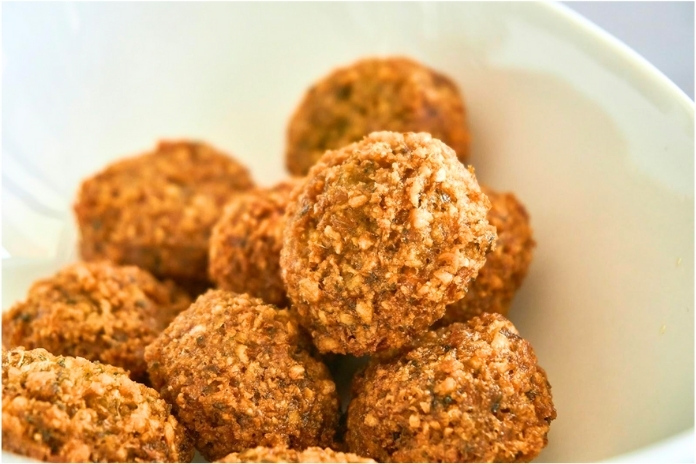
Falafel suffers from a strange reputation problem. It is either treated like a health food by default or dismissed as a deep-fried indulgence. Neither view is accurate. Falafel is neither highly nutritious nor too harmless. It is a legume-based food that behaves very differently depending on how and why it is eaten.
Most people asking whether falafel is healthy are not asking out of curiosity. They are trying to justify a habit. That is where most research on nutrition content fails: by reassuring rather than explaining. Food does not work on intention. It works on composition, quantity, and context.
This article is not about selling falafel as a health food or warning you to never touch it. It is about understanding what falafel actually does inside the body, digestion, blood sugar, fat handling, and things that rarely get discussed properly.
What Is Falafel Made Of?

At its core, falafel is ground chickpeas with herbs and spices. That sounds simple, but the details matter more than the name.
Traditional falafel uses soaked dried chickpeas, not boiled ones. This affects starch behavior, oil absorption, and digestion. Soaked chickpeas stay dense when cooked. Boiled ones collapse and demand flour to hold their shape. That is how falafel quietly turns into a starch ball.
Commercial falafel often includes the following:
- Excess flour
- Potato
- Baking agents
- Heavy amount of salt
- Pre-cooked chickpea paste
None of these are visible when you eat it, but they decide how your body responds. Falafel is not one food. It is a category.
Falafel Nutrition at a Glance
Falafel is calorie-dense for its size. That is not a flaw. It becomes a problem only when people pretend it is light food.
Nutritionally, falafel offers:
- Moderate plant protein
- Meaningful fibre
- Iron and folate
- Fat content that varies wildly
What falafel does not give reliably is protein density. Chickpeas are useful, but they are not strong protein carriers per calorie. This matters if falafel is eaten as a main meal repeatedly. Most nutrition articles list numbers. Real eating does not happen in numbers.
Health Benefits of Falafel
Falafel’s benefits are quiet, not dramatic. These benefits matter over time, not in single servings or idealized portions.
- Falafel Is Dense. That alone changes appetite regulation compared to refined snacks.
- Hunger does not bounce back quickly. Not because it is “high protein,” but because fiber and fat together delay stomach emptying.
- Falafel contributes iron and magnesium, which matter over time, not in single meals.
- This is an under-discussed benefit. Falafel often replaces processed meat, refined snacks, or sugar-heavy meals. Relative improvement counts.
“Its chickpeas and herbs supply iron, magnesium, folate and potassium, which support heart health, red blood cell production and overall well-being,” explains Amy Goodson, a Texas-based nutritionist. “Some of its fresh seasoning and spices also provide antioxidants and anti-inflammatory compounds,” she adds.
Falafel does not heal anything. It simply does less damage when used well.
The Biggest Health Concern With Falafel: Frying
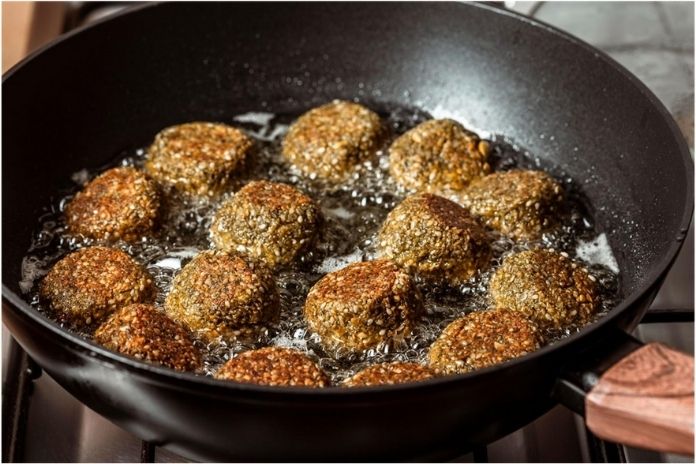
This is where most arguments collapse. Falafel is usually fried. Not lightly sautéed but deep-fried. Often in oil that has been reheated for hours. Falafel absorbs oil aggressively because:
- The mixture has air pockets.
- Chickpea starch swells during frying.
- High frying temperature causes oil migration into the center.
This causes a few changes:
- Energy density increases sharply
- Fat oxidation increases
- Omega-6 fat intake increases
- Digestive tolerance drops
People blame chickpeas when they feel heavy after falafel. It is almost always the oil.
“Even when the oil used is unsaturated, it still increases calorie intake considerably. For some people, this adds too much fat to the diet,” explains Amy Shapiro, RD. She also notes that “Vendors heat low-quality oils beyond their smoke point, this can lead to the formation of potentially harmful compounds.”
Repeatedly heated oil is not neutral. It creates compounds that irritate the gut and strain lipid metabolism. This is why falafel feels different at home versus outside.
The issue is not frying once. It is habitual frying without freshness.
Fried vs Baked Falafel: How Different Are They?
Baked falafel behaves like a food component. Fried falafel behaves like a snack.
That sounds dismissive, but it is accurate.
Fried falafel:
- Encourages overeating
- Disrupts satiety signals
- Sits heavily in the stomach
Baked or air-fried falafel:
- Preserves the fibre structure
- Keeps fat content predictable
- Can be eaten regularly
Texture complaints are usually psychological. People are used to an oil crunch, not a flavour.
“Until recently, most commercial deep frying used beef fat or oils high in trans fat. This was unhealthy, but most deep frying now is done with trans-fat-free oils that are largely unsaturated, and these can actually reduce your blood cholesterol levels and decrease the risk of heart disease,” says Dr. Walter Willett, chair of nutrition at Harvard School of Public Health.
Read More: Morning vs. Night Apple Cider Vinegar: Best Timing for Metabolic Benefits
Is Falafel Healthy for Weight Loss?
Falafel does not help with weight loss. It also does not prevent it. Weight loss fails with falafel when portion control disappears, bread and sauces dominate, and fried versions become frequent.
Weight loss works with falafel when it replaces refined carbs, vegetables dominate the plate, and quantity is respected
Falafel is filling, which helps adherence. But it is also easy to underestimate. That is where the problem arises.
Read More: Surprising Things That Happen When You Eat Seaweed Every Day
Falafel and Blood Sugar: Is It a Good Choice?
Falafel has a moderate glucose response. Not low. Not extreme. Chickpeas help here. But meals are rarely that simple.
Blood sugar impact depends on:
- Flour content
- Cooking method
- Meal pairing
Falafel eaten with vegetables and fats gives a stable response. Falafel eaten with white bread spikes sugar more than expected.
For people managing blood sugar, falafel is neither forbidden nor free. It needs structure.
Read More: The Complete Guide to Low-Carb Swaps That Don’t Compromise on Flavor
Falafel for Heart Health
Falafel’s heart-health reputation comes from what it lacks: cholesterol and animal fat. That is incomplete logic. Heart health depends on oil quality, sodium load, & frequency.
“If you buy a pita with falafel at a restaurant or vendor, it can contain up to 1,500 mg of sodium, a full day’s worth,” says Robin Danowski, RD, an assistant professor of nutrition at La Salle University. She adds, “Adverse health effects become more likely beyond 2,400 mg per day.”
Falafel made with fresh oil and controlled salt can fit into heart-friendly diets. Commercial falafel, eaten often, does not. Plant-based foods do not automatically mean cardioprotective.”
Read More: Roasting vs Steaming Broccoli: Which Method Keeps More Nutrients?
Falafel in a Healthy Meal: What to Pair It With
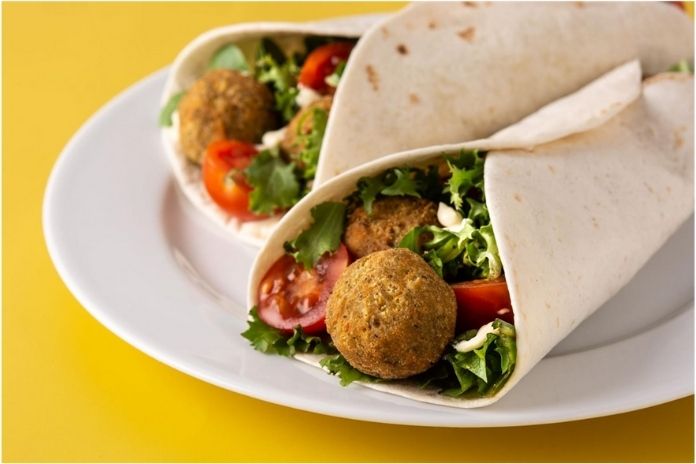
Falafel should never be the loudest thing on the plate. Better pair it with raw vegetables, pickled elements, lemon or vinegar, and small amounts of tahini. Tahini improves mineral absorption and balances fat intake better than most commercial sauces.
If you eat falafel in a pita, Robin Danowski suggests choosing whole wheat because the fiber supports digestion. She also recommends hummus as a condiment, since it adds plant-based protein.
It is less helpful with large white bread portions, sugary sauces, and cheese overload. Falafel works when it supports the meal, not when it is the meal.
Read More: Does Cooking Spinach Increase or Decrease Its Iron Content?
When Falafel May Not Be the Best Choice
Falafel is not ideal if you:
- Rely on it daily for protein
- Struggle with reflux
- Have trouble digesting legumes
- Experience bloating easily
- Have gallbladder issues
- Eat it mainly fried
- Eat without attention
- When advised to follow a very low-fat diet
In these cases, simpler legume preparations work better.
Read More: Is Gluten Bad for Everyone? The Truth Behind the Trend
Final Thoughts
Its impact is shaped less by chickpeas and more by decisions that happen before it reaches the plate, how it is prepared, how often it is eaten, and what surrounds it in a meal.
Falafel is not healthy because it is traditional. It is not unhealthy because it is fried. It becomes one or the other through consumption (portion size), preparation, and its effect on your system.
So treating falafel as automatically “good” or inherently “bad” misses the point. Eat it like food. Evaluate it like food.
- Falafel can be a healthy, plant-based food when made thoughtfully and eaten in balance.
- Its chickpea base offers protein and fiber, but frying, portion size, and accompaniments ultimately decide whether it supports or undermines health.
- Falafel’s health value changes more with oil than with the ingredients it contains.
- Portion control matters more than protein content here.
- Falafel works best as part of a vegetable-heavy plate.
- The long-term metabolic impact of fried legume-based foods is poorly studied compared to boiled or baked forms.
FAQs
1. Can falafel replace meat protein?
It can contribute, but protein density is lower than that of animal sources.
2. Can falafel replace meat nutritionally?
No. It can complement, not replace, without planning.
3. Does falafel cause bloating?
Often due to oil, not chickpeas.
4. Is homemade falafel significantly better?
Yes, mainly because oil and flour are controlled.
5. Is falafel good for daily eating?
Only in baked form and reasonable portions.
References
- Fikry, M., Khalifa, I., Sami, R., Khojah, E., Ismail, K. A., & Dabbour, M. D. (2021). Optimization of the Frying Temperature and Time for Preparation of Healthy Falafel Using Air Frying Technology. 10(11).
- Food & Nutrition Jersey. (n.d.). Baked Falafel Wrap.
- Healthy Eating Advisory Service. (n.d.). Falafel.
In this Article