












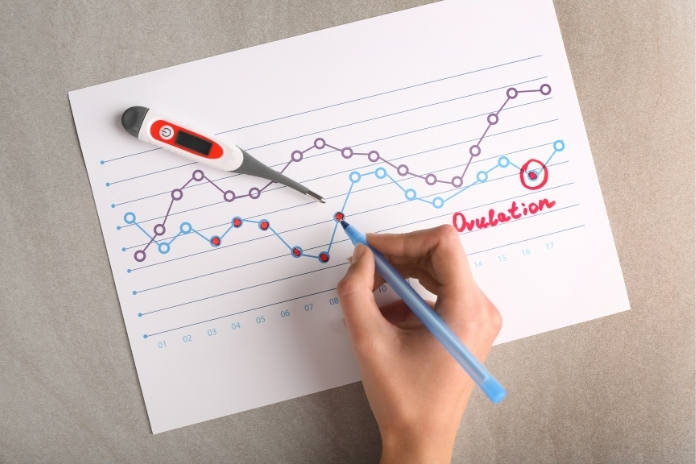
Tracking ovulation can be incredibly helpful for those trying to conceive, avoid pregnancy naturally, or simply improve their understanding of reproductive health. Ovulation marks the peak fertility phase of the menstrual cycle, when an egg is released and the chances of conception are the highest.
The question, “How can I track ovulation with irregular periods?” is frequently asked by expectant mothers. There are several answers to this common question.
It can be challenging to track ovulation and determine the optimal time for sex to become pregnant when periods are irregular. The good news is that it’s relatively simple to track ovulation when irregular cycles occur. Modern medicine has advanced to the point where you can even track your ovulation with a fair degree of accuracy.
This article outlines the best practices to help you take charge of your fertility journey, from tracking physical symptoms to using digital tools and hormone tests. These suggestions will give you the confidence you need to handle ovulation, whether you’re trying for a child or regulating your period naturally.
Read More: Effective Ovulation Tracking: Top Tools and Methods for Conception
Why Tracking Ovulation Matters
Detection and tracking of ovulation are critical to reproductive health, especially among women trying to get pregnant or avoiding pregnancy.
Your window of fertility is the time in your menstrual cycle when you are most likely to get pregnant. In most individuals, fertility is at its peak during the five days leading up to ovulation, on the day of ovulation, and the day after. If you are trying to conceive, you may calculate the optimal moment for intercourse using your monthly fertility window.
By aligning IUI or IVF with the ovulation cycle, patients can improve the procedure’s effectiveness.
When you monitor your ovulation, you are well informed about your hormonal balance after conception. It can assist in identifying symptoms of hormonal abnormalities, such as irregular progesterone levels or disorders like polycystic ovarian syndrome (PCOS) or ovulatory dysfunction.
Both short-term planning and long-term health monitoring can benefit from this information.
Natural family planning provides no protection against sexually transmitted diseases and is generally less reliable as a form of contraception.
Sasha Hakman, M.D., an ob-gyn and reproductive endocrinologist, and an infertility specialist in Phoenix, Arizona, says that, “even if you’re not actively trying to conceive, being aware of your menstrual cycle and ovulation patterns provides great insight into your reproductive health.”
Understanding the Ovulation Process

The first day of a woman’s menstrual cycle is followed by the first day of her subsequent period to determine her monthly cycle. A woman’s cycle typically lasts 28 to 32 days, while some women may have cycles that are significantly shorter or longer.
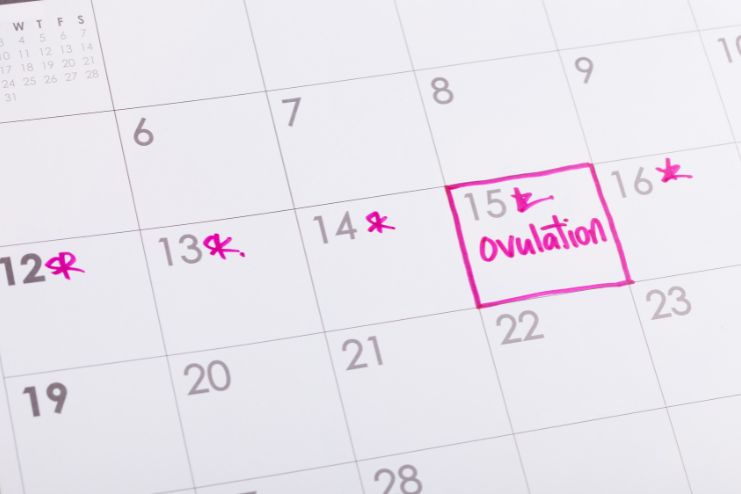
Either the first day of the last menstrual period (LMP) or 12–16 days until the next anticipated period can be used to calculate ovulation. Counting from the first day of the LMP, the majority of women ovulate between Days 11 and 21 of their cycle.
Because having sex during this period enhances the likelihood of becoming pregnant, many people call this the “fertile time” of a woman’s cycle. Ovulation may occur on a different day each month or at various points during a cycle. Tracking your menstrual cycle is important, and fortunately, there are numerous free fertility charting tools that can help women identify their most fertile days.
Read More: Can Heavy Periods Be a Sign of Something Serious?
Top Signs You May Be Ovulating
I’m sure you’re wondering if you can sense ovulation. There are a few typical ovulation symptoms you might experience; however, they might vary from woman to woman. Hormonal changes can affect every part of the body before and during ovulation, resulting in symptoms commonly associated with ovulation.
These can provide you with strong, yet occasionally subtle, cues about when you’re ovulating. Patricia Pollio, MD, a Director of Obstetrics at the Good Samaritan Hospital in Suffern, New York, explains that many women may notice ovulation-related symptoms starting up to five days before ovulation and lasting through the day it occurs. They can even persist for a day after ovulation.
But there’s no need to worry—lack of noticeable symptoms doesn’t always indicate that ovulation isn’t taking place. According to Donnica L. Moore, MD, president of the Sapphire Women’s Health Group in Chester, New Jersey, has stated that “the majority of women are even clueless about it.”
Cervical Mucus Changes: One sign of ovulation that you can see is cervical mucus changes. As ovulation approaches, your body produces more estrogen, which makes the cervical mucus elastic and clear, similar to egg white. It helps facilitate the movement of sperm toward the egg after it’s released.
Heightened Senses: Some women may notice a more acute sense of smell during the second part of their menstrual cycle, as their bodies become more sensitive to the male pheromone androstenone during this reproductive phase. However, studies suggest that ovulation may affect a woman’s overall sense of smell.
Breast Soreness or Tenderness: Tender breasts or sore nipples can also signal ovulation, triggered by the hormonal spike that occurs just before and after the egg is released. Some women may experience soreness immediately before ovulation, while others may feel it immediately after ovulation.
Jenna Turocy, MD, an ob-gyn and a reproductive endocrinologist at Columbia University Irving Medical Center in New York City, notes that breast discomfort can also occur at other points during the menstrual cycle. She further states that, “Usually, hormonal changes unrelated to ovulation are linked to it.”
Light Spotting or Discharge: Turocy explains that “a spike in hormones around ovulation may sometimes lead to light spotting or a brownish discharge.” When the follicle that envelops and shields the developing oocyte (the egg) matures, expands, and then finally bursts, causing a very tiny amount of bleeding, which may manifest as a sign of ovulation.
Headaches and Nausea: Can ovulation cause nausea? Many women often ask this common question — and the answer is yes. Changes in estrogen and progesterone levels during ovulation can lead to symptoms like nausea and headaches.
Best Methods to Track Ovulation (Irregular Cycles Included)
1. Ovulation Predictor Kits (OPKs)
Urine-based diagnostics, known as ovulation prediction kits (OPKs) or ovulation tests, monitor the spike in luteinizing hormone (LH) production that occurs in the lead-up to ovulation. The pituitary gland releases luteinizing hormone (LH), which triggers the ovary to release an egg. Ovulation typically occurs approximately 12 hours after the peak, and the surge lasts for around 40 hours.
Similar to an at-home pregnancy test, you can dip the test in a cup or insert it into your urine stream to determine your LH level. Remember that most tests recommend testing your urine first thing in the morning, when your LH levels are at their highest, and follow the specific directions for your test.
Similar to pregnancy tests, most ovulation tests display results in one or two lines. The control line, which is the first line, indicates that the test was successful. The test line, which displays the outcome, is the other line.
However, the lines on a pregnancy test are more definitive than those two lines. When the test line is as dark as or darker than the control line, it suggests that your LH levels are high; two lines by themselves do not necessarily imply a good result.
Read More: Do “Period Blood Detoxes” Actually Work? What Science Says
2. Basal Body Temperature (BBT) Charting
This ovulation tracking approach is the most error-prone and challenging to measure accurately. According to research, your resting temperature, or your basal body temperature (BBT), will rise a little during the days leading up to ovulation.
To measure the BBT, a specific type of thermometer is required, but they are reasonably priced. It may not be the most effective approach on its own, as not everyone exhibits changes in BBT around ovulation; however, it can be helpful in conjunction with other tracking techniques.
3. Cervical Mucus Monitoring
You can forecast when you will ovulate by observing the changes in cervical mucus during your menstrual cycle. As ovulation draws near, your estrogen levels increase. The amount and consistency of cervical mucus changes as a result of this estrogen increase, becoming more sperm-friendly.
You can observe that your body is making more mucus as your ovulation draws near, and that this mucus is a little thinner, more elastic, and more slippery, almost like egg white.
Additionally, you should start checking your cervical mucus at least twice a day as soon as your period stops. All vaginal secretions, except menstrual blood, are considered as cervical mucus. Check for fluids on your underwear, on toilet paper, or the opening of your vagina. You can also use your fingertips to feel for secretions.
4. Fertility Tracking Apps
A menstrual cycle and ovulation-tracking app like Flo can handle the arithmetic for you if all that counting is making your head spin. Ovulation tracking apps work in a way that’s comparable to the calendar method. However, all you have to do is record the dates of your periods for a few cycles, and an algorithm will determine when you will ovulate.
According to Dr. Renita White, obstetrician and gynecologist at Georgia Obstetrics and Gynecology in Georgia, US, “these tracking apps make it easy to look back and review patterns each month.” You can observe when you usually have symptoms like bloating, cervical mucus, or premenstrual syndrome, in addition to how frequently you get your period. This can make identifying your fertile window easier.
Read More: 8 Period Symptoms That Might Actually Be a Thyroid Issue
5. Blood Tests or Ultrasound Monitoring (If Needed)
A woman’s ovarian reserve, or the number of the eggs available in her ovaries, can be determined using a battery of tests known as fertility blood testing. A woman has all of her eggs at birth, ready for use and available throughout her reproductive life.
Typical Blood Tests for Fertility:
- Follicle-Stimulating Hormone (FSH): Follicle-stimulating hormone also known as (FSH) is secreted by the pituitary gland. It aids in promoting the development of ovarian follicles. If a woman’s FSH level is elevated, it may indicate that she has a reduced ovarian reserve.
- Estradiol (E2): The ovaries produce the hormone E2. It helps prepare the body for pregnancy and regulates the menstrual cycle. A woman may have a reduced ovarian reserve if her E2 level is either high or too low.
- Anti-Müllerian hormone (AMH): The ovaries also produce this hormone. Doctors can use it to predict a woman’s response to reproductive therapies, making it a valuable indicator of ovarian reserve. Some specialists regard AMH as the most accurate test option available.
Tips for Tracking With Irregular Periods
- Ovulation doesn’t happen regularly when cycles are irregular; pay attention to physical indicators such as cervical mucus, temperature, and the results of ovulation tests.
- Combining instruments like OPKs with BBT charting or cervical mucus monitoring increases accuracy and allows you to cross-verify the results.
- To better identify patterns and trends over time, record data daily, ideally simultaneously.
- If you are noticing regular irregularities, then you will want to see a doctor; these irregularities may be a sign of similar issues such as PCOS, thyroid issues, or hormonal imbalance.
Read More: Why Your Periods Might Stop: Understanding Amenorrhea
When to See a Doctor

Although some irregularities in the menstrual cycle are typical, specific symptoms require medical attention. Your periods may be showing that there is a hormonal or reproductive issue that is well-established if they consistently last more than 35 days or less than 21 days.
Likewise, it can indicate non-ovulation if you have been monitoring ovulation for several months and have not yet observed signs, such as a rise in LH, a temperature change, or shifts in cervical mucus.
Conditions like thyroid illness, endometriosis, or PCOS disrupt ovulation and require diagnosis by a professional. Do not hesitate to get medical attention if you notice any of the above.
Read More: What Your Period Blood Color Says About Your Health
Final Thoughts
It may initially sound like you can’t ovulate on an irregular cycle, but it is possible if you’re both determined and patient. You will pick up a lot about your cycle and fertility if you listen to what your body is communicating with you and use the proper tools, such as OPKs, BBT charting, cervical mucus observation, or a fertility app.
Combination methods produce more accurate results, especially if your cycle is abnormal. No matter whether you are trying to conceive, avoiding pregnancy naturally, or simply knowing about your hormonal well-being, this information progressively makes you more comfortable and enables you to be better in charge of your reproductive life.
Do not hesitate to visit a doctor if you have been attempting conception and are unable to, or if you are not noticing regular ovulation symptoms.
References
- https://americanpregnancy.org/getting-pregnant/track-ovulation-irregular-periods/
- https://flo.health/getting-pregnant/trying-to-conceive/tracking-ovulation/track-ovulation-irregular-periods
- https://mytexashealthcareobgyn.com/pregnancy-infertility/spotting-3-tips-for-tracking-ovulation-with-irregular-periods/
- https://www.hopkinsmedicine.org/health/wellness-and-prevention/calculating-your-monthly-fertility-window
- https://ro.co/fertility/why-track-your-cycle-ovulation/
- https://my.clevelandclinic.org/health/articles/23439-ovulation
- https://americanpregnancy.org/getting-pregnant/infertility/understanding-ovulation/
- https://www.fertilityfriend.com/
- https://www.mayoclinic.org/healthy-lifestyle/getting-pregnant/expert-answers/ovulation-signs/faq-20058000
- https://www.babycenter.com/getting-pregnant/ovulation/ovulation-symptoms-how-can-i-tell-when-im-ovulating_484
- https://www.thebump.com/a/ovulation-symptoms-signs-of-ovulation
- https://www.babycenter.com/expert-sasha-hakman
- https://uihc.org/educational-resources/ovulation-predictor-kits-opk
- https://weconceive.com/library/fertility-101/ovulation-predictor-kits-opks
- https://flo.health/getting-pregnant/trying-to-conceive/tracking-ovulation/how-to-track-ovulation
- https://flo.health/about-us/renita-white
- https://www.clearblue.com/ovulation/how-to-track-ovulation
- https://conceivenj.com/fertility-testing/fertility-blood-tests
- https://www.safeconception.com/post/tips-to-conceive-with-irregular-periods
- https://healthcare.utah.edu/fertility/when-should-you-see-a-fertility-specialist
In this Article