










Mandelic acid, an alpha-hydroxy acid (AHA) that exfoliates, has been overlooked in favor of better-known AHA family members, such as lactic acid and glycolic acid. However, the time for mandelic acid to shine has now arrived.
Think of mandelic acid as the soft-spoken member of the AHA family. It is mild, more subdued, and often overlooked. However, it still offers the same advantages as other AHAs, such as promoting an even tone, addressing sun damage, smoothing skin texture, and reducing the appearance of wrinkles and fine lines.
This article explains how to create a mandelic acid regimen that is both safe and effective, how often to use it, which products work best with it, and crucial safety measures to follow for optimal results.
Read More: Skin Cycling: The Skincare Trend Revolutionizing Your Routine
Benefits of Mandelic Acid
Mandelic acid is becoming more popular in the cosmetics industry. An intriguing new alternative to well-known AHAs, this acid is praised for its antibacterial and anti-inflammatory properties.
The beautiful thing about mandelic acid is that the longer you use it, the better the results get. Expect to see:
- Acne Be Gone: Thanks to its exfoliating and antibacterial properties, mandelic acid is an effective treatment for acne.
- Bright and Glowy Skin: Exfoliation gives the skin a more glowing appearance by removing dead skin cells from its surface.
- Reduces the Appearance of Hyperpigmentation: Melanin from the skin’s outer layers is dispersed by increased skin cell turnover, which minimizes UV damage and lessens the appearance of dark markings. To avoid additional discoloration, mandelic acid goes one step further by inhibiting pigment synthesis in the skin’s deeper layers.
- Reduces Wrinkles and Fine Lines: Mandelic acid encourages collagen synthesis and cellular turnover, giving skin a smoother, firmer, and younger appearance.
- Enhances Texture and Tone: Smoother skin with a more even, radiant tone results from increased cell turnover and exfoliation.
- Balances Oil Production: Remember that mandelic acid is more soluble in oil than most AHAs. To put it another way, it dissolves in sebum, the oil that your skin secretes. That means it can promote balanced sebum production and help mattify oilier patches of skin (like the T-zone) without over-drying the rest of your complexion, because it dissolves into your skin’s oil and gets past the surface more easily than other AHAs.
This hidden hero merits a bit more attention—and a place in your skincare regimen, particularly if you have sensitive skin.
“It’s an under-appreciated ingredient,” says Melanie Palm, MD, a board-certified dermatologist and cosmetic surgeon at Art of Skin MD in Solana Beach, California. “Mandelic acid is my go-to recommendation when people can’t tolerate other AHAs.”
This is due to its remarkable tolerability, which sets it apart from the other, more well-known AHAs in that it is far less likely to irritate skin.
How to Start — Choosing the Right Mandelic Acid Product for Beginners & Sensitive Skin

Compared to its smaller-molecule counterparts, mandelic acid penetrates the skin much more slowly. Because of its gradual absorption, the risk of irritation is significantly lower, making it much kinder.
When you begin using mandelic acid, choose a product with the appropriate concentration to ensure your skin remains comfortable and irritation-free. If you have sensitive skin or limited experience, start with milder versions of the product and gradually increase the potency as your skin becomes accustomed to it.
We recommend that those with sensitive skin or who are complete beginners to AHA products look for a toner or serum containing 5%-10% AHA for gentle yet effective daily use.
Read More: What to Do After Removing a Pimple Patch: Dermatologist-Approved Care Routine
Sample Skincare Routines with Mandelic Acid
You’ve selected Mandelic Acid products suitable for beginners. Now, how can you include them with Mandelic Acid in an organized daily skincare regimen?
You might be surprised at how easy it is! Consistency and taking the proper actions are crucial. When adding Mandelic Acid, you can modify that framework as follows:
1. Cleanse (AM & PM):
Use a mild cleanser first. Gently massage a Mandelic Acid cleanser, such as the Mandelic Acid 3-In-1 Wash or the Mandelic Acid 3-in-1 Exfoliating Cleanser, over wet skin for 30 to 60 seconds. Rinse thoroughly with lukewarm water and gently pat your skin dry. You can repeat this routine once or twice a day.
2. Tone/Prep (Start PM Only):
Use a cotton pad to apply your Mandelic Acid toner, such as the Skin Nourishing Toner or the 3% Mandelic Acid 3-in-1 Toner. Avoid the eye area and softly swipe over the entire face, including the neck, if you’d like.
Frequency: Start by using the toner every other night, then increase to nightly use after a week or two if your skin tolerates it well. You may even incorporate it into your AM regimen if additional tolerance permits and is needed, but always give PM use for actives priority first.
3. Correct (AM and/or PM – Begin PM Only):
Your Mandelic Acid serum, such as the 8% Mandelic Acid 3-in-1 Serum, should be applied. Apply a thin, even layer to the entire face using a tiny amount (pea-sized is usually sufficient); once more, avoid spot treating. Before moving on to the next phase, let it soak thoroughly.
Frequency: As with the toner, begin using the serum in the evening, every other night (if you are introducing both, you might start by switching nights with the toner). Increase each night gradually as tolerated. It may be feasible to use it in the morning in the future, but make sure you use it consistently in the evening first.
4. Hydrate and Protect (AM & PM):
AM: It is a VERY IMPORTANT STEP. If using in the morning, add an appropriate moisturizer after your serum. Always apply an SPF 15+ broad-spectrum sunscreen afterwards, topping up if you’re outside.
PM: After this, apply your preferred nighttime moisturizer to keep the skin hydrated and reinforce the skin barrier, allowing the Mandelic Acid serum to absorb fully.
What to Avoid While Using Mandelic Acid

Knowing what not to combine with mandelic acid is crucial for maintaining healthy, irritation-free skin.
Combining mandelic acid with other potent exfoliants may easily lead to over-exfoliation, as it is an exfoliating AHA. A weakened skin barrier can cause redness, flaking, irritation, and even outbreaks.
Avoid stacking more than one acid on the same day, and keep exfoliation straightforward.
Avoid using retinol and mandelic acid on the same day. Mandelic acid and retinol are both physical exfoliants that can irritate and cause redness when used together. Avoid using your retinol on the same day or any other mandelic acid treatment if you use it frequently.
Maintain consistency. Generally, using a product consistently yields the best benefits, and mandelic acid peels are no exception. Use the peel once a month at first, then every other week if you have really sensitive skin.
Be careful with aftercare. In the days following your peel, it’s crucial to focus on calming ingredients like aloe vera, niacinamide, vitamin C and E, and other antioxidants, as chemical exfoliants are potent substances.
Read More: Why Your Moisturizer Isn’t Working (And How to Layer Skincare the Right Way)
Signs Mandelic Acid Is Working — And What to Expect
The consistent application of mandelic acid yields a range of small yet impactful benefits for the skin.
As an initial benefit, you will notice softer, smoother skin.
After only a few applications, your skin will likely feel more refined and look brighter, thanks to the gentle loosening of the layer of dead skin cells exfoliated from the surface. This softened glow of your skin indicates that the exfoliating process is working to remove the surface layer of dead skin without being too stimulating.
Over the next few weeks, you might observe hyperpigmentation or dark patches as well as post-acne marks become noticeably less pronounced. Mandelic acid is particularly good for sensitive or deeper skin tones, as it gently and steadily fades discolouration. These dark spots eventually lighten and become more even over time.
The added benefit of mandelic acid is that it can also help to reduce breakouts if you have congestion or acne. Its pore-clearing, antimicrobial properties mean less inflammation, fewer pimples, and a noticeable boost in overall clarity.
When the skin is doing its job, shedding deposits more effectively, the pores can start to look smaller and less congested.
When to Pause or Reconsider — Who Should Be Cautious
Compared to more potent AHAs, mandelic acid is typically considered gentle. It does not usually cause the skin to become dry or irritated, particularly when applied in over-the-counter treatments at lower concentrations.
On the other hand, it is essential to use sunscreen consistently when using mandelic acid, as alpha hydroxy acids (AHAs) like mandelic acid can increase sun sensitivity. Mandelic acid, like all other alpha-hydroxy acids (AHAs), still has the potential to cause skin irritation.
The following are possible adverse reactions that AHAs can cause:
- Skin that is both dry and flaky
- Peeling of the skin
- Skin that is inflamed or has a reddish appearance
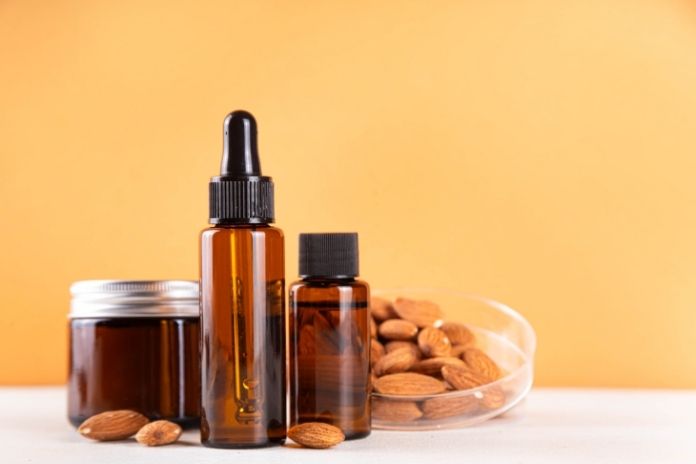
If you are allergic to almonds, avoid using mandelic acid as an added safety measure.
Bonus: Ingredients That Pair Well With Mandelic Acid
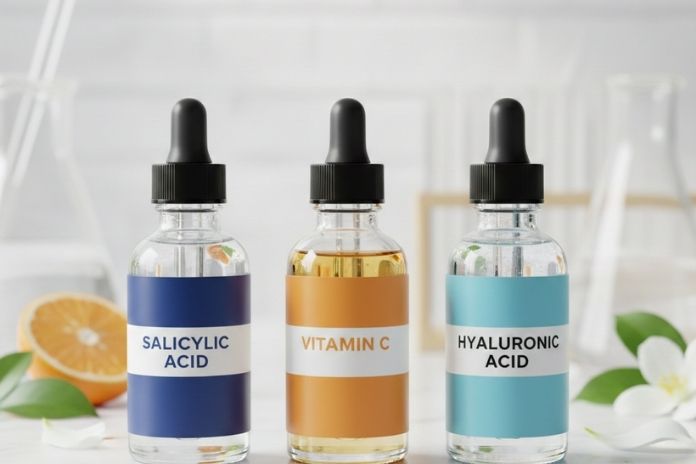
Mandelic Acid can be mixed with other active components to achieve a desired outcome because it is compatible with a wide range of other substances. Let’s find out which.
Mandelic Acid With Salicylic Acid: It makes sense to choose a treatment that contains both mandelic acid and salicylic acid if your skin is prone to acne. Its combination impact with other chemical exfoliants gives it an advantage over other treatments.
Salicylic acid aids in deep-pore unclogging, whereas mandelic acid eliminates dead skin cells from the skin’s surface. Together, these two active chemicals provide your skin with a smooth, glowing, and imperfection-free appearance.
Salicylic acid is a potent comedolytic due to its lipophilic and anti-inflammatory qualities. Mandelic acid and salicylic acid peels are superior to glycolic acid peels for treating non-inflammatory acne outbreaks.
Vitamin C with Mandelic Acid: Mandelic acid and vitamin C can be combined. Vitamin C will “support” the effects of mandelic acid, such as lightening and depigmentation. By reducing the visibility of dark spots, this active ingredient combination evens out your complexion, restores radiance, and smoothes your skin’s texture. Make sure it’s pure vitamin C, though.
Unlike their counterparts, these two active components function only when you prepare them in an acidic solution.
Mandelic acid combined with hydrating substances (glycerin, hyaluronic acid, etc.): Mandelic acid can be used with hydrating substances like hyaluronic acid to restore volume and perk up the skin. Mandelic acid keeps the skin moisturized by promoting the shedding of dead skin cells.
In addition to blurring the fine lines of dehydration, the inclusion of a moisturizing agent will help retain water in the epidermal layers and give the skin a plumping effect. Additionally, mandelic acid is an effective active ingredient for people with dry skin, especially older adults.
Read More: Morning Beauty Routine: 10 Steps to Start Your Day with Freshness and Glow
Conclusion
Mandelic acid is known as the “gateway AHA.” It is a very gentle, more accessible AHA exfoliant that provides the benefits of chemical exfoliation without the intensity or irritation of stronger acids.
Because of its larger molecular size, mandelic acid penetrates the skin slowly and evenly, making it perfect for those new to acids and for anyone with sensitive or reactive skin. It delivers AHA benefits, including visible improvements in texture, tone, and clarity.
Your skin can safely build tolerance when you take a slow, cautious approach with a lower concentration, using it just 2 or 3 times a week and practicing proper aftercare. It ensures that you get results while keeping your skin barrier intact.
References
- https://www.paulaschoice-eu.com/mandelic-acid-what-is-it-and-how-can-i-use-it
- https://www.paulaschoice.com/expert-advice/skincare-advice/ingredient-spotlight/mandelic-acid-for-skin.html
- https://www.platinumskincare.com/right-mandelic-concentration
- https://www.health.com/mandelic-acid-benefits-8408138
- https://us.typology.com/library/can-mandelic-acid-be-combined-with-other-active-ingredients
- https://vivantskincare.eu/mandelic-acid-safe-pregnancy-skincare-for-acne-and-melasma/
- https://www.womenshealthmag.com/beauty/a67962085/mandelic-acid-for-skin/
- https://intothegloss.com/2021/08/mandelic-acid-explainer
In this Article