











Today, let us talk about a habit that we hardly discuss. Washing hands after going to the bathroom, keeping it clean, and other hygiene habits are often talked about. Except one. Read on to know.
Picture this: you’ve finished your bathroom routine, flushed the toilet, and walk away feeling fresh and clean. But in the moments after, an invisible cloud of germs might be spreading silently across the room. These tiny droplets are thrown into the air by the flush, can settle on toothbrushes, hand towels, and even your phone if it’s nearby.
This is referred to as the “toilet plume,” and it’s far more powerful and extensive than most are aware. Research indicates that flushing without the lid can spread bacteria and viruses far and wide, some of which remain suspended in the air for hours before settling on surfaces we touch daily.
The better news? With good habits, you can significantly cut down on exposure and keep your family’s health safe. This guide explores toilet plume bacteria, the distance toilet germs can travel, the health hazards of flushing with the lid open, and effective ways to make your bathroom cleaner and safer.
Read More: Toilet Infections: Types, Symptoms, Prevention, and Treatment
Quick Take: Flushing With Lid Open—Important Facts
Most people don’t realize how far the germs in a flush can travel. Here’s what you should know:
- Droplet Spread: With every flush, microscopic droplets can be released as far as 6 feet away, enough to travel to sinks, mirrors, counters, and shelves. In even the smallest bathrooms, germs can infect much more than just the toilet.
- Surface Contamination: Toothbrushes, razors, makeup brushes, towels, and even phones will become contaminated with germs in a matter of seconds. In households with multiple people, exposure compounds with each flush.
- Persistence in the Air: Minute droplets may stay suspended for minutes or hours, dripping slowly onto surfaces. Even after disinfection, bacteria can remain if proper techniques are not followed.
A 2022 study indicates that lid-open flushing releases up to 12 times the amount of bacteria onto surfaces compared to lid-down flushing. Commercial toilets with high pressure create even larger plumes, boosting airborne contamination.
Practical takeaway: By simply keeping the lid down before flushing, flushing regularly, and keeping personal items in check, germs can be drastically cut back.
Real-life example: Picture brushing your teeth right after a family member flushed. Without a lid on, unseen droplets from the toilet plume may fall right onto your toothbrush bristles or towel, quietly adding to your exposure to viruses and bacteria.
What Is the “Toilet Plume”?
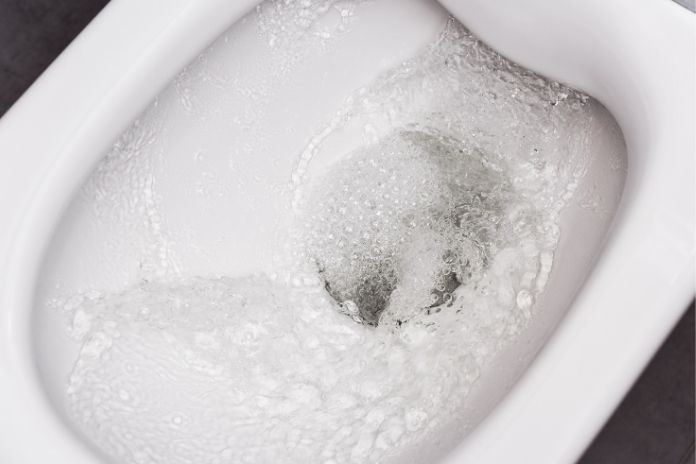
The phrase “toilet plume” may sound different. But it’s something that anyone can find in their own home.
When you flush, water rushes into the bowl at high velocity, causing turbulence. The whirling motion sends tiny droplets in the air, creating a plume that splashes outward and upward.
Those droplets can contain noxious pathogens like:
- Coli: Produces stomach cramps, diarrhea, and can cause foodborne illness.
- Norovirus: Highly contagious and spreads through soiled surfaces, resulting in vomiting and flu-like illness.
- Clostridioides Difficile (C. diff): Causes severe infection of the colon, particularly in older adults and those who have less immunity.
Other bacteria and viruses that survive on fecal material and urine.
Why it occurs: The more powerful the flush, the greater the turbulence, creating a bigger and more energetic plume. Public toilets, especially, are a hub of infections and contamination. In essence, every flush is a micro-explosion of microbes, dispersing out of the toilet bowl into the area around it.
Consider each flush similar to shaking up a soda can. If you open it right away, the contents spray everywhere. The toilet plume functions in the same manner. And, closing the lid is the only method of containing most of the spray.
How Far Can Toilet Germs Travel?

If you wonder whether the toilet germs are not far-reaching, read this. Research shows just how far germs on a flush can travel:
- Distance: When you flush, the droplets travel as far as 8 meters, spreading to counters, sinks, mirrors, and even items on shelves.
- Items at Risk: Toothbrushes, razors, makeup brushes, towels, and phones are especially risky if they are not covered.
- Airborne Existence: Particles that become airborne in minutes or hours have a higher likelihood of being inhaled or causing secondary infections.
A 2022 study that utilized laser imaging revealed that flushes at high pressure generate powerful air currents that spread bacteria throughout small bathroom environments. Another study indicated that open-lid flushing deposited bacteria up to 12-fold on surfaces than lid-down flushing.
Imagine a child brushing their teeth shortly after a sibling flushed. Germs in the plume can land on the toothbrush or towel, exposing them to bacteria and viruses without ever coming into contact with the toilet itself.
Health Risks of Flushing With the Lid Open
The toilet plume is more than gross. It can have serious health effects, such as:
- Gastrointestinal Infections: coli and C. diff bacteria can cause stomach cramps, diarrhea, and serious intestinal illnesses. Kids and older adults are especially at risk.
- Viral Illness: Norovirus becomes airborne very easily through contaminated surfaces. A small number of particles on towels or toothbrushes can easily infect a person.
- Respiratory Exposure: Airborne pathogens can be breathed in, especially in non-ventilated bathrooms, which raises the risk of respiratory infection.
- Shared/public Toilets: Busy places experience several flushes, dispersing germs over and over again. Each exposure adds to the cumulative risk.
Here are a few people particularly at risk:
- Kids who cross-touch many surfaces and insert their hands into their mouths
- Older adults with weak immune systems
- Individuals with chronic conditions or those with weak immunity
A study showed that bacterial contamination on toothbrushes was significantly higher in bathrooms where lids were left open, indicating how daily habits directly influence microbial exposure in your home.
Read More: 7 Ways to Protect Yourself From Indoor Pollution: A Survival Guide for Healthy Living
Other Common Bathroom Hygiene Mistakes
Even after closing the lid, other habits can unintentionally increase germ spread:
- Leaving toothbrushes uncovered, as bristles absorb airborne bacteria from toilet plumes.
- Rushed handwashing is another mistake we all make. Quick rinses are ineffective. Experts recommend at least 20 seconds with soap.
- Sharing towels is a big no. Wet towels contain bacteria and fungi, and sharing leads to cross-contamination.
- Glossing over high-touch areas, such as flush handles, faucets, and doorknobs. You may catch bacteria if these are unclean.
- Cleaning with the same cloth in all places seems normal, but it is a mistake we all make. Cleaning the toilet and sink with the same cloth spreads germs rather than killing them. You may wash your sink thoroughly, but having toothbrushes exposed or towels shared can undo all your efforts in minutes.
How to Reduce Bathroom Germ Exposure
The good news is that bathroom germs, even the feared toilet plume, are highly preventable. With a few simple habits, you can significantly reduce exposure and make a safer bathroom for you and your family.
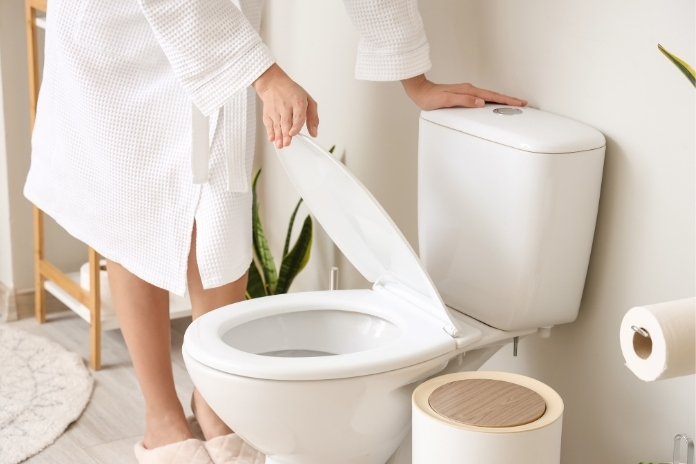
1. Always Flush With the Lid Closed:
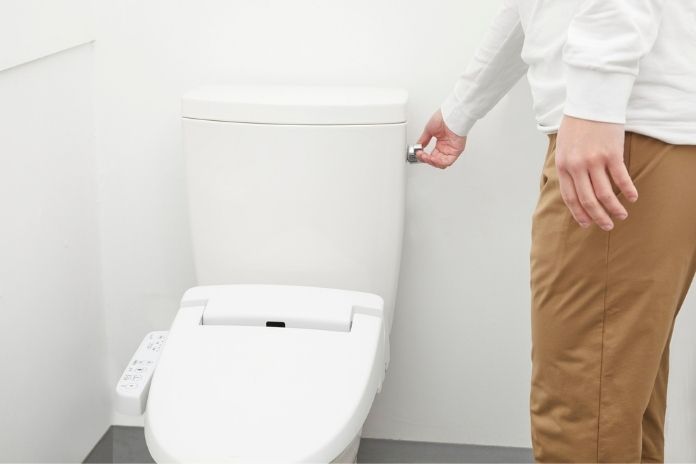
Closing the toilet lid before flushing is the single most effective way to stop germs from escaping into the air. Studies have shown that lid-down flushing can reduce bacterial dispersion by up to 30-60%. Consider it a physical barrier that keeps microscopic droplets and the pathogens they carry contained within the bowl.
Real-life example: In homes with small children, an open lid can mean that each time the toilet is flushed, it releases bacteria onto toothbrushes and towels, invisibly raising their chances of GI infections. Establishing a simple habit of shutting the lid every time it is used helps keep everyone safe, particularly the most vulnerable.
2. Store Personal Belongings Covered and Properly:
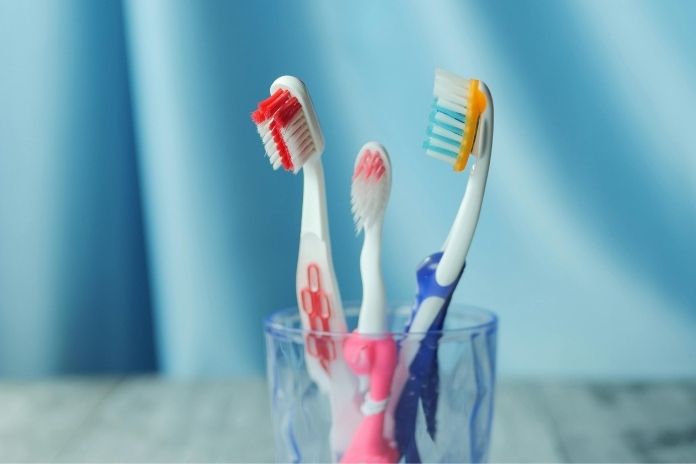
Razors, toothbrushes, makeup brushes, and facial brushes are prime sites for toilet plume contamination. Keeping them out in the open is basically leaving an air landing pad for airborne germs.
- Use covered containers or cabinets. Toothbrushes within a covered holder or within a cabinet significantly reduce contact with airborne droplets.
- Have separate wet and dry places. Wet sponges and makeup brushes are perfect places for bacteria to grow. Store them in ventilated containers.
- Regular replacement of items such as toothbrushes and cleaning applicators is necessary periodically, especially after illness, to minimize the risk of contamination.
3. Enhance Bathroom Ventilation:
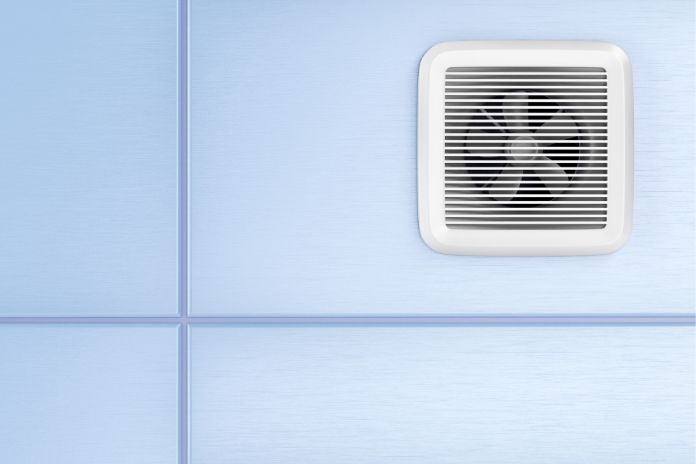
Airborne germs survive longer in closed-up bathrooms. Good ventilation, either through an exhaust fan or an open window, dilutes airborne particles and disperses them quickly.
- Tips for exhaust fans: Use fans for 10–15 minutes after each flush.
- Open windows: If possible, use cross-ventilation, that is, open windows, to bring fresh air through.
- Portable air purifiers: In bathrooms without sufficient ventilation, HEPA filters can help with microscopic droplets and reduce contamination.
4. Clean Frequently and Properly:
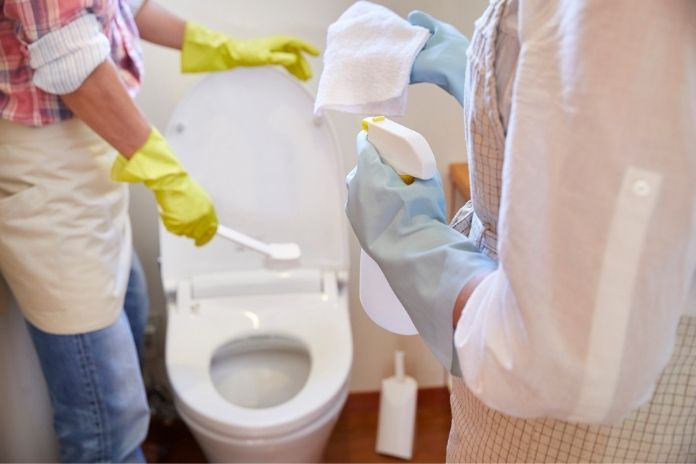
Cleaning isn’t just about the appearance or look of the toilet seat. It’s about removing germs before they spread.
- Disinfect toilets, counters, and sinks 2–3 times per week: Focus on surfaces that get the most exposure from airborne droplets.
- High-touch points such as flush handles, faucet knobs, and doorknobs are germ magnets. Try to disinfect them daily if possible.
- Use separate cleaning equipment to prevent cross-contamination. Do so by keeping cloths or sponges for the toilet separate from those for sinks and countertops.
- Use EPA-registered disinfectants or a bleach-water solution for best results.
Dr. Pete He, chief scientist at Dirty Labs, not just recommended flushing while the lid is down, but also emphasized having clean toilets. explains how he recommends leaving the toilet lid down before flushing. “In addition to keeping the toilet bowl in good hygiene, it is also important to regularly clean the lid, exterior surfaces of the toilet bowl and water tank, and the floor nearby by using a disinfectant,” Dr. He says.
5. Take Special Precautions in Public Bathrooms:
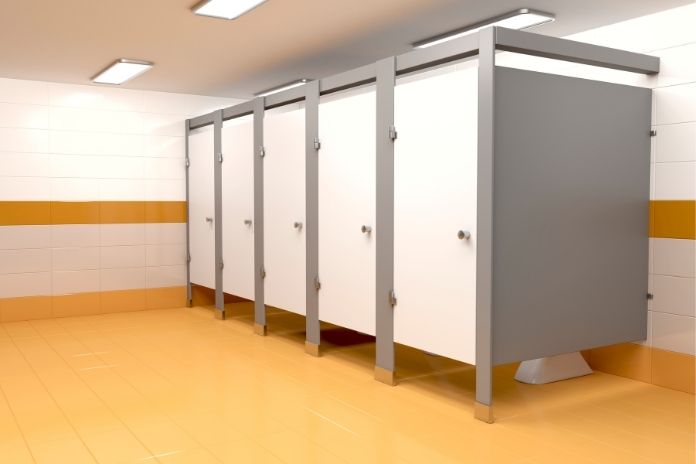
Public restrooms are risk areas for exposure to the toilet plume. Adhering to these precautions can help you:
- Close the lid if available. Even in public bathrooms, a lid prevents droplets from spreading.
- Back off while flushing. Without a lid, stand a few feet away to minimize direct contact.
- Handle surfaces with care. Use paper towels when turning faucets, flushing handles, and doors.
- Don’t put personal items on countertops. Phones, makeup, and towels are convenient targets for airborne pathogens.
Pro tip: Approach public toilets as high-risk areas. Your care in them is as important, or perhaps more so, than at home, since the germs are transmitted with each user who flushes with the lid up.
Read More: Why You Always Feel Like You Have to Pee (Even After Going)
Conclusion: Why Lid-Down Flushing Changes Everything
Flushing with the lid up might appear harmless, but the truth is stark: every flush releases thousands of tiny droplets into your bathroom, carrying viruses and bacteria that deposit onto toothbrushes, towels, countertops, and even electronic products. This unseen toilet plume is a very real, science-backed risk to the health of your family.
The good news is that you don’t have to spend money on fancy gadgets or renovations to protect yourself. Simple, habit-forming routines, such as closing the lid, keeping personal items covered, wiping strategically, ventilating well, and being extra cautious when out in public, can significantly reduce your chances of exposure.
Consider it similar to the use of a seatbelt: a tiny daily practice that avoids several unseen hazards. Eventually, these precautions not only protect your health but also alleviate the load of frequent sicknesses and make your home a cleaner and safer place.
Recall, the fight against germs should not make you worried, but it calls for awareness and action. Begin today: make lid-down flushing second nature, house your personal belongings responsibly, and clean in a deliberate manner. Every small move adds up to a healthier, safer bathroom experience for you and your family. And, closing the toilet seat lid is just one of those!
References
- https://www.cdc.gov/infection-control/hcp/environmental-control/air.html
- https://www.researchgate.net/publication/377728239_Impacts_of_lid_closure_during_toilet_flushing_and_of_toilet_bowl_cleaning_on_viral_contamination_of_surfaces_in_United_States_restrooms
- https://microbiologysociety.org/news/society-news/does-putting-the-lid-down-when-flushing-the-toilet-really-make-a-difference.html
- https://www.dettolarabia.com/common-infections/health-hands-body/hand-washing-guide/
- https://impactfactor.org/PDF/IJPCR/16/IJPCR,Vol16,Issue7,Article15.pdf
- https://pubmed.ncbi.nlm.nih.gov/32301491/
In this Article