















Pregnancy is a unique and distinct experience for every woman. One common denominator, though, is that every woman undergoes significant transformations.
Now, for some, it can be a breeze, with glowing skin and easy, active days. For some, the journey becomes difficult with new or old health issues flaring up.
One such topic we cover in this article is eczema during pregnancy.
It happens because the pregnancy hormones (fluctuations) and changes in the immune system shift your body’s response to irritants and its ability to retain moisture.
The downside is that the itchy, inflamed patches, redness, and dryness that result from eczema can also occur in women who have never had it before. And in the case of previous history, pregnancy can trigger a flare-up.
The condition is quite common; however, the upside is that it’s temporary and easily manageable, with safe treatment options that are available.
This article provides an exhaustive guide on everything related to eczema during pregnancy, including its causes, symptoms, safe remedies, skincare tips, and when to consult a dermatologist or an OB-GYN.
Read More: 10 Everyday Triggers of Atopic Dermatitis (Eczema) Flare-Ups—and How to Avoid Them
An Overview: What You’ll Learn
- The reasons how hormonal/immune changes can cause or flare up eczema during pregnancy
- Common symptoms and where it develops
- Pregnancy eczema treatment – Safe skincare ingredients, pregnancy-friendly moisturizers, home remedies, and medications
- Natural ways to soothe itching and dryness
- When to consult the relevant doctor
What Causes Eczema During Pregnancy?
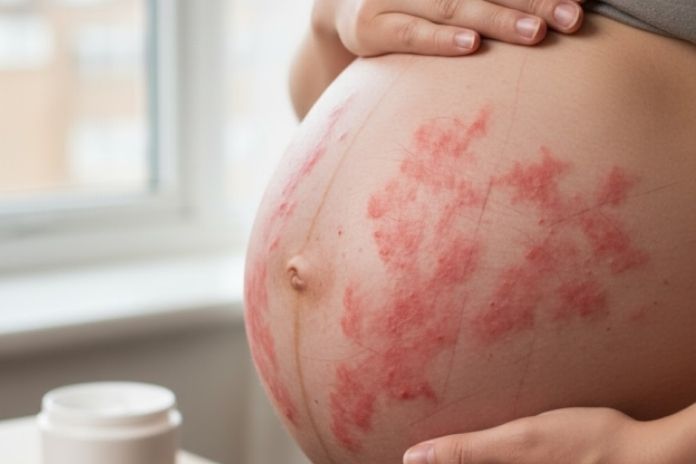 Pregnancy causes numerous changes in the body, including alterations to systems such as the skin barrier and the immune system.
- Hormonal changesor fluctuations in estrogen and progesterone can affect the skin barrier, making the skin more sensitive to environmental factors and reducing its ability to retain moisture.
- There is a shift or fluctuation in the immune system during pregnancy. It becomes slightly suppressed, which protects the baby (an active immune system can attack the growing baby as an invader); however, it also reduces skin sensitivity, causing your skin to react more strongly to allergens and irritants.
- Factors like genetics or a history of atopic dermatitis can lead to a higher likelihood of flare-ups during pregnancy.
- Environmental triggers like weather, harsh soaps, fragrances, stress, allergens (dust, pet), etc., can lead to women contracting the disease.
- Sometimes, other pregnancy skin conditions like PUPPP or atopic eruption of pregnancy (AEP) can mimic the condition and look like eczema. Aim for a precise diagnosis before starting on any medication.
Key Insight
Did you know – 20-40% of women who end up contracting eczema during their pregnancy had a prior history of eczema.
“During pregnancy, a shift takes place in a woman’s body from Th1-dominant to Th2-dominant immunity, which makes the mother more sensitive to allergens — in other words, to triggers that aggravate asthma, food allergies, and eczema.”
— Dr. Jenny Murase, Dermatologist, University of California-San Francisco
Common Symptoms and Where Eczema Appears
- Red, itchy, or inflamed patches on face, neck, chest, elbows, or behind knees/hands.
- Dry, flaky, or scaly skin
In some cases, eczema may first appear during pregnancy, even if the skin was previously calm and clear. Severe itching can significantly impact sleep quality, potentially increasing stress levels and exacerbating eczema. So, it’s better to get an early diagnosis and treatment to break the cycle.
Additionally, symptoms can worsen at night.
Read More: White Spots on My Nipples: What They Mean and When to Worry
Safe Treatments and Skincare Options During Pregnancy
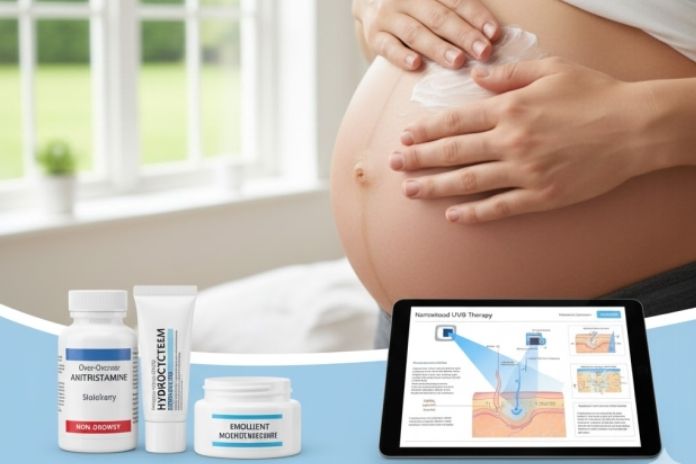 1. Moisturize Your Skin Frequently
This is the most crucial and primary step in treating pregnancy-related eczema.
Choose:
- Fragrance-free, hypoallergenic creams or ointments.
- Petroleum jelly or thick ointments will help seal in moisture as effectively as possible.
- Ceramide-rich moisturizers.
Avoid:
- Alcohol-based lotions.
- Products with strong scents
2. Topical Steroids (Use Only as Directed)
- Mild-to-moderate steroids, such as hydrocortisone, can help alleviate itching and redness. Remember to use it only under the supervision of a healthcare professional.
- Don’t go for potent steroids unless prescribed by your doctor.
3. Non-Steroidal Creams and Ointments
- Anti-inflammatory medications, such as tacrolimus or pimecrolimus, may be used, but only with approval from your doctor.
- Emollients remain first-line therapy.
4. Antihistamines for Itch Relief
- Certain antihistamines, like chlorpheniramine, are considered to have a low risk in pregnancy. But always confirm with the OB-GYN first before starting anything.
5. Light Therapy (Phototherapy)
- In cases of severe eczema, Narrowband UVB treatment is a safe and steroid-free option for people who are unresponsive to creams.
Read More: 16 Reasons Why Argan Oil is a Game-Changer for Your Health, Skin, and Hair
Natural and Home Remedies for Eczema Relief
 A lot of women would prefer gentle non-medicated approaches during pregnancy – some of which are listed below.
- Oatmeal and lukewarm baths – The compounds in oatmeal have natural anti-inflammatory effects. It forms a protective layer over the skin, locking in moisture and soothing itching. Add a cup to a lukewarm bath, soak for 15 minutes, and apply a moisturizer immediately afterwards.
- Coconut oil or aloe vera – These remedies will help strengthen the skin barrier, reduce inflammation, moisturise and cool the skin, and calm itching. Opt for cold-pressed and unrefined coconut oil and pure aloe vera gel.
- Cool compresses – Cold temperature helps in calming the skin by reducing nerve activity. The result would be a lesser urge to scratch. Use a soft towel soaked in cool water to gently clean and soothe the area. However, avoid applying ice directly, as it can irritate.
- Wear soft, breathable clothing – Opt for fabrics like cotton, linen, and bamboo to keep your skin comfortable. Fabrics like wool and polyester can irritate your skin and trap heat, exacerbatingyour eczema. Also, avoid tight, friction-causing clothing.
- Avoid hot showers and strong soaps – Hot showers strip your skin of natural oils, making it drier. Avoid taking longer showers and using strong, fragrant soaps.
- Use a humidifier – An AC or heater – can make the indoor air dry, pulling moisture out of your skin. Use a humidifier while sleeping, targeting a humidity level of 40–50%. This helps reduce overnight dryness, minimise morning itching, and support skin barrier recovery at night.
- Diet and hydration – Opt for omega-3-rich foods, such as walnuts and flaxseeds, along with leafy greens and hydrating fruits. Maintain a high water intake to help combat internal inflammation.
Skincare Ingredients to Avoid During Pregnancy
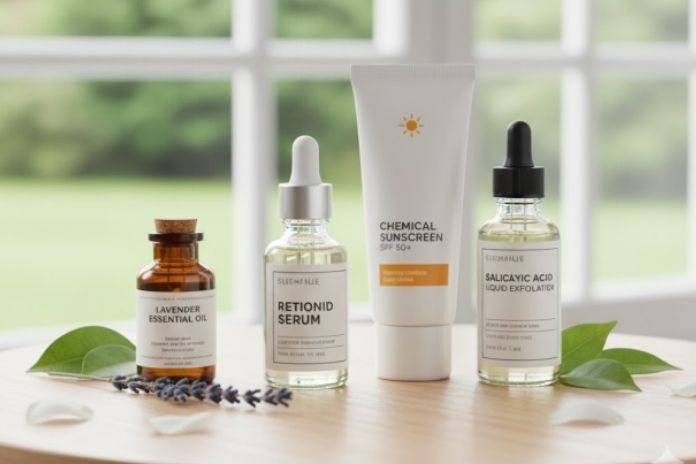 These ingredients are not safe during pregnancy and should therefore be avoided.
- Retinoids (Vitamin A derivatives) — Unsafe for fetal development and have a risk of harming the fetus. You can find them in anti-ageing creams, night repair serums, and acne treatment.
- High-strength salicylic acid can be absorbed into the bloodstream, and the risks are similar to those of ingesting oral aspirin during pregnancy.
- Highly fragrant essential oils can irritate the skin and trigger sensitivity. Not all are unsafe, but some can cause hormonal effects, uterine stimulation, and skin sensitivity. Avoid using oils like rosemary, cinnamon, and peppermint on a regular basis. Always remember to dilute the oils you use appropriately and avoid applying them directly to the skin, especially the abdomen.
- Chemical sunscreens, skin lightening creams, or chemical peels – Chemicalsunscreen agents can cross the placenta, so mineral sunscreens are better. Avoid using dark spot correctors or pigmentation creams. Additionally, avoid using glycolic acid, TCA, Jessner peels, and other similar products.
Always patch test new products and consult your dermatologist if you are unsure about their safety.
Read More: Why Is My Pregnant Belly Sometimes Hard and Sometimes Soft? What It Means and When to Worry
When to See a Doctor
- If the eczema is spreading quickly and becoming worse.
- Persistent itching that’s affecting your sleep and causing stress and anxiety.
- Signs of infection include redness, crusting, swelling, oozing, fever, and others.
- Onset of new eczema-like rash late in pregnancy, which could mean PUPPP or cholestasis.
Quick Recap – What You Need to Remember
Eczema during pregnancy might feel like a very uncomfortable condition, with all the other changes going on in the body. However, the good news is that it’s completely manageable with a bit of care and attention.
Here are a few quick tips to help you tackle the issue more smoothly.
- Eczema during pregnancy is common due to hormonal, immune, and skin barrier changes. Changes in hormones and the immune system can lead to extra-sensitive skin, which may cause a sudden onset of the condition even if you have never experienced it before.
- With gentle skincare, safe moisturizers, and medical guidance, most women can manage symptoms comfortably. Opt for soft fabrics, lukewarm showers, a humidifier, a balanced diet, and stress management techniques such as deep breathing and meditation.
- Non-medicated routes, such as oatmeal baths, coconut oil, and aloe vera gel, can help you tackle the condition more effectively.
- Always consult your doctor before using any prescription or over-the-counter eczema treatment while pregnant. Also, look out for signs like oozing, cracking, infection, or pain to seek immediate professional help.
FAQs
● Is eczema during pregnancy dangerous for my baby?
It won’t harm the baby. It may cause you discomfort (skin health issues), but it won’t affect your baby’s health.
● Can pregnancy cause or make eczema worse, even if I never had it before?
Shifts in immunity, hormones, and skin barriers can result in eczema for the first time during pregnancy, even if you have never had it.
● Are steroid creams safe to use while pregnant?
Mild steroids are generally considered safe. However, medical advice is mandatory before starting any treatment.
● What natural remedies can help alleviate eczema during pregnancy?
Colloidal oatmeal, coconut oil, aloe vera gel, cool compresses, soft clothing, lukewarm showers, gentle cleansers, a humidifier, a balanced diet, hydration, and mind-body techniques.
● How long does pregnancy-related eczema last?
In most scenarios, it improves after childbirth; however, in some cases, women might still experience flare-ups while breastfeeding.
References
- https://health.clevelandclinic.org/weird-symptoms-of-low-estrogen
- https://midcityobgyn.com/posts/pregnancy/how-pregnancy-affects-the-immune-system/
- https://nationaleczema.org/blog/oh-baby-eczema/?utm_source=chatgpt.com
- https://www.ucb-usa.com/Healthcare-Professionals/Immunology-Wellness-Connect/Wellness4U/Speakers/Jenny-Murase
- https://www.bad.org.uk/
- https://pmc.ncbi.nlm.nih.gov/articles/PMC8634827/
- https://my.clevelandclinic.org/health/diseases/22374-puppp-rash
- https://my.clevelandclinic.org/health/diseases/17901-cholestasis-of-pregnancy
- https://pmc.ncbi.nlm.nih.gov/articles/PMC1925231/?utm_source=chatgpt.com
- https://www.healthspectra.com/10-everyday-triggers-of-atopic-dermatitis-eczema-flare-ups-and-how-to-avoid-them/
- https://www.healthspectra.com/white-spots-on-my-nipples-what-they-mean-and-when-to-worry/?utm_source=chatgpt.com
- https://www.healthspectra.com/why-is-my-pregnant-belly-sometimes-hard-and-sometimes-soft-what-it-means-and-when-to-worry/?utm_source=chatgpt.com
In this Article