













It’s 9:30 PM. You’ve finally wrapped up the day. Dinner ran late, or maybe you skipped it because work got out of control. You’re hungry, but that familiar voice pops up immediately: “Don’t eat now. Eating after 8 PM causes weight gain.” That warning seems everywhere, on fitness forums, in diet plans, and from friends who swear the clock matters more than anything else.
The truth is more complicated. Eating late at night does not automatically make you gain weight. Your body doesn’t store fat simply because of the hour. Weight gain is influenced by total calories, food quality, sleep patterns, hormonal balance, and consistency over time, not by an arbitrary cutoff on the clock.
That said, late-night eating can contribute to weight gain in certain contexts, especially when it leads to extra calories, poor food choices, or disrupted sleep, but the reason isn’t what most people assume. Understanding the origin of this “8 PM rule,” what research actually says, and how your body responds to late-night meals can help you make smarter, personalized choices that fit your lifestyle.
In this article, we’ll dive into the myths and realities of late-night eating, examine how timing interacts with metabolism and hormones, and provide practical strategies for managing evening meals without guilt or unnecessary restrictions.
Where the “Don’t Eat After 8 PM” Rule Came From

The idea that eating late at night automatically causes weight gain didn’t come from metabolism research; it emerged from observation, oversimplification, and diet culture.
Early weight-loss programs thrived on structure. Fixed meal times were easy to teach, track, and enforce. Telling people to “stop eating after dinner” often worked because it automatically reduced calorie intake, even if the reasoning behind it wasn’t scientifically sound.
It was simple, actionable advice, which made it stick, regardless of whether the timing itself mattered.
Researchers noticed a pattern: people who regularly ate late at night often consumed more calories overall. The mistake was assuming the timing caused weight gain, rather than recognizing the real culprits that tend to accompany late-night eating: ultra-processed snacks, large portions, mindless eating, alcohol, and poor sleep. These lifestyle factors drive calorie surplus far more than the hour on the clock.
Simple rules travel faster than nuanced explanations. “Don’t eat after 8 PM” feels actionable and easy to follow, even though it doesn’t fit everyone’s lifestyle. Shift workers, parents, athletes, and anyone with a non-standard schedule can eat late without automatically gaining fat. The popularity of the rule owes more to its simplicity than to strong scientific evidence.
What Actually Causes Weight Gain
Before worrying about the clock, it’s important to understand what truly drives fat accumulation.
“Weight gain results from consuming more calories than your body uses, and reducing total calorie intake is key to losing weight. The timing of meals doesn’t ‘magically’ change energy balance,” explains Dr. Wendy Bennett, an Associate Professor of Medicine at Johns Hopkins School of Medicine.
Does Eating After 8 PM Automatically Lead to Weight Gain?
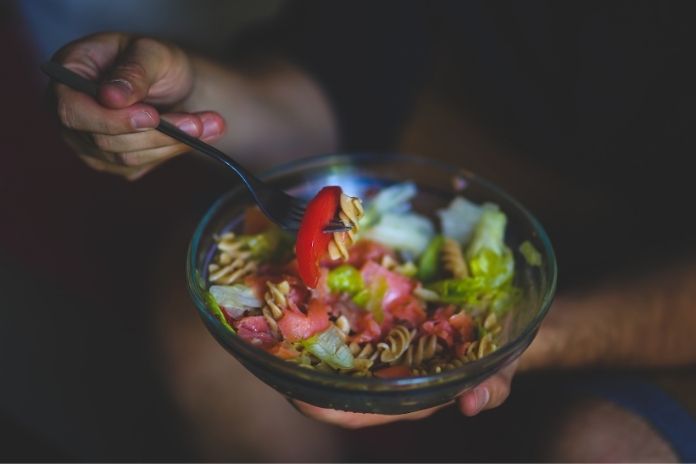
The short answer is no. Weight gain is driven by long-term energy balance, food quality, sleep, and lifestyle, not the clock on the wall. When calorie and macronutrient intake are controlled, meal timing has little to no effect on fat gain.
Metabolic studies where participants ate controlled diets at different times consistently show that fat gain is similar whether meals are eaten morning, afternoon, or late at night, as long as total calories are equal.
A randomized study found that while people who ate later tended to consume more total calories, their timing didn’t predict BMI once calories were accounted for. This supports the idea that eating later is linked with higher total intake, not that timing alone causes weight gain.
Your metabolism doesn’t shut down at night. Your basal metabolic rate continues 24/7—you burn energy while sleeping, breathing, and digesting. The thermic effect of food occurs whether you eat at noon or 10 PM.
Observational studies often report that late-night eaters have higher body weight, but correlation isn’t causation. Late-night eating frequently accompanies other behaviors that contribute to weight gain: skipping earlier meals, stress-driven snacking, irregular eating patterns, and sleep disruption. These accompanying factors, rather than the clock itself, are the real drivers.
Late-night meals can cause short-term weight gain due to water retention, glycogen storage, and increased food volume in your gut. But this isn’t fat gain. True fat accumulation only occurs with a sustained calorie surplus over time.
Practical takeaway: Eating after 8 PM isn’t inherently fattening. What matters is total daily calories, food quality, and healthy habits. If your late-night meal fits your overall energy needs, doesn’t disrupt sleep, and is balanced, it won’t cause fat gain. Late eating only becomes problematic when it leads to overeating, poor food choices, or chronic sleep loss.
Why Late-Night Eating Is Sometimes Associated With Weight Gain
Late-night eating isn’t inherently harmful, but certain patterns can make it more likely to contribute to weight gain. The problem is usually not the timing itself, but the types of foods consumed, how they are eaten, and how they interact with sleep and appetite hormones.
Food Choices Tend to Be Less Nutritious
Few people reach for grilled salmon and steamed vegetables at midnight. Late-night snacks tend to be calorie-dense, highly processed, and easy to overeat: chips, cookies, ice cream, sugary cereals, and other convenience foods.
These are not only high in calories but low in satiety, making it easy to consume more than your body needs without feeling full. Over time, repeated late-night indulgences can push daily calorie intake beyond energy expenditure.
Distracted Eating Undermines Fullness Cues
Late-night eating often happens in front of screens. Scrolling on your phone, watching TV, or decompressing after a long day. This distracted eating disconnects your mind from natural hunger cues, making it difficult to gauge portions and stop when full.
In this Harvard Health post, Dr. Howard E. LeWine explains that distracted or hurried eating tends to make people eat more at that meal and can lead to overeating later on, because the brain doesn’t fully register what you’re eating when you’re not paying attention. That leads to more calories consumed without the usual sense of satisfaction.
Poor Sleep Disrupts Appetite Hormones
Eating late can interfere with sleep quality, particularly if meals are heavy, spicy, or high in sugar. Poor sleep affects hormones that regulate appetite: ghrelin (which increases hunger) rises, while leptin (which signals fullness) drops. Over time, these hormonal changes can increase cravings, encourage snacking, and make it harder to regulate calorie intake.
The bottom line: Late-night eating only becomes a concern when it encourages higher-calorie choices, distracts you from mindful eating, or disrupts sleep. The timing itself isn’t fattening—but the patterns that often accompany late meals can make weight gain more likely.
Read More: 15 Effective Ways To Stop Binge Eating At Night
Meal Timing, Circadian Rhythm, and Metabolism

Meal timing does interact with biology, but not in the dramatic, “eat-before-8-PM-or-you’ll-get-fat” way often suggested by diet culture. Understanding the relationship between when you eat, your body’s internal clock, and metabolism can help you make smarter choices without unnecessary restriction.
Our bodies run on a natural 24-hour cycle called the circadian rhythm, which influences hormone release, digestion, and metabolism. Research published in Cell Metabolism shows that insulin sensitivity tends to be higher earlier in the day, while glucose tolerance can decline at night for many individuals.
For most healthy people, this doesn’t mean late meals automatically lead to fat gain. It simply means that blood sugar may rise slightly more after a nighttime meal, something that is most relevant for people with insulin resistance or type 2 diabetes.
For individuals with metabolic conditions, very large or heavy late-night meals can slightly elevate overnight blood glucose, disrupt sleep, and increase hunger the next day. These effects are real but generally modest compared to the influence of total daily calorie intake. In other words, eating a controlled, balanced meal at night will not undo your diet or automatically cause fat gain.
A 2020 Nutrients review on food timing, circadian rhythm, and metabolism discusses how meal timing can influence insulin and glucose responses and other metabolic markers, and places those effects in the context of overall energy intake and metabolic regulation.
Eating After 8 PM for Different Goals
Whether late-night eating supports or undermines your goals depends on what you eat, how much, and how it fits into your overall routine.
For Weight Loss:
Late-night eating can work if total daily calories are controlled and food choices are intentional. Eat in response to real hunger, not stress, boredom, or habit. For some people, a planned evening meal or snack actually prevents overeating earlier in the day and improves diet adherence.
For Muscle Building:
Evening meals are highly beneficial for those building muscle. Eating protein-rich foods before bed supports post-workout recovery and enhances muscle protein synthesis overnight.
A randomized controlled trial published in The Journal of Nutrition found that protein consumed right before sleep (casein) is properly digested and absorbed during the night and increases overnight muscle protein synthesis in healthy older men. It provides precursors for muscle repair and growth throughout sleep.
For Blood Sugar Management:
Individuals with diabetes, prediabetes, or insulin resistance may benefit from slightly smaller evening meals, consuming most carbohydrates earlier in the day, and maintaining consistent meal timing. These adjustments can help manage overnight glucose levels, though personal response varies.
What to Eat at Night If You’re Hungry
Feeling hungry at night is a biological signal that your body needs energy. The right foods can satisfy hunger without disrupting sleep or derailing your goals.
Best Choices:
- Greek yogurt or cottage cheese
- Hard-boiled eggs or a protein shake
- Fruit with nut butter
- Small bowl of oatmeal
- Handful of nuts with a piece of fruit
These options provide protein, fiber, and slow-digesting nutrients that promote fullness without overloading calories or spiking blood sugar.
Foods to Limit Before Bed: Heavy, greasy meals, alcohol, large amounts of sugar, and very spicy foods can interfere with sleep quality and digestion. Limiting these late at night helps you rest better while still allowing for hunger-driven snacks when needed.
Read More: Why Meal Timing Matters: Eating for Energy and Recovery
When Eating Late May Be a Problem

Eating late isn’t automatically bad. It becomes problematic when it’s reactive rather than intentional.
Emotional or Stress-Driven Eating: Many people turn to food at night as a coping mechanism for exhaustion, stress, or anxiety. Mindless eating triggered by emotions often leads to excess calories and poor food choices. In these cases, the timing is a symptom rather than the cause of weight gain.
Habitual Overeating: Consistently consuming large portions or high-calorie snacks late at night can push total daily intake above what your body needs. When late-night eating becomes habitual and heavy, it can contribute to a sustained calorie surplus and eventual fat gain.
Undereating During the Day: Skipping meals or not eating enough earlier often leads to overeating at night. Appetite regulation works best when meals are consistent and balanced throughout the day, reducing the likelihood of extreme hunger and reactive eating after 8 PM.
Common Myths About Late-Night Eating
Late-night eating is surrounded by myths that overcomplicate a simple truth: timing alone does not determine fat gain.
“Calories eaten at night turn into fat.” This is false. Your body does not have a switch that converts calories into fat based on the hour. Weight gain is driven by long-term energy balance, not the clock.
“Your metabolism stops after dinner.” Also false. Your metabolism runs continuously, even while you sleep. Basal metabolic rate and the thermic effect of food ensure your body is burning energy 24/7.
“Skipping dinner helps weight loss.” Often, skipping dinner backfires. It can increase nighttime hunger, reduce adherence to a calorie-controlled plan, and even trigger stress-driven snacking. Consistency and balance matter far more than skipping meals for arbitrary reasons.
How to Decide If Eating After 8 PM Is Right for You
Rather than focusing on an arbitrary cutoff time, it’s better to ask questions that consider your hunger, daily intake, and lifestyle.
Ask yourself:
- Am I truly hungry, or am I eating out of boredom or stress?
- Did I eat enough during the day to meet my energy needs?
- Will this meal affect my sleep quality?
- Does this fit within my daily calorie and nutrition goals?
Match eating patterns to your life: Everyone’s schedule is different; shift workers, athletes, parents, and students often have late evenings built into their routines. Flexible eating that adapts to your lifestyle is more effective than following a strict, universal cutoff.
Consistency beats rigid rules: Rigid rules often fail when real life interferes. Sustainable routines, eating when you’re hungry, choosing nutrient-dense foods, and spreading calories reasonably throughout the day, are far more effective for long-term health and weight management than worrying about whether it’s “past 8 PM.”
Practical takeaway: Late-night eating is only a problem when it becomes reactive, heavy, or habitual. Focus on hunger cues, consistent nourishment, and mindful choices, rather than strict clocks. By doing so, you can eat late when necessary without sabotaging health, weight, or sleep.
Conclusion
Eating after 8 PM is not inherently harmful and does not automatically cause weight gain. The body does not have a strict cutoff for storing fat, and metabolism continues to function throughout the night. What truly influences weight and overall health is total daily calorie intake, the quality of the foods you eat, your sleep, and the consistency of your eating habits.
Late-night meals only become a problem when they are reactive rather than intentional, when you eat out of stress, boredom, or leftover hunger from skipped meals, or when portions are excessive and calorie-dense. The key is intentionality and consistency.
Planning balanced, nutrient-dense late-night meals, such as Greek yogurt, cottage cheese, eggs, fruit with nut butter, or oatmeal, can satisfy hunger without adding unnecessary calories.
Avoid mindless snacking on highly processed or sugary foods, and be mindful of how late eating affects sleep quality. Align meals with your lifestyle, activity patterns, and personal schedule, rather than following arbitrary rules or the “8 PM cutoff.” Ultimately, eating after 8 PM can be part of a healthy routine when approached thoughtfully.
By focusing on hunger cues, portion control, balanced choices, and consistent habits, you can eat late without guilt, maintain metabolic health, and achieve your weight or wellness goals. The clock matters far less than what, how much, and why you eat, making flexibility and mindfulness the most effective tools for sustainable eating.
References
- WebMD. (n.d.). Diet truth or myth: Eating at night causes weight gain. WebMD.
- Health.com. (2023). Does eating after 8 p.m. really cause weight gain? Health.
- Paoli, A., Tinsley, G., Bianco, A., & Moro, T. (2019). The influence of meal timing and frequency on body weight and body composition. Nutrients, 11(1), 1–24.
- What I’ve Learned. (2016, August 21). Does eating at night make you fat?
- UAMS Health. (n.d.). Does eating late at night make you fat? UAMS Health.
- Harvard Health Publishing. (2020). How can meal schedules affect your weight?
- The Endocrine Society. (2020). People who eat a late dinner may gain weight.
- ArchWell Health. (n.d.). Will eating after 7 cause weight gain?
- Manna Plus. (n.d.). Does eating before bedtime cause weight gain?
- SecondMedic. (n.d.). Do late-night meals cause weight gain? Let’s uncover the truth.
- Qubit Fitness. (n.d.). The truth about eating late at night and weight gain.
- Holwerda, A. M., Kouw, I. W. K., Trommelen, J., Halson, S. L., Wodzig, W. K. W. H., Verdijk, L. B., & van Loon, L. J. C. (2016). Physical activity performed in the evening increases the overnight muscle protein synthetic response to presleep protein ingestion in older men. The Journal of Nutrition, 146(7), 1307–1314.
- Morris, C. J., Yang, J. N., Garcia, J. I., Myers, S., Bozzi, I., Wang, W., … Scheer, F. A. J. L. (2015). Endogenous circadian system and circadian misalignment impact glucose tolerance via separate mechanisms in humans. Proceedings of the National Academy of Sciences, 112(17), E2225–E2234.
- LeWine, H. E. (2013). Distracted eating may add to weight gain. Harvard Health Publishing.
- Bo, S., Musso, G., Beccuti, G., Fadda, M., Fedele, D., Gambino, R., … Cassader, M. (2014). Consuming more of daily caloric intake at dinner predisposes to obesity: A 6-year population-based prospective cohort study. PLoS ONE, 9(9), e108467.
- Ducharme, J. (2023). Does meal timing matter for weight loss? Time.
- University of Surrey. (2022). Study challenges myth that eating at different times of day leads to differential energy metabolism.
In this Article