












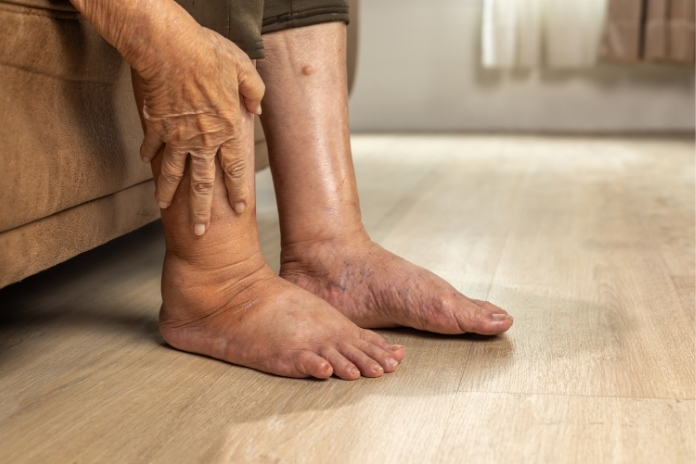
Tired, achy, or swollen feet after a long day are a near-universal complaint. Whether you spend hours standing at a counter, walking on hard surfaces, or sitting at a desk without much movement, your feet bear the brunt of it. By evening, it’s common to feel heaviness, puffiness, or sore muscles that make even simple tasks uncomfortable.
The good news is that most of these problems stem from temporary strain, poor circulation, or mild swelling, and simple steps like stretching, elevating your feet, or adjusting workplace habits can make a noticeable difference. Improving blood flow, easing tight muscles, and supporting recovery not only help your feet feel better at night but also protect them from long-term strain.
That said, not every foot problem is harmless. If you notice sudden or severe swelling, redness, warmth, or pain, it’s important not to dismiss it. These symptoms may signal infections, blood clots, or other medical conditions that require prompt evaluation. Knowing the difference between everyday fatigue and signs of something more serious helps you treat your feet kindly while staying alert to potential health issues.
Why Do Feet Feel Tired or Swollen After Work?
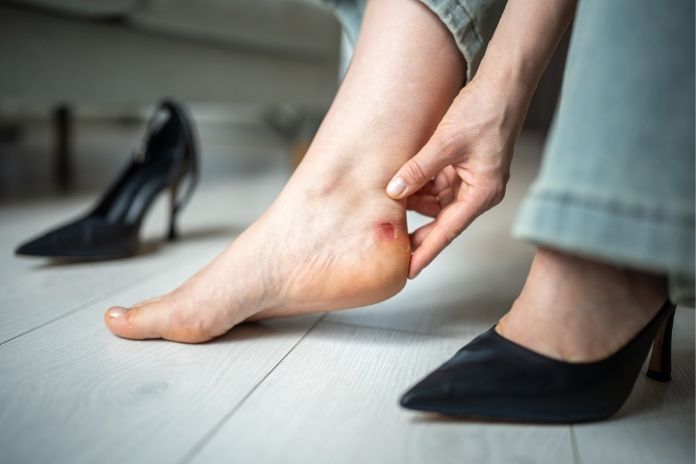
Several predictable forces make feet hurt or puff up by the end of the day:
- Prolonged standing or sitting. Staying upright or immobile for long periods lets gravity pool fluid in the lower legs and feet; this is the most common cause of job-related swelling.
- Hard surfaces and repetitive stress. Standing or walking on concrete, tile, or other unforgiving floors increases mechanical stress on the plantar fascia, heel, and small foot muscles, which leads to fatigue and pain.
- Tight, unsupportive shoes. Shoes without enough cushion, arch support, or toe room increase strain and reduce the foot’s ability to absorb shock.
- Fluid retention and medical causes. Salt intake, some medications, pregnancy, venous insufficiency, and other conditions (kidney, heart, liver problems, or lymphatic issues) can cause peripheral edema that shows up as swollen feet. If swelling is one-sided, painful, or with redness/warmth, get medical attention.
“Leg swelling, or edema, happens when fluid builds up in the tissues of your lower extremities, often signaling an underlying medical condition,” says Mazen Roumia, MD, an interventional cardiologist and independent member of the HonorHealth Medical Staff. “While it can result from non-medical causes like prolonged sitting or standing, high salt intake, or medication side effects, it may also indicate serious issues such as deep vein thrombosis, kidney or liver disease, or heart failure.”
Stretching helps because it improves local muscle flexibility, encourages venous return (blood flow back toward the heart), and relieves tension on structures like the plantar fascia and Achilles tendon, a practical, low-risk first step you can do at your desk or when you get home.
Read More: Swollen Feet: Causes, Symptoms & 10 Natural Remedies That Work
Best Stretches for Relief
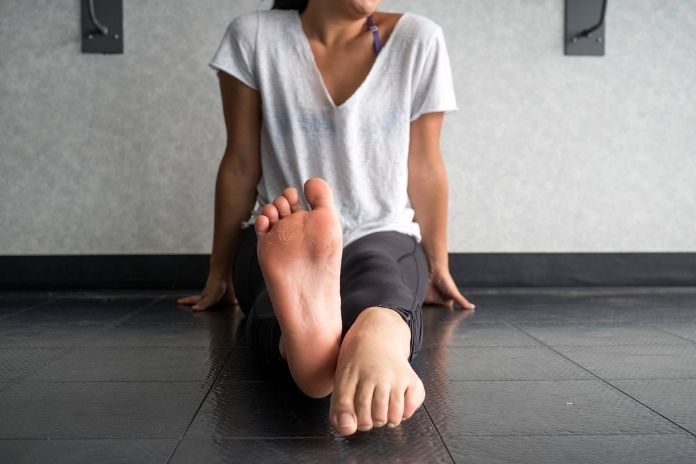
Below are six quick, evidence-based moves you can do in a chair or standing; they take minutes and can provide immediate relief and longer-term protection.
1. Toe Flex and Point (Seated)
How: Sit tall. Extend one leg a few inches, point your toes away, then flex them back toward you. Do 15–20 reps slowly; switch legs.
Why it helps: Alternating point/flex activates the muscles that control blood flow through the foot and stretches the plantar fascia and toe flexors. It’s safe, easy, and useful when symptoms are mild.
2. Ankle Circles (Seated)
How: Lift one foot off the floor and rotate the ankle slowly 10–15 times clockwise, then counterclockwise. Repeat on the other side.
Why it helps: Ankle mobility reduces stiffness, improves circulation, and engages the calf “muscle pump” that pushes fluid up from the foot, helpful after long static periods.
3. Calf Stretch Against a Wall (Standing)
How: Face a wall with your hands on it. Step one foot back, keeping the back knee straight and heel down; bend the front knee and lean forward until you feel a stretch in the calf. Hold 20–30 seconds; repeat 2–3 times per side.
Why it helps: Tight calf muscles increase strain through the Achilles and plantar fascia; loosening them reduces heel and arch pain and improves your push-off mechanics. Multiple clinical guides recommend calf stretching as part of foot-care programs.
4. Seated Foot Roll (Tennis Ball or Frozen Bottle)
How: While seated, roll the sole of your foot slowly over a tennis ball or a frozen water bottle for 1–3 minutes per foot. Apply pressure within comfort.
Why it helps: Self-myofascial release (rolling) loosens tight fascia and can reduce soreness; ice rolling (frozen bottle) also provides short-term anti-inflammatory relief after a long day. Small studies and clinical recommendations support this as a low-risk, symptom-relieving option.
5. Heel Raises (Standing Calf Raises)
How: Stand with feet hip-width apart. Slowly rise onto your toes, hold 1–2 seconds, then lower with control. Perform 10–15 reps; repeat 2–3 sets. Use a support (chair or wall) for balance.
Why it helps: Heel raises strengthen the calf and improve the venous pump action that returns blood from the feet, which both builds resilience and reduces daytime swelling in people who stand a lot. Strengthening programs have shown better outcomes for chronic heel pain when combined with stretching.
6. Towel Stretch (Seated or Lying)
How: Sit with your leg extended. Loop a towel around the ball of your foot and gently pull the towel toward you until you feel a stretch along the arch and calf. Hold 20–30 seconds; repeat 2–4 times.
Why it helps: This classic stretch targets the plantar fascia and Achilles complex and is recommended by orthopaedic and podiatry guidelines for heel/arch pain (including plantar fasciitis). Clinical trials show plantar-fascia-specific stretching improves outcomes over time.
Practical tip: Stop if a stretch produces sharp pain. Gentle discomfort is OK; sharp or worsening pain needs a clinician’s assessment.
Tips to Prevent Foot Fatigue (Simple, evidence-based habits)
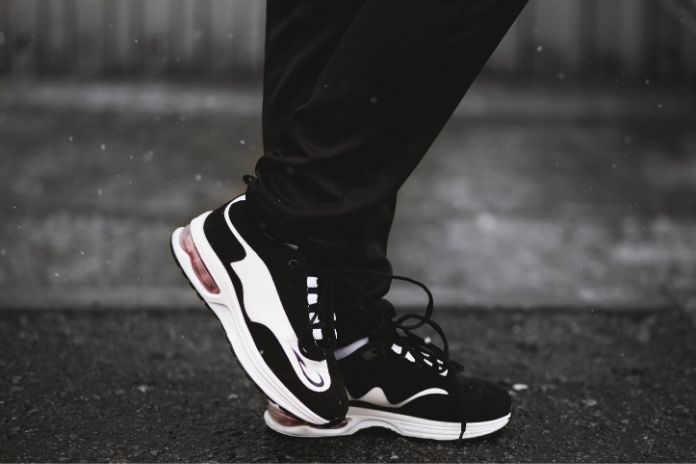
- Wear cushioned, supportive shoes or insoles. Avoid flat, thin-soled shoes for long standing shifts; supportive footwear lowers repetitive strain.
- Elevate your feet after work. Raising feet above heart level for 15–20 minutes helps fluid drain and reduces swelling; repeated elevation sessions are useful for chronic mild edema.
- Use compression stockings when appropriate. Graduated compression (calf-length, 11–21 or 20–30 mmHg depending on need) is shown to reduce occupational leg swelling and improve comfort for people who stand all day. Check fit and medical suitability first.
- Move regularly during shifts. Short walking or marching-in-place breaks every hour activate the calf pump and prevent fluid pooling.
- Watch salt and hydration. Excess sodium can worsen fluid retention in susceptible people; staying well-hydrated and moderating salt intake are sensible measures.
Dr. Britt Tonnessen, MD, at Yale Medicine, emphasizes that “a compression stocking can be particularly helpful for reducing swelling and improving circulation,” especially for workers on their feet all day, but he cautions that people with certain vascular conditions should get medical advice before using compression.
Read More: 6 Best Foot Spas for Swollen Feet
When to See a Doctor
Most daytime swelling and foot soreness respond to the measures above. See a clinician promptly if you have:
- Severe, sudden, or one-sided swelling (possible blood clot).
- Redness, warmth, fever, or worsening pain (possible infection or cellulitis).
- Swelling that doesn’t improve with elevation/compression or recurs despite self-care, you may need evaluation for venous insufficiency, heart/kidney/liver issues, or lymphedema.
- Diabetes, numbness, or non-healing wounds require urgent foot care.
If your job demands long standing, ask your clinician or a podiatrist about custom orthotics, specific strengthening plans, or medical-grade compression to protect you over the long term. Clinical evidence shows that targeted exercise programs and appropriate footwear reduce the recurrence of heel pain and related problems.
Quick At-Home Routine (5–7 minutes)
- Toe flex/point, 20 reps each foot.
- Ankle circles, 10 each direction.
- Calf wall stretch, 30 seconds per side, repeat twice.
- Seated foot roll, 1–2 minutes per foot.
- Heel raises, 2 sets of 12 reps.
Finish by elevating your feet for 10–15 minutes while you relax. Do this nightly and you’ll likely notice reduced soreness and less evening swelling within a few days to weeks.
Bottom Line
Do the simple stretches above, pick supportive shoes, move around periodically during your shift, and elevate your feet or use compression socks if swelling keeps coming back. These habits may sound basic, but when practiced consistently, they help reduce strain, improve circulation, and make a noticeable difference in how your feet feel at the end of the day. Think of them as small investments that pay off daily.
Recovery isn’t just about fixing discomfort once it appears; it’s about preventing it from building up in the first place. Switching to cushioned, supportive footwear, taking micro-breaks to stretch, or rolling your feet over a water bottle after work can all ease tension before it becomes pain. Over time, these routines not only reduce fatigue but also support better posture, balance, and long-term joint health.
That said, not all swelling is routine. If your feet suddenly become painful, swollen on just one side, or show redness, warmth, numbness, or fever, that’s not something to brush off; it’s your body’s way of asking for urgent medical attention. Healthy feet carry you through every shift, every errand, every plan. Treat them well, and they’ll serve you reliably for the long haul.
References
- https://www.keckmedicine.org/blog/6-possible-reasons-why-you-have-swollen-feet-ankles-or-legs
- https://www.medicalnewstoday.com/articles/323265
- https://www.arpfootandankle.com/blog/277138-5-ways-to-soothe-tired-aching-feet
- https://www.health.harvard.edu/diseases-and-conditions/whats-causing-those-swollen-feet
- https://www.kurufootwear.com/blogs/articles/feet-hurt-after-work
- https://www.health.com/condition/heart-failure/swollen-feet
- https://www.webmd.com/a-to-z-guides/swollen-ankles-and-feet
- https://www.mountsinai.org/health-library/symptoms/foot-leg-and-ankle-swelling
- https://my.clevelandclinic.org/health/symptoms/foot-pain
- https://www.mayoclinic.org/symptom-checker/foot-swelling-or-leg-swelling-in-adults-adult/related-factors/itt-20009075
- https://www.maxhealthcare.in/blogs/causes-of-swelling-in-feet
- https://www.nhs.uk/conditions/oedema
- https://www.merivalepodiatry.co.nz/blogs/news/why-do-my-feet-ache-after-work
- https://blog.orthoindy.com/2019/05/13/what-does-it-mean-when-your-hands-and-feet-are-swollen
- https://fasafw.com/blog/how-to-care-for-your-feet-after-being-on-them-all-day
In this Article