












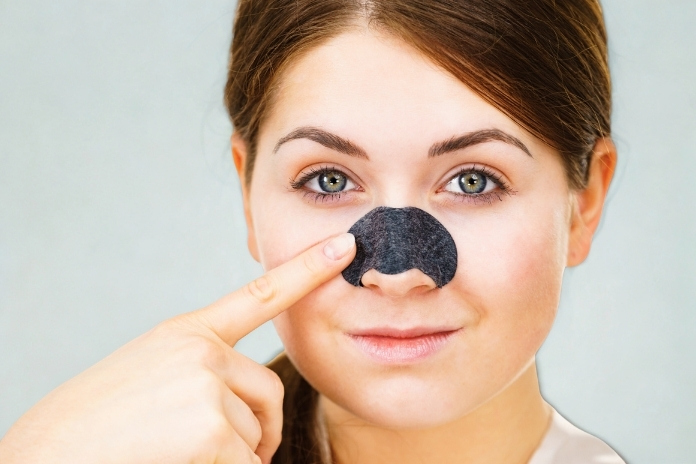
It can be oddly satisfying to peel off a pore strip and see the debris it’s lifted from your pores. They’ve become a mainstay in many people’s skin care routines since they give you the impression that you’ve actually cleaned that part of your skin. The crucial question, however, is whether pore strips are safe for your skin.
Pore strips are currently a trend, offering an easy and rapid solution for those pesky blackheads, particularly on the nose. For anyone unfamiliar with this product, pore strips resemble papier-mache strips that adhere to the skin.
Regardless of how effective they feel, the question remains whether these unusual cosmetic items will actually work on your skin, and more importantly, whether they will effectively extract your blackheads. To find out, we consulted dermatologists.
In this article, we will outline the opinions of dermatologists regarding the use of pore strips and their potential side effects, as well as some alternatives that can lead to glowing skin without compromising results.
Read More: Detoxifying Face Masks: The Top 5 Options for Clearer, Healthier Skin
How Pore Strips Work
Small bits of cotton or plastic with adhesive on one side are called pore strips. The purpose of the adhesive is to draw debris out of your pores when you remove the strip. The pore strip sticks to skin. Do they, however, function?
“They can help to remove the contents of open pores such as sebum (skin oil), oxidized keratin and skin cells, and other environmental particles setting up shop in the pores on your nose,” says Dr. Mona Gohara, a board-certified dermatologist and clinical professor at Yale.
Gohara emphasizes that pore strips are not a permanent solution, saying that they may remove some oil, but pores will inevitably fill up again. For this reason, she says she usually recommends them for a quick fix, such as a special event. It’s also worth noting that they may not work for everyone and there’s a significant opportunity for human error.
The glue needs to cure and rest flat on the nose to adhere correctly. Pore strips won’t work if your nose shape or placement prevents them from lying flat against your skin.
Why Does Acne Occur?

Clogged hair follicles beneath the skin cause acne, a common inflammatory skin disorder. Our faces contain a variety of germs, cells, and oils that can enter the hair follicles and cause lesions or pimples as well as irritation, swelling, redness, heat, and discomfort.
Hormonal fluctuations, which are most prevalent in teens and young adults, can also cause acne to flare up. Acne usually disappears in the thirties for most people; however, some people in their forties and fifties still struggle with this skin condition.
To help clear your skin over time, dermatologists may occasionally recommend extractions, medications, or a new skincare routine. You could have one of the following types of acne:
- Whiteheads: Develop when dead skin cells and extra oil accumulate and obstruct a pore’s entrance. This results in a raised imperfection that appears as a white bump. Instead of plucking at these, dermatologists advise using an acne treatment.
- Blackheads: A blackhead does not necessarily indicate that your face is unclean. When dead skin cells and extra oil accumulate inside a pore, acne develops. When the clogged follicles reach the skin’s surface, they open up and appear black.
- Papules: Inflamed lesions that can feel tender to the touch and typically manifest as small, pink pimples on the skin.
- Pustules: Tiny pimples filled with pus or liquid form on the skin, and red skin typically surrounds these white pimples.
Read More: 5 Must-Have Glycolic Acid Exfoliators to Smooth and Renew Your Skin’s Surface
Are Pore Strips Bad for Your Skin?
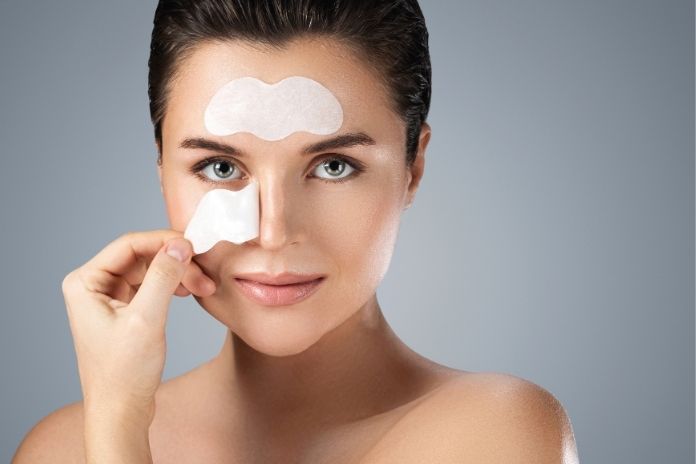
Instead of just cleansing your pores, most pore strips can remove or damage your skin, as they are too harsh for your skin. Because of this, doctors advise against using pore strips, particularly if they contain drying ingredients such as alcohol or other astringents.
The short answer: Pore strips can irritate skin — and often do more harm than good, says Dr. Blair Murphy-Rose, a board-certified dermatologist at the Laser & Skin Surgery Center of New York. This is because the adhesive doesn’t just stick to the dirt in your pores; it sticks to the skin around your pores. When you pull the strip off, it can irritate the skin.
Pore strips are also often made with additives like astringents, says Gohara. These additives are typically drying and can further strip the skin, leading to irritation.
Murphy-Rose advises that individuals with sensitive skin or eczema should avoid using these strips. Someone with oilier skin may be okay using them occasionally, adds Gohara. However, no one should use them frequently, as it increases the chance of damage and sensitivity.
What Dermatologists Say
Dermatologists offer a unique perspective on pore strips. Experts say that those with non-sensitive skin can safely use them occasionally. Infrequent use won’t typically result in long-term harm for people who appreciate the rapid and pleasant peel and blackhead treatment.
Dermatologists warn that pore strips are not a permanent solution for maintaining clear pores or preventing blackheads. They remove debris from the surface without addressing root concerns, like clogged follicles or excess oil.
Individuals with rosacea, active acne, or sensitive skin should avoid using pore strips altogether. The adhesive element can irritate sensitive skin, making pores more visible and exacerbating redness. You could even microtear your skin if you over-stress it.
Safer Alternatives to Pore Strips
Pore strips might “work” for you, but the risks are greater than the advantages. To keep pores clear, follow a regular, non-comedogenic skincare regimen recommended by a dermatologist.
Use a chemical Exfoliant in conjunction with a cleaner: “Cleansing with a strong oil-busting wash that also exfoliates is a more surefire way of eliminating blackheads,” says Purvisha Patel, MD, a board-certified dermatologist and founder of Visha Skincare.
Salicylic acid (BHA), which exfoliates deeply within the pores, and glycolic acid (AHA), which sloughs away dead cells from the skin’s surface, are two of the chemical exfoliators included in this composition.
Retinols: A vitamin A derivative, retinol falls under the ingredient class of retinoids, which are known to unclog pores. One way they do this is by increasing cell turnover, removing dead skin cells, and replacing them with new ones, says Dr. Cyndi Torosky, a board-certified dermatologist at Pariser Dermatology in Virginia Beach.
Try Professional Treatments: If you have more to spend, try getting an in-office treatment. Jennifer Herrmann, MD, is a board-certified dermatologist and dermatologic surgeon at MFC Dermatology in Beverly Hills. Recommends an Oxygeneo Facial, which oxygenates the skin from within, or a laser treatment like Clear + Brilliant, which she says will temporarily reduce the look of pores.
Mechanical Exfoliants: Gohara also recommends using a mechanical exfoliant (also known as a physical exfoliant) to unclog pores. This type of exfoliant is usually found in the form of face scrubs. They are composed of tiny particles that, when rubbed gently on the skin, can dislodge sebum stuck in pores.
Read More: The LED Face Mask Trend: Do Light Therapy Masks Actually Work for Your Skin?
Tips If You Still Use Pore Strips

Dermatologists recommend following these simple rules if you’d like to protect your skin and still receive the immediate benefits of pore strippers:
It is best not to use pore strippers excessively, such as every day or every other day, if you have naturally dry or sensitive skin. It can irritate your skin and compromise the skin barrier. Space out your pore strippers, such as every two weeks!
Be sure to start on clean skin, as this will help the strip affix properly and remove debris correctly. After removing the strip, apply a gentle, soothing moisturizer to replenish moisture and restore your skin’s normal balance.
Do not apply pore strippers on areas of irritated, damaged, sunburned, or broken-out skin. It could further irritate the skin and create microscopic tears, delaying healing.
After using a pore stripper, your skin may become more susceptible to UV damage. Your skin’s protective layer can be at risk, and for this reason, wearing a broad-spectrum sunscreen will protect your skin and help prevent red or brown spots.
Conclusion
While pore strips eliminate blackheads almost immediately with just one application and may feel like a quick win, remember they are a temporary solution, not a long-term solution. Pore strips can be risky for sensitive skin, rosacea, or inflamed acne, and may often lead to irritation or pore dilation. However, they may be acceptable to use sporadically on non-sensitive skin.
Overall, dermatologists recommend avoiding or limiting the use of pore strips in favor of more gentle and scientifically based alternatives. Dermatologists often consider professional extractions, clay masks, and salicylic acid cleansers safer and more environmentally friendly treatments for blackheads because they help preserve your skin’s barrier.
Read More: 11 Benefits of Vitamin C Serum for Face You Should Know About
FAQs
Do pore strips make pores bigger?
No, pore strips alone will not change the size of your pores, but excessive or frequent use can irritate and inflame them, which can make them appear larger or more prominent.
Are charcoal pore strips better?
Charcoal pore strips effectively extract blackheads from the surface, which form when dead skin cells combine with sebum, a type of dried oil. They are not, however, a long-term solution and do not prevent further blackheads from forming.
Can pore strips cause scars?
Yes, pore strips have the potential to harm your skin over time, leading to larger pores, broken capillaries, redness, and inflammation.
How often can you safely use pore strips?
To prevent skin irritation and damage, use pore strips only once a week. However, depending on your skin’s sensitivity and the results you want, other sources recommend using them even less frequently, like once a month or every two weeks.
References
- https://www.nbcnews.com/select/shopping/pore-strips-bad-for-skin-rcna134771
- https://www.byrdie.com/are-pore-strips-safe
- https://bionyxskincare.com/the-truth-about-pore-strips-do-they-really-work/
- https://dermatologyofct.com/about/our-providers/mona-gohara-m-d/
- https://www.drblairrose.com/
- https://blog.ochsner.org/articles/are-you-stripping-away-at-your-beauty-with-pore-strips/
- https://pariserderm.com/aboutpariserdermatology/meet-our-providers/cyndi-m-torosky-m-d/
- https://www.vishaskincare.com/
- https://www.castleconnolly.com/top-doctors/jennifer-herrmann-dermatology
- https://www.self.com/story/how-do-pore-strips-work
In this Article