














You can invest in the priciest collagen serum on the market and still wonder why your skin looks flat, dull, or strangely fragile after a few months. That frustration is surprisingly common, and it’s rarely because you’re doing something wrong.
The truth is that collagen doesn’t work the way most marketing campaigns suggest. Your body builds collagen from the inside out, using raw materials like vitamin C, antioxidants, and protective enzymes. Without these essentials, even expensive creams can only do so much.
This is where grapefruit comes in. It’s not a miracle cure, but it’s one of the most efficient dietary sources for supporting collagen production, providing antioxidant defense, and promoting skin renewal. Despite these benefits, it’s often overlooked in favor of supplements and powders.
In this article, we’ll break down what grapefruit actually does for your skin, explore the science behind it, and explain how to use it safely and effectively.
What Makes Grapefruit a Skin-Health Powerhouse

Grapefruit supports skin health by supplying the nutrients required for collagen production, not by acting as a cosmetic fix.
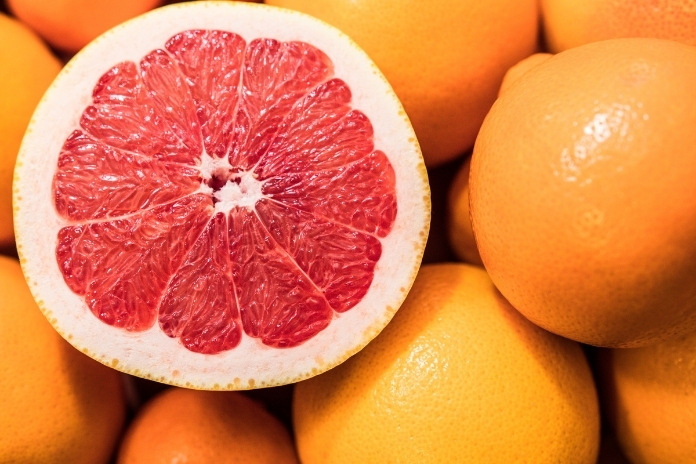
One medium grapefruit provides roughly 70 to 80 percent of daily vitamin C needs, making it one of the most efficient whole-food sources of this nutrient. Vitamin C is required for collagen synthesis at the cellular level. Without it, fibroblast cells cannot produce stable, well-structured collagen fibers.
According to Harvard Health, effective collagen synthesis relies heavily on micronutrients such as vitamin C, zinc, and specific amino acids. When these building blocks are lacking, collagen fibers form poorly, are weaker, and degrade more quickly.
Grapefruit also contains antioxidants such as lycopene and beta-carotene, small amounts of natural alpha hydroxy acids, and a high water content that contributes to overall skin hydration. These components support skin integrity by limiting oxidative damage and maintaining tissue resilience rather than altering appearance at the surface.
Topical collagen products do not replace this process. Collagen molecules are too large to penetrate the skin barrier and do not stimulate collagen production. Nutrients consumed through the diet circulate through the bloodstream and reach the dermis, where collagen is actually synthesized.
Vitamin C: The Catalyst for Collagen Synthesis
Vitamin C functions as a required cofactor for the enzymes prolyl hydroxylase and lysyl hydroxylase, which stabilize collagen’s triple-helix structure. When vitamin C intake is inadequate, newly formed collagen is weak and prone to degradation, a mechanism historically observed in scurvy.
Dermatologist Sheldon R. Pinnell, MD, has explained that L-ascorbic acid is essential for activating these collagen-forming enzymes and also directly stimulates collagen production at the genetic level, increasing collagen-specific messenger RNA in skin cells.
Vitamin C also supports fibroblast activity more broadly, promoting the production of elastin alongside collagen. This contributes to skin strength and elasticity over time rather than temporary surface hydration.
Protecting Existing Collagen
Collagen loss results not only from reduced production but also from accelerated breakdown. Ultraviolet radiation, pollution, and chronic inflammation generate free radicals that damage collagen fibers.
Vitamin C acts as a potent antioxidant, neutralizing these free radicals before structural damage occurs. A review published in Nutrients reported that adequate vitamin C intake is associated with reduced oxidative stress markers and better preservation of dermal collagen density, particularly in aging skin.
Read More: 11 Benefits of Vitamin C Serum for Face You Should Know About
Natural AHAs in Grapefruit: Gentle Exfoliation from the Inside Out

When people hear “alpha hydroxy acids” (AHAs), they often think of chemical peels or exfoliating toners. Grapefruit contains naturally occurring AHAs that work differently; they support skin renewal from the inside, rather than directly stripping the surface.
What AHAs Are and How They Work
Grapefruit is rich in citric acid and contains smaller amounts of malic and tartaric acids. These dietary AHAs influence cellular turnover by affecting keratinocyte behavior and desquamation, the natural shedding of dead skin cells. While eating grapefruit won’t exfoliate your skin like a topical AHA product, these acids help maintain metabolic pathways involved in cell renewal and pH balance.
Research published in the Journal of Dermatological Science shows that skin pH and the acid mantle play a critical role in regulating epidermal renewal and maintaining skin barrier integrity. Disruptions in acid–base balance can impair enzymatic activity involved in barrier formation, making the skin more vulnerable to damage and inflammation.
Boosting Cell Turnover and Skin Elasticity
Enhanced cell turnover means fresher, more functional skin cells reach the surface, supporting smoother texture, more even tone, and a reduction in dullness over time. Grapefruit’s AHAs also indirectly support collagen production by reducing inflammation and creating a healthier environment for fibroblast activity.
This dual effect, promoting cellular renewal while optimizing collagen function, is one reason grapefruit is often highlighted in discussions of natural foods that support skin health and youthful appearance.
The Antioxidant Allies: Lycopene, Beta-Carotene, and Hydration
Vitamin C is not working alone. Pink and red grapefruit varieties are rich in lycopene, a carotenoid known for its photoprotective effects. Lycopene helps reduce UV-induced oxidative damage, one of the biggest drivers of collagen degradation.
Beta-carotene, another antioxidant present in grapefruit, supports skin repair and immune defense. It also converts to vitamin A in the body, which plays a role in skin cell differentiation.
A study in The American Journal of Clinical Nutrition found that higher carotenoid intake was associated with improved skin elasticity and reduced wrinkle formation over time.
Collagen fibers require adequate hydration to maintain flexibility. Dehydrated skin makes collagen appear brittle and less elastic. Grapefruit is over 88 percent water. Combined with electrolytes and organic acids, it supports cellular hydration in a way that plain water does not always achieve. Hydrated skin is not just plumper. It is structurally stronger.
Read More: Collagen vs. Hyaluronic Acid: Which One Is Better for Anti-Aging?
How to Add Grapefruit to Your Diet for Skin Benefits
You don’t need complicated routines or strict schedules to benefit from grapefruit. What matters most is consistency; regular intake provides your skin with steady vitamin C, antioxidants, and other nutrients that support collagen production, antioxidant defense, and cellular renewal.
Best Ways to Consume Grapefruit
Eating the whole fruit is the most effective option. Whole grapefruit delivers fiber, which slows sugar absorption and ensures that nutrients are absorbed in their natural matrix. Freshly squeezed juice is acceptable occasionally, but it lacks fiber and can cause rapid blood sugar spikes if consumed in excess.
For those who dislike the bitterness, blending grapefruit with berries, leafy greens, or a splash of other citrus fruits creates a flavorful, nutrient-packed drink that is easier to enjoy while retaining most of the health benefits.
Timing and Nutrient Absorption
Vitamin C absorption is not highly time-dependent, but consuming grapefruit earlier in the day may maximize antioxidant availability during periods of UV exposure. Pairing grapefruit with healthy fats, like nuts, seeds, or avocado, improves the absorption of carotenoids such as lycopene and beta-carotene, amplifying its skin-protective potential.
Portion and Frequency
One-half to one medium grapefruit per day is sufficient for supporting collagen production and antioxidant defenses. More is not necessarily better; excessive consumption may increase acidity or sugar intake without providing additional skin benefits.
Consistency, moderate portions, and pairing grapefruit with a balanced diet are the keys to harnessing its skin-supportive properties.
Safety Notes and When to Be Cautious
While grapefruit is highly beneficial for most people, it is not risk-free for everyone. Awareness of potential interactions and sensitivities is important.
- Medication Interactions: Grapefruit contains compounds that inhibit the CYP3A4 enzyme in the liver, which can increase blood levels of certain medications, including statins, calcium channel blockers, and some antidepressants.
- Sun Sensitivity Myths: Dietary grapefruit does not meaningfully increase sun sensitivity. However, topical grapefruit oils can be phototoxic and should not be applied directly to the skin before sun exposure.
- Acid Sensitivity and Digestive Issues: People with GERD, acid reflux, or sensitive digestion may experience discomfort when consuming grapefruit. In these cases, smaller portions, pairing grapefruit with other foods, or opting for milder citrus alternatives can help minimize irritation while still delivering nutritional benefits.
Lifestyle Factors That Amplify Grapefruit’s Benefits for Collagen

Eating grapefruit is powerful, but it’s only one piece of the puzzle. By combining nutrient-rich foods like grapefruit with collagen-friendly habits, you maximize your skin’s ability to repair, renew, and resist aging.
Sleep and Collagen Production
Deep sleep isn’t just restorative for the mind; it’s when your body makes most of its collagen. Fibroblasts are most active during slow-wave sleep, synthesizing collagen fibers while removing damaged proteins.
Dr. Lulu Guo, MD, explains that “During sleep, cell production can more than double. This expedites skin repair from daytime damage.” What this really means is that deep, restorative sleep isn’t just downtime for your brain; it’s when growth hormone release peaks and your body shifts into repair mode, helping stimulate collagen synthesis and reduce cortisol-driven breakdown.
Poor sleep reduces this natural production and increases cortisol, which accelerates collagen breakdown. Pairing adequate sleep with daily grapefruit intake ensures your body has both the raw materials and the energy to build strong collagen.
Exercise and Circulation
Regular movement improves blood flow, delivering nutrients and oxygen to your skin. This increased circulation ensures vitamin C, antioxidants, and other collagen-supportive compounds from grapefruit actually reach the dermis where they are needed.
Weight-bearing and resistance exercises also stimulate growth factors that encourage collagen production in connective tissues, complementing dietary support.
Sun Protection
Sun exposure is one of the leading causes of premature ageing, says Khushboo Jha, MD, Chief Dermatologist and Founder of One Skin Clinic, Faridabad. “Protecting your skin from harmful UV rays is essential as it can accelerate the breakdown of collagen and make signs of ageingmore prominent,” she says.
UV exposure is one of the biggest accelerators of collagen breakdown. While grapefruit’s antioxidants, like lycopene, provide some protection, they cannot replace sunscreen.
Daily sun protection, using SPF, clothing, and limiting peak sun exposure, preserves both existing collagen and the benefits of nutrient intake. Think of grapefruit as a shield from the inside out, while sun safety is the external armor.
Stress Management
Chronic stress increases cortisol, which not only accelerates collagen degradation but also impairs fibroblast function. Incorporating stress-reducing practices, like meditation, deep breathing, or gentle yoga, helps maintain an environment where collagen synthesis can thrive. Grapefruit intake during periods of stress still helps, but lifestyle harmony multiplies the effect.
Hydration Beyond Grapefruit
Grapefruit provides water, but overall hydration matters too. Proper hydration keeps skin plump and collagen fibers flexible. Drinking enough water, consuming hydrating foods, and maintaining electrolyte balance work hand-in-hand with grapefruit’s hydration benefits.
Grapefruit is a powerful ally for collagen, but it cannot act in isolation. By combining it with restorative sleep, regular exercise, sun protection, stress management, and overall hydration, you create a lifestyle that supports collagen from every angle.
In other words, the fruit feeds your cells, and your habits ensure those cells can use the nutrients efficiently, producing stronger, healthier, and more resilient skin over time.
Key Takeaway
Collagen isn’t something you can spray, rub, or smear onto your skin; it’s built from within, inside your own cells. The most effective way to support it is by supplying your body with the nutrients it needs to produce strong, resilient fibers. Grapefruit is a practical, science-backed ally in this process.
It supports collagen formation in several ways: vitamin C drives key enzyme activity that stabilizes collagen’s structure; antioxidants protect existing collagen from free radical damage and breakdown; naturally occurring AHAs promote gentle cell turnover and renewal; and its high water content contributes to skin hydration, helping maintain elasticity.
Taken together, these benefits make grapefruit a functional, multi-layered approach to nourishing the skin from the inside out. This is why grapefruit works best as part of a dietary strategy, not as a shortcut through creams or serums. For resilient, smooth, and youthful-looking skin, feeding the system that actually builds collagen is far more effective than relying solely on topical products.
Regular inclusion of grapefruit, alongside a nutrient-rich diet, hydration, and sun protection, gives your skin the tools it needs to age gracefully, maintain elasticity, and stay healthy over time. In short: the strongest collagen support doesn’t come in a jar; it comes from consistent, internal nourishment, and grapefruit is one of the simplest, most effective ways to provide it.
FAQs: People Also Ask
Does grapefruit increase collagen production?
Yes. Grapefruit is rich in vitamin C, which is essential for collagen synthesis and stabilizing collagen fibers. Without enough vitamin C, fibroblasts cannot produce strong collagen. Regular intake of grapefruit helps ensure your body has the raw materials it needs for healthy collagen formation.
Is grapefruit better than collagen supplements?
Grapefruit doesn’t replace collagen supplements but supports your body’s natural collagen production. Supplements without sufficient vitamin C are less effective because the body cannot properly synthesize collagen. Combining nutrient-rich foods like grapefruit with supplements can maximize results.
How long does it take to see skin benefits?
Consistent intake of vitamin C and antioxidants, like those in grapefruit, generally shows improvements in skin texture and elasticity within 8 to 12 weeks. Results depend on overall diet, hydration, and lifestyle habits. Regular consumption ensures ongoing support for skin renewal.
Can grapefruit help with wrinkles?
Indirectly, yes. By protecting existing collagen from oxidative damage and supporting new collagen formation, grapefruit helps maintain skin structure and elasticity. Over time, this can slow wrinkle formation and keep the skin looking smoother and firmer.
References
- American Journal of Clinical Nutrition. (2010). Dietary nutrient intakes and skin-aging appearance among middle-aged American women.
- Beauty Bay. (n.d.). Yes to grapefruit acids.
- Deyga Organics. (n.d.). These qualities of grapefruit make it an incredible choice for skincare.
- Harvard T. H. Chan School of Public Health. (n.d.). Collagen. The Nutrition Source.
- Herbal Dynamics Beauty. (n.d.). All about alpha hydroxy acids.
- Herbivore Botanicals. (n.d.). All about natural AHAs.
- IMARĀ Derma. (n.d.). Grapefruit.
- InciDecoder. (n.d.). Ursa Major fantastic face wash.
- Journal of Dermatological Science. (2024). Skin pH, acid mantle regulation, and epidermal barrier integrity.
- L’Oréal Professional Skincare. (n.d.). Regulation of collagen biosynthesis by ascorbic acid.
- MDPI Nutrients. (2024). Effects of collagen and vitamin C supplementation on skin properties.
- Moneycontrol. (n.d.). Shield your skin from sun damage: Dermatologist-recommended tips.
- Sadhev. (n.d.). The benefits of grapefruit for the skin.
- Skin-Beauty. (n.d.). Salicylic, lactic, and glycolic acids: Explaining AHAs and BHAs in skincare.
- Sleep Foundation. (n.d.). Beauty sleep.
In this Article