















Empathy and sympathy are often used interchangeably. In conversations, workplace emails, therapy sessions, and even in close relationships, people switch between them without much thought. Most of us assume they mean roughly the same thing: being kind when someone is hurting.
But they are not the same. And the difference is not small.
Most of the time, the confusion doesn’t matter until someone is actually hurting. Then the difference becomes very obvious. One response makes people open up. The other makes them stop talking, even if they can’t explain why.
This article clearly breaks down the difference between empathy and sympathy, without motivational clichés. You’ll see why sympathy sometimes misses the mark, why empathy feels harder but lands deeper, and how small shifts in response can change the entire tone of a conversation.
What Is Sympathy?

Sympathy is recognising that someone is in pain and responding from the outside. You’re aware that something bad happened. You acknowledge it. You express concern. But you remain separate from the emotional experience.
That distance is the key feature. That emotional distance matters more than people realise. Mental health professionals often describe sympathy in exactly this way.
“Sympathy is often given when you might not relate to or fully comprehend what the other person is dealing with,” Dr. Jerimya Fox, a licensed professional counselor and doctor of behavioral health, said.
“For example, feeling concerned about a friend who has cancer and hoping the treatments go well when you haven’t had to personally experience this before.”
Why sympathy can feel dismissive without meaning to
Sympathy places the speaker in a position of stability. The other person is struggling; you are observing. This creates a subtle imbalance. Common sympathy phrases include:
- “I’m sorry you’re going through this.”
- “That’s really unfortunate.”
- “I feel bad for you.”
- “At least you tried.”
None of these is cruel. But many people walk away from such responses feeling unheard. The pain is acknowledged, but not understood. This is where the distinction between validation and pity becomes important.
Sympathy can slip into pity without meaning to, and pity never feels equal.
What Is Empathy?

Empathy is emotionally understanding what someone is feeling, even if you haven’t experienced the same situation. It is not about matching stories or fixing problems. It is about emotional presence.
Empathy says: “I get how this feels for you.” Not from a place of expertise, but from attention.
Emotional connection vs observation
Unlike sympathy, empathy does not stand outside the experience. It steps closer. It listens without rushing. It allows discomfort without trying to erase it.
There’s no “you’re struggling, I’m fine.” There are just two people in the same emotional space for a moment. That’s why empathy feels validating. It tells the other person:
- Your feelings make sense
- You don’t need to justify them
- You are not alone in this moment
In the context of mental health, this distinction is critical. People don’t need advice first. They need to feel safe enough to speak honestly.
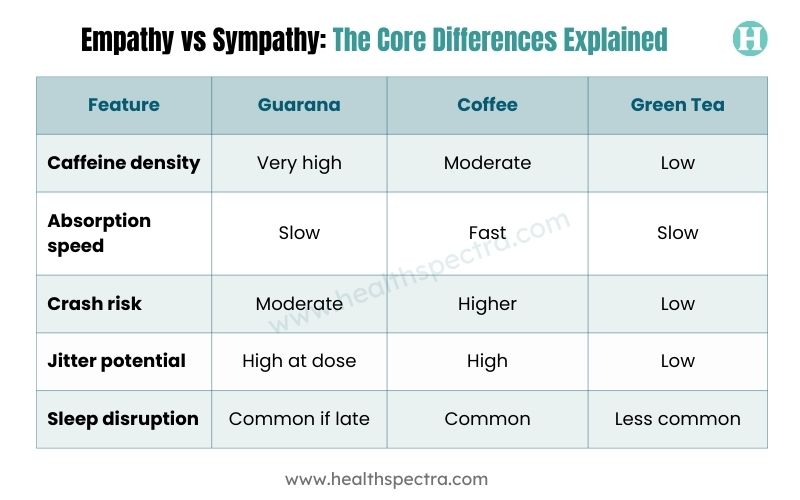
Empathy vs Sympathy: The Core Differences Explained
At a glance, empathy and sympathy seem similar. The difference becomes clear only when you look at how each one feels to the person receiving it.
 Empathy vs Sympathy Examples in Real-Life Situations
How we respond in difficult moments matters more than what we intend. These everyday situations show how empathy and sympathy feel very different to the person receiving them.
1. When Someone Is Grieving
Sympathy response: “I’m sorry for your loss. They’re in a better place.”
Empathy response: “This loss sounds unbearable. I can’t imagine how heavy this feels for you.”
Sympathy tries to close the wound. Empathy allows it to exist.
2. When Someone Is Anxious or Depressed
This is where sympathy vs empathy meaning becomes very clear.
Sympathy response: “Don’t worry so much. Things will work out.”
Empathy response: “It sounds like your mind doesn’t give you much rest. That’s exhausting.”
Sympathy minimises unintentionally. Empathy creates emotional safety.
3. In Everyday Stress or Frustration
Work pressure. Parenting fatigue. Health issues that don’t look serious from the outside.
Sympathy response: “That sounds stressful. Hope it gets better.”
Empathy response: “It feels like you’re carrying more than people realise. No wonder you’re drained.”
These empathy vs sympathy examples show how empathy reflects emotion back, without trying to improve it.
Why Sympathy Can Sometimes Do More Harm Than Good

Sympathy is usually well-intended, but it often stops at acknowledging pain rather than engaging with it. In vulnerable moments, this emotional distance can unintentionally minimise how someone feels, even when the words sound kind.
Sympathy often fails not because it’s wrong, but because it’s incomplete.
1. Unintended invalidation
Phrases starting with “at least…” usually shut people down.
- “At least you still have a job.”
- “At least it wasn’t worse.”
The message received: your pain is being compared.
2. Emotional distancing
Sympathy allows the listener to stay comfortable. Empathy requires staying present with discomfort, and many people avoid that without realising it. Psychologists note that people often disengage from empathy when they anticipate emotional or practical costs.
“If I’m watching TV and see a sad commercial for a charity organization like the SPCA, I may choose to keep watching and feeling that empathy, or I may choose to change the channel,” Dr. Daryl Cameron, assistant professor of psychology, said.
“This decision is based on costs and benefits. I might think it could be too emotionally exhausting to keep watching, or that I’ll be compelled to spend money and help. There are all these interesting considerations about why we have these empathy gaps.”
3. Toxic positivity in disguise
Trying to “cheer someone up” too quickly often communicates impatience with their feelings. That’s why people often say, “I stopped talking about it. Nobody really listened.”
Why Empathy Builds Trust, Safety, and Emotional Connection
Empathy works because it regulates emotion, not by fixing it, but by sharing it. When someone feels understood:
- The nervous system settles
- Defensiveness reduces
- Communication becomes clearer
This is why empathy vs sympathy in relationships matters deeply. Empathy builds trust not through words, but through presence. It also strengthens emotional intelligence, the ability to respond rather than react.
Does Empathy Mean Agreeing or Fixing the Problem?
No. Empathy means: “I understand why this feels the way it does.” That’s it. Its presence without correction; understanding without control.
Empathy does not mean:
- You agree with their choices
- You support harmful behaviour
- You must give advice
How to Practice Empathy Without Getting Emotionally Overwhelmed
Many people avoid empathy because they fear emotional exhaustion. But empathy does not require losing boundaries.
1. Maintain emotional boundaries while staying present
You can listen deeply without taking responsibility for fixing. Neuroscience research supports this distinction between connection and emotional collapse.
“Empathy not only requires a mechanism for sharing emotions, but also for keeping them separate. Otherwise, we are getting ‘contaged,’ emotionally distressed, and so on,” Dr. Claus Lamm, Professor of Biological Psychology specializing in Social, Cognitive, and Affective Neuroscience, said.
2. Listen to understand, not to fix:
Focus on understanding, not solving. That alone reduces emotional load.
- Protect your capacity by being honest about limits:
Saying “I don’t have the capacity right now” is not unempathetic. It’s honest.
Read More: 12 Best Ways To Practice Empathy And Make It Your Real Trait
When Sympathy Is Enough
Empathy is not required everywhere. Sympathy works better when:
- The situation is distant or brief
- Professional boundaries are needed
- Emotional depth isn’t expected
A short condolence message doesn’t require deep empathy. Context matters.
Read More: What Are Core Beliefs? A Complete Guide
How to Respond With Empathy: Simple Phrases That Help
These sympathy response examples often sound kind, but here’s how to shift them.
- Validation statements:
- “That sounds really hard.”
- “I can see why this hurt you.”
- Open-ended questions:
- “What part of this is most difficult right now?”
- “Do you want to talk more about it?”
- Supportive silence: Sometimes saying nothing and staying present is the most empathetic response.
- What to avoid saying:
- “Everything happens for a reason.”
- “Be positive”
- “Others have it worse.”
Read More: The Power of Social Connections: Building a Supportive Network for a Vibrant Life
Final Thoughts
Sympathy acknowledges pain. Empathy connects with pain. It is deeply human. Sympathy notices. Empathy stays. In a world where people feel rushed, dismissed, or unheard, empathy is not a soft skill. It is a relational skill. Choosing empathy, especially when it feels uncomfortable, changes how safe people feel around you. And that changes everything.
- Empathy reduces emotional isolation even when problems remain unsolved.
- Sympathy often ends conversations unintentionally.
- Empathy creates safety, not dependency.
- Most people want understanding before advice.
- While empathy is widely discussed, real-world studies on how everyday language choices affect emotional safety are still limited.
References
- Jeffrey, D. (2016). Empathy, Sympathy and Compassion in healthcare: Is There a problem? Is There a difference? Does It matter? Journal of the Royal Society of Medicine, 109(12), 446–452.
- Malbois, E. (2022). What is Sympathy? Understanding the Structure of Other-Oriented Emotions. Emotion Review, 15(1), 175407392211404.
- Sinclair, S., Beamer, K., Hack, T. F., McClement, S., Raffin Bouchal, S., Chochinov, H. M., & Hagen, N. A. (2017). Sympathy, empathy, and compassion: A grounded theory study of palliative care patients’ understandings, experiences, and preferences. Palliative Medicine, 31(5), 437–447. NCBI.
In this Article