













Pregnancy often brings digestive discomfort like constipation and bloating, alongside immune shifts that leave many women seeking gut-friendly solutions.
Probiotics are frequently prescribed because they may support microbiome balance amid these changes. However, safety remains paramount, and benefits could differ depending on the individual. Hence, they may not be essential for everyone.
In this article, we’ll explore how probiotics work during pregnancy, their potential benefits, safety considerations, and when it might be best to consult a healthcare provider.
Are Probiotics Safe During Pregnancy?
Probiotics are generally safe for healthy pregnancies, with research showing no increased risk of preterm birth, malformations, or other adverse outcomes.
Unlike medications, these live bacteria mimic those naturally in the body. They are rarely absorbed systemically in healthy people, which minimizes risks. Strain-specific effects and product quality matter. Hence, you should always consult a healthcare provider before starting, especially in the U.S., where prenatal care emphasizes personalized guidance.
Key safety factors include:
- No Links to Birth Complications: Systematic reviews confirm no higher rates of preterm birth, low birth weight, or congenital issues in healthy women.
- Minimal Systemic Absorption: Live bacteria stay in the gut, unlike drugs that cross the placenta, reducing fetal exposure.
- Strain and Quality Focus: Effects vary by specific strains (e.g., Lactobacillus rhamnosus); third-party tested products lower contamination risks.
- Provider Consultation Is Essential: U.S. OB-GYNs tailor advice to individual health, history, and trimester.
“These results suggest that certain probiotics given to mothers during pregnancy can improve their offsprings’ behavior and may affect the metabolism of common amino acids in our diets. Probiotics may also help counteract the negative effects of prenatal stress,” says Tamar Gur, MD, PhD, 2024 study lead at Ohio State Wexner Medical Center.
Read More: How Soon Can You Get Pregnant After a Miscarriage? What Doctors Say
Probiotics’ Role in Pregnancy

Probiotics introduce beneficial bacteria that help maintain gut and vaginal microbiome balance, which naturally shifts during pregnancy due to hormonal influences and immune adaptations. Pregnancy hormones like progesterone slow gut motility, leading to constipation in up to 40% of women, while the immune system modulates to tolerate the fetus, sometimes disrupting microbial harmony.
These bacteria compete with harmful pathogens, produce short-chain fatty acids for gut lining integrity, and support overall metabolic function.
Key ways probiotics contribute include:
- They crowd out harmful bacteria in the gut and vagina, reducing infection risks common during pregnancy.
- These nourish the gut lining, improve barrier function, and aid nutrient absorption amid slowed digestion.
- By influencing insulin sensitivity and inflammation, they help counter pregnancy-related glucose shifts.
- Hormonal changes favor certain bacteria; probiotics replenish beneficial strains like Lactobacillus for vaginal health.
Read More: Working While Pregnant: Safety Tips, Rights, and How to Stay Comfortable at Work
Potential Benefits
During pregnancy, probiotics may play a supportive role in addressing common gut and metabolic changes. While not essential for everyone, evidence suggests they can offer several targeted benefits for digestive, vaginal, and metabolic health when used appropriately.
Safety Consensus: Extensive research supports probiotics as low-risk for healthy pregnancies, with no consistent evidence of harm to mother or baby.
Situational Benefits: Digestive relief excels for constipation or bloating, while microbiome support aids those with antibiotic use or infections.
Practical Priorities: Start with foods like yogurt before supplements, and consult providers to match your health profile.
Digestive Comfort and Constipation Relief
Probiotics can improve stool consistency and gut motility, offering modest relief from pregnancy-related constipation. This has been observed in studies where strains reduced nausea hours by 16% and vomiting episodes by 33%. Benefits stem from enhanced transit time but aren’t guaranteed for all, varying by diet and baseline health.
Vaginal and Urinary Health Support
Lactobacillus strains, like L. rhamnosus GR-1 and L. reuteri RC-14, bolster vaginal flora by producing lactic acid. These can potentially lower the risks of bacterial vaginosis or urinary tract infections common in pregnancy. This balance can help when hormonal changes disrupt the microbiome, though routine use isn’t always needed without symptoms.
Blood Sugar and Metabolic Health
Emerging evidence links probiotics to better insulin sensitivity, with some trials showing reduced gestational diabetes risk from 36% to 13% using strains like L. rhamnosus and B. lactis. Findings remain mixed, with low-certainty data on preeclampsia. Hence, you should view these as supportive rather than preventive.
When Probiotics During Pregnancy May Not Be Necessary
Probiotics may be unnecessary if digestion remains normal, your diet includes ample fiber from fruits, vegetables, and whole grains, or you consume fermented foods like yogurt. Women without an infection history or recent antibiotics often maintain balance naturally, avoiding supplements altogether.
Read More: Cryptic Pregnancy: When You’re Pregnant and Don’t Know It – Causes, Risks & What to Do
Are There Risks or Side Effects of Probiotics While Pregnant?
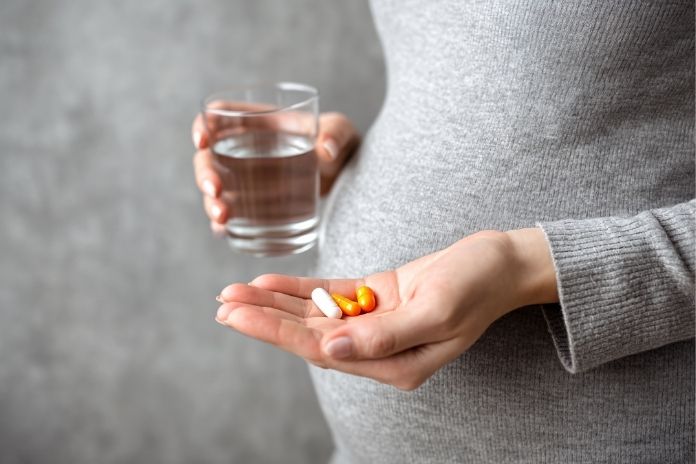
Common side effects include temporary gas, bloating, or digestive discomfort as the body adjusts, typically resolving within days. Rare infection risks apply mainly to immunocompromised individuals. However, quality products with verified strains and dosing minimize issues. High-quality choices from reputable brands reduce contamination concerns.
Most Studied Strains
Lactobacillus species, such as L. rhamnosus HN001, L. rhamnosus GG, and L. reuteri, dominate pregnancy research for digestive, immune, and vaginal support. Bifidobacterium strains like B. lactis and B. longum aid gut health and metabolic balance, often in multi-strain formulas. Multi-strain isn’t inherently superior. Hence, you must prioritize clinically tested ones over unverified novelty strains.
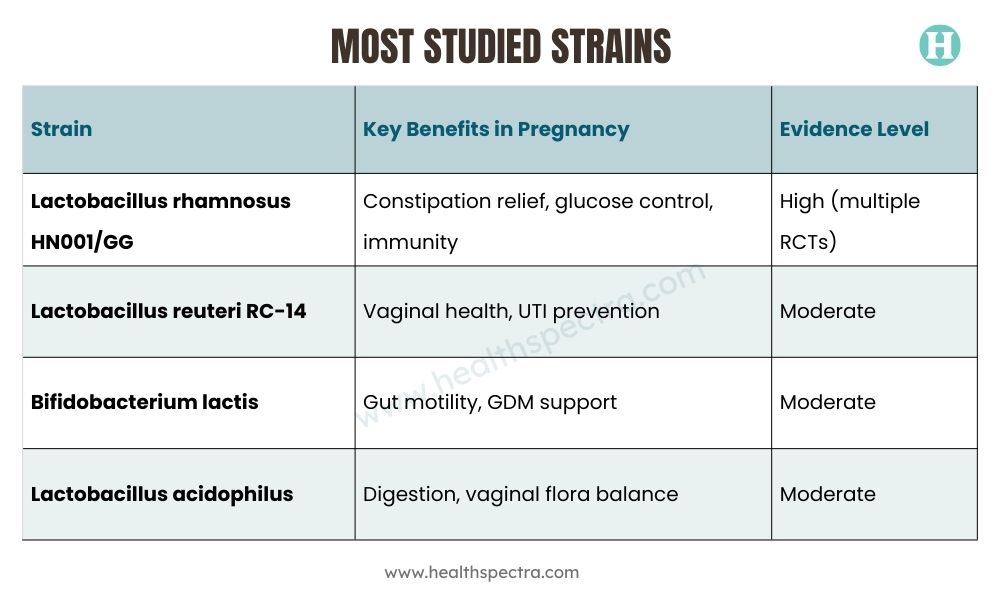 Food vs. Supplements
Food sources like pasteurized yogurt, kefir, sauerkraut, and kimchi provide natural probiotics safely, without unpasteurized risks like listeria during pregnancy. These integrate easily into a balanced diet, often sufficing for mild needs. Supplements suit targeted support, such as specific strains for constipation, when the diet falls short.
Choosing Safely
Opt for third-party tested products, such as those certified by USP or NSF, with clear strain labeling like L. rhamnosus GG, not just genus names. Avoid megadoses over 10-50 billion CFUs unless advised; prenatal formulations ensure pregnancy-appropriate potency and stability. tore in the refrigerator if required to maintain potency.
Read More: Can You Get Pregnant While Already Pregnant? What Science Says About
When to Consult a Doctor

Discuss probiotics during high-risk pregnancies, immune conditions like HIV, recent hospitalizations with IV lines, or persistent GI symptoms. U.S. guidelines recommend provider input to tailor choices to your health profile and avoid prenatal interactions.
Symptoms:
- Persistent bloating or diarrhea
- Unexplained weight changes
- Frequent infections or antibiotic history
- High-risk factors like preterm labor history
Read More: Superfetation Can You Still Get Pregnant During Perimenopause? Doctors
Key Takeaway
Probiotics are generally safe for most pregnant individuals, according to extensive reviews. Benefits like digestive relief and microbiome support are situational, shining brightest with symptoms or risks.
Prioritize food-first strategies, then quality supplements, always personalizing with medical advice for optimal outcomes.
References
- Kuang, L., & Jiang, Y. (2020). Effect of probiotic supplementation in pregnant women: A meta-analysis of randomised controlled trials. British Journal of Nutrition, 123(8), 870–880.
- Binda, S., Chow-Shi-Yée, M., El Salti, S., Auclair-Ouellet, N., Oula, M.-L., Carton, T., Leuillet, S., Tomassi, D., Hemmings, R., & Kadoch, I.-J. (2025). The effect of probiotics on health in pregnancy and infants: A randomized, double-blind, placebo-controlled trial. Nutrients, 17(11), Article 1825.
- Balducci, J., Nellis, S. J., & Weiss, B. D. (2016). The probiotics in pregnancy study (PiP study): Rationale and design of a pilot randomized controlled trial of Lactobacillus rhamnosus GR-1 and Lactobacillus reuteri RC-14. Contemporary Clinical Trials Communications, 4, 99–104.
- Jarde, A., Lewis-Mikhael, A.-M., Chamberlain, C., Dewailly, J., Luypaerts, A., Buyse, G., Shatenstein, B., Tuduri, X., & Abenhaim, H. A. (2018). Pregnancy outcomes in women taking probiotics or prebiotics: A systematic review and meta-analysis. Critical Reviews in Food Science and Nutrition, 58(12), 1225–1239.
- O’Neill, S. M., Slee, N., McCarthy, F. P., & Myers, J. E. (2024). The effect of probiotics on gestational diabetes mellitus: An umbrella meta-analysis of randomized controlled trials. AJOG Global Reports, 4(4), Article 100135.
- Jarde, A., Gomez-Roig, M. D., Kalra, P. S., Dutta, S., Lewis-Mikhael, A.-M., Sawh, S., Davda, R., Chamberlain, C., & Abenhaim, H. A. (2021). Are probiotics and prebiotics safe for use during pregnancy and lactation? Polymers, 13(14), 2247.
- Mullins, E. N., & Guirguis, J. (2024). Probiotics for the prevention of gestational diabetes mellitus: A meta-analysis of randomized controlled trials. American Journal of Obstetrics & Gynecology MFM, 6(10), Article 101671.
- Doron, S., Snydman, D. R., & Gorbach, S. L. (2008). Are probiotics safe for use during pregnancy and lactation? American Journal of Obstetrics and Gynecology, 201(3), 235–242.
- Oncel, M. Y., Sari, F. N., Arayici, S., Guzel, T., Erdeve, O., Dilmen, U., & Uras, N. (2018). Rationale of probiotic supplementation during pregnancy and neonatal period. Turkish Journal of Pediatrics, 60(6), 573–584.
- Jois, R. S., Hickey, M., & Keelan, J. A. (2020). Do probiotics in pregnancy reduce the risk of group B streptococcus carriage at delivery? Journal of Paediatrics and Child Health, 56(6), 870–872.
- Zhang, Y., Doré, J., & Ji, G. (2022). Preventive effect of probiotics supplementation on occurrence of gestational diabetes mellitus: A systematic review and meta-analysis of randomized controlled trials. Frontiers in Medicine, 9, Article 1031915.
- Steele, J., Cui, B., & Shao, W. (2022). Probiotic supplementation during pregnancy or infancy for the prevention of eczema: A systematic review and meta-analysis of randomized controlled trials. Nutrients, 14(22), Article 4901.
- Asgharian, A., Askari, G., Bagherniya, M., & Iraj, B. (2022). The effect of probiotics on gestational diabetes and its complications in pregnant mother and newborn: A systematic review and meta-analysis during 2010–2020. Food Science & Nutrition, 10(6), 1700–1713.
In this Article