











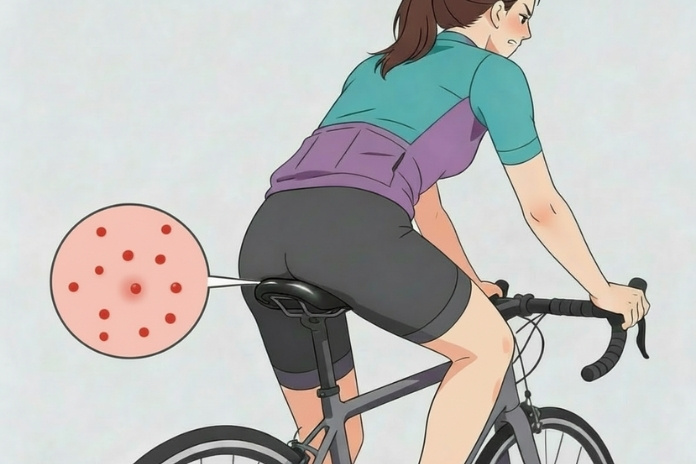
You finish a ride feeling strong and accomplished, only to notice soreness that doesn’t feel like normal muscle fatigue. Sitting suddenly hurts. Walking feels awkward and stiff. The idea of getting back on the bike tomorrow doesn’t sound exciting anymore. If you cycle, spin, or spend long hours seated, this feeling is probably familiar. Saddle sores often start quietly.
At first, it might be mild tenderness, redness, or a small irritated spot that’s easy to ignore. But saddle sores aren’t just surface-level discomfort. They’re real skin and soft-tissue injuries caused by repeated pressure, friction, trapped moisture, and bacteria. When left untreated, they can worsen quickly, turning into painful sores or infections that force riders to stop training for days or even weeks.
The reassuring truth is that saddle sores are extremely common, manageable, and often preventable. Understanding why they form and recognizing the early warning signs can stop a minor issue from becoming a major setback.
This guide explains what saddle sores are, how to identify them early, the most effective treatment options, and practical strategies to prevent them from coming back, so discomfort doesn’t stand between you and your next ride.
What Is a Saddle Sore?
A saddle sore is a localized injury affecting the skin and underlying soft tissue caused by repeated pressure, friction, heat, and moisture in areas that contact a bicycle saddle or seat. Unlike temporary discomfort after a long ride, saddle sores represent actual tissue irritation or damage that can worsen with continued riding.
They develop gradually. What starts as mild tenderness or redness can progress into painful bumps, inflamed follicles, or open lesions if the stress on the area continues.
Where Saddle Sores Typically Occur
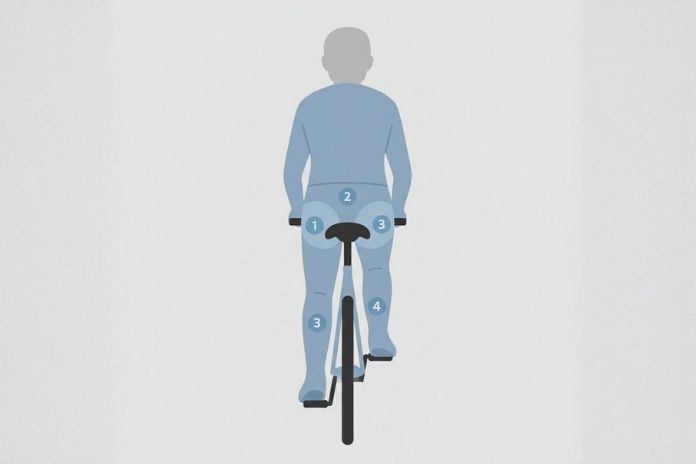
Saddle sores form in areas where the body is in constant contact with the saddle, experiencing pressure and movement. The most common locations include:
- Inner thighs
- Groin
- The perineal area is the space between the genitals and anus.
- Sit bone contact points.
These regions are particularly vulnerable because they combine pressure from body weight, repetitive motion from pedaling, heat buildup, and trapped moisture from sweat or tight clothing.
How Saddle Sores Differ From Simple Chafing
Chafing and saddle sores are often confused, but they’re not the same thing. Chafing is a surface-level issue. It usually shows up as redness, burning, or raw skin caused by friction and typically improves quickly with rest and basic skin care. Saddle sores go deeper.
They can involve:
- Inflamed hair follicles.
- Blocked or irritated sweat glands.
- Deeper layers of skin and soft tissue.
- Bacterial involvement or infection.
Because the skin barrier becomes compromised, bacteria can enter more easily. Medical guidance, including from the Mayo Clinic, notes that persistent friction combined with moisture significantly increases the risk of folliculitis and localized skin infections. This is why saddle sores tend to worsen rather than heal if riding continues without intervention.
Understanding this difference matters. Treating a saddle sore like simple chafing often isn’t enough and can delay proper healing.
What Causes Saddle Sores?
Saddle sores rarely have a single cause. They develop when several physical and environmental stressors act on the same areas of skin repeatedly. Over time, this repeated stress overwhelms the skin’s ability to protect and repair itself.
Friction and Pressure
Friction combined with sustained pressure is the primary driver behind saddle sores.
Common contributors include:
- Repeated rubbing between the skin and the saddle.
- Long hours spent in a seated riding position.
- Poor bike fit or incorrect saddle height.
- Saddles that don’t match pelvic anatomy or sit bone width.
Constant pressure compresses the skin and underlying tissue, reducing blood flow to the area. With less circulation, the skin becomes more fragile and slower to heal, making it easier for irritation to turn into injury.
Moisture and Sweat
Damp skin is vulnerable skin. Sweat softens the outer protective layer of the skin, increasing friction and making small tears more likely. Once the skin barrier is weakened, bacteria can penetrate more easily, and inflammation escalates.
This is why saddle sores are especially common during:
- Long-distance rides.
- Indoor cycling or spin classes.
- Hot, humid, or poorly ventilated environments.
Moisture trapped against the skin for extended periods creates ideal conditions for irritation and infection.
Hair Follicle Irritation
Hair follicles are particularly sensitive to friction and blocked pores.
Repeated rubbing, sweat, and pressure can cause follicles to become irritated or obstructed, leading to:
- Ingrown hairs.
- Folliculitis, or inflamed hair follicles.
- Small, tender, pimple-like bumps beneath the skin.
Follicle-based lesions are among the most common forms of saddle sores, especially in riders who train frequently or wear tight, non-breathable clothing.
Bacterial Growth
When the skin barrier is damaged by friction and moisture, bacteria that normally live on the skin surface can enter deeper layers.
Dermatology research indexed in PubMed shows that warm, moist environments significantly increase bacterial growth, which raises the risk of localized infection. Once bacteria are involved, saddle sores become more painful, slower to heal, and more likely to recur if the underlying causes aren’t addressed.
Common Symptoms of Saddle Sores
Recognizing saddle sores early makes a real difference. When caught early, they often resolve with simple measures such as rest and friction reduction. When ignored, they can progress into deeper, more painful injuries.
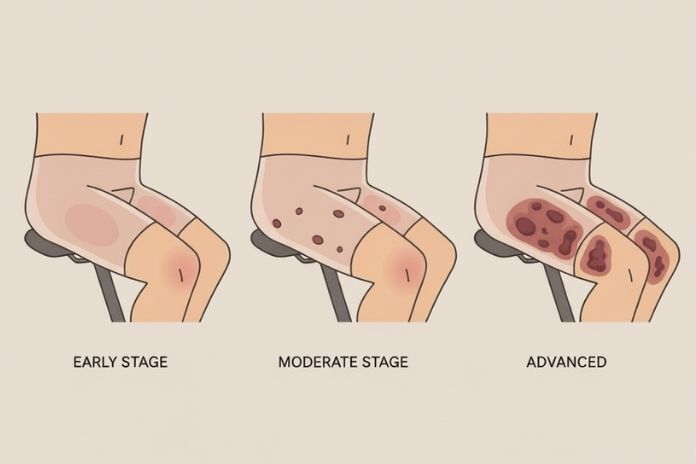
Early Saddle Sore Symptoms
In the early stages, symptoms are usually mild and localized. Common signs include:
“Saddle sores usually start as simple irritation from friction and pressure against the saddle,” explains cycling sports medicine expert Dr. Kevin Sprouse. “Redness, tenderness, and mild swelling are common early signs, and if you reduce pressure, keep the area clean and dry, and allow time for recovery, you can often stop them from worsening.”
At this stage, the skin is irritated but not yet seriously damaged. Reducing pressure, keeping the area clean and dry, and allowing time to recover can often stop progression completely.
Progressive or Advanced Symptoms
As irritation continues, symptoms become more pronounced and harder to ignore. These signs suggest deeper tissue involvement or infection:
- Firm, tender bumps or nodules under the skin.
- Sharp or burning pain when riding or sitting.
- Skin thickening or hardening in the affected area.
- Drainage, pus, or crusting.
- Redness that spreads beyond the original spot.
Once symptoms reach this stage, continuing to ride often worsens the injury. Medical evaluation may be needed, especially if signs of infection are present.
Types of Saddle Sores
Not all saddle sores are the same. They can look and feel very different depending on the extent of tissue involvement and whether infection is present. Identifying the type helps guide appropriate treatment and prevent unnecessary worsening.
Chafing-Related Sores
Chafing-related sores are the mildest form and develop primarily from repeated rubbing and surface irritation, without deeper infection.
Common features include:
- Surface-level redness.
- A burning or raw sensation.
- Mild swelling or skin sensitivity.
These sores usually improve quickly with rest, friction reduction, and basic skin protection. When addressed early, they rarely lead to complications.
Folliculitis-Based Bumps
These saddle sores originate in the hair follicles and are among the most common types seen in cyclists.
Typical features include:
- Small, tender bumps under or on the skin.
- Occasionally, white-tipped or pimple-like in appearance.
- Often worsened by shaving, tight clothing, or trapped sweat.
Because hair follicles are involved, these sores can linger. If they persist, antibacterial skin care or medical treatment may be needed to prevent progression.
Abscess-Like Lesions
Abscess-like saddle sores represent a more serious stage of tissue involvement and infection.
Key features include:
- Deep, painful lumps beneath the skin.
- Noticeable warmth and swelling.
- Possible drainage of fluid or pus.
These sores should not be ignored. They often require medical evaluation and may need prescription treatment or drainage to heal properly.
Early vs Advanced Saddle Sores
Early saddle sores respond well to conservative care such as rest, hygiene, and friction reduction. Advanced saddle sores take longer to heal, are more painful, and carry a higher risk of infection and scarring if riding continues.
Knowing the difference helps you act early and protect both your skin and your training.
How to Treat Saddle Sores
Effective treatment starts with acting early. The goal is to reduce irritation, protect damaged skin, and prevent infection before the sore progresses.
Immediate Care: First Steps
When a saddle sore appears, the top priority is removing the stress that caused it.
What to do right away:
- Stop riding or significantly reduce saddle time.
- Keep the area clean and thoroughly dry.
- Change out of tight or sweaty clothing as soon as possible.
- Wear loose, breathable fabrics to reduce friction.
- Avoid direct pressure on the affected area whenever you can.
Trying to ride through saddle sore pain often leads to deeper tissue damage and a longer recovery time.
Topical Treatments
Topical care supports healing by calming inflammation and protecting the skin barrier.
Common options include:
- Barrier creams, such as zinc oxide or petroleum-based ointments to reduce friction.
- Mild antibacterial ointments if the skin is broken or irritated.
- Anti-inflammatory creams should only be used when recommended by a healthcare professional.
Warm compresses can also help, especially for follicle-based bumps. Gentle heat improves comfort, encourages blood flow, and may help blocked follicles drain naturally.
What NOT to Do
Certain actions can turn a mild saddle sore into an infected lesion.
Avoid the following:
- Do not pop, squeeze, or lance sores.
- Do not scrub the area aggressively.
- Don’t apply unverified home remedies or essential oils.
- Avoid harsh antiseptics like hydrogen peroxide or iodine, which can damage healing tissue.
Infection-prevention guidance from the Centers for Disease Control and Prevention warns that squeezing inflamed skin lesions increases the risk of spreading bacteria and worsening infection.
How Long Do Saddle Sores Take to Heal?
The healing time for a saddle sore depends on its severity, underlying causes, and whether the area continues to experience friction or pressure.
Typical Healing Timelines:
- Mild irritation:2–5 days with proper care.
- Moderate saddle sores:1–2 weeks.
- Infected or abscess-like sores: Several weeks, often requiring medical treatment.
Factors That Can Delay Healing:
- Continuing to ride without adjustments.
- Poor hygiene or leaving sweat trapped against the skin.
- Wearing tight or high-friction clothing.
- Existing skin conditions that impair healing.
- Persistent moisture from sweat or wet clothing.
Rest and reducing friction are essential. Healing stalls if pressure and irritation continue.
According to Dr. Michael Dakkak, “If you catch them early, saddle sores typically go away after a few days off the bike, but deeper sores may take a few weeks to fully heal,” because continued pressure and friction delay recovery.
When to See a Doctor
Most saddle sores resolve with proper care, but medical evaluation is important in the following cases:
Seek care if you notice:
- Increasing pain, swelling, or tenderness.
- Fever, chills, or feeling unwell.
- Redness spreading beyond the original sore.
- Persistent drainage or pus.
- No improvement after 1–2 weeks of self-care.
- Frequent or recurring sores.
A clinician may prescribe antibacterial creams, oral antibiotics, or perform drainage for severe abscess-like lesions.
How to Prevent Saddle Sores
Prevention is far easier than treatment, particularly for frequent riders. Addressing equipment, clothing, skin care, and riding habits can dramatically reduce your risk.
Bike and Equipment Factors
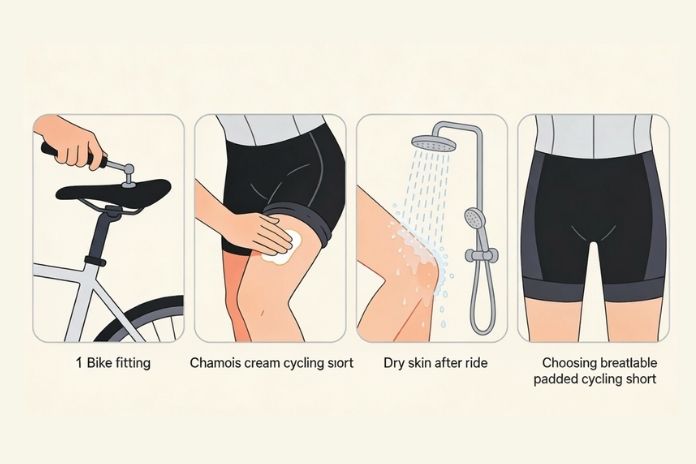
Proper bike fit is critical to preventing saddle sores. Professional bike fitting can minimize pressure points and distribute weight evenly.
Saddle considerations:
- Correct width to match your sit bones.
- Shape suited to your anatomy and riding style.
- Firmness that supports without causing excessive compression.
More padding isn’t always better. Overly soft saddles can increase friction and skin movement, making sores more likely.
Cycling Shorts and Clothing
Clothing plays a major role in reducing friction and moisture accumulation.
Recommendations:
- Wear clean, well-fitting cycling shorts with a quality chamois.
- Avoid seams that rub sensitive areas.
- Never wear underwear under cycling shorts.
- Change out of damp or sweaty clothing immediately after riding.
Skin Care and Hygiene
Maintaining good hygiene reduces bacterial load and lowers infection risk.
Best practices:
- Shower soon after riding.
- Gently clean and dry the skin without scrubbing aggressively.
- Wear breathable fabrics whenever possible.
- Manage hair carefully; trimming is usually safer than shaving, which can irritate follicles and increase risk.
Riding Habits
Your riding style also affects the risk of saddle soreness. Small adjustments can make a big difference:
- Gradually increase riding volume and intensity.
- Take short standing breaks during long rides to relieve pressure.
- Shift your position periodically on the saddle.
- Use chamois cream if prone to friction.
These habits reduce prolonged pressure on a single area, giving the skin a chance to recover during longer sessions.
Are Saddle Sores Dangerous?
In most cases, saddle sores are uncomfortable but not dangerous when treated early. Ignoring them, however, can lead to:
- Skin infection.
- Abscess formation.
- Chronic thickened or scarred skin.
- Recurrent pain that affects riding performance.
According to sports medicine guidance from the National Institutes of Health, repeated untreated skin trauma increases the risk of chronic tissue changes and makes future sores more likely.
Common Myths About Saddle Sores
There are many misconceptions about saddle sores that can make prevention and treatment harder than it needs to be. Understanding the facts helps riders avoid unnecessary pain and setbacks.
Myth 1: “They’re Unavoidable if You Ride”
Reality: Saddle sores are common, but they are not inevitable. With proper bike fit, good hygiene, suitable clothing, and adequate rest, most riders can avoid them entirely. Early attention to friction, pressure, and moisture drastically reduces risk.
Myth 2: “You Should Push Through the Pain”
Reality: Pain is your body’s warning system. Riding through it often turns mild irritation into a deeper, more serious sore. Acting early, adjusting position, reducing pressure, or taking a short break, prevents minor issues from becoming long-term injuries.
Myth 3: “More Padding Always Helps”
Reality: More cushion isn’t always better. Overly soft or thick saddles can trap heat, increase moisture, and create additional friction, making saddle sores more likely. The right saddle supports your anatomy while allowing skin to breathe and move naturally.
Busting these myths helps riders focus on prevention, early care, and smarter riding practices instead of relying on misinformation or quick fixes.
Final Takeaway
A saddle sore is more than just a minor annoyance; it is a preventable injury caused by a combination of friction, pressure, moisture, and bacteria. While it is common among cyclists, addressing it early can prevent pain, infection, and long-term tissue damage.
Recognizing the first signs, redness, tenderness, or irritation, and taking immediate steps to reduce pressure and protect the skin is essential for a quick recovery. Proper bike fit, clean and well-fitting cycling clothing, and adequate rest play a critical role in prevention.
Small adjustments, such as shifting position during rides, taking standing breaks, or gradually increasing ride duration, can significantly reduce the risk of developing sores. Ignoring discomfort or pushing through the pain often worsens the injury, turning what could have been a minor irritation into a deep, persistent sore.
For persistent, worsening, or recurrent saddle sores, especially those showing signs of infection such as swelling, drainage, or spreading redness, seeking medical attention is crucial. With the right approach, including preventive measures, attentive care, and timely intervention, most riders can stay comfortable and healthy, enjoying their rides without recurring problems.
References
- Adventure Cycling Association. (n.d.). Saddle sores: What they are and how to prevent them.
- American Geophysical Union. (n.d.). 5 tips against saddle soreness.
- British Cycling. (2014, January 23). All cycling: Are you sitting comfortably?
- Cleveland Clinic. (n.d.). Saddle sores: Treatment and prevention.
- Cycling Ireland. (n.d.). Saddle sores guide: The causes, prevention and treatment.
- Cycling Weekly. (n.d.). How to prevent saddle sores.
- BikeRadar. (n.d.). How to avoid and treat saddle sores.
- Bicycling. (2015, September 23). How to diagnose, treat and avoid saddle sores.
- Bike Legal Firm. (n.d.). Saddle sores.
- Liv Cycling. (n.d.). How to deal with discomfort down there.
- Team EF Coaching. (n.d.). Treating saddle sores with Dr. Kevin Sprouse.
- PubMed. (2017). Sports dermatology: Traumatic or mechanical injuries, inflammatory conditions, and exacerbations of pre-existing conditions.
- PubMed. (2022). Saddle sore development and risk factors in cyclists.
- Reddit. (2022, June 12). How to never get saddle sores.
- Wikipedia. (n.d.). Saddle sore.
- Rodalink. (n.d.). How to avoid saddle sores.
- TrainerRoad Forum. (n.d.). Problems with saddle sores.
- Vetericyn. (n.d.). Saddle sores in horses.
In this Article