












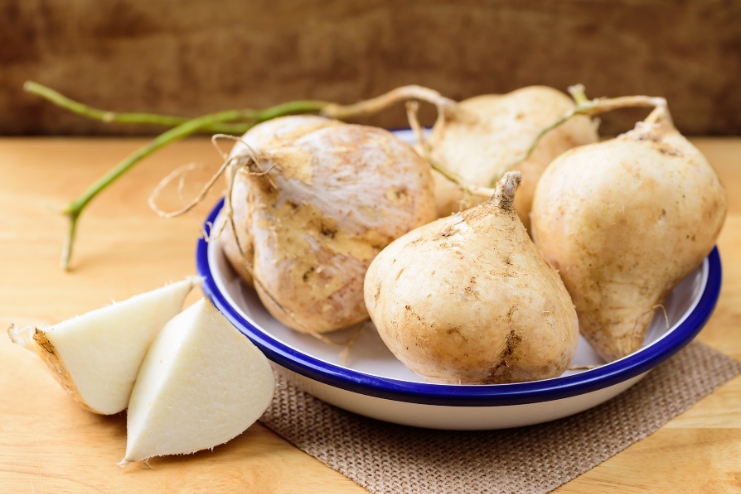
If you’ve ever bitten into something crisp, slightly sweet, and weirdly refreshing at a salad bar and thought, What is this?, chances are it was jicama. It looks like a potato, crunches like an apple, and hydrates like a cucumber. That combo is why jicama has built a quiet following among people focused on gut health, blood sugar balance, and weight management.
Here’s the thing. Jicama isn’t popular because it’s exotic. It’s popular because it’s practical. It adds volume without many calories, fiber without heaviness, and crunch without blood sugar spikes. Jicama is a root vegetable native to Mexico, often eaten raw rather than cooked.
Unlike starchy roots, it stays crisp and light, making it more comparable to fruits or watery vegetables than to potatoes. Nutritionally, it’s mostly water with a high fiber payoff, especially inulin, a prebiotic fiber that supports gut bacteria and helps keep blood sugar steady. That’s why it works so well for digestion, satiety, and weight control.
This article breaks down what jicama is, its real health benefits, how to eat it safely, and who should be cautious.
What Is Jicama?
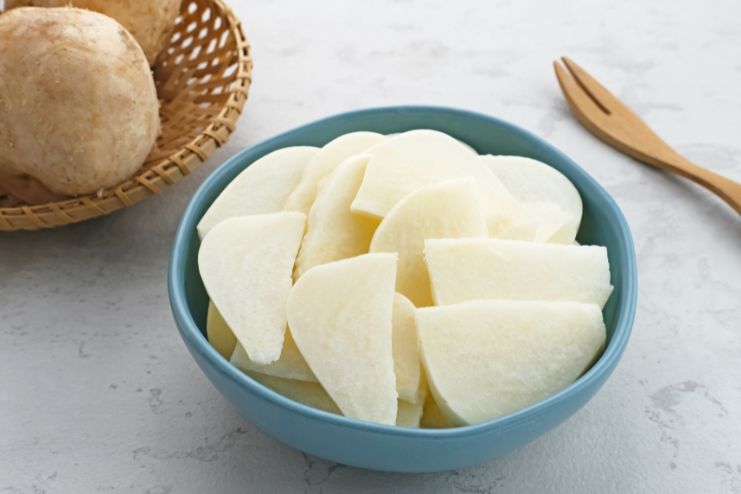
Jicama is a crunchy root vegetable that belongs to the legume family, even though it doesn’t eat or behave like a typical legume. Its botanical name is Pachyrhizus erosus, and it’s native to Mexico and Central America, where it has been eaten for centuries. Depending on where you are, you might hear it called Mexican yam bean, Chinese turnip, or sengkwang.
Despite the word bean in some of its names, the edible portion is not a pod or seed. It’s the large underground root. That root is crisp, juicy, and mildly sweet, closer in texture to an apple or water chestnut than to a potato. This is why jicama is commonly eaten raw and used for crunch in salads, slaws, and fresh snacks.
Important Safety Note: Only the white flesh of the root is safe to eat.
The skin, leaves, stems, and seeds contain rotenone, a naturally occurring insecticide that is toxic to humans. Always peel jicama completely before eating it. This is not optional, and it’s not a minor detail. Proper preparation is what makes jicama a safe, healthy food.
Jicama Nutrition Facts
Jicama stands out nutritionally because it delivers hydration and fiber with very few calories. It’s a high-volume food that supports fullness without weighing meals down.
Macronutrients (per 1 cup raw, about 120 g)
- Calories: ~46
- Carbohydrates: ~11 g
- Fiber: ~6 g
- Protein: ~1 g
- Fat: ~0 g
Nearly half of jicama’s carbohydrates come from fiber rather than digestible starch or sugar. That’s a big reason it has a low glycemic impact and works well for blood sugar control.
Fiber Content: Inulin
Most of jicama’s fiber comes from inulin, a soluble prebiotic fiber. Inulin isn’t broken down in the small intestine. Instead, it moves to the colon, where it feeds beneficial gut bacteria. This supports digestion, gut health, and more stable blood sugar responses after meals.
Because inulin slows digestion and increases satiety, jicama can help you feel full longer without adding many calories.
Dr. Kendra Weekley, a clinical nutrition expert at the Cleveland Clinic, explains: “Inulin is a soluble fiber that slows the rate at which the stomach empties, so you feel fuller longer, and your blood sugar stays more stable after meals. At the same time, inulin feeds beneficial gut bacteria, which support digestion and a healthier gut environment.”
Vitamins, Minerals, and Water Content
- Vitamin C: About 25 percent of daily needs per cup, supporting immune function and collagen production.
- Potassium: Helps regulate fluid balance and blood pressure.
- Magnesium: Plays a role in muscle, nerve, and metabolic function.
- Water: Roughly 85 to 90 percent by weight.
This mix of fiber, water, and micronutrients explains why jicama feels refreshing and filling at the same time. It hydrates, supports digestion, and adds structure to meals without heaviness. In short, jicama isn’t just a crunchy filler. It’s a low-calorie, fiber-rich root that earns its place on the plate when nutrition and practicality both matter.
Health Benefits of Jicama
The health benefits of jicama come from its rare mix of prebiotic fiber, high water content, and low-digestible carbohydrates. Unlike many root vegetables, jicama provides volume, crunch, and satiety without triggering blood sugar spikes. That makes it especially useful for gut health, metabolic balance, and weight management.
Let’s break down the key jicama health benefits and what they mean in real terms.
Jicama for Gut Health and Digestion
One of the most researched health benefits of jicama is its support for gut health. Jicama is rich in inulin, a prebiotic fiber that feeds beneficial gut bacteria rather than being digested by the body.
Inulin selectively supports strains such as Bifidobacteria and Lactobacilli, which are linked to better digestion, immune regulation, and reduced inflammation. Research published in The Journal of Nutrition shows that diets high in inulin improve gut microbial balance and increase short-chain fatty acid production, which helps protect colon health.
Gut health expert Dr. Megan Rossi, PhD, explains the role of prebiotic fibers like inulin in shaping the gut ecosystem: “It’s not just that prebiotic fibers add bulk to your diet, they feed the trillions of microbes living in your large intestine, which ferment that fiber into beneficial compounds such as short‑chain fatty acids that help support your gut lining, immunity and metabolic function.”
That said, jicama’s inulin content can cause gas or bloating if introduced too quickly. Starting with small portions allows the gut to adapt.
Jicama and Blood Sugar Control
Another major jicama benefit is its low impact on blood sugar. Jicama has a low glycemic index, meaning it causes minimal post-meal glucose spikes.
This happens because:
- Jicama is low in digestible carbohydrates.
- Its fiber slows glucose absorption.
- It contains no refined sugars.
According to the American Diabetes Association, high-fiber, low-GI foods support better post-meal glucose control and improved insulin sensitivity over time. For people with prediabetes or type 2 diabetes, jicama can be a practical replacement for higher-carb snack foods when eaten in reasonable portions.
Jicama for Weight Loss and Satiety
When it comes to weight management, jicama for weight loss makes sense physiologically.
It combines:
- Low calorie density
- High food volume
- High fiber content
Fiber slows digestion and activates fullness hormones like GLP-1, helping reduce overall calorie intake. Research summarized in Nutrition Reviews consistently links higher fiber intake with lower body weight and smaller waist circumference.
Texture matters too. Jicama’s crunch increases chewing time, which gives satiety signals time to register. That’s one reason crunchy foods tend to be more satisfying than soft, calorie-dense options.
Antioxidant Benefits of Jicama
Jicama provides a moderate amount of vitamin C, an antioxidant that helps protect cells from oxidative stress and supports immune function. Vitamin C is also essential for collagen synthesis, skin health, and wound healing.
According to the National Institutes of Health, consistent vitamin C intake supports immune defense and tissue repair. While jicama isn’t an antioxidant powerhouse, it contributes meaningfully when eaten regularly as part of a balanced diet.
Jicama for Hydration and Electrolyte Balance
With nearly 85 to 90 percent water content, jicama supports hydration, especially in hot climates or for people consuming higher-fiber diets that increase fluid needs.
Its potassium content helps regulate:
- Fluid balance.
- Muscle contractions.
- Nerve signaling.
Potassium-rich diets are consistently associated with better blood pressure regulation, according to Harvard Health Publishing. Combined with its water content, this makes jicama a refreshing, hydrating food rather than just a crunchy add-on.
What this really means is: Jicama earns its place through function, not hype. It supports digestion, steadier blood sugar, hydration, and fullness in ways that align with how the body actually works.
Read More: Jicama Health Benefits – Why This Crunchy Superfood Deserves a Spot in Your Diet
Is Jicama Good for Digestive Health?
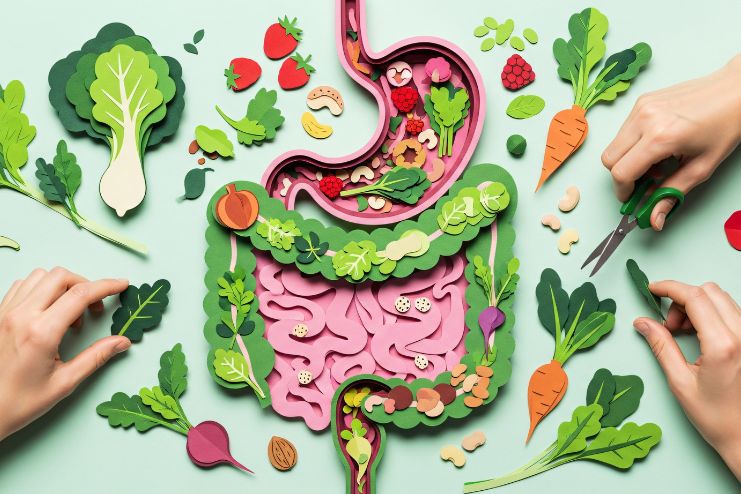
For many people, yes. For others, not always. Jicama and digestive health depend largely on fiber tolerance and gut sensitivity.
Jicama contains inulin, a prebiotic fiber that supports beneficial gut bacteria. While this can improve digestion for some, it can also cause discomfort in people sensitive to fermentable fibers.
Jicama tends to work best for:
- People with low fiber intake.
- Those transitioning away from refined carbohydrates.
- Individuals seeking gentle support for stool regularity.
For these groups, jicama can help improve bowel movement consistency and promote healthier gut bacteria when introduced gradually.
Who May Experience Digestive Issues
Some people may experience discomfort from jicama, especially in larger amounts:
- People with IBS.
- Those sensitive to FODMAPs.
- Anyone increasing fiber intake too quickly.
Inulin is classified as a FODMAP. In sensitive individuals, it can ferment rapidly in the gut, triggering bloating, gas, or abdominal cramps.
Tips to Improve Jicama Tolerance
If you want the digestive benefits of jicama without discomfort, these strategies help:
- Start with small portions.
- Eat jicama with meals rather than on its own.
- Cook jicama lightly instead of eating it raw.
- Drink adequate water throughout the day.
Gradual exposure allows the gut microbiome time to adapt, reducing unwanted symptoms.
Jicama and Heart Health
Jicama does not treat or cure heart disease. However, jicama and heart health are connected through its fiber and mineral content.
- Fiber and Cholesterol
The soluble fiber in jicama can help reduce LDL cholesterol by binding bile acids in the digestive tract. According to the Cleveland Clinic, consistent intake of dietary fiber is associated with improved lipid profiles over time.
This effect is modest but meaningful when jicama is part of a fiber-rich, heart-healthy eating pattern.
- Potassium and Blood Pressure
Jicama provides potassium, a mineral that helps counterbalance the effects of sodium and supports healthy blood pressure regulation.
Potassium supports:
- Vascular function.
- Muscle contraction.
- Nerve signaling.
These benefits are supportive rather than medicinal. Jicama complements heart-healthy diets but does not replace medical treatment or prescribed therapies.
Read More: Top 7 Heart-Healthy Breakfast Products to Start Your Day Right
How to Eat Jicama
How you prepare jicama affects its texture, digestion, and nutrient availability.
Raw vs Cooked Jicama
Raw jicama offers maximum crunch, a slightly sweeter taste, and higher vitamin C content. Cooked jicama has a softer texture, slightly reduced vitamin C, and is often easier to digest.
Light cooking can reduce fermentation for people sensitive to raw fiber.
Jicama is versatile and easy to incorporate into meals:
- Sliced raw with lime and chili powder.
- Added to salads for extra crunch.
- Stir-fried with other vegetables.
- Roasted as a low-carb alternative to fries.
- Paired with hummus or yogurt-based dips.
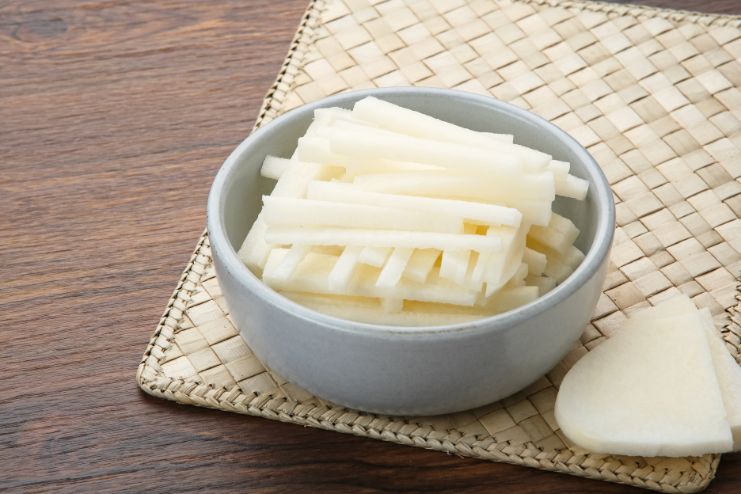
Always peel jicama thoroughly before use. Discard the skin completely.
Is Jicama Safe for Everyone?
Jicama is generally safe when prepared correctly, but it is not risk-free.
Critical Safety Reminder
- Do not eat the skin, leaves, or seeds.
- Peel deeply and discard peels immediately.
These parts contain rotenone, a naturally occurring insecticide that is toxic to humans.
Some individuals should limit or avoid jicama:
- People with IBS or FODMAP sensitivity.
- Those prone to bloating or excessive gas.
- Anyone with a history of allergic reactions to legumes.
If digestive symptoms persist despite small portions and proper preparation, it’s best to avoid jicama altogether.
Bottom line: Jicama supports digestion, heart health, and hydration for many people, but tolerance matters. When eaten correctly and in appropriate portions, jicama can be a valuable addition to a balanced diet.
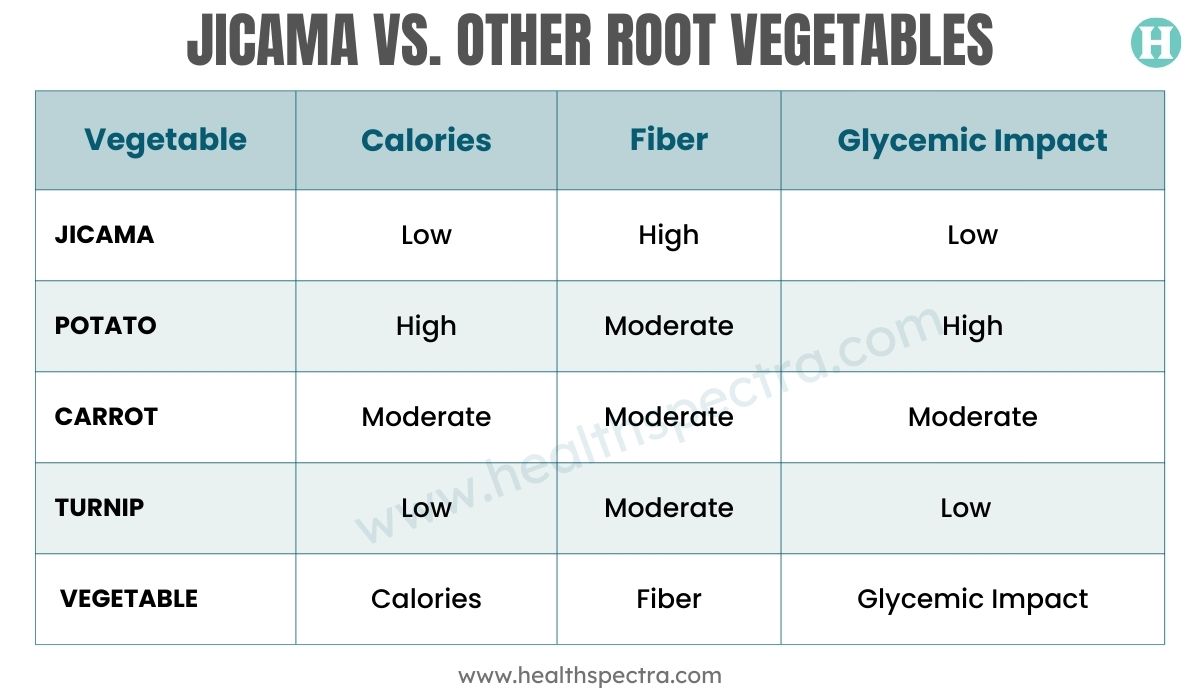 Jicama stands out for its fiber density and blood sugar-friendliness, not for its vitamin diversity.
Conclusion
Jicama isn’t a miracle food, and it doesn’t need to be. Its value lies in its simplicity, hydration, fiber richness, and metabolic gentleness. It doesn’t promise dramatic transformations or overnight results. What it offers instead is consistency. It fills the gaps that many modern diets leave behind: too little fiber, too many refined carbs, and not enough foods that actually satisfy without overloading the body.
For people focused on gut health, jicama provides prebiotic fiber that supports beneficial bacteria when introduced gradually. For those managing blood sugar, it delivers crunch and volume without sharp glucose spikes. And for anyone trying to control weight, it allows larger portions with fewer calories, which matters far more than most diet rules admit. Jicama also fits easily into real meals.
It doesn’t require special preparation, expensive ingredients, or complicated recipes. It works raw, lightly cooked, or mixed into everyday dishes. That practicality is part of its strength. The key is using it correctly. Peel it thoroughly. Start with reasonable portions. Pay attention to how your digestion responds. If it works well for you, it can be a steady, reliable addition to your diet.
If it doesn’t, there’s no need to force it. In the end, jicama is not a cure-all. It’s a supportive food. And when it’s treated as part of a balanced, varied diet, rather than a solution on its own, that’s precisely where its real value shows up.
FAQs: People Also Ask
Is jicama healthy to eat every day?
For most people, yes. Jicama can be eaten daily if your digestion tolerates its fiber content and portions are kept reasonable. Its low-calorie load, high water content, and prebiotic fiber make it suitable for regular consumption, as with any high-fiber food, variety and moderation still matter.
Is jicama good for weight loss?
Yes. Jicama supports weight loss because it is low in calories, high in volume, and rich in fiber. This combination helps increase fullness while reducing overall calorie intake. Its crunchy texture also slows eating, which supports better appetite control over time.
Does jicama raise blood sugar?
Jicama has minimal impact on blood sugar levels. It has a low glycemic index and contains very little digestible carbohydrate. The fiber in jicama slows glucose absorption, making it a suitable option for people managing blood sugar when eaten in reasonable portions.
Can jicama cause gas or bloating?
Yes, it can. Jicama contains inulin, a fermentable prebiotic fiber classified as a FODMAP. In sensitive individuals, this may lead to gas, bloating, or cramps, especially if intake increases too quickly. Starting with small portions usually improves tolerance.
Is jicama keto-friendly?
Jicama is lower in net carbs than many root vegetables, but it is not zero-carb. Small amounts may fit into flexible or low-carb diets. On strict ketogenic diets, jicama is usually limited or avoided due to its carbohydrate content.
References
- Advanced Health. (2023). Jicama nutrition handout.
- Apollo 24/7. (n.d.). Jicama uses and health benefits.
- Baptist Health. (n.d.). Jicama vs. potatoes: Health benefits.
- Cleveland Clinic. (n.d.). Cholesterol and nutrition.
- Cleveland Clinic. (n.d.). Inulin: Benefits and side effects.
- Cleveland Clinic. (n.d.). Jicama nutrition and health benefits.
- Diabetes Food Hub. (n.d.). Facts about fiber you should know. American Diabetes Association.
- Harvard Health Publishing. (n.d.). Using food to stay hydrated.
- Health.com. (n.d.). Jicama benefits.
- Lybrate. (n.d.). Benefits of jicama and its side effects.
- National Institutes of Health, Office of Dietary Supplements. (n.d.). Vitamin C: Fact sheet for health professionals.
- Nutrition Reviews. (2009). Health benefits of dietary fiber. Nutrition Reviews, 67(4), 188–205.
- PubMed Central. (2019). Dietary fiber, gut microbiota, and metabolic health.
- The Doctor’s Kitchen. (n.d.). Eat fiber: Podcast episode.
- WebMD. (n.d.). Jicama: Health benefits.
- Alonso-Allende, J., Milagro, F. I., & Aranaz, P. (2024). Health effects and mechanisms of inulin action in human metabolism. Nutrients, 16(17), 2935.
In this Article