










In the past few years, black plastic health risk concerns have been magnified through media reports, expert interviews, and viral posts. These warn people about the toxic chemicals potentially hidden in everyday black plastic products. From black plastic cooking utensils to takeout containers and food packaging, these products are common in modern kitchens. Hence, the question feels both personal and urgent.
This raises the question: Is black plastic harmful to your health, or is this a simplistic view?
The truth lies somewhere between alarm and dismissal. Black plastic itself is not toxic. However, specific forms of processing, particularly utilizing recycled plastics from electronic waste, heighten the risk of chemical contamination.
Whether black plastic presents a significant health risk depends upon what chemicals are present, how the plastic is used, and how frequent exposure occurs, especially in the context of heat and plastic leaching.
The article explains what studies actually show about black plastic chemicals, the chemical exposure risk, and food contact safety, including evidence and not exaggeration.
What Is Black Plastic Made Of?

We use black plastic widely for:
- Spatulas, ladles, serving spoons, and all other kitchen utensils.
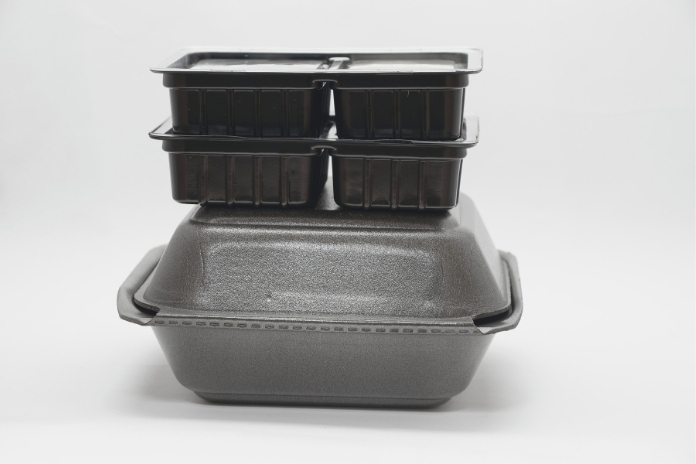
- Black plastic food containers that are used for meal prep or takeout.
- Disposable trays, packaging, and ready-meal containers.
From a materials standpoint, black plastic is not a single substance. It can be made from several polymers, including polypropylene and polystyrene. However, the source of the plastic matters more than the polymer itself.
Why Recycled Electronic Waste Matters
A major concern is that black plastic is often produced using recycled plastics, including plastics recovered from discarded electronics. Electronics often contain flame retardants to meet fire safety standards. When those plastics are recycled and repurposed into consumer goods, trace amounts of those additives can remain predisposed.
Role of Carbon Black Pigment
The deep black color comes from carbon black pigment, which provides durability and UV resistance. However, carbon black also absorbs heat more efficiently than lighter pigments.
This characteristic becomes relevant during cooking or reheating, as higher surface temperatures may increase chemical migration, contributing to heat and plastic leaching when black plastic comes in contact with food.
Why Black Plastic is a Health Concern
Black plastic raises more concern as compared to other plastics due to three main reasons:
- Limitations of Recycling: Carbon black interferes with the optical sorting systems. Therefore, black plastic cannot be recycled properly.
- Higher Contamination Risk: Poor sorting increases the possibility of mixing of recycled electronic plastics within consumer products.
- Detection of Flame Retardants: In certain black plastic utensils and packaging, brominated flame retardants (BFRs) have been identified by studies.
Megan Liu, science and policy manager at Toxic-Free Future, says, “When you’re using black plastic items, there’s going to be a risk that they could be contaminated.”
These findings do not mean that all black plastic is unsafe, but they explain why black plastic health risks are taken more seriously than color alone. This is the reason why material source and usage conditions matter.
What Chemicals Have Been Found in Some Black Plastics?
Brominated Flame Retardants (BFRs)
Brominated flame retardants (BFRs) are added to electronic plastics to reduce fire risk. When plastics from old electronics are recycled into household items, traces of BFRs may be left behind.
Why BFRs raise concern:
- Some act as endocrine disruptors, interfering with thyroid and reproductive hormones.
- Long-term exposure has been linked to metabolic and developmental effects in animal studies.
- They are persistent in the environment and tend to bioaccumulate.
Most health effects are associated with chronic exposure and not brief or occasional contact.
Other Additives and Trace Contaminants
In addition to BFRs, chemicals in black plastics may also include:
- Plasticizers that promote flexibility.
- Stabilizers that prevent breakdown under heat.
- Trace contaminants from mixed recycled streams.
A critical scientific distinction: detecting a chemical does not equal a harmful dose. Toxicity is a matter of concentration, frequency, and duration of exposure.
How Exposure Could Happen

The main issue with black plastic toxic questions is related to food contact, not skin contact.
Higher-risk exposure situations include:
- Preparing food with black plastic utensils in high-temperature conditions.
- Microwaving food in black plastic food containers.
- Reheating fatty or oily foods allows for the dissolving and more effective carrying of chemicals.
Why Heat and Fat Matter
Heat increases the rate of plastic leaching, while fats can act as a solvent, increasing the migration of chemicals from plastic into food. This implies that frequency and duration of exposure matter far more than single use.
The occasional takeout in black plastic is unlikely to be a meaningful risk, but daily use at high temperatures increases cumulative exposure.
Read More: The Truth About Reheating Leftovers: Safety, Nutrition, and Taste
What the Research Actually Shows
Scientific research clearly distinguishes between the detection of chemicals and demonstrated health harm.
What studies have consistently shown:
- Some black plastic items have detectable flame retardants.
- The levels are usually low and variable.
- Most health data comes from animal models or environments involving high exposure.
What scientists can generally agree on:
- The risk from everyday consumer use is low, but not zero.
- Repeated exposure to heat increases potential risk.
- Further studies are required to assess long-term, low-dose human exposure.
In other words, science supports risk management, not panic.
Is Black Plastic Worse Than Other Plastics?

Black plastic is not automatically worse than clear or colored plastic. However, color alone does not determine safety.
More important risk factors are:
- Whether the plastic is labeled as safe for contact with food.
- How often is it heated?
- Whether it is scratched, degraded, or old.
Clear plastic, colored plastic, and even food-safe plastics can leach chemicals under high heat. It is the use conditions that matter more than pigment alone.
Everyday Things People are Most Afraid Of
Black Plastic Cooking Utensils:
Utensils are exposed to a lot of heat, which makes them one of the higher-risk uses.
Replacement may be reasonable if utensils are:
- Warped or partially melted
- Heavily scratched or brittle
- Used daily in high-temperature cooking
Black Plastic Food Containers:
Black plastic food containers are an extremely common item for takeaway food. Single use with hot food is unlikely to cause harm, but microwaving or repeated reuse increases the risk of chemical exposure.
Black Plastic Packaging:
Short contact with cool or dry foods is less dangerous than with those that are heated or oily.
Read More: How Much Plastic Do We Eat Each Week? (And Why It Matters)
How to Reduce Potential Risk (Without Panic)
Evidence-based ways to lower the health risks from black plastics include:
- Avoid heating food in plastic, especially black plastic.
- Transfer takeout foods to glass or ceramic before heating.
- Replace worn or damaged utensils.
Use safer alternatives to high-heat cooking:
- Stainless steel
- Silicone
- Wood
- Look for products that are clearly labeled for food contact safety
These measures minimize exposure without making it necessary to completely avoid the use of black plastic.
Who May Want to Be Extra Cautious
Some may want to take extra precautions because of higher vulnerability or for cumulative exposure:
- Pregnant women
- Infants and children
- People who actively minimize endocrine disruptors are the ones who already avoid BPA, phthalates, and similar hormone-disrupting chemicals. They may choose to limit black plastic as part of reducing their overall chemical exposure.
For these groups, reducing plastic use in cooking and reheating provides a margin of reasonable safety.
Common Myths about Black Plastic
- ‘All black plastic is toxic’ – Incorrect
- ‘Touching black plastic is dangerous’- Not supported by evidence.
- ‘One meal causes cancer’- That is not how toxic exposure works.
Health risk is determined by dose, frequency, and duration, not by isolated events.
What Matters More than Black Plastic
It focuses solely on black plastic and detracts from broader exposure drivers, such as:
- The total chemical exposure over time.
- Regular heating practices.
- Long-term food storage habits.
- Overall environmental and lifestyle context.
- Black plastic is one contributor, but far from the dominant one.
Read More: How BPA Exposure in Everyday Products Could Be Hurting Your Fertility
When to Replace vs. When It’s Probably Fine
Replacement is reasonable if you notice:
- Cracks or surface degradations.
- Melting or warping.
- Frequent use at high heat.
Likely Fine If:
- Use is occasional.
- Food is not reheated.
- The object stays whole and stable.
Final Takeaway
So, is black plastic bad for your health? Evidence says: not necessarily. Black plastic itself is not actually dangerous. Some black plastics might contain concerning additives owing to their source from recycling. The risk, therefore, depends on how plastic is used, heated, and reused, not color alone.
Small, well-informed adaptations can greatly reduce exposure without fear or disruption to lifestyle. Understanding the actual risk rather than reacting to headlines is the most protective step of all.
References
- Interreg Baltic Sea Region. (2025, March 18). The hidden risks of food packaging and its impact on health. Interreg Baltic Sea Region
- Young, L. J. (2024, December 18). A study miscalculation has everyone talking about black plastic spatulas again. Scientific American
- Beyond Plastics. (n.d.). Why black plastic is bad news
- Liu, M., Schreder, E., & Brandsma, S. H. (2024). From e-waste to living space: Flame retardants contaminating household items add to concern about plastic recycling
- Lexology. (2024). Black plastic: The black sheep in the recycling industry
- Food Packaging Forum. (2024, October 10). Black kitchen utensils contain banned flame retardants, study finds
In this Article