











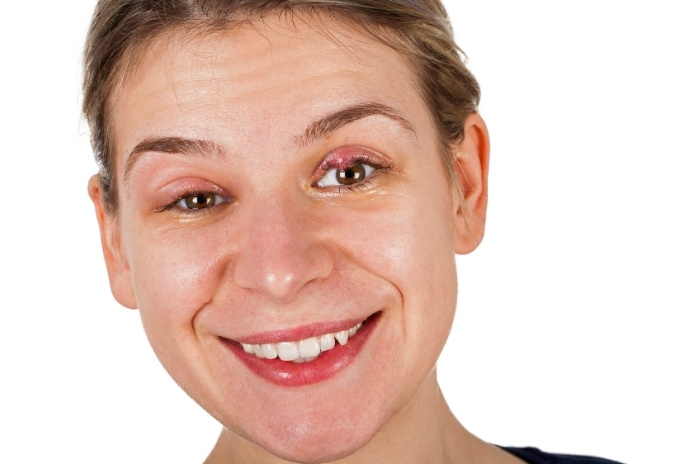
Even a small bump on the eyelid can feel alarming. Our eyes are delicate, constantly in use, and visible, so even minor changes can raise concern.
We generally think that a lump indicates an infection, whether it’s subtle or painful to touch. This assumption is understandable but may not always be accurate.
Two of the most common causes of eyelid lumps are chalazion and stye. While they may look similar at first glance, they are not the same condition. A bacterial infection causes a stye, while a chalazion develops due to a blocked oil gland and chronic inflammation. Understanding these differences matters because their causes, speed of onset, symptoms, and treatments differ significantly.
Knowing whether you’re dealing with a chalazion or a stye can help you avoid unnecessary antibiotics, reduce the risk of recurrence, and recognize when medical care is necessary. Identifying the signs early also prevents frustration, especially when a painless lump lingers longer than expected, or a painful swelling worsens rapidly over days.
Noticing the difference early can help prevent unnecessary usage of antibiotics, recurrent attacks, and guide you in determining when to seek medical attention.
Read More: Can You Really Get Pink Eye from a Fart? What Science Actually Says
What is a Chalazion?
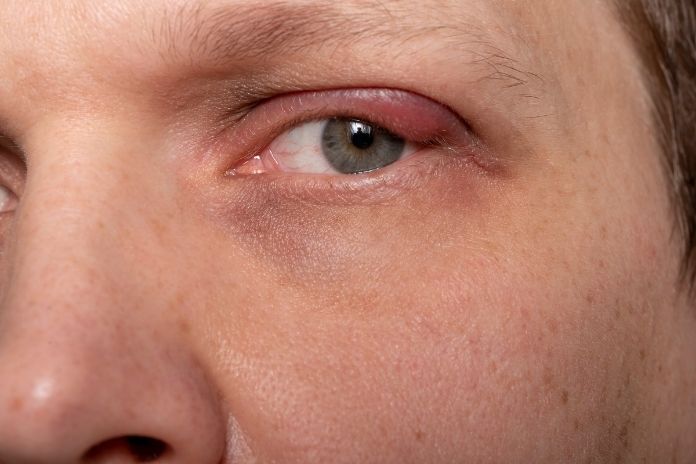
A chalazion is a chronic inflammatory mass involving a blocked gland that produces oils. The chalazion falls on the non-infectious side of the chalazion vs hordeolum spectrum.
The eyelids are home to a group of meibomian glands that produce an oily secretion designed to retard the evaporation of tears. If one of these glands is obstructed, the oil accumulates behind the obstruction itself. This accumulated fluid eventually hardens and leaks into the nearby tissues of the eyelid, prompting a bodily reaction, producing an inflammatory reaction and a palpable lump.
Since bacteria aren’t present in chalazia, these typically cause less redness, swelling, heat, or pain. This explains why chalazia are usually hard lumps rather than soft ones or why antibiotics aren’t helpful unless an associated infection is present.
Symptoms of a Chalazion
The important thing when distinguishing a chalazion from a stye is the sensations associated with the growth and the rapidity of change. A chalazion begins subtly, with the sensation of fullness or heaviness in the tissue of the eyelid. This progresses over a number of days or weeks to become more evident as a swelling.
Common symptoms include:
- A lump on a hard, rounded eyelid is usually not painful.
- Swelling of the eyelids rather than inflammation.
- Little redness compared to an infection.
- Blurred sight due to a chalazion pressing on the cornea.
Chalazia lasts longer than one would anticipate. If left untreated, it may last for weeks to months, with a gradual decrease in inflammation.
Who’s More Likely to Get Chalazia?
Chalazia are strongly linked to conditions affecting oil gland functions rather than just cleanliness. In blepharitis, people with chronic cases have thicker discharge, which tends to obstruct the glands. Furthermore, rosacea may change the oil composition in the skin, leading to blockage. Oily skin, diabetes, immunodisequilibrium, and eye rubbing are other contributing factors.
When chalazia turns chronic, it indicates meibomian gland dysfunction and makes lid care important for prevention.
What is a Stye?
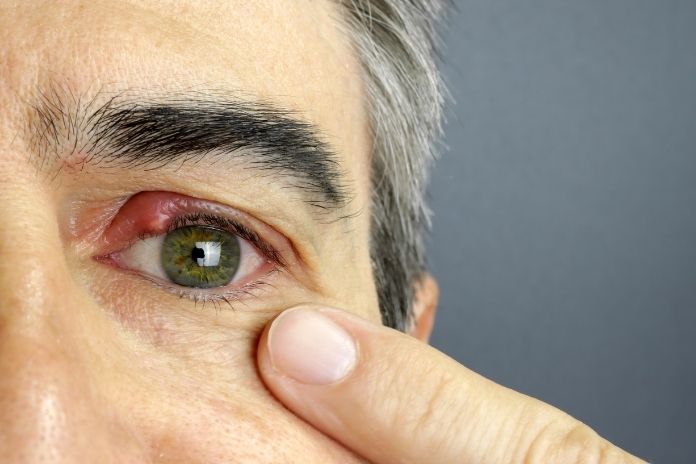
A stye is an acute bacterial infection of the eyelid. Its medical terminology is “hordeolum.” This represents the infectious side of the disease process of chalazion vs. stye.
Styes develop when bacteria, usually Staphylococcus aureus (S. aureus), invade an eyelash follicle or an opening of an oil gland in the eyelid. This causes the body’s natural defense mechanism to develop inflammation in the area due to bacterial invasion. Pus may also quickly develop in an attempt to eliminate the bacteria.
In contrast to a chalazion, a stye is an inflammatory and painful condition right from the beginning.
Symptoms of Stye
Styes can be described as inflammation caused by infection. They can rapidly become worse over the course of 24-48 hours.
Common symptoms of a stye include:
- A painful, tender, and red swelling near the edge of the lid.
- Local warmth and swelling.
- A throbbing or sore sensation with each blink.
- Tear film breakup, irritation, and photosensitivity.
- White or yellow pus-filled head.
Since a stye is essentially an infection of the eyelid, pain is usually more severe compared to a chalazion.
Internal vs. External Styes
Styes are classified based on their depth:
- Cutaneous or external styes appear at the eyelash. They are easily visible shortly after they appear.
- Internal styes occur deeper within the eyelid with more generalized inflammation and pain.
An internal stye is more likely to become a chalazion if it gets blocked but resolves as an infection.
Read More: The Dangers of Excessive Eye Rubbing: 7 Hidden Risks You Should Know!
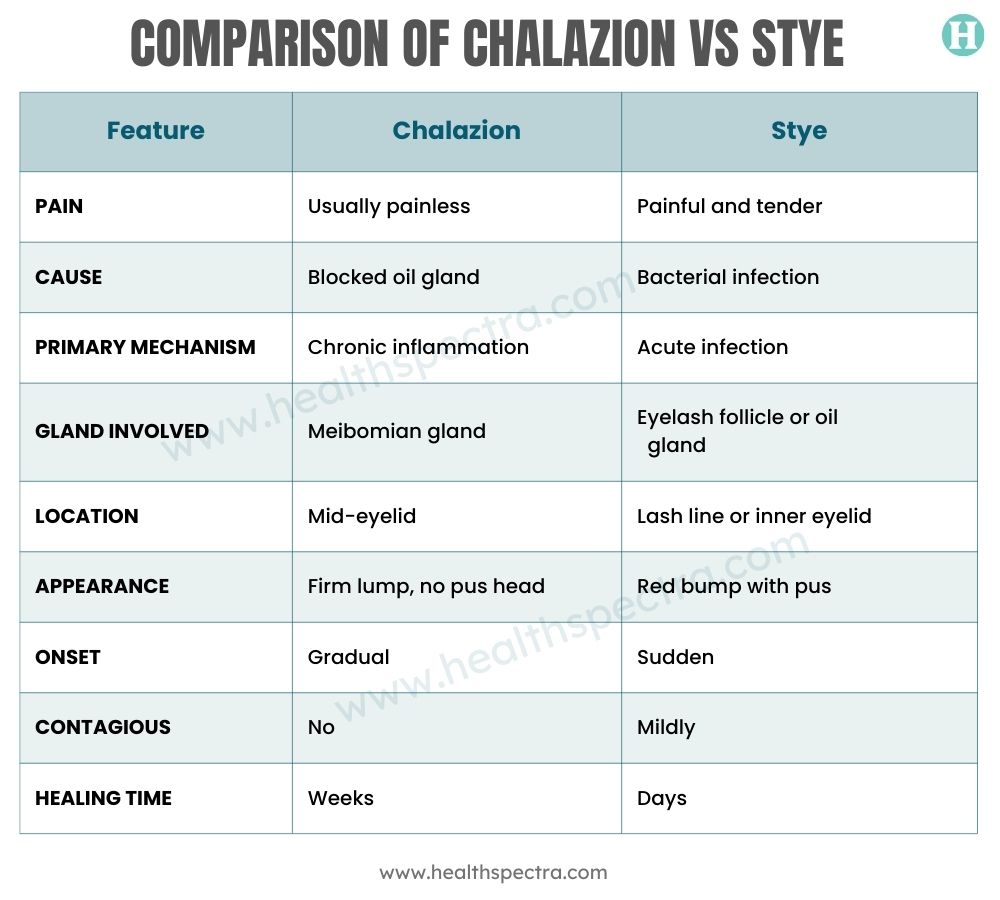
Comparison of Chalazion vs Stye
Are Chalazia and Styes Contagious?
A chalazion is not contagious because it develops from a blocked oil gland rather than an infection.
A stye is slightly contagious. Bacteria may be transmitted in the following ways:
- Touching the infected eyelid and subsequently touching the other eye.
- Using towels, pillowcases, and eye makeup.
Hand hygiene practices are important during the course of an active infection involving the eyelids.
How to Treat a Chalazion at Home
Chalazion treatment mostly focuses on ensuring the flow of oil from the gland.
Application of warmth using warm compresses is essential. This helps soften the thickened oil within the meibomian gland. This should be done for 10-15 minutes, three to four times a day.
After warming, a gentle eyelid massage with the palm towards the eyelashes will help to drain. Avoid squeezing, as this may worsen the inflammation.
Generally, most small chalazia will resolve by themselves within two to four weeks. A larger one will often resolve in six to eight weeks.
Treating a Stye at Home
Early care for a stye includes the use of a warm compress to concentrate the infection in one place and aid the draining process.
Additionally, you can opt for the following things:
- Maintain the cleanliness of the eyelid using a diluted baby shampoo solution or sterile eyelid wipes.
- Do not wear makeup or contact lenses until healed.
- Avoid popping a stye, as it may lead to the development of an infection.
Dr. Eduardo Besser, a medical and surgical ophthalmologist and founding member of Angeles Eye Institute, recommends treating it with an oral antibiotic. The key takeaway here is to avoid squeezing or trying to pop the bump, as it can cause the infection to spread.”
Most cases of styes are resolved within three to seven days, provided that appropriate care is provided.
Read More: Say Goodbye to Pink Eye: 10 Quick and Effective Home Remedies
When to See a Doctor
Medical evaluation is necessary in some instances.
Seek medical attention if:
- The lump persists for more than 4-6 weeks.
- Vision may become distorted.
- Chalazia tend to recur in the same area.
- Pain is severe or progressive.
- Swelling extends from the eyelid.
- You experience a fever.
- The stye does not improve in 7-10 days.
Management strategies recommended by the American Academy of Ophthalmology could include prescription medication, steroid shots, and simple drainage.
Reasons a Stye May Develop into a Chalazion
With a drained stye, the infection may resolve, while obstruction of the oil gland persists. Pain may resolve, with a painless lump left, resulting in a chalazion. This can be avoided by continued warmth to the affected area once the pain resolves.
Prevention for Both Conditions
Long-term prevention focuses on looking after the eyes and eyelids, not merely treating lumps when they occur.
Regular eyelid cleanliness practices include:
- Remove eye makeup before sleeping.
- Change eye cosmetics every 3-6 months.
- Control rosacea and blepharitis with everyday eyelid hygiene practices.
- Do not rub the eyes.
The normal functioning of the meibomian gland is essential for avoiding recurrence.
Conclusion: When to wait, when to act
Bumps on the eyelids start similarly, such as in chalazia and sties, but quickly diverge in their courses. A stye is usually painful, grows rapidly, and is also infectious. However, it can heal in a matter of days with appropriate attention. A chalazion, on the other hand, evolves slowly, usually without pain, and may persist for weeks before the draining of the obstructed oil gland.
Recognizing which type of lump you’re experiencing helps in better and more appropriate treatment. Chalazia-type lumps can be managed by applying warm compresses and patience. Styes can be treated by practicing good hygiene and controlling the infection. Understanding the difference helps you identify which lumps are signs of something that should be seen by a professional.
When lumps linger, affect vision, spread beyond the area of infection, or recur, you should seek professional help. Treatment options include prescription medications, steroid injections, or drainage.
The good news is that in most cases, eyelid bumps are not serious. By noticing the pain, the appearance of the lump, and its timing, you may be able to handle it in the right way.
References
- American Academy of Ophthalmology. (n.d.). What are chalazia and styes? American Academy of Ophthalmology. Retrieved December 19, 2025
- All About Vision. (2020, November 23). Internal vs. external stye: What’s the difference? Retrieved December 19, 2025, from All About Vision
- Milan Eye Center. (n.d.). Eye stye & chalazion: Differences, treatment and removal. Milan Eye Center. Retrieved December 19, 2025, from Milan Eye Center
- National Center for Biotechnology Information. (n.d.). Hordeolum (stye) in StatPearls. In NCBI Bookshelf. Retrieved December 19, 2025, from NCBI
- National Center for Biotechnology Information. (n.d.). Blepharitis caused by Demodex — StatPearls. In NCBI Bookshelf. Retrieved December 19, 2025, from PubMed
- Paula’s Choice. (2025, February 17). When to throw out skin care and makeup products. Retrieved December 19, 2025, from Paula’s Choice
- PMCID. (2021). Both rosacea and demodex blepharitis… PubMed Central. Retrieved December 19, 2025, from PubMed
In this Article