














- Choose safer cookware like stainless steel, cast iron, and pure ceramic for toxin-free cooking.
- Limit risky materials and avoid PFAS-coated nonstick pans and heavily scratched cookware.
- Use cookware wisely, maintain it properly, avoid overheating, and replace damaged kitchen pans.
In light of increasing concern about heavy metals, synthetic coatings that leach into food, and PFAS, or “forever chemicals,” people are more conscious of the cookware they use to cook their families’ meals. While many people do not think about it, choosing non-toxic cookware is a crucial long-term step for maintaining one’s health.
Cookware materials significantly impact environmental sustainability and health, so choose them mindfully. With more choices than ever flooding the market, many people are left unsure which materials are genuinely safe and strong.
Knowing the pros and cons of popular cookware types helps you make truly health-conscious decisions. We’re breaking down the safest non-toxic cookware and sharing some buying tips to ensure you cook with total confidence.
What Makes Cookware “Non-Toxic”?
Non-toxic cookware safely supports daily use without contaminating your meals. When manufacturers call their pans ‘non-toxic,’ they typically mean the pans avoid chemicals that can contaminate food, especially at high temperatures.
Genuine non-toxic cookware does not include:
- PFAS (the family of “forever chemicals,” which includes GenX, PFOA, and PFOS).
- PTFE (also referred to as Teflon) is the traditional non-stick coating.
- PFOA, a substance that was once used to make PTFE non-stick.
- Lead and cadmium are examples of heavy metals found in coatings and glazes.
- Plastics commonly contain chemicals such as BPA, BPS, and BPF.
Strong performance, ease of cooking and cleaning, and the absence of toxins that accumulate in the body or the environment are the straightforward objectives of healthy, non-toxic cookware.
Best Non-Toxic Cookware Materials (Ranked & Explained)
1. Stainless Steel (Safest, Most Durable)
Stainless steel is made from a metal alloy that includes small amounts of chromium, nickel, and other metals. It’s one of the safest, most reliable options when choosing non-toxic cookware.

Cuisinart Chef’s Classic 11-Piece Stainless Steel Pots and Pans Set
We recommend Cuisinart Chef’s Classic 11-Piece Stainless Steel Pots and Pans Set Give your kitchen a boost with the Cuisinart Stainless Steel 11‑Piece Cookware Set. This set isn’t just about looks; it’s tough, made from stainless steel with an aluminum base, so everything heats up evenly. You get the kind of performance and style that makes cooking feel a little more special.
*Purchases through this link support our research at no extra cost to you.
Pros:
- Most stainless-steel pots and pans are dishwasher safe.
- They’re extremely durable and can last for many years with proper care.
- They’re easy to clean and maintain.
Cons:
- High-quality stainless-steel sets can run close to $1,000, though you can start affordably with just a few basics like a medium saucepan and a frying pan.
- It has no natural nonstick coating, so there’s a learning curve if you’ve only used nonstick cookware.
- You’ll need to use more oil than you would with a nonstick pan.
2. Cast Iron (Classic, Chemical-Free, Naturally Nonstick When Seasoned)
Cast iron has been used for thousands of years and remains one of the safest and most reliable cookware options. Each piece is made from a single solid mold of metal and becomes naturally low-stick when properly seasoned—coated with oil and heated to create a protective layer.
Some varieties come with an enamel coating, which adds color, reduces maintenance, and offers an almost nonstick surface.

Lodge Store Pre-Seasoned Cast Iron 5-Piece Set
We recommend Lodge Store Pre-Seasoned Cast Iron 5-Piece Set Step up your cooking game with the Lodge cast iron seasoned 5-piece set. Each piece comes pre-seasoned with pure vegetable oil, so you get that natural nonstick surface and solid heat retention right out of the box. We recommend this versatile cookware for everyday cooking, perfect for stovetop, oven, grill, or even campfire meals.
*Purchases through this link support our research at no extra cost to you.
Pros:
- Exceptional heat retention and distribution, especially when well preheated.
- Ideal for high-temperature cooking, searing meat, and creating crisp, pan-fried textures.
- Holds enough heat to continue cooking or reheating food even after being removed from the stove or oven.
Cons:
- Requires ongoing seasoning and a bit more maintenance than other cookware to keep the surface nonstick.
- Acidic foods can damage the seasoning, and it’s not the best choice for delicate items like fish or crepes.
3. 100% Ceramic Cookware
True ceramic cookware is made from clay that’s kiln-fired at very high temperatures, creating a hard, quartz-sand–like surface that functions as a naturally low-stick cooking surface.

BSONEDO Store Ceramic Cooking Pot
We recommend BSONEDO Store Ceramic Cooking Pot Bring a touch of comfort and tradition into your kitchen with this 1.9-quart ceramic clay pot. It’s made from natural clay, so it stands up to heat and locks in all that rich flavor. Soups, stews, or whatever cozy meal you’re in the mood for, this pot’s got you covered.
*Purchases through this link support our research at no extra cost to you.
Pros:
- Both pure ceramic and ceramic-coated cookware have inherent nonstick qualities and don’t release harmful fumes.
- Made from durable, inorganic materials often considered among the least toxic options.
- When properly cared for, 100% ceramic pieces are long-lasting and environmentally friendly.
Cons:
- You may still need a bit of oil to prevent sticking, especially at higher temperatures.
- Terms like “100% ceramic,” “nonstick ceramic,” and “ceramic-coated” are not regulated by the FDA, so it’s important to verify you’re buying genuine full-ceramic cookware, not ceramic-coated metal or ceramic-style nonstick utensils.
Read More: Top 10 Heart-Healthy Cookware Essentials for Every Kitchen
4. Copper
Copper cookware has been around at least as long as cast iron and remains a favorite among professional chefs. Most pieces are crafted from solid copper and lined with tin, creating a beautiful and highly functional option for precise cooking.
Copper vessels can help clean water microbiologically and add a little copper, but you should use them moderately and under medical advice if you have liver, kidney, or copper‑related conditions.

Moss & Stone 7 Pcs Copper Chef Cookware
We recommend Moss & Stone 7 Pcs Copper Chef Cookware Upgrade your kitchen with the Moss & Stone 7-Piece Copper Cookware Set. It’s built for busy home cooks, with tough copper-colored nonstick surfaces that heat up fast and clean up even faster.
Plus, it works on induction cooktops, so you’re covered no matter what stove you use. If you want cookware that looks sharp and gets the job done every day, this set fits the bill.
*Purchases through this link support our research at no extra cost to you.
Pros:
- Exceptional heat conductivity allows for rapid heating and cooling, giving cooks precise temperature control.
- The tin lining provides an almost nonstick surface.
- Tin doesn’t react with acidic foods, making copper ideal for sauces, reductions, and tomato-based recipes.
Cons:
- Copper cools quickly once removed from the heat. It’s great for control, but not ideal if you need food to stay warm.
- Pure and unlined copper cookware can pose health risks with excessive exposure. Although most modern copper pans are safely lined. If you have concerns, consult a healthcare professional.
5. Glass Cookware
Glass cookware is a versatile and elegant option that works well for many dishes. Its clear appearance adds a classy touch to anything you serve, and it’s commonly used for pasta bakes, breads, casseroles, and pot pies.
A 2024 elemental‑release study of food‑contact glassware in the Chinese market found that most tested glass items released only trace amounts of elements, well below health‑based guidance, and that the main risk came from poorly manufactured or heavily decorated glassware (such as lead‑crystal or badly glazed products) rather than plain glass.
Unlike some ceramics, most glass cookware is safe for reheating and dishwasher use.
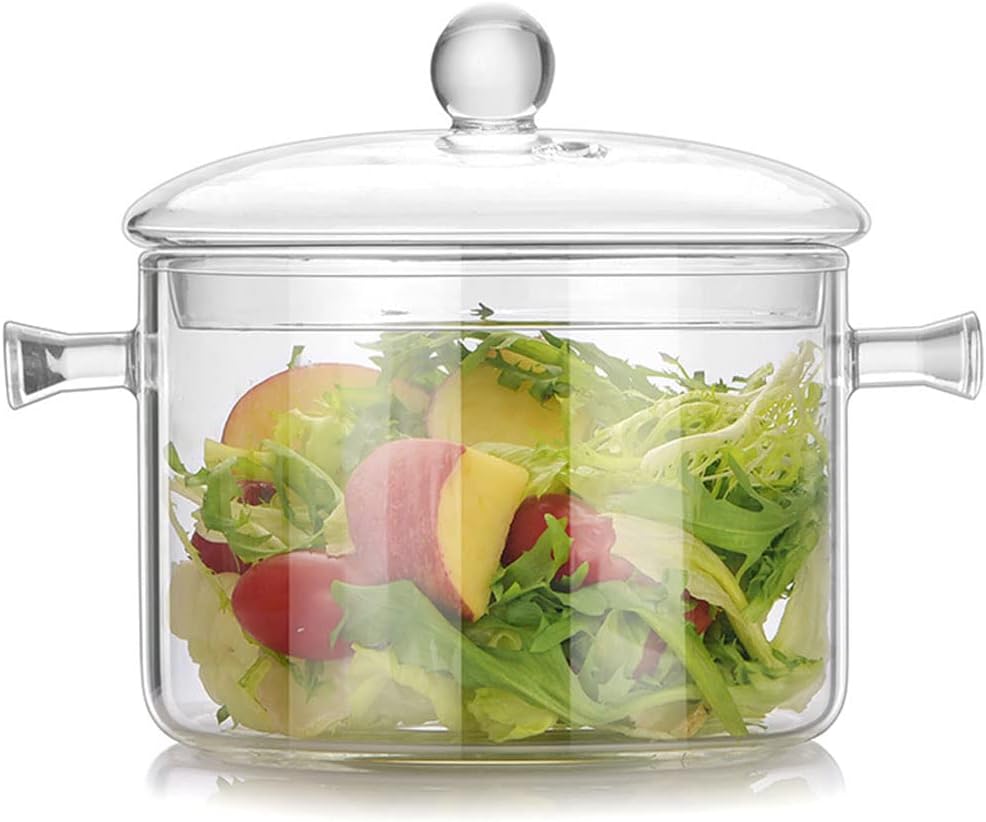
Miecux Glass Saucepan with Cover
We recommend Miecux Glass Saucepan with Cover Meet your new favorite kitchen tool: the Heat-Resistant Glass Stovetop Saucepan with Lid. It’s handmade from tough borosilicate glass, so you can see exactly what’s happening as your soup bubbles or your milk warms up. No guessing, just pure flavors and total control. This clear, elegant pan works like a charm for soups, milk, noodles, and sauces.
*Purchases through this link support our research at no extra cost to you.
Pros:
- Naturally free of PFAS, heavy metals, and chemical coatings, making it one of the safest cookware choices.
- Won’t react with acidic foods, alter flavors, absorb odors, or leach unwanted substances.
Cons:
- Prone to cracking from sudden temperature changes, so avoid using it over direct heat or on electric coils.
- Thermal shock can occur if it’s moved too quickly between extreme temperatures, such as from freezer to oven or oven to cold surfaces.
Cookware Materials You May Want to Limit or Avoid
Choosing healthy ingredients is important—but so is selecting the right cookware. Some materials, while convenient in the kitchen, can pose safety risks, especially when used frequently or at high temperatures.
Here are the types to limit or avoid:
Nonstick Cookware
- Many nonstick pans contain synthetic compounds called PFAS (perfluoroalkyl and polyfluoroalkyl substances).
- PFAS are persistent chemicals that do not break down easily and can accumulate over time in soil, humans, and animals.
- While convenient for cooking and cleaning, repeated use of nonstick cookware at high heat can increase exposure to these compounds.
Aluminum Cookware
- Aluminum is lightweight and conducts heat well, making it popular for baking and roasting.
- However, it can release metals into food, especially if the cookware is uncoated or scratched.
- Some exposure to aluminum is unavoidable, as it naturally occurs in soil, water, and even common consumer products like cosmetics and medications.
Ceramic Cookware
- Some ceramic cookware glazes may contain lead.
- Poorly manufactured glazes can leach lead into food, even from slow cookers or other coated ceramic items.
- Lead exposure is harmful at any level and may cause fatigue, memory problems, and difficulties with focus and learning.
Damaged Cookware
- Cracked, chipped, or worn cookware is more likely to release metals into your food, regardless of the material.
- Regularly inspect your pots and pans and replace any that are compromised to reduce risk.
Read More: Things You Shouldn’t Put in Your Air Fryer (and Why They Don’t Belong There)
What to Look for When Buying Non-Toxic Cookware

Protect your health by choosing cookware verified to be free of hazardous materials such as lead, cadmium, PFAS, and PFOA. Check for certifications or labels that confirm compliance with safety standards for toxic compounds.
Cookware made from 100% ceramic, carbon steel, cast iron, and stainless steel is widely regarded as safe and non-toxic, making it a solid choice for everyday use.
To maximize the benefits of non-toxic cookware, proper use and maintenance are essential:
- Seasoning: Regularly season cast-iron and carbon-steel pans to maintain a natural nonstick surface.
- Gentle Cleaning: Avoid harsh detergents. Gentle cleaning preserves the finish and extends the life of your cookware.
- Limit Excessive Heat: Avoid overheating, especially on nonstick surfaces, to prevent breakdown, fumes, or damage.
- Check for Wear: Inspect cookware regularly for signs of wear or damage to ensure it remains safe and functional.
By selecting high-quality cookware and caring for it properly, you can enjoy both safer cooking and better-performing kitchen tools.
How to Care for Non-Toxic Cookware to Make It Last
Proper care helps non-toxic cookware retain its performance and longevity. Different materials require specific approaches:
Stainless Steel
- Wash daily with a soft sponge, warm water, and mild soap.
- For stubborn stains or burnt-on food, simmer water with a bit of baking soda or use a non-abrasive cleaner to restore shine without scratching.
Cast Iron & Carbon Steel
- Regular seasoning is essential to maintain the naturally nonstick surface and prevent rust.
- Apply a thin layer of oil and heat it until it bonds with the pan. Repeat as needed to keep the surface smooth, rust-free, and ready for cooking.
Ceramic Cookware
- Avoid thermal shock by using medium or low heat.
- Use wooden, silicone, or plastic utensils to prevent scratching.
- Hand washing to preserve the coating and prevent premature wear.
With proper care, your non-toxic cookware will remain safe, functional, and enjoyable to cook with for years.
Who Should Prioritize Non-Toxic Cookware?
While everyone can benefit from non-toxic cookware, certain groups may find it especially important:
- Children and Women of childbearing age, pregnant or breastfeeding people, since developing systems are more sensitive to endocrine‑disrupting chemicals (like PFAS in older non‑stick coatings) and heavy metals.
- People with Allergies or Chemical Sensitivities: Non-toxic cookware can help reduce reactions caused by off-gassing, metal leaching, or flaking, creating a safer and more comfortable cooking environment.
Choosing safe, non-toxic cookware is a simple step toward protecting health for both you and your loved ones.
Read More: Is Aluminum Foil Safe for Cooking? Risks and Alternatives
Conclusion
When choosing non-toxic cookware, the goal isn’t following trends—it’s creating a kitchen that supports your long-term health. Fortunately, there are many excellent options. Authentic ceramic, cast iron, and stainless steel each offer a combination of performance, durability, and peace of mind.
Investing in quality cookware goes beyond owning a pan—it means selecting pieces that won’t leach harmful chemicals, provide safer meals, and deliver consistent, even heat for years to come.

References
- https://nephcure.org/safe-kitchen-choices-a-comprehensive-guide-to-non-toxic-cookware/
- https://thepaleodiet.com/choosing-the-right-non-toxic-cookware/
- https://www.healthierhomes.com/post/what-is-the-healthiest-material-for-cookware
- https://bltkitchens.com/which-is-the-best-cookware-ceramic-glass-or-metal/
- https://www.goodrx.com/health-topic/environmental/dangerous-cookware-to-avoid
- https://www.aarp.org/home-living/pots-and-pans-safety-guide/
- https://www.solamexhome.com/the-ultimate-guide-to-non-toxic-pans-from-materials-to-maintenance.html
In this Article