














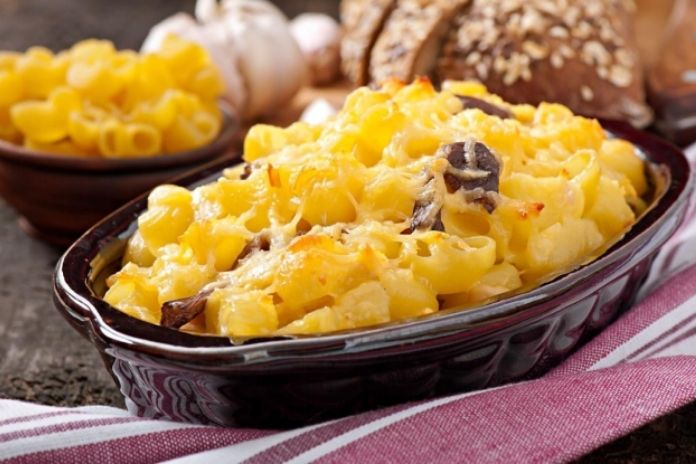
If there’s one dish that manages to unite picky eaters, stressed college students, late-night workers, and nostalgia lovers, it’s mac and cheese. Warm, creamy, cheesy, simple, and healthy mac and cheese. The type of meal you can eat in silence and immediately feel that life is slightly better.
But then comes the inconvenient thought halfway through the second spoonful: “Is this… healthy?” Or the guilt-loaded version: “I should not be eating this, right?”
The truth is, mac and cheese falls into an interesting space. It’s not a superfood. It’s not poison. It’s not just junk food. It’s also not automatically “bad.” It’s a comfort food that can be either balanced or indulgent, depending on how it’s made, how often you eat it, and how much ends up in your bowl.
Let’s break it down without judgment, without fear-based nutrition, and without pretending it is either a “superfood” or “toxic.”
Key Takeaways – What You’ll Learn
- The actual nutrition breakdown of mac and cheese
- The difference between the boxed vs homemade versions
- When mac and cheese works nutritionally and when it doesn’t
- Why sodium, fat, as well as additives matter
- Easy tips to make healthy mac and cheese, even without ruining the taste
- Whether it fits into a balanced lifestyle, including weight management
If you love mac and cheese, this isn’t a warning. It’s permission, with clarity.
Nutrition Breakdown of Mac and Cheese
Let’s start with the rough numbers (1 cup serving, which most people exceed). These vary massively based on the preparation style of healthy comfort food recipes. So here’s a better comparison:
Boxed vs Homemade So, if you wonder, “Is boxed mac and cheese bad for you?” this table makes it clear: It’s not about the dish itself, it’s the version made from it.
The Health Pros – Yes, There Are Some
Mac and cheese is rarely discussed for its benefits, because comfort foods often get labeled “guilty.”
So, let’s balance it with facts:
- Protein and Calcium: from milk and cheese
- Carbohydrates for energy: useful for training, recovery, or active days
- Satiety: it feels satisfying, helping some people avoid overeating later
- Customizable base: healthy pasta dishes absorb ingredients well, meaning they can be upgraded
- Emotionally satisfying: reducing the urge to binge later (yes, mental satisfaction matters).
- Shelf-stable boxed versions are convenient for busy days or limited grocery access.
Many people snack on random processed foods and call mac and cheese “unhealthy.”
But mac and cheese is an actual meal. With real food ingredients.
Sometimes “unhealthy” comes from how emotionally we eat it, not what’s inside it.
The Cons – Why It Gets a Bad Reputation
Mac and cheese isn’t perfect. Here’s where it loses points:
- High Saturated Fat: especially if it is made with full-fat cheese with heavy cream
- High Sodium: boxed versions, especially
- Refined Pasta: low fiber, quick glucose spike
- Ultra-Processed Additives: dyes, stabilizers in packaged products
- Portions Are Often Large: restaurants give 2–3 times more than a normal homemade serving
So, the question isn’t: “Is mac and cheese healthy?”
The better question is: “How can mac and cheese be made healthier without eating unhealthy?”
How to Make Mac and Cheese Healthier Without Losing Flavor

Not everyone wants quinoa, kale, and even tofu in their heart-healthy mac and cheese. Because taste is more important.
Here are tweaks that actually work:
1. Choose Better Pasta
A simple change that improves:
- Fiber
- Protein
- Satiety
For example:
- Whole-grain pasta adds more fiber and minerals
- Chickpea, lentil, or quinoa pasta adds more protein as well as a better blood sugar response
You don’t have to change the meal idea entirely; even a 50% combination of pasta styles works.
2. Upgrade Dairy Smartly
Instead of heavy cream or full cheddar overload:
- Use evaporated milk or low-fat milk
- Mix Greek yogurt for creaminess
- Use sharp and aged cheeses; they give flavor with less quantity
- Add nutritional yeast for a cheesy taste with extra B-vitamins
Aged cheddar with Parmesan means a stronger flavor; you don’t need to use as much to make the dish flavorful.
3. Add Volume with Vegetables or Protein
This isn’t about hiding vegetables like feeding a toddler. It’s about balance. Some foods blend smoothly without changing the taste much:
Add-ins that actually taste good:
- Steamed broccoli
- Spinach
- Green peas
- Roasted cauliflower
- Mushrooms
- Sweet corn
Protein boosters:
- Grilled chicken
- Tuna
- Beans
- Lenstils
- Cottage cheese
- Tofu cubes (crumbled into the sauce works better)
Suddenly, mac and cheese becomes a full, balanced meal, not just cheese-coated pasta.
4. Watch Portions and Pair Well
Serving size guideline: 1–1.5 cups.
Pairing ideas:
- Side salad
- Sautéed vegetables
- Lean protein serving
- Soup before the meal
This reduces the high blood sugar and makes the meal more nutritionally steady.
Read More: What Happens to Your Blood Pressure When You Eat Cheese Every Day? (Benefits and…
What Dietitians Say
Ask five nutrition experts, and most won’t say “Never eat it.”
Instead, you’ll hear things like: “Mac and cheese is good, the key is frequency, not fear.”
Or: “Eating it occasionally isn’t the problem; eating it in isolation with no vegetables or protein is.”
One dietitian, Julie Andrews, MS, RDN, puts it into practical terms. She explains that you never need to entirely cut comfort foods; you can simply build them in a smarter way. For mac and cheese, that might mean choosing a higher-fiber pasta, using a lighter sauce, or mixing in ingredients that add more nutrients without changing the comfort factor. Food guilt achieves nothing. Awareness does.
Read More: Comfort Food Makeovers: Mac and Cheese, Pizza, and More – The Healthy Way
Healthy Mac and Cheese Inspiration Ideas
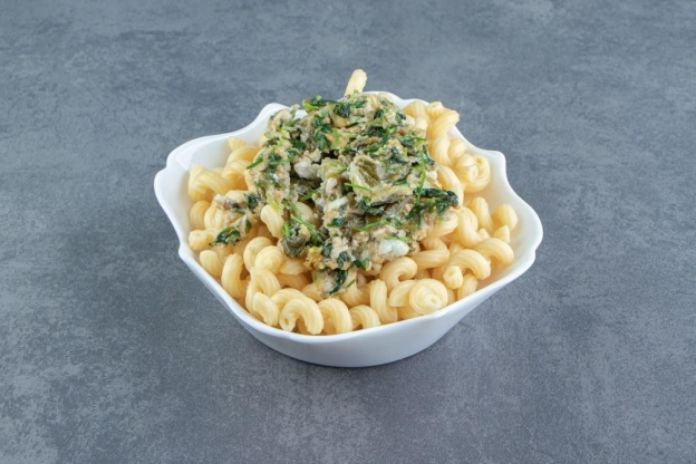
Not strict low-fat mac and cheese recipes, just directions:
- Cauliflower mac → use half pasta, half roasted cauliflower
- Greek yogurt mac → creamier, higher protein
- Whole grain spinach mac → fiber with iron boost
- Vegan cashew mac → dairy-free with plant protein
None of these is “diet food.” They’re just smarter versions.
You can even see this in practice. Katie Krawczyk, a registered dietitian nutritionist, shares a mac and cheese with vegetables recipe with her cancer patients because it’s simple, comforting, and naturally nutrient-boosted.
Read More: Things You Shouldn’t Put in Your Air Fryer (and Why They Don’t Belong There)
Dietitian-Approved Vegetable Mac and Cheese (4 servings)
A balanced version with whole-grain mac and cheese, vegetables, and lighter dairy, without losing creaminess.
Ingredients:
- ½ pound whole-wheat pasta
- 4 tbsp butter
- ¼ cup flour
- 2 cups warm milk
- ½ tsp nutmeg
- 2 tsp Parmesan
- ½ tsp salt (or to taste)
- Pepper, to taste
- ½ tbsp olive oil
- ½ small cauliflower, chopped
- 1½ cups spinach
- ½ cup shredded mozzarella
Directions:
- Cook pasta until barely al dente (to be still firm when bitten); set aside.
- Sauté the cauliflower in olive oil until soft; then add the spinach to wilt.
- Make the sauce: melt the butter, whisk in the flour, slowly add the warm milk, and let it simmer until it thickens. Then stir in the nutmeg and cheeses.
- Mix the cooked pasta and sautéed vegetables into the cheese sauce until everything is well coated.
- Bake at 350°F for 25–30 minutes until golden.
Nutrition (per serving):
- 542 calories
- 27 g protein
- 58 g carbs
- 2 g fiber
- 649 mg sodium
Read More: The Truth About Reheating Leftovers: Safety, Nutrition, and Taste
When Mac and Cheese Might Not Be a Good Choice
Some situations need caution:
- Lactose intolerance→ may need lactose-free cheese or vegan options
- High blood pressure→ boxed varieties too salty
- Kidney conditions→ phosphate additives in processed cheese sauces matter
- Weight management plateau→ large portions may push mac and cheese calories too high
Even Andrews notes that while mac and cheese can be upgraded, “cheese is a source of saturated fat, so you want to be mindful of how much you are using,” she says. The solution is to modify, not abandon, the dish completely.
Read More: Strategies to Reduce Your Stomach Cancer Risk During Awareness Month
Final Thoughts
Mac and cheese doesn’t need to be labeled as “bad.” It’s a comfort food, and comfort is part of health, too.
The healthiest relationship with mac and cheese isn’t avoidance. It’s understanding:
- How much do you eat
- How often do you eat it
- What ingredients do you choose
- How balanced the rest of your diet looks
Enjoy it. Modify it a little. Pair it wisely. And eat it without guilt, just awareness. Because sometimes, a warm bowl of mac and cheese isn’t just food. It’s relief, and that matters.
References
- https://www.cdc.gov/healthy-weight-growth/healthy-eating/cutting-calories.html
- https://medlineplus.gov/recipes/classic-macaroni-and-cheese/
- https://www.sciencedirect.com/science/article/pii/S1051227621002120
- https://www.veteranshealthlibrary.va.gov/RelatedItems/30,24012a
- https://fdc.nal.usda.gov/food-details/169849/nutrients
- https://fdc.nal.usda.gov/food-details/169770/nutrients
- https://www.sciencedirect.com/science/article/pii/S2161831323013285
In this Article