














Menopause is a natural stage of life characterized by significant hormonal changes, particularly declining estrogen levels. These hormonal shifts weaken bone density, reduce muscle mass, compromise cartilage vascularity, and decrease joint stability.
Despite these challenges, exercise remains the best way to maintain bone strength, cardiovascular health, and mental clarity after menopause.
However, not all exercises are equally safe during this stage. High-impact movements such as burpees, box jumps, and running on hard surfaces can put excessive stress on fragile bones and vulnerable joints.
Similarly, heavy free weights and explosive movements become much more likely to result in injuries due to the hormonal changes affecting connective tissues and joint stability.
To help women stay active and strong after menopause, we’ll highlight which exercises to avoid or modify, explain why they can be risky, and suggest safer alternatives.
Read More: Sleep Problems After Menopause: Why They Happen and How to Fix Them
Women’s Common Challenges During Menopause Exercise
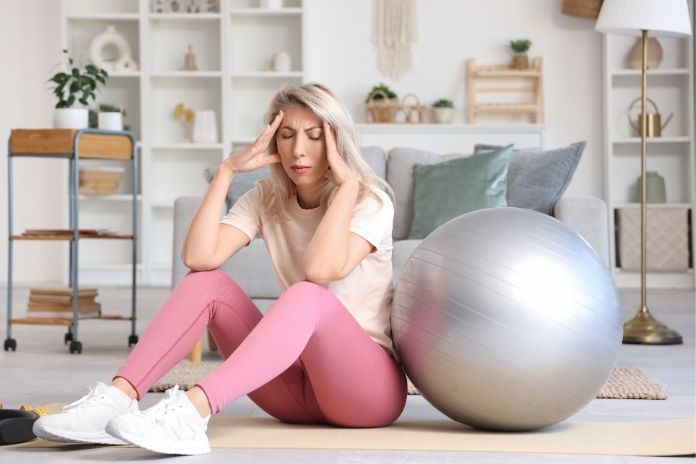
Exercise is beneficial during menopause, yet women still face numerous barriers to it. Understanding how these challenges relate to our changing bodies is the first step toward developing safe and body-appropriate fitness habits. Some common difficulties during menopause include:
Extreme weariness and joint pain: 67% of women over 40 experience this crippling menopausal symptom. This type of fatigue feels far more intense than normal tiredness—some women describe it as feeling like they’re “wading through treacle.” The joint pain that often accompanies this exhaustion is known as “menopausal arthralgia,” a condition that occurs as a direct result of hormonal changes.
Weight gain and body image concerns: Menopause causes a noticeable shift in body composition, with a large portion of fat accumulating in the abdomen regardless of total weight. This happens because declining estrogen alters how the body stores fat, leading to increased accumulation around the midsection.
This “menopause belly” isn’t just a cosmetic issue—it increases the risk of heart disease, stroke, and diabetes. These bodily changes profoundly impact women’s self-perception. Studies show that 40–80% of middle-aged women feel dissatisfied with their bodies, a concern that affects many younger women as well.
Lack of motivation and time: 51% of women cite lack of motivation as a barrier to exercise during menopause. This isn’t simply a matter of willpower—hormonal fluctuations directly impact brain chemistry. Lower estrogen levels decrease the dopamine signals that motivate people to exercise, making it harder even for previously active women to maintain their routines.
Compounding this challenge, 42% of women report lacking time. Many find themselves in the “sandwich generation,” caring for aging parents while still supporting their children, all while facing increased career responsibilities. During this life stage, time and energy become precious resources in short supply.
Exercises to Avoid or Modify During Menopause

Even though exercise is beneficial during menopause, some routines may need to be adjusted to accommodate your body’s specific changes. Depending on your health, fitness level, and any existing injuries, you may need to modify certain exercises or approach them more cautiously.
High-Intensity Interval Training (HIIT): While HIIT workouts are known for burning fat and offering numerous benefits, they can have the opposite effect during menopause. Intense workouts that require bursts of maximal effort elevate cortisol, the body’s primary stress hormone.
Elevated cortisol levels contribute to increased fatigue, belly fat accumulation, and insomnia—the very issues many menopausal women are already battling. Unless you’re already accustomed to HIIT and have medical clearance, it’s best to keep workouts moderate in intensity and ensure adequate recovery time between sessions.
Spinning: Although hours on a spin bike may leave your quadriceps burning, spinning isn’t an effective full-body workout for women over 40. It primarily targets the quadriceps while leaving much of the rest of the body underworked, offering little benefit for overall muscle development or toning.
Like HIIT, spinning is another form of intense aerobic exercise that may trigger elevated cortisol secretion, potentially increasing abdominal fat. Perhaps most importantly, spinning does little to prevent sarcopenia, the age-related muscle loss that accelerates during menopause. As muscle mass declines, metabolism slows further, making weight management increasingly difficult.
Running: While running may seem like an excellent calorie-burning exercise, it isn’t always the best choice during menopause. As a high-impact, high-intensity activity, running places significant stress on the knees, hips, and back—especially problematic if you’re carrying excess weight or experiencing joint pain.
Additionally, while running benefits cardiovascular health, it does little to maintain muscle mass. Relying on running alone for weight loss can leave the body leaner but not toned, with weaker muscles and diminished core strength—the opposite of what menopausal women need to combat age-related muscle loss.
Menopause coaching expert Ging Hoang, BS, RN, says, “Remember, you know your body better than anyone else. Menopause is a time when women navigate through many physical, mental, and emotional changes. This is a reminder to be gentle with yourself and to take a step back and to choose exercises that will support you at this moment.”
Read More: Is Bleeding After Menopause Always Cancer? What Doctors Want You to Know
Menopause-Friendly Physical Activity
It doesn’t have to be a fight to start an exercise routine while you’re going through menopause. You can take your time, listen to your body, choose forms of exercise that suit your fitness level, and build a balanced program for stress relief, weight control, and wellness.
Aerobic and cardiovascular exercise: Cardiovascular exercise is a good way to maintain heart health and reduce your risk of stroke or hypertension. Walking, swimming, or joining group exercise classes are all great ways to stay active and make you feel good.
Strength and resistance exercise: If you want to maintain bone and muscle strength during menopause, then strength exercises can be your best friend. Weight training with free weights or machines, resistance band workouts, and bodyweight exercises like push-ups and squats can help maintain muscle mass and promote bone health during menopause.
Yoga: An excellent way to care for the body and mind during menopause, as it promotes flexibility and reduces anxiety. It can be a soft but effective complement to your routine thanks to its diverse exercise opportunities.
How to Safely Exercise During Menopause — Best Practices

Customizing your exercise program to meet your specific needs will help you achieve your fitness goals and avoid soreness during menopause.
Listen to Your Body: Change the types of workouts you do, how many you do, or how long or hard you work out based on how you’re feeling at the time and afterward. Get used to listening to your body and changing your exercise process.
Warm Up Properly: As we get older, our bodies take longer to warm up. The purpose of warming up is to prepare your body for the exercise and also to prevent injury.
Use Mind–Body Exercises: Add yoga, Pilates, stretching, and deep-breathing exercises to your routine to help reduce stress and alleviate menopausal symptoms. You will feel better after doing these forms of mind–body exercises.
Research shows that regular exercise improves the physical and mental health of postmenopausal women. Their fitness program should include strength training, cardiovascular activities, and mobility and balance exercises.
Exercise is a powerful way to address the problems of aging and menopause because it improves muscle size, strength, balance, and coordination.
Conclusion
Menopause may change your body, but it doesn’t have to restrict your mobility; it just calls for a more innovative strategy. Your body demands strength, not strain, and caring, not caution, when estrogen levels fall. Knowing how your muscles, joints, and bones change over time will help you design exercises that will make you feel better rather than worse.
During menopause, you should view exercise as a collaboration with your body, not a conflict against it. You can maintain your energy, strength, and confidence during this shift with the right combination of conscious strength training, low-impact aerobic exercise, and restorative recovery.
Read More: Why Menopause Can Change Body Odor (and How to Manage It)
References
- https://newsnetwork.mayoclinic.org/discussion/womens-wellness-fitness-tips-for-menopause/
- https://josephroofehmd.com/what-exercises-should-you-avoid-during-menopause/
- https://news.umiamihealth.org/en/how-to-exercise-effectively-in-perimenopause-and-menopause/
- https://www.balance-menopause.com/menopause-library/fit-and-active-how-the-menopause-can-affect-you/
- https://pmc.ncbi.nlm.nih.gov/articles/PMC3296386/
- https://www.physio-pedia.com/Menopause_Associated_Arthralgia
- https://trinitytransformation.co.uk/3-exercises-to-avoid-during-menopause-and-what-to-do-instead/
- https://www.urmc.rochester.edu/news/publications/health-matters/why-exercise-is-essential-during-menopause
- https://www.womens-health-concern.org/wp-content/uploads/2023/06/29-WHC-FACTSHEET-Exercise-in-menopause-JUNE2023-A.pdf
- https://son.rochester.edu/directory/ginghoang/
- https://www.drlouisenewson.co.uk/knowledge/fatigue-and-menopause-tips-to-boost-energy
In this Article