














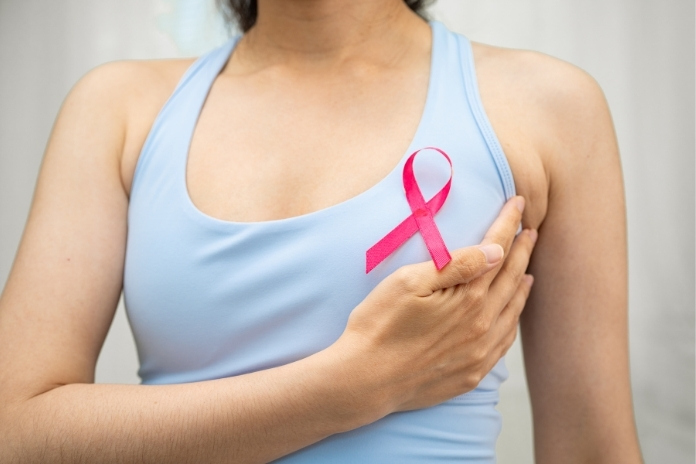
Breast cancer signs and symptoms vary from person to person, making it challenging to identify the disease in its early stages. There may occasionally be a noticeable lump or soreness. Frequently, neither is present. In its early stages, breast cancer typically exhibits no symptoms.
However, in both men and women, there are specific breast abnormalities that could be signs of breast cancer. (Yes, although it is uncommon, breast cancer can strike men as well. Less than 1% of all breast cancers diagnosed in the United States are in men.)
Both men and women should learn about their breast health so they can recognize changes early and seek prompt treatment..
The purpose of this article is to educate readers on the early signs of breast cancer in younger women, how to spot abnormal changes in the breasts, and when to get medical aid for a timely diagnosis and course of treatment.
Read More: What Breast Cancer Patients Need to Know to Stay Healthy
What Is Early-Onset Breast Cancer?
Women diagnosed with breast cancer between the ages of 18-45 are known to have early-onset breast cancer.
While breast cancer can occur at any age, most women are diagnosed with breast cancer after they are over 50 years of age. However, doctors can still diagnose breast cancer at a younger age, as it can affect teenagers and young adults too.
“Just as we’re worried and aware about other aspects of health, like weight, exercise, or diet, it’s important to be self-aware of our breast health,” says Sean Edmunds, MD, an OBGYN at St. Mark’s Hospital in Salt Lake City, Utah.
Early Breast Cancer Risk Factors
Women who have certain risk factors are more likely to get breast cancer early in life. You may be more susceptible to breast cancer if you are under 45 and:
- If more than one relative was diagnosed, or if a male relative had breast cancer, your close relatives may have received a breast cancer diagnosis before the age of 45.
- At any age, you or a close family member received an ovarian cancer diagnosis.
- You haven’t been tested, but either you or a close relative carries mutations in the BRCA1 or BRCA2 genes that cause breast cancer.
- During your childhood or early adulthood, you underwent radiation treatment to the breast or chest.
- Atypical ductal hyperplasia, atypical lobular hyperplasia, lobular carcinoma in situ (LCIS), ductal carcinoma in situ (DCIS), or breast cancer are among the conditions you have experienced.
- A mammography has revealed that your breasts are thick.
Early Physical Signs and Symptoms You Shouldn’t Ignore
Young women with breast cancer get the same symptoms as other breast cancer patients.
Symptoms could consist of:
- Lumps in your armpit or breasts.
- Mastalgia, or breast pain.
- Alterations to your breast’s skin, such as skin rash, dimpling, or redness.
- Nipple inverted.
- Either nipple pain or nipple discharge.
- Swelling in the lymph nodes.
- Thickening or enlargement of your nipple or breast skin.
Read More: Male Breast Cancer: Understanding Risk Factors, Symptoms, and Unique Challenges
Which Cancers are becoming more common in Younger Adults?
According to numerous reports and research, cancer is increasing in younger adults, even as some malignancies have been decreasing in older adults. According to a recent large study that examined differences among adults born in the United States between 1920 and 1999 and was published in The Lancet Public Health in July 2024, incidence rates increased in 17 of 34 cancer types, including breast, pancreatic, and gastric cancers, in progressively younger generations, especially in Generation Xers and Millennials. Additionally, mortality rates for several cancer forms rose. The American Cancer Society (ACS) was in charge of the study.
The American Cancer Society’s annual report on cancer statistics and trends, Cancer Statistics, 2024, is another recent example. The January study found that although the number of cancer fatalities is declining, the number of new cases is slightly increasing, from 1.9 million in 2022 to over 2 million in 2023.
Younger folks are involved in a higher number of those recent cases. According to the American Cancer Society’s annual report, the incidence of cancer has increased by 1% to 2% annually between 1995 and 2020, with younger persons being the only age group to see this increase.
When to See a Doctor
It is wise to consult a physician in the case of changing breast conditions and symptoms that become worse or persist longer than two to three weeks. Also, continual self-examination will give you knowledge of the standard size, shape, or texture of your breast, and you will recognize any abnormal changes sooner. A change in condition includes even slight variations, such as thickening, tenderness, or dimpling.
If you notice a lump, swelling, discharge from the nipple (especially if it is bloody or occurs without squeezing), or any change in the skin (such as redness, puckering, or scaling), consult a gynecologist immediately. These are sometimes early warning signals that require the evaluation of a specialist.
How Doctors Diagnose Early-Onset Breast Cancer
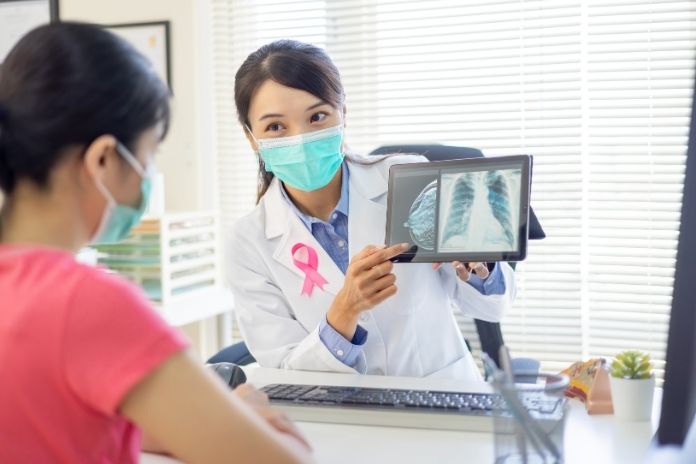
Your age has little bearing on how medical professionals identify breast cancer.
- The first thing your doctor will do is examine your breasts.
- They will then inquire about your family history, personal history, and symptoms.
- To check for any unusual growths in your breasts, they may also request imaging. Your doctor might do a breast tissue biopsy if something doesn’t seem right.
Read More: 9 Early Signs Of Breast Cancer – Know The Risks Before
How do Medical Professionals treat young women with Breast Cancer?
You and your healthcare practitioner discuss the type and stage of your breast cancer before starting treatment. They will also inquire about your intention to start a family. You and your provider will work together to create a personalized treatment plan.
Your treatment approach may consist of the following, depending on your particular situation and tumor markers:
- Surgery for breast cancer, including mastectomy (breast removal) or lumpectomy
- Chemotherapy
- Hormone treatment
- Immunotherapy treatment
- Radiation treatment
- Targeted therapy
How to Protect Yourself — Awareness and Prevention Tips
According to the experts, you should focus on your diet and exercise, avoid smoking and excessive alcohol consumption, and be mindful of your family history and discuss it with your primary care physician.
Following up with a doctor and thoroughly checking out any unusual symptoms can be critical, Dr. Jeremy Kortmansky, MD, a Yale Medicine medical oncologist specializing in gastrointestinal cancers, adds. “There is often a delay between the onset of symptoms and the actual diagnostic procedure to find the cancer,” he says. “Some of that may be driven by patients who think, ‘I’m only 40—it’s probably not cancer, right?’ Other times, a physician may think rectal bleeding in a young patient is just a sign of hemorrhoids, so it’s important to advocate for yourself.”
At the same time, no patient should feel guilty or ashamed if they are diagnosed with cancer, Dr. Veda Giri, MD, a Yale Medicine medical oncologist and director of Yale Cancer Center’s Early-Onset Cancer Program at Smilow Cancer Hospital, and Nancy Borstelmann, PhD, MPH, LCSW, co-director of Yale’s Early-Onset Cancer Program, say, describing two common reactions they say some of their young patients have.
“It can be a human response to ask, ‘Did I do something wrong?’” Dr. Giri says. “I’ve seen this in some incredibly health-conscious patients who ate well and exercised. They feel completely thrown by this and need to know it’s not their fault.”
Conclusion
Despite being less frequently seen, the occurrence of breast cancer in young women sets up significant problems due to its aggressiveness and the fact that it is more challenging to diagnose in these younger individuals. Education serves as the first line of defense since most women under forty do not participate in the regular screening programs offered to older women.
By recognizing warning signs and understanding personal risk factors, women can significantly improve their chances of early diagnosis and successful treatment outcomes. All women should learn to examine themselves regularly and have a better idea of their own bodies. A visit to the family physician at an early date may help determine the presence of possible problems before they develop into something more serious.
Read More: Breast Pain Before Period: What’s Normal and What’s Not
FAQs
What is the typical onset age of breast cancer?
The majority of women with breast cancer are middle-aged and older. It shows that half of the women are diagnosed with breast cancer at age 62 or younger. Fewer than 45-year-old women receive a breast cancer diagnosis.
Are breast lumps in your 20s or 30s usually cancerous?
People in their 20s and 30s are most likely to have fibroadenomas, which are firm, smooth, and solid lumps that are not cancerous. They can appear at any age and are the most prevalent benign breast tumors in people. Doctors observe them more frequently in postmenopausal patients receiving hormone therapy.
How can I check for breast cancer at home?
To conduct a breast self-examination, search for nipple discharge and visually examine your breasts in a mirror for changes in size, shape, or skin texture. Next, feel your breasts and armpits in a circular motion with three different pressure levels using the pads of your fingers to look for any lumps, masses, or thick spots. To distribute the breast tissue, repeat this procedure while lying down with a pillow beneath your shoulder. For improved gliding, try performing it in the shower with soapy fingers.
Should women under 40 get mammograms?
Because breast cancer is less common in younger women and screening can cause adverse effects like false positives and unnecessary radiation exposure, doctors do not recommend mammograms for average-risk women under 40.
References
- https://my.clevelandclinic.org/health/diseases/16805-breast-cancer-in-young-women
- https://bewellshbp.com/breast-cancer/symptoms-of-breast-cancer-you-shouldnt-ignore/
- https://www.mdanderson.org/cancerwise/how-i-knew-i-had-inflammatory-breast-cancer—6-survivors-describe-their-symptoms.h00-159699912.html
- https://www.karmanos.org/karmanos/news/dont-ignore-these-signs-that-could-mean-breast-can-4703
- https://www.ucsfhealth.org/education/17-cancer-symptoms-you-shouldnt-ignore
- https://www.komen.org/breast-cancer/signs-symptoms/warning-signs/
- https://www.linkedin.com/in/sean-edmunds-1509683/
- https://www.cdc.gov/bring-your-brave/risk-factors/index.html
- https://www.yalemedicine.org/news/early-onset-cancer-in-younger-people-on-the-rise
- https://www.cancer.columbia.edu/news/rise-early-onset-breast-cancer-may-start-puberty
- https://www.thelancet.com/journals/lanpub/article/PIIS2468-2667(24)00156-7/fulltext
- https://www.cancer.org/research/cancer-facts-statistics/all-cancer-facts-figures.html
- https://medicine.yale.edu/profile/nancy-borstelmann/
- https://www.yalemedicine.org/specialists/jeremy-kortmansky
- https://www.bcrf.org/about-breast-cancer/breast-cancer-young-women/
In this Article