











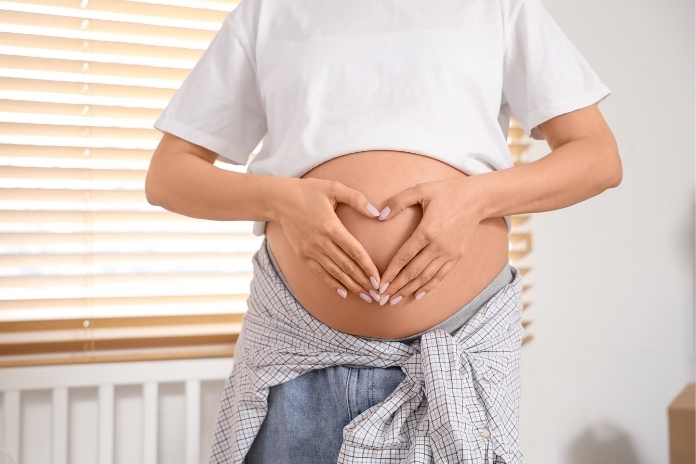
Many women believe that perimenopause signals the end of their fertility. But this is often not true.
In today’s world, many women are decision-makers, and we often choose to wait a little longer to have children, typically for a variety of plausible reasons, such as not finding the right partner, financial constraints, wanting to advance in our careers, or gain more life experience.
20% of American women now give birth to their first child after 35, for both the above and many other reasons. People often tell women that they need fertility treatments to conceive after 40 and that age causes infertility, but this isn’t always true.
It is possible to become pregnant in your forties. Some women may have already transitioned into or are winding down from the perimenopause process, while others may not have yet.
In this article, we will touch on some of the potential risks of pregnancy at this point, some additional information on the effects of perimenopause on fertility, and what some healthcare providers ask and recommend women during this special time in their life.
Read More: Perimenopause Fatigue: Causes and Energy-Boosting Tips
What Is Perimenopause?
During perimenopause, a drop in estrogen and progesterone levels triggers the typical menopausal symptoms. Your menstrual cycle, which is the process of preparing and releasing an egg for potential fertilization, is regulated by these hormones.
Your reproductive cycle becomes more irregular, and ovulation occurs far less frequently than it ever did when these hormones fall. Nevertheless, conception can still take place during the perimenopause despite these modifications.
Even though ovulation is irregular, if you continue to have unprotected sex, you may still become pregnant. It might be challenging to monitor viable windows, which can result in unwanted pregnancies due to the unpredictable nature of ovulation timing.
Whether planned or not, it’s essential to be aware of pregnancy during the perimenopause for several health reasons.
“Perimenopause is the transitional phase [through] menopause, during which a woman’s body has few eggs remaining and is beginning to produce less [of the hormones] estrogen and progesterone,” explains Dr. Amanda Kallen, a reproductive endocrinologist and associate professor of obstetrics, gynecology, and reproductive endocrinology at Yale University School of Medicine, Connecticut, US.
Perimenopause can begin anywhere from your mid-30s to your 50s, but it usually occurs in your 40s.
Can You Ovulate During Perimenopause?
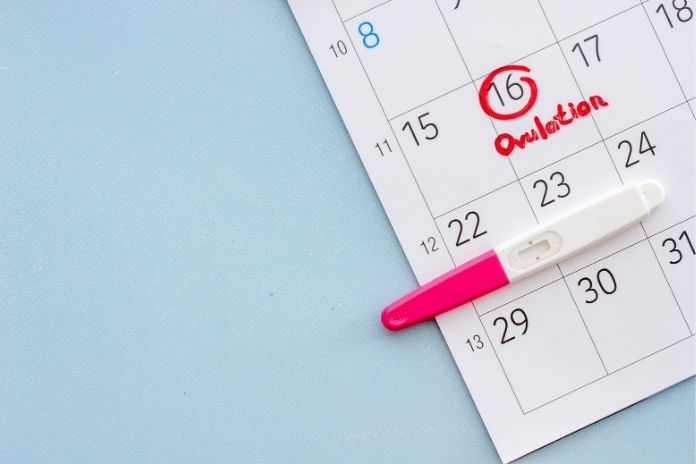
Yes, throughout the perimenopause, you ovulate! You’re probably still ovulating even though your ovulation may be more sporadic.
Your ovaries begin to release fewer eggs and produce less estrogen during perimenopause. Progesterone levels fall as a result, and luteinizing hormone levels rise. The regularity and predictability of your ovulation are affected by all of these hormonal changes.
You may ovulate without a period or experience an anovulatory cycle, which is when you receive a period but don’t ovulate. Menopause, which occurs 12 months following your last period, is the point at which you will entirely cease ovulating.
It might be challenging to determine when you are ovulating during perimenopause because of all the irregularities and unpredictabilities, but recognizing symptoms can be a fantastic starting step.
“Ovulation still occurs in perimenopause,” says obstetrician and gynecologist Dr. Sara Twogood, Cedars-Sinai Medical Group, California, US. “Just more irregularly and infrequently than in normal reproductive years.”
“Perimenopause is the transitional time into menopause,” explains Dr. Twogood.
Read More: Perimenopause vs. PCOS: Overlapping Symptoms You Shouldn’t Ignore
Pregnancy During Perimenopause: How Likely Is It?
Suppose you’re trying to get pregnant during perimenopause. In that case, it is crucial to discuss your health and the health of your developing child with a healthcare professional during labor and delivery. The following are some things you can do for a safe perimenopausal pregnancy:
Routine Prenatal Appointments: Regular prenatal care is essential to manage your pregnancy and monitor both you and your unborn child. Engaging a high-risk OB-GYN can minimize potentially serious complications by finding problems as they arise. Routine visits also provide an opportunity to express concerns and receive guidance about your pregnancy.
Maintain a Healthy Lifestyle and Diet: Eating a well-balanced, nutritious diet is very essential in supporting your and your unborn child’s health. Focus on the diet that includes a wide variety of nutrients, such as whole grains, lean meats, fruits, vegetables, and healthy fats. In addition to eating right, maintaining a moderate level of exercise through activities such as swimming or
walking can help decrease stress, control weight gain, and promote cardiovascular health.
Monitor and Maintain Chronic Health Conditions: You must see your healthcare provider regarding management of any chronic health conditions before planning your pregnancy (i.e., diabetes, hypertension, etc). By correctly maintaining these conditions, you can promote and protect your pregnancy from preeclampsia, gestational diabetes, etc. It involves routine monitoring of your blood glucose, blood pressure, or other defined chronic conditions.
Prenatal Supplementation, Vitamins: Based on your health, you may need to add supplementation to ensure you have the required nutrients during pregnancy. A prenatal multivitamin may provide some of this support. Folic acid is very essential for the developing fetus for the prevention of neural tube defects. Your provider may also recommend specific doses of vitamins and minerals tailored to your individual health needs.
Signs of Pregnancy vs. Perimenopause Symptoms
Some pregnancy and perimenopause symptoms can feel similar, so it is possible to mix up the two. “During perimenopause, cycles begin to spread out and are not always predictable,” says obstetrician and gynecologist Dr. Renita White, Georgia Obstetrics and Gynecology, US. “Because it’s possible to get pregnant during perimenopause, a late period may be due to either pregnancy or perimenopause hormone changes.”
The following are some signs that perimenopause and pregnancy frequently have in common:
Period Irregularities: The usual length of a woman’s menstrual cycle is 28 days. Although the first sign of pregnancy is typically a missed period, some women may have irregular cycles, which can make it challenging to identify early pregnancy.
Hot flashes: Characterized by an abrupt spike in body temperature and perspiration, especially in the face, neck, and chest. There may also be palpitations, weakness, or fainting.
Brain Fog: Changes in hormones during pregnancy and perimenopause can impact memory and cognition. These side effects, however, are usually minor and do not substantially affect day-to-day functioning.
Mood Shifts: Pregnant and perimenopausal women are more susceptible to anxiety and despair. During the first trimester of pregnancy, abrupt mood swings are typical.
Sleep Difficulty: Perimenopausal women may have trouble sleeping and staying asleep due to hot flashes, night sweats, and mental health issues. Sleep issues may also affect pregnant women in the third trimester.
Headaches: During the first trimester of pregnancy, many women experience headaches. Similarly, women with migraines experience more frequent headaches during perimenopause.
Read More: Perimenopause: Symptoms to Watch and Lifestyle Strategies to Ease the Transition
Risks of Pregnancy During Perimenopause

Pregnancies occurring during the perimenopausal period are fraught with risk, mainly due to maternal age. The chance of miscarriage is 25% for women aged 40 and over compared to approximately 12-15% for women in their 20s. The risk of premature birth increases irrespective of other factors when the woman is in the perimenopausal period.
In addition, pregnancies in the perimenopause are prone to complications, including gestational diabetes and hypertension. Maternal and infant long-term health implications may arise from the effects of premature births and low birth weight, precipitated by chronic hypertension. Age also increases the risk of fetal chromosomal abnormalities.
The health monitoring associated with a perimenopausal pregnancy necessitates appropriate prenatal care. Hormonal fluctuations can disguise pregnancy symptoms, making routine check-ups and testing critical. Nevertheless, with proper medical support, many women can navigate through these complications, become pregnant, and deliver healthy children.
The birth rates are 10-20% for women aged 40-44 years and 12% for women aged 45-49 years. Fertile capacity decreases in the perimenopausal period. Additionally, more than 75% of pregnancies in women aged 40 and older are unplanned! We emphasize that if pregnancy is not desired, women should consider using a method of contraception.
Birth Control and Family Planning in Perimenopause

Birth control comes in two primary forms: non-hormonal birth control, sometimes known as barrier methods, which physically prevent sperm from fertilizing an egg, and hormonal birth control, which uses hormones to prevent pregnancy.
Your medical history and personal preferences still play a significant role in selecting the best birth control for you throughout the perimenopause.
Among the hormonal possibilities are:
- Tablets for birth control
- Injections of birth control
- Progestin, a synthetic version of naturally occurring hormone progesterone, is found in long-acting reversible contraceptives such as implants and intrauterine devices (IUDs)
- Topical birth control patch that stick to your skin
- The vaginal ring
Non-hormonal barrier techniques consist of:
- Condoms
- Sponge for birth control
- A cervical cap
- Copper IUD
- Diaphragms
- Gels for spermicide and contraception
“Nonreversible sterilization procedures like getting your tubes tied are also an option for people who are 100% done with considering pregnancy,” says Ob/Gyn George Drake, DO. “This type of sterilization won’t affect menopause or perimenopause.”
Read More: How to Tell If You’re Ovulating: Key Signs Your Body Gives You
Conclusion
While the odds of a woman conceiving during perimenopause have decreased in comparison to her more fertile years, it is still very much possible. If a woman has an egg and ovulation occurs, then there is always a chance of conception —even if ovulation is irregular or infrequent. It decreases the likelihood, but catches so many women off guard with surprise pregnancies as they enter this transitional time.
Therefore, the ultimate conclusion is that, based on symptoms alone, it is not necessarily an easy task to distinguish between perimenopause and pregnancy. Some of the symptoms common to both processes — such as mood changes, fatigue, and/or late/missed periods — can be two-sided. In any case of concern, the best option is to take a pregnancy test and/or consult a physician.
Additionally, each woman has their own anatomy and medical history. It isn’t easy to give the safest or best advice without knowing each woman individually.
References
- https://newsinhealth.nih.gov/2022/07/having-kids-later-life
- https://flo.health/menstrual-cycle/menopause/can-you-get-pregnant-during-perimenopause
- https://www.uclahealth.org/news/article/pregnancy-still-possible-during-perimenopause
- https://www.aosphysicians.com/can-you-get-pregnant-during-perimenopause/
- https://www.goodrx.com/conditions/menopause/pregnant-during-perimenopause
- https://flo.health/about-us/amanda-kallen
- https://flo.health/about-us/sara-twogood
- https://flo.health/menstrual-cycle/menopause/ovulation-symptoms-perimenopause
- https://flo.health/menstrual-cycle/menopause/pregnant-or-menopause
- https://drhaddad.org/menstruation-periods/perimenopause-doctor-dearborn/
- https://bywinona.com/journal/hot-flashes-during-pregnancy-is-it-normal
- https://flo.health/about-us/renita-white
- https://www.thewomensclinic.co.uk/can-you-get-pregnant-during-perimenopause/
- https://health.clevelandclinic.org/birth-control-during-perimenopause
- https://providers.clevelandclinic.org/provider/george-drake/4268006
In this Article