














For decades, Body Mass Index (BMI) has been the go-to gauge for assessing health risk, since it’s easy to measure and interpret. But BMI can mislead: it lumps muscle, bone, and fat together, and tells you nothing about where fat is stored. Meanwhile, waist size, specifically abdominal or visceral fat, gives a much clearer picture of risks like heart disease, type 2 diabetes, and a shorter lifespan.
In this article, I’ll explain what your waist measurement reveals, why it often matters more than BMI, what “healthy” ranges look like for different populations, how health risks rise when the belly gets bigger, how to measure correctly, and what you can do to shift waist size in a healthier direction.
Average Waist Size for Men: Where Do You Stand?

What is the typical waist size for men, especially in the U.S., and how does that compare to healthy benchmarks?
- According to the CDC’s National Health and Nutrition Examination Survey (NHANES) (data 2015–2018), the average waist circumference for U.S. men 20 years and older is about 40.5 inches (≈ 102.9 cm).
- That’s increased from near 39 in (≈ 99-100 cm) in surveys from the late 1990s.
Compared to health-risk cutoffs:
- In many S. guidelines, a waist of 40 in (≈ 102 cm) or more is considered the threshold for “abdominal obesity” and significant risk.
- For optimal health (lower risk), many experts suggest aiming for under ~37 in (≈ 94 cm), though the exact “ideal” depends on height, ethnic group, age, and individual risk profile.
Globally, cutoffs vary:
- In Asian populations, the thresholds are often lower. For example, many health bodies propose 90 cm (~35 in) for men as the cutoff for elevated risk, rather than the ~102 cm used in U.S./Western guidelines.
So, if you’re around the average U.S. waist size, you may already be at or above what many guidelines consider risky.
Waist Size vs. BMI: Why Waist Matters More

BMI (weight divided by height squared) is widely used for its simplicity, but it has important limitations:
- It does not distinguish fat vs lean tissue. A muscular athlete might have a high BMI but very little fat. Conversely, someone could have a “normal” BMI but high visceral fat around the belly.
- This matters because visceral fat (fat around internal organs, particularly in the abdominal cavity) is metabolically active as it produces hormones, cytokines, inflammatory agents, etc., that affect insulin sensitivity, lipid profile, blood pressure, etc.
A key study from Johns Hopkins covering over 27,000 men for about 13 years showed that waist circumference was a better predictor of developing type 2 diabetes than BMI alone. Men in the highest waist groups had up to 12 times the risk of developing diabetes compared to those with the smallest waists, even when BMI was held constant.
Another large study in Nature Reviews Endocrinology showed that after adjusting for BMI, every 5 cm increase in waist circumference in men was still strongly associated with mortality risk.
The waist-to-hip ratio (WHR) also gives another perspective. It estimates fat distribution (belly vs hips). A man whose waist is relatively larger than his hips faces a higher health risk, even if his BMI or overall weight appears normal.
In short, waist size can catch a risk that BMI misses. That’s why many health experts consider it essential to measure both.
Health Risks of a Larger Waistline
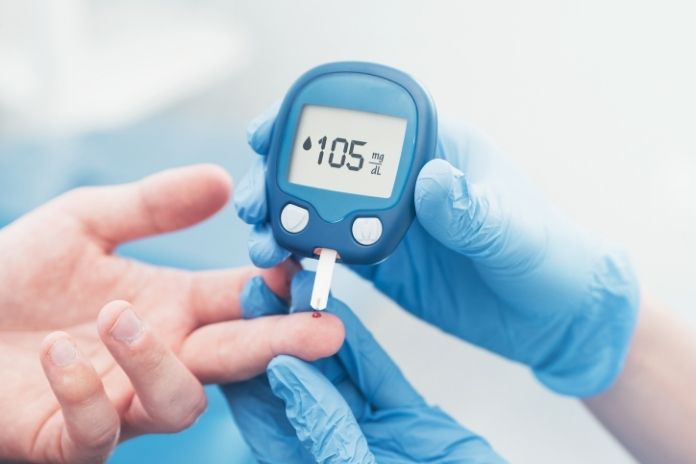
What does having a large waist truly put you at risk for? The evidence is strong across multiple outcomes.
A. Heart Disease and Stroke
Visceral fat contributes to unfavourable cholesterol profiles, increases in LDL (“bad cholesterol”), lowers HDL (“good”), and increases triglycerides. It also tends to drive up blood pressure through multiple mechanisms (insulin resistance, inflammation, hormonal shifts).
- A study of nearly half a million people aged 40-69 in the UK found that men with waist circumferences over 40 in (≈102 cm) had a significantly higher risk of heart attacks and other cardiovascular events.
- The Cancer Prevention Study II from JAMA-Internal Medicine showed that men with a waist ≥120 cm (~47 in) had roughly twice the mortality risk compared to men with a waist <90 cm, after adjusting for BMI.
B. Type 2 Diabetes and Insulin Resistance
Higher visceral fat worsens insulin sensitivity. The fat releases free fatty acids and inflammatory mediators that impair insulin signaling.
- In the Hopkins study, men in progressively larger waist groups (from ~34–35 in up to 40-60 in) had increasing diabetes risk, 2x, 3x, 5x, and up to 12x compared to the smallest group.
- A 2021 pooled meta-analysis in BMJ found that each 10 cm increase in waist circumference corresponded to ~61% higher risk of type 2 diabetes.
Read More: 6 Important Weight Loss Tips for Type 2 Diabetes
C. Other Conditions
Besides heart disease and diabetes, excess waist size (abdominal obesity) predicts:
- Sleep apnea, because excess fat around the neck/throat and chest can restrict airflow.
- Non-alcoholic fatty liver disease (NAFLD) occurs when visceral fat increases fat deposition in the liver.
- Hormonal imbalance: Higher visceral fat lowers testosterone, alters cortisol, and increases estrogen in men in some cases.
- Shorter lifespan: Multiple studies show that elevated waist circumference is linked to higher all-cause mortality, even when BMI is accounted for. For example, a large meta-study (≈650,000 people) found that for every 5 cm increase in waist circumference in men, mortality risk rose by ~7%.
How to Measure Your Waist Size Correctly

To ensure accuracy and to make your measurements meaningful, follow the right procedure.
- Location: Measure above the hip bones (iliac crest) and below the ribcage. Many guidelines recommend measuring at the midpoint between the lowest rib and the top of the iliac crest. Simpler instructions suggest ‘just above the belly button,’ though this point can vary from person to person.
- Tape: Use a flexible measuring tape. Ensure it’s parallel to the floor all around.
- Posture and breath: Stand up straight, with feet together, and arms by your side. Take a normal exhale (don’t hold your breath or suck in). Then measure.
- Clothes: Measure on bare skin, or light clothing that doesn’t compress or shift the tape.
Also, it’s helpful to measure the waist-to-hip ratio (WHR): measure hip circumference at the widest part of the buttocks, and divide the waist circumference by the hip circumference. WHR gives extra insight, especially when someone has a low height or an unusual body shape.
Taking measurements every few months (same time of day, same conditions) helps track changes over time.
What’s a Healthy Waist Size for Men?
Healthy waist size cutoffs depend on population, ethnicity, height, etc., but here are widely accepted benchmarks.
- In many Western guidelines (U.S., Europe), a waist size of 40 inches (≈ 102 cm) in men is considered the threshold for abdominal obesity (higher risk).
- For lower risk/optimal health, many experts suggest <37 in (≈94 cm), depending on height and build.
- In Asian populations, and among Asian-origin men (e.g., South Asia), the risk cut-offs are often lower: ~90 cm (≈35.4 in) for men is mostly used for central obesity.
Doctors usually combine waist size with other health markers, BMI, blood pressure, cholesterol, and fasting glucose, to get a fuller view.
As Dr. Youfa Wang, PhD, MD, says in relation to the diabetes risk study: “Abdominal fat measured by waist circumference can indicate a strong risk for diabetes whether or not a man is considered overweight or obese according to his BMI.”
Lifestyle Changes to Reduce Waist Size

If your waist is above healthy thresholds, small, consistent lifestyle shifts make a big difference. Here are evidence-based strategies.
Diet
- Reduce added sugars (soda, sweets, and sweetened beverages), which drive visceral fat more than total calories sometimes.
- Limit refined carbohydrates (white bread, pastries) and processed/fast foods. Emphasize whole grains, vegetables, and legumes.
- Keep alcohol in check. Alcohol adds empty calories and tends to promote fat accumulation around internal organs.
Exercise
- Combine cardio (running, swimming, brisk walking) with strength training (weights, bodyweight). Resistance training is especially helpful in preserving or building muscle, which helps raise metabolic rate.
- High-intensity interval training (HIIT) has been shown in many studies to reduce visceral fat efficiently.
Read More: 8 Exercises To Lose Upper Belly Fat For A Healthier Physique
Sleep and Stress Management
- Poor sleep (short duration or low quality) is linked to higher belly fat via hormonal imbalances (e.g., cortisol, ghrelin).
- Chronic stress elevates cortisol, which can favour fat storage in the abdomen. Mindfulness, meditation, adequate rest, and managing work/life balance help.
Sustainable Habits
- Avoid crash diets; they often reduce weight temporarily but can cause muscle loss, metabolic slowdown, and rebound fat gain.
- Track progress via waist size (and ideally waist-to-hip ratio), not just scale weight.
- Set realistic, incremental goals (e.g., reducing waist by 1-2 in over months) rather than chasing rapid change.
Conclusion
Your waist circumference is more than a clothing measurement; it’s a powerful health indicator. In many cases, waist size predicts risk of heart disease, diabetes, and mortality better than BMI alone. Measuring your waist correctly, comparing it to evidence-based cutoffs (which vary by ethnicity), and taking small sustainable lifestyle steps can shift your health trajectory.
If your waist is above the risky thresholds (≈102 cm/40 in for Western men; ~90 cm for many Asian men), you don’t need radical change, just consistent improvements. Monitor, adjust diet, increase physical activity, manage stress and sleep, and consult a healthcare professional if you have other risk factors (high blood pressure, cholesterol, family history).
References
- https://www.webmd.com/diet/calculating-your-waist-circumference
- https://www.health.com/average-waist-size-for-men-11801475
- https://www.physio-pedia.com/Waist_Measurement
- https://www.menshealth.com/uk/health/a65858121/average-waist-size-men-uk/
- https://www.heartandstroke.ca/healthy-living/healthy-weight/healthy-weight-and-waist
- https://prodiadigital.com/en/articles/ideal-waist-measurement
- https://www.youtube.com/watch?v=4MajPk-vp8M
- https://www.youtube.com/watch?v=dwk8sVCKuio
- https://www.youtube.com/watch?v=lNllQPC0WsM
- https://pmc.ncbi.nlm.nih.gov/articles/PMC7376462
- https://newsnetwork.mayoclinic.org/discussion/large-waist-linked-to-poor-health-even-among-those-in-healthy-body-mass-index-ranges
- https://www.health.harvard.edu/heart-health/should-you-worry-about-your-waistline
- https://www.bhf.org.uk/informationsupport/heart-matters-magazine/medical/measuring-your-waist
In this Article