












Artificial intelligence (AI) is often linked with chatbots, self-driving cars, or recommendation systems on streaming platforms. But behind the scenes, AI is quietly reshaping one of the most important fields of all: healthcare. Its most powerful promise lies not only in diagnosing diseases once symptoms appear but in predicting risks and preventing conditions before they take hold.
By analyzing vast amounts of data, from genetic profiles to daily steps logged by a smartwatch, AI can uncover subtle warning signs that humans might miss. It can flag the early risk of diabetes, detect precancerous changes in medical images, or even predict cardiovascular disease through a routine eye scan. This isn’t futuristic speculation; it’s already happening in research labs, hospitals, and consumer health tech.
Why does this matter? Preventive care saves lives and reduces costs. Chronic diseases like diabetes, cancer, and heart disease are the leading causes of death globally, and they’re often preventable if caught early. AI enables a shift from reactive medicine to proactive wellness, where the focus is on staying healthy rather than just treating illness.
What Does AI in Preventive Healthcare Mean?
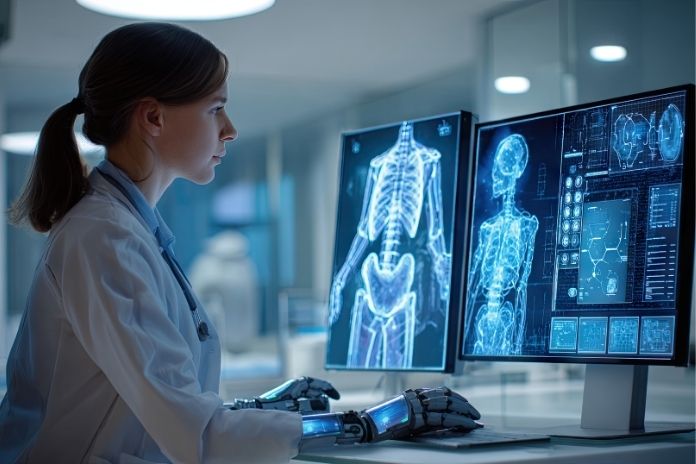
Preventive healthcare is all about identifying risks and acting before illness develops. Traditionally, this has relied on basic screenings, family history, and lifestyle advice. AI expands this model by applying algorithms and machine learning to enormous datasets, uncovering patterns that would be invisible to even the most experienced clinicians.
AI in preventive healthcare involves:
- Predictive modeling: Algorithms trained on millions of patient records learn to calculate the likelihood of developing conditions like cancer or heart disease.
- Risk stratification: AI can classify patients into low, medium, or high risk, enabling providers to prioritize care effectively.
- Personalized prevention: Instead of broad advice like “exercise more,” AI tailors recommendations based on an individual’s genetics, lifestyle, and environment.
A review discusses how AI predictive analytics analyzes diverse data sources, including electronic health records, imaging, and genetics, to forecast disease progression and identify early markers, thereby enabling preventive interventions. This is in contrast to diagnostic tools that focus on disease detection after symptoms have appeared.
Dr. Eric Topol, cardiologist and author of Deep Medicine, says: “AI models are reaching the point where they can detect diseases before symptoms arise. By combining imaging, genomics, EHRs, and other data, we gain unprecedented ability to forecast individual risk and intervene preventively.”
How AI Predicts Health Risks
AI’s predictive power comes from its ability to process and integrate multiple streams of health data. Here are the main ways it does this:
a. Analyzing Medical Records & Genetic Data
Electronic health records (EHRs) are treasure troves of information: lab tests, prescriptions, imaging reports, and family history. AI systems can sift through this complex data far more quickly than humans, identifying trends that signal increased risk.
For example, a patient with slightly elevated fasting glucose, high blood pressure, and a family history of diabetes may not raise alarms individually. However, AI can calculate the combined probability of developing type 2 diabetes within five years and recommend preventive measures accordingly. Genomics adds another layer. AI tools can analyze genetic variants associated with conditions such as breast cancer (BRCA1/2 mutations) or heart disease.
A 2025 study in Communications Medicine introduced a deep learning model (LUNAR) that integrates clinical, genetic, and transcriptomic data to predict early glioma recurrence with higher accuracy than traditional models.
b. Lifestyle & Wearable Data Integration
The rise of wearables, smartwatches, continuous glucose monitors, and fitness trackers has created a constant stream of health data. Heart rate variability, step counts, sleep cycles, and even blood oxygen levels are now trackable 24/7.
AI analyzes this data to detect deviations from baseline. For instance:
- A resting heart rate trending upward may indicate increased cardiovascular risk.
- Irregular sleep cycles can be linked to depression or metabolic disorders.
- Continuous glucose monitoring data can predict early insulin resistance.
Stanford Medicine’s MyHeart Counts study has shown it’s feasible to continuously collect real-world data on physical activity, sleep, and fitness using smartphones and wearables. This approach enables researchers to track lifestyle patterns and risk factors associated with cardiovascular health in large, diverse populations.
c. Imaging & Scans
Medical imaging is one of the most advanced areas of AI applications. Algorithms can detect subtle changes in scans that even skilled radiologists may overlook.
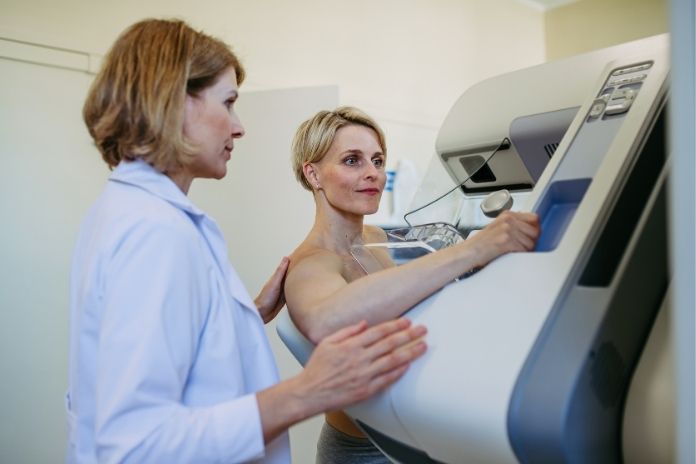
- Cancer: AI has been shown to outperform radiologists in identifying early breast cancer from mammograms. A 2020 study in Nature showed that Google Health’s AI system reduced false positives by about 5.7% in the U.S. and 1.2% in the U.K., and lowered false negatives by 9.4% and 2.7% respectively, outperforming radiologist performance in mammogram interpretation.
- Cardiovascular disease: AI applied to CT scans can identify plaque buildup in arteries, predicting the risk of heart attacks.
- Neurological disorders: Early signs of Alzheimer’s disease, such as small hippocampal changes, can be detected through AI analysis of brain scans.
By detecting disease before it progresses, AI enables truly preventive imaging.
d. Predictive Analytics for Chronic Disease
Chronic diseases account for nearly 70% of deaths worldwide, according to the World Health Organization. AI predictive models are now targeting these conditions:
- Diabetes: Algorithms integrate lab results, family history, and lifestyle data to forecast risk years in advance.
- Heart disease: AI can predict cardiovascular events by analyzing EHRs, cholesterol levels, and blood pressure trends.
- Cancer: Models trained on population-level data can identify individuals at elevated risk for colon, lung, or breast cancers.
- Mental health: AI chatbots and monitoring apps track speech patterns, activity levels, and social media use to detect early depression or anxiety.
A review summarizing how machine learning models are applied to detect and predict a variety of chronic diseases; it emphasizes the promise of predictive modeling and the need for validation in real-world clinical workflows.
Real-World Examples of AI in Preventive Care

The promise of AI isn’t theoretical; several applications are already in use.
- Breast Cancer Detection: Google Health’s AI mammogram tool has been tested on tens of thousands of scans and shown to detect breast cancer earlier and more accurately than radiologists in some cases. This enables treatment at earlier stages, resulting in significantly improved survival rates.
- Google’s Eye Scan Research: In collaboration with Moorfields Eye Hospital, Google developed an AI that analyzes retinal scans to predict cardiovascular risk factors like blood pressure, BMI, and smoking status. This non-invasive method could make heart disease screening more accessible and cost-effective.
- Mental Health Chatbots: Tools like Woebot use AI to monitor mood, detect potential mental health risks, and provide early cognitive behavioral therapy (CBT) interventions. While not replacements for therapists, they serve as preventive aids, catching early warning signs.
- Sepsis Prediction in Hospitals: AI models like Epic’s Sepsis Model analyze patient data in real-time to predict sepsis risk hours before it develops, allowing clinicians to act quickly. Early intervention significantly reduces mortality.
These examples highlight how AI is already shifting the healthcare model from late-stage treatment to early prevention.
Read More: AI in Mental Health: How Technology Is Revolutionizing Diagnosis and Treatment
Benefits of Using AI for Preventive Healthcare
The advantages of AI in prevention go beyond convenience:
- Early Detection = Better Outcomes: Diseases caught earlier are far easier and cheaper to treat. For instance, breast cancer survival rates are over 90% when detected early, but drop sharply once it metastasizes.
- Personalized Risk Assessment: Instead of one-size-fits-all screening, AI tailors recommendations. A patient with a genetic risk for colon cancer might be advised to start colonoscopies earlier than guidelines suggest.
- Reduced Healthcare Costs: Preventing chronic diseases saves billions. A RAND Corporation report estimates that effective preventive measures could cut U.S. healthcare costs by 8–15% over time.
- Data-Driven Decision Making: Doctors get real-time, evidence-based support in making preventive decisions, reducing reliance on guesswork.
Dr. Fei Wang, Associate Professor at Weill Cornell Medicine and director of the Institute for AI for Digital Health, emphasizes that modern AI models, by integrating clinical, behavioral, and environmental data, have the potential to anticipate disease risk before clinical symptoms arise, shifting healthcare from reactive diagnosis to proactive prevention.
Limitations and Concerns
Despite its promise, AI in preventive healthcare comes with challenges.
- Accuracy and Bias: AI models are only as good as their training data. If datasets underrepresent certain populations, predictions can be biased. For example, dermatology AI models trained primarily on lighter skin tones have been less effective at detecting conditions in darker skin tones.
- Privacy and Data Security: Health data is extremely sensitive. Storing genetic and wearable data raises risks of breaches or misuse. Regulators like the EU’s GDPR and HIPAA in the U.S. impose strict rules, but enforcement remains a challenge.
- Over-Reliance on Technology: AI tools should support, not replace, clinical judgment. Blindly trusting algorithms can be dangerous if errors go unchecked.
Dr. Cynthia Rudin, a computer scientist at Duke University, argues that in high-stakes domains like healthcare, models must be transparent and interpretable. As she puts it, “If you want to trust a prediction, you need to understand how all the computations work.”
The Role of Patients in AI-Driven Prevention

For all its technical sophistication, AI in preventive healthcare ultimately depends on one critical factor: patient engagement. Predictive algorithms and continuous monitoring only create value if individuals are willing to participate, share data, and act on the insights provided.
- Data Sharing and Trust
AI thrives on information, medical records, genetic data, lifestyle habits, and wearable outputs. But patients must consent to sharing this information, and trust that it will be handled responsibly.
According to a 2023 Pew Research survey, only 39% of U.S. adults feel comfortable with their doctor using AI for diagnosing or recommending treatments, and a majority (70%) expresses little to no trust in companies to make responsible decisions about using AI, highlighting the importance of transparency and privacy protection to build public confidence.
- Digital Literacy as a Gatekeeper
Even the most advanced AI systems can falter if patients don’t know how to interpret or act on results. Digital literacy, the ability to understand health apps, read wearable dashboards, and follow algorithm-based recommendations, is uneven across populations.
Older adults, for example, may struggle with wearable integration, while younger users often adopt it more quickly. Healthcare providers will need to act as educators, bridging this literacy gap to ensure equitable access.
- Behavior Change and Motivation
AI can identify risks, but prevention only works if individuals take action. A smartwatch alert about rising resting heart rate or an algorithm flagging early diabetes risk means little if lifestyle changes aren’t implemented.
A 2022 JMIR mHealth and uHealth scoping review describes burgeoning use of AI and behavioral science in mHealth tools to deliver personalized intervention features, like adaptive reminders and goal-setting, to support habit formation. However, it notes that sustaining long-term behavior change remains a significant challenge.
- Patient Autonomy and Empowerment
One of AI’s most transformative aspects is the potential to shift power toward patients. Instead of passively waiting for annual check-ups, individuals can now receive continuous insights about their health.
This proactive model empowers individuals to make informed choices every day. However, it also places more responsibility on patients to navigate recommendations, weigh options, and avoid becoming overwhelmed by alerts.
- Equity and Inclusion
A final consideration is inclusivity. If only wealthier patients can afford wearables or advanced genetic testing, AI-driven prevention risks widening health disparities. Ensuring that predictive tools are accessible across income, education, and geographic divides is essential for their impact to be meaningful on a population level.
Programs that subsidize wearables for at-risk groups, or community health initiatives integrating AI insights, will be key. In short, the success of AI in preventive healthcare doesn’t hinge on algorithms alone; it hinges on people. Patients must trust, understand, and act on the technology for its potential to be fully realized.
The Future of AI in Predicting and Preventing Disease

Looking ahead, AI will become even more integrated into preventive care:
- AI + Genomics: Advances in whole-genome sequencing paired with AI will enable ultra-personalized prevention plans. Imagine knowing from birth which diseases you’re most at risk for and receiving lifestyle guidance accordingly.
- Continuous Monitoring via Wearables & IoT: Future wearables will monitor not only heart rate and steps, but also biomarkers such as hydration levels, stress hormones, and even early indicators of infection. AI will provide real-time alerts, essentially acting as a personal health coach.
- Virtual AI Health Coaches: Beyond alerts, AI systems could provide tailored exercise plans, diet suggestions, and mental health support, functioning as 24/7 wellness advisors.
- Population-Level Prediction: Governments may use anonymized AI models to predict public health risks (e.g., flu outbreaks) and deploy preventive measures earlier.
When to Trust AI, and When to See a Doctor
AI should be seen as a powerful tool, not a substitute for human expertise. If an app or wearable flags a risk, like elevated heart disease probability, that doesn’t mean a diagnosis. It signals the need for professional follow-up testing.
Doctors bring context, experience, and empathy that AI lacks. For instance, an algorithm might predict high diabetes risk, but a physician can interpret whether it’s due to genetic predisposition, lifestyle, or both, and provide actionable guidance.
The key is collaboration: AI provides the early signal; clinicians confirm, contextualize, and guide treatment.
Conclusion
Artificial intelligence is reshaping preventive healthcare, shifting it from a system that primarily reacts to illness into one that anticipates and prevents disease before it takes root. By interpreting genetic blueprints, lifestyle data, medical imaging, and real-time signals from wearables, AI is making it possible to identify risks long before symptoms emerge.
This isn’t a distant possibility; it’s already happening. From detecting breast cancer earlier than ever to predicting cardiovascular disease through a simple eye scan, AI is proving its ability to save lives in tangible ways.
Yet, this transformation isn’t without challenges. Bias in algorithms, data privacy concerns, and the irreplaceable role of human judgment remind us that AI cannot and should not work in isolation. The real power lies in synergy, where machine intelligence amplifies human expertise, and doctors use AI not as a replacement, but as a partner in decision-making.
What this really means is a future where healthcare is not just about treating sickness, but about preventing it, where early interventions become the norm, where patients take proactive control of their health, and where entire populations can benefit from longer, healthier lives.
The vision is bold but clear: a healthcare system that doesn’t just respond to problems, but helps eliminate them before they even begin.
References
- https://pmc.ncbi.nlm.nih.gov/articles/PMC8285156/
- https://www.foreseemed.com/artificial-intelligence-in-healthcare
- https://www.coursera.org/specializations/ai-healthcare
- https://www.arm.com/glossary/ai-in-healthcare
- https://www.weforum.org/stories/2025/08/ai-transforming-global-health/
- https://health.ec.europa.eu/ehealth-digital-health-and-care/artificial-intelligence-healthcare_en
- https://www.who.int/teams/digital-health-and-innovation/harnessing-artificial-intelligence-for-health
- https://caregility.com/blog/ai-preventative-care-what-you-need-to-know/
- https://www.echelon.health/artificial-intelligence-preventative-health/
- https://pmc.ncbi.nlm.nih.gov/articles/PMC9026833/
- https://www.cognizant.com/se/en/insights/blog/articles/exploring-how-generative-ai-s-is-applied-in-preventive-healthcare
- https://www.sciencedirect.com/science/article/pii/S2666990024000156
- https://bmcmededuc.biomedcentral.com/articles/10.1186/s12909-023-04698-z
- https://indiaai.gov.in/article/how-is-ai-used-in-preventive-medicine
- https://medium.com/docme-tech/artificial-intelligences-growing-role-in-preventive-medicine-3e4f06591cfd
In this Article