















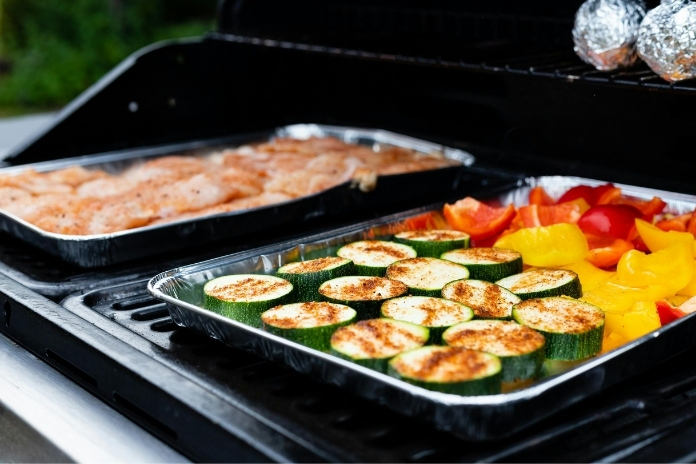
Aluminum foil is my go-to kitchen tool! Wrapping food, leftovers, packing lunches, or even enjoying steak cooked in foil has always been my thing. However, is aluminum foil safe for cooking? Or I am just thinking too much. Read this article further to know more.
If you open nearly any kitchen drawer, you will most likely find a roll of aluminum foil. It is a household staple globally, loved for its usability. Folks use it to cover leftovers, line baking pans, top casseroles, and even make packets for grilling vegetables or meat.
However, in recent years, questions have arisen: Is aluminum foil safe to use for cooking? Could it cause the leaching of toxic levels of aluminum into foods? Does it increase the risk for Alzheimer’s disease or other illnesses?
These questions matter because aluminum is not just a cooking material; it’s also a naturally occurring element that we’re already exposed to through food, water, and even medications. With rising awareness about the connection between lifestyle habits and long-term health, it makes sense to pause and evaluate whether cooking with foil is a harmless convenience or a hidden health risk.
This article will explain to us certain science-backed facts about using aluminum for cooking, the risks involved, and offer safer alternatives to health-focused families and home chefs.
How Aluminum Foil Is Utilized in Cooking
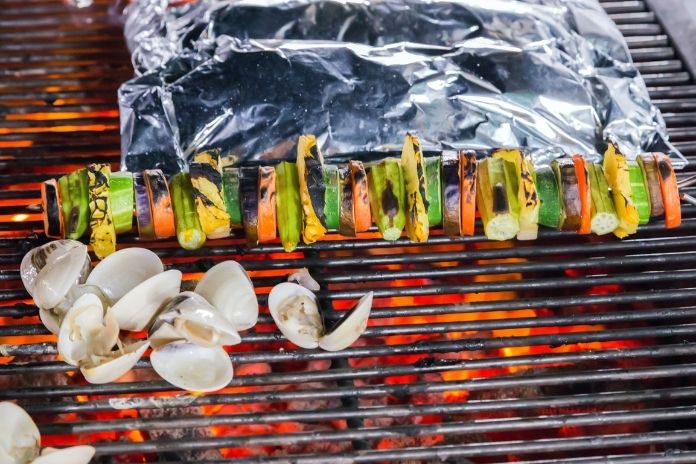
Aluminum foil is one of the most versatile things we can find in a contemporary kitchen. Its main uses include:
- Baking and Roasting: Home chefs often cover casseroles, wrap baked potatoes, or tent roasted meats to retain moisture.
- Grilling: Foil packets are an easy method of cooking fish, vegetables, or marinated meat on outdoor grills with no flare-ups.
- Lining Pans: Bakers line cookie sheets or roasting pans with foil for easy cleanup.
- Wrapping Leftovers: Foil tightly wraps cooked food, which remains fresh in the refrigerator or freezer.
“High temperatures, especially with acidic foods like tomatoes, citrus, or vinegar, may cause aluminum to leach into food,” says Darin Detwiler, chair of the National Environmental Health Association’s Food Safety Program, as per Huffpost.
Its beauty lies in its high heat conductivity, light build, and capacity for creating an airtight seal. But this same ease has sparked controversy. This is because when aluminum is heated in contact with food, there’s a risk of leaching into the food itself.
Does Aluminum From Foil Leach Into Food?
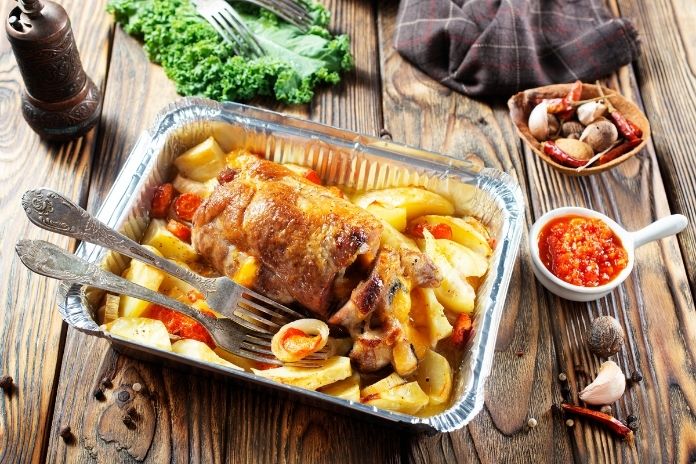
Studies have shown that foil can leach aluminum into food, but the extent of this leaching varies depending on several factors.
Conditions That Increase Leaching:
- Hot Temperatures: Foil used in the oven at high heat or placed directly on the grill increases the release of aluminum.
- Acidic Foods: Tomato sauce, lemon juice, and vinegar foods speed up the breakdown of aluminum.
- Salty Foods: Salt facilitates chemical reactions that facilitate leaching.
For example, baking marinated meat in foil simultaneously exposes it to heat, salt, and acidity. This makes it a “perfect storm” for the transfer of aluminum.
What the Studies Say:
One study determined that red meat cooked in foil added as much as 378% more aluminum to food than raw meat.
A trial also revealed that fish and poultry cooked with foil took up measurable amounts of aluminum, especially when combined with acidic spices.
While aluminum influence is real, it usually doesn’t exceed thresholds considered safe for healthy individuals. But because we’re already exposed to aluminum from other daily sources, cumulative intake is worth considering.
Health Concerns Around Aluminum Exposure
The most common metal in Earth’s crust is aluminum. It naturally enters food, water, soil, and air. Many consumer products also contribute to exposure:
- Food additives, including baking powders, processed cheese.
- Medications such as antacids (buffered aspirin).
- Personal care products (antiperspirants).
We ingest small quantities of aluminum every day, and the body usually removes it through the kidneys.
Aluminum and Alzheimer’s: Dispelling the Myth:
Perhaps the most common concern is the alleged link between aluminum exposure and Alzheimer’s disease. This stems from studies in the 1960s and 1970s that detected aluminum deposits in the brains of Alzheimer’s patients. However, modern research shows:
Aluminum in the brain is not necessarily a cause; it may be a byproduct of the disease process.
Large reviews, such as those by the Alzheimer’s Research, UK, have discovered no solid evidence to connect normal aluminum exposure with Alzheimer’s.
The “aluminum dementia myth” exists, but the majority of neurologists now think it is baseless.
Read More: Quick and Healthy Sheet Pan Dinners: Minimal Effort, Maximum Flavor
High Exposure Risks
While average exposure is not dangerous for most, there are some at greater risk:
- Individuals with kidney disease: Because their kidneys are unable to effectively filter out aluminum, even moderate exposure will tend to accumulate and lead to bone or neurological issues.
- Factory workers: Chronic occupational exposure to aluminum dust has been associated with respiratory and skeletal issues.
Occasional use of aluminum foil in cooking by the average individual is not likely to cause harm. However, for individuals with impaired kidney function, reducing exposure to aluminum, including that from foil, is advisable.
Safe Ways to Use Aluminum Foil

Rather than banning foil from the kitchen, embracing wiser cooking techniques can minimize risks:
- Use Dry Foods: Cover baked potatoes, roasted vegetables that are not acidic, marinades, or dry meat rubs with foil.
- Skip Acidic or Salty Foods: Avoid foil for cooking tomatoes, citrus fruits, vinegar-based recipes, or brined meats.
- Use Moderate Temperatures: Use oven temperatures below 400°F (204°C) and not direct flame grilling with foil.
- Don’t reuse Crumpled Foil: Once heavily crumpled or deteriorated, foil can flake and shed minute particles onto food.
Tip: Try to use it as a lid instead of a wrap. Bending a dish loosely minimizes direct foil-to-food contact.
These precautions help you to use aluminum foil responsibly without major cause for concern.
Aluminum Foil Alternatives
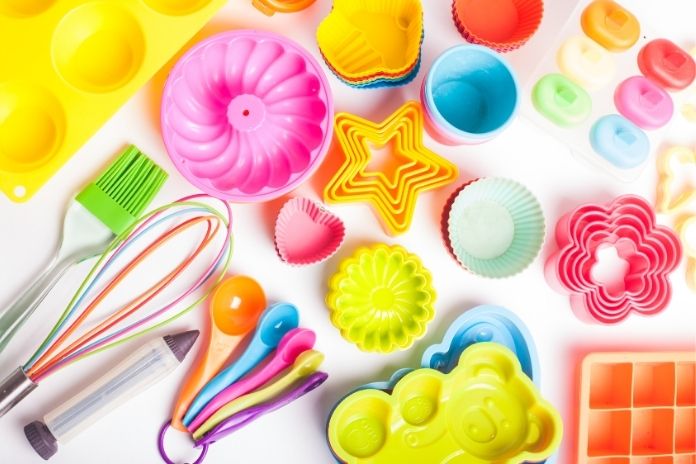
Health-conscious chefs increasingly turn to alternatives that are eco-friendly, non-toxic, and reusable. Here are a few eco-friendly and healthier options you can use instead of aluminum foil:
Parchment Paper:
- Safe for baking and roasting up to very high oven temperatures.
- Non-reactive, i.e., no aluminum leaching.
- Several brands also offer compostable or unbleached parchment to make their products more environmentally friendly.
Silicone Baking Mats:
- Last for years, instead of using hundreds of sheets of foil.
- Heat-resistant, non-stick, and easy to wipe clean.
- Great for cookies, roasted vegetables, or sheet-pan dinners.
Glass or Ceramic Bakeware:
- Great for casseroles, lasagna, and oven storage.
- Can transfer from oven to fridge without worry.
- Unlike foil, they won’t react to acids or salts.
Cast Iron or Stainless Steel Cookware:
- Both are oven- and grill-safe.
- Cast iron holds heat exceptionally well, making it ideal for roasting or searing.
- Stainless steel is durable, non-reactive, and a versatile workhorse for stovetops and ovens.
- Both alternatives not only reduce exposure to aluminum but also minimize waste.
Read More: 4 Eco-Friendly Food Packaging Options: What to Choose and What to Avoid
Environmental Impact of Foil vs Alternatives
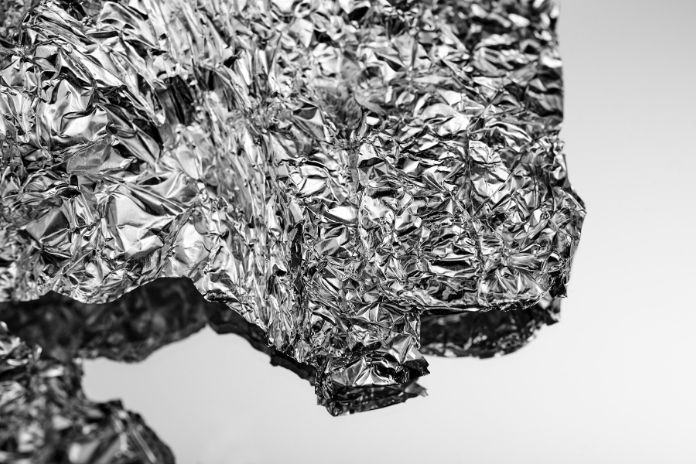
Aluminum foil’s impact extends beyond health; it also affects the environment.
- Energy-intensive Production: The production of aluminum is energy-intensive, and it has a heavy impact on greenhouse gas (GHG) emissions.
- Limited Recycling: Technically recyclable, but due to contamination with food, most household foil is not recycled.
- Landfill Waste: Foil that has been used tends to be dumped as rubbish, contributing to non-biodegradable landfill waste.
On the other hand, alternatives such as silicone mats, glass, ceramic, and cast iron provide years of recycling. Even parchment paper, while disposable, is usually made from sustainably harvested materials and breaks down more readily than aluminum. Using these alternatives lessens the environmental footprint and is good for health as well.
Conclusion: Balance and Better Choices
Therefore, is aluminum foil safe to cook with? The answer is complicated.
- If you use it rarely, particularly with dry, non-acidic foods at moderate oven temperatures, it is usually safe for otherwise healthy adults.
- Individuals with kidney issues or those who regularly prepare acidic or salty meals should limit their use of foil.
- Better, earth-friendly options such as parchment paper, silicone mats, glass, ceramic, stainless steel, and cast iron make great replacements without the hazards.
Ultimately, aluminum foil does not have to be banished from your kitchen. Rather, consider it a sometimes tool instead of a daily habit. By switching to safer options, you can protect your health, decrease waste, and make your cooking habits more sustainable.
References
- https://www.alzheimersresearchuk.org/news/aluminium-and-alzheimers/
- https://pmc.ncbi.nlm.nih.gov/articles/PMC5651828/
- https://www.researchgate.net/publication/223759864_Aluminium_levels_of_fish_fillets_baked_and_grilled_in_aluminium_foil
- https://www.sciencedirect.com/science/article/pii/S2666202719300072
In this Article