










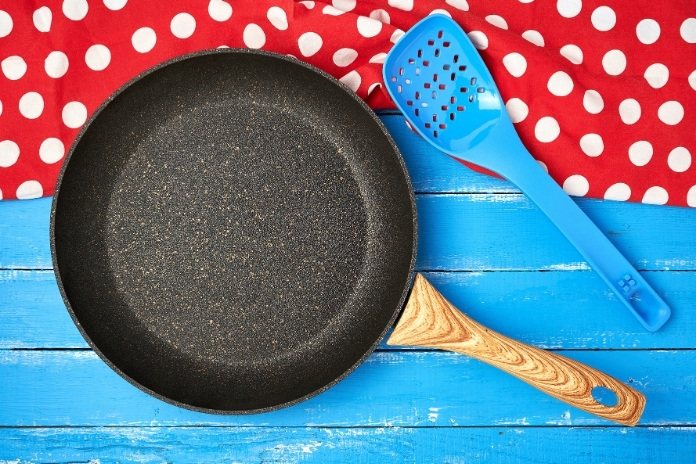
The convenience of use, simplicity of cleanup, and low oil consumption of nonstick pans have made them a kitchen necessity for many homes. These pans simplify daily cooking, whether it’s flipping pancakes or sautéing veggies.
A nonstick pan is at the top of the list of kitchen necessities. It is flexible enough to handle everything from frying an egg to cooking the perfect steak, and it may be great for cooking, especially if you dislike cleaning.
Most American homes often use pots and pans with non-stick coatings, but a new study has raised questions about the long-term safety of using them.
The use of per- and polyfluoroalkyl substances (PFAS) in non-stick cookware coatings is often the subject of common concerns.
People call these compounds ‘forever chemicals’ because they persist in the environment for a long time. Manufacturers have used them in many household items, including waterproof clothing, carpet, and fabric stain removers.
Knowing the facts about nonstick safety is crucial, as it affects not only family health but also the comfort individuals experience when using cookware for their daily meals.
Read More: Top 10 Heart-Healthy Cookware Essentials for Every Kitchen
What Is Nonstick Cookware Made Of?
It is interesting to think that the most recognized products are the result of secret discoveries. Nonstick coatings were the result of a secret discovery made by Roy Plunkett, a chemist at DuPont Chemical, who was seeking an experimental substitute for the commonly used refrigerant Freon.
One day, Plunkett was attempting to freeze a fluoropolymer cryogenically. To achieve this, he used a chemical gas called tetrafluoroethylene, with the intention of compressing and freezing it. To his surprise, instead of a chemical gas, tetrafluoroethylene changed into a solid material that was extremely smooth, white, waxy, non-sticky, and frictionless.
DuPont patented the chemical that Roy Plunkett discovered, which he hoped could be used as a coating on a metal surface. Scientists named the chemical polytetrafluoroethylene, abbreviated as PTFE, but people today know it better as Teflon. One of the most well-known cookware brands nowadays is Teflon.
When people say “non-stick pan,” they usually mean a pan that has the Teflon coating on it. Manufacturers coat metal pots and pans with a transparent plastic sold under the Teflon name. The outcome is a pan that is simple to clean; however, the problem lies in the plastic coating.
Researchers have investigated the safety of this coating for use in cooking. Teflon pans are safe and non-toxic when used correctly, according to experts.
Teflon pans have a problem when they overheat; research has revealed that the plastic covering starts to degrade and produce harmful gases when a Teflon pan gets too hot. Scientists express special concern about the chemical perfluorooctanoic acid (PFOA) because studies have linked prolonged exposure to thyroid disorders and cancer.
Is Teflon Safe Today? What Experts Say
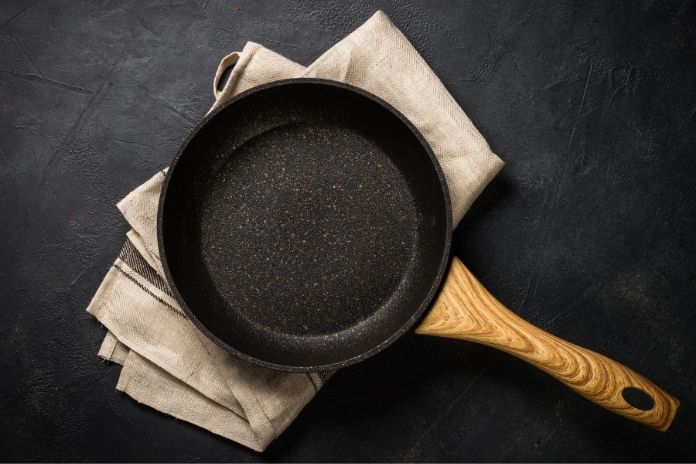
Experts state that non-stick cookware is currently safe to use when people follow the directions. Since 2013, Teflon cookware manufacturers have modified their processes to eliminate PFOA, ensuring that new cookware does not contain the toxic compound.
Another widely used component of Teflon is PTFE, which is considered chemically inactive and does not interact with materials either within the body or in the external environment. For these reasons, the support of non-stick cookware says it is o.k. to use as “directed safely”.
When Teflon-containing pans are overheated, an issue occurs. Teflon coating degrades at temperatures higher than 570°F, releasing hazardous chemicals into the atmosphere.
Once released into the environment, these substances cannot be recovered or removed. They have occasionally resulted in “polymer fume fever,” also referred to as “Teflon flu.” It frequently appears 4–10 hours after exposure, producing flu-like symptoms that can last hours or days. Symptoms often include fever, chills, body aches, and headache.
“PFAS are absorbed in our bodies and they don’t degrade easily, so there’s a risk of cumulative toxicity,” says Philip Kuriakose, M.D., a hematologist and medical oncologist at Henry Ford Health. “That’s why they’re called ‘forever chemicals.’”
The American Cancer Society acknowledges some suggestions that Teflon and cancer may have a relationship, although many manufacturers claim it is absolutely risk-free.
They have made statements that show PFOA was associated with tumors in rats and kidney, prostate, bladder, ovarian, and thyroid tumors in humans. According to the EPA, there is suggestive evidence that PFOA may cause cancer, but the data are insufficient to fully evaluate its cancer-causing potential in humans.
Read More: Top 6 Healthy Cooking Appliances: Must-Have Kitchen Gadgets for Nutritious Meals
Everyday Risks and Precautions

Using a nonstick cooking set can be convenient, safe, and healthful as long as you take basic safety measures. Here are tips for reducing risk during cooking:
- Do not preheat a pan without food in it. An empty pan can reach very high temperatures in just a few minutes, which creates polymer fumes. Always place food or liquid in your pots and pans before preheating.
- Do not cook for extended periods at high heat. Broiling requires higher temperatures, as well as the recommended time for nonstick cookware, so use medium or low heat.
- Make it your business to keep air flowing through your kitchen. Turn on your exhaust fan or open windows to vent any fumes while cooking. Remember, your health depends on it!
- Use plastic, silicone, or wooden cooking utensils. Using metal utensils on nonstick cookware can cause scratches and wear, potentially reducing its lifespan.
- Change out your old cookware. When Teflon coatings exhibit severe wear, such as scratches, peeling, flaking, or chipping of the product, it is advisable to replace them.
Nonstick Alternatives: Pros and Cons

If Teflon isn’t your thing, several great substitutes offer strength, adaptability, and, in certain situations, inherent nonstick properties. Your cooking style and maintenance preferences will determine which option is best for you, as each has its own advantages and disadvantages.
- Cast Iron
Benefits: For hundreds of years, cast iron has been the preferred cooking material for good reason. It is strong, long-lasting, non-toxic, and has a high thermal density, which keeps food hotter for longer. Additionally, it can be used directly from the cooktop to the oven to the tabletop, making it great for searing food.
Cons: A well-seasoned cast-iron pan is versatile and straightforward to use, despite some people being intimidated by it because they think food will stick. In addition to being heavier than other options, cast-iron pans are not the best for cooking acidic foods unless they are extremely well-seasoned.
- Stainless Steel
Advantages: If you’re looking for cookware that’s free from harmful chemicals, stainless steel is another excellent choice. Stainless steel cookware is not only scratch-proof and long-lasting, but it also heats evenly, cleans easily, is affordable, feels good in the hand, and doesn’t react with acidic foods like citrus and tomatoes.
Cons: Not all stainless steel is non-stick. However, a more efficient cooking experience can be encouraged by using metal cooking utensils and thoroughly oiling the pan. Additionally, exposure to high heat and saltwater can cause discoloration of stainless steel.
- Ceramic
Advantages: Ceramic cookware has a non-stick coating that is safer than Teflon and is aesthetically pleasing. When consumers first began searching for non-stick cookware free of PFOA and PTFE, ceramic cookware gained significant popularity. Ceramic pots and pans are now available in a vast array of hues, textures, and dimensions. They are generally suitable for ovens and stovetops and are simple to clean.
Cons: It is not advisable to use metal tools on ceramic cookware, as they will scratch more easily than stainless steel or cast iron. Additionally, some ceramic cookware may not disperse heat as effectively as other materials. Lastly, ceramic cookware can chip over time and is generally less durable than stainless steel or cast iron.
Read More: Meal Prep Containers: 8 Best Options for Portion Control and Meal Planning
What Dangers Does Teflon Pose to the Environment?

Teflon may pose the following harmful long-term environmental risks:
- Teflon products take a long time (possibly centuries) to break down in a landfill setting because, like all fluorocarbons, they only begin to decompose above 500°F (260°C). In the future, this might expose entire populations to the unanticipated accumulation of PTFE breakdown products.
- Perfluorooctanoic acid (PFOA), a surfactant used in the production of Teflon before 2014, is now considered to pose a risk to human health. Although manufacturers no longer use PFOA to produce Teflon, this chemical and others in the PFAS class (per- and polyfluoroalkyl substances) persist so strongly that researchers now find them in large quantities in water resources and in the tissues of humans and animals. As a result, they are being studied, regulated, and remedied.
- When burned with other trash, Teflon breaks down and releases hazardous substances such as trifluoroacetic acid (TFA). These substances then enter the atmosphere and spread into the environment.
Read More: Quick and Healthy Sheet Pan Dinners: Minimal Effort, Maximum Flavor
Conclusion
Typically, the discussion about nonstick cookware centers on its use. When used correctly, modern Teflon cookware is safe and acceptable for everyday use. When misused, such as heating an empty pan or scratching the surface with a metal utensil, these are the real concerns of nonstick cookware. These two factors can compromise the coating performance of your cookware and, in a worst-case scenario, release fumes or flakes.
If your nonstick pan is in good condition, there is no need to dispose of it. Use silicone or wooden utensils, limit your heat level to low or medium, and replace them when the coating is visibly damaged.
Ultimately, you don’t have to discard your nonstick cookware. Use it sparingly, or if it makes you feel more at ease, consider an alternative option.
References
- https://www.ahealthiermichigan.org/stories/food-and-recipes/are-non-stick-pans-safe
- https://www.abc.net.au/news/2024-08-02/is-non-stick-cookware-safe/104160814
- https://www.cnet.com/home/kitchen-and-household/how-to-know-if-your-teflon-pans-are-safe-to-use/
- https://www.livescience.com/are-nonstick-pans-toxic.html
- https://www.cancer.org/cancer/risk-prevention/chemicals/teflon-and-perfluorooctanoic-acid-pfoa.html
- https://nepis.epa.gov/Exe/ZyNET.exe/901S0J00.TXT
- https://www.hollyroser.com/is-teflon-safe-the-truth-about-nonstick-cookware-2021/
- https://www.xometry.com/resources/machining/is-it-safe-to-use-products-with-teflon/#what-is-teflon
- https://www.healthline.com/nutrition/nonstick-cookware-safety#risks
- https://thegoodlifedesigns.com/alternatives-to-non-stick-pans/
In this Article