










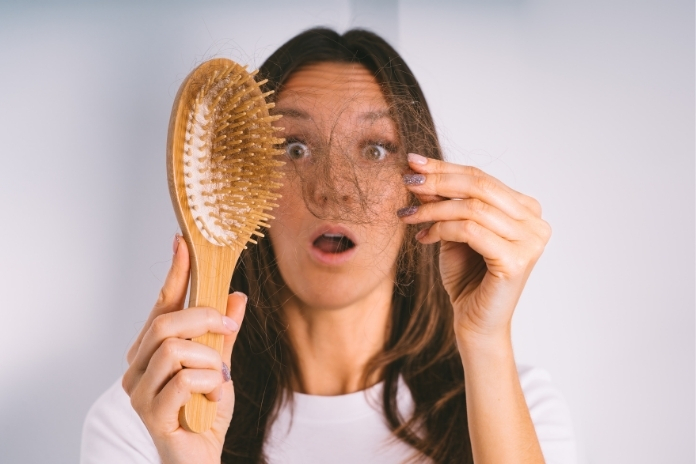
Do you see a scalp where once there were thick, luxuriant strands when you look in the mirror? Your body undergoes several changes as you age, and your hair is no different. Over time, hair naturally changes in structure and color. Additionally, your hair needs extra care to maintain its beauty as you age.
When you notice that your hair is thinning, it can be very emotionally upsetting, especially if you can see gaps between the hairs and your scalp showing in some areas. Usually, hair loss doesn’t hurt.
Hormonal changes, slower cell regeneration, nutritional inadequacies, and greater susceptibility to hair care products frequently cause age-related hair loss. Over time, styling practices and environmental factors may exacerbate the issue.
The good news? Thankfully, various methods can treat thinning hair and prevent the condition from worsening.
This article will discuss the most typical reasons why people lose hair as they age and offer doable, research-backed methods to help you maintain volume, strengthen hair follicles, and promote scalp health.
Read More: 22 Benefits of Sweet Almond Oil For Health, Skin, and Hair
Why Hair Loss Increases With Age
Hair loss, a condition that cuts across gender and cultural borders, is a typical occurrence as we deal with the realities of aging. For many of us, balding—the progressive loss of hair—can be both fascinating and concerning. For many people who see thinning crowns or receding hairlines, the question of whether balding is a typical aspect of aging looms large. Although hair loss, aging, and other changes can be concerning, there are solutions.
As people age, a mix of biological and lifestyle factors contributes to the increased prevalence of hair loss. Aging affects every part of the body, including hair, which serves as a protective layer. It also helps to keep an ideal body temperature. As we get older, our hair naturally starts to change.
As you age, the thickness of your hair can also vary, and numerous protein strands make up your hair. The life span of any one hair strand is about two to seven years. After one hair strand falls out, new hair grows in its place. Your genes also play a part in the amount of hair that you will have on your head and body.
As people age, almost everyone experiences hair loss, along with a reduction in overall hair growth, which results in new hair strands becoming smaller and having less pigment. Young adults have thick, coarse hair; then, as you get older, your hair arrangement continues to soften and become delicate and light, due to numerous hair follicles no longer producing new hair strands.
Indeed, hair loss may be a result of the normal aging process. According to the American Academy of Dermatology Association (AADA), age-related hair loss happens as a result of the hair follicle’s gradual slowing down. The earliest indications of hair loss appear when shedding happens more quickly than new hair can form.
Signs You’re Experiencing Age-Related Hair Loss
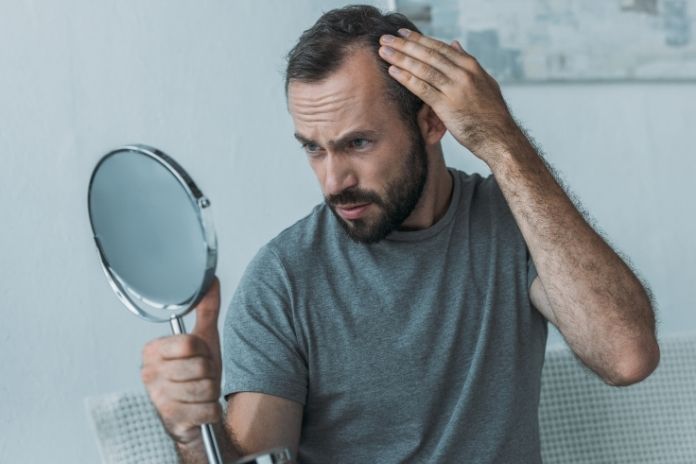
Moreover, balding symptoms may not be the same for everyone. For some, the hairline may recede, while for others, thinning occurs around the temples. It also means that the symptoms of balding experienced by individuals with hair loss will vary. Some reasons for hair loss related to aging:
Increased Hair Loss: Three definite indicators of hair loss are thinning hair, a widening part, and an excessive amount of hair on your brush, pillow, or shower drain. Suppose thinning hair, running a finger along your hairline reveals a larger part, or you are seeing an increasing number of hair strands that you are leaving behind when getting ready for your day. In that case, you could be suffering from ongoing hair loss.
Receding Hairlines: This occurs when the hair at the front and sides of the head begins to recede from the face and gradually thins out. People who experience this type of hair loss usually notice that the hair on the side of their head is falling out at a faster rate than the center, causing their hairline to slip back towards their crown and take on a semi-M shape.
Bald Spots or Thinning Areas: Unexpected hair loss in some regions of your scalp, showing distinctive round or oval bald patches, may suggest a condition called alopecia areata or other issues. These bald areas often combine with smooth skin in the affected region, resulting in localized hair loss.
Part Line Enlargement: Another kind of hair loss results in the widening and separation of your part line, which is the line where your hair breaks on top of your head.
Clumps of Hair Fall Out: Hair loss often progresses slowly, though at times you might notice sudden, visible changes. Instead of slowly thinning or receding, the hair may sometimes shed in large clumps. Such significant shedding could indicate an underlying health problem. So it’s wise to consult a medical expert to determine the cause of this kind of hair loss.
Dry, Brittle Strands: As we age, our hair frequently loses its natural oils, which increases the likelihood of breakage, split ends, and dryness.
Read More: My Experience With Postpartum Hair Loss (And How I Managed It Without Panicking)
Natural Ways to Slow Age-Related Hair Loss
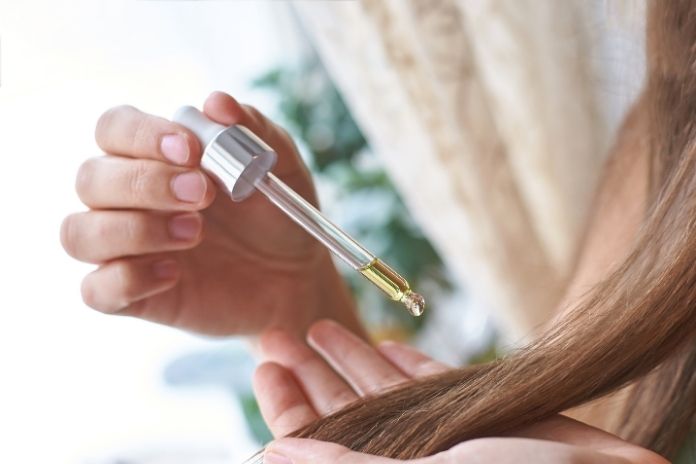
You can maintain the health of your hair, even though you can’t go back in time. By considering a few simple measures, you can safeguard your healthy, thick hair and get the most out of it at any age:
Know your Hair Type: Knowing whether your hair is straight and fine or wavy and coarse is helpful, as it allows you to choose products that are appropriate for your hair type. If you notice a change in your hair, you need to adjust the hair care routine you are following.
Purposeful Shampooing: Keep track of how often your hair gets oily or dirty and shampoo appropriately. Those with dry hair should refrain from washing it every day. Use shampoo to relieve dust build-up and clean excess oil from your scalp, but it is not necessary to dry out your hair.
Avoid Heat: Heat can be very damaging to the hair. Use hot styling tools such as flat irons, curling irons, and dryers only when necessary and use them in moderation. Use the low setting if you must use heated tools.
Coconut Oil: Current studies have suggested that coconut oil can prevent hair loss. However, it is more of a preventative measure than a treatment for hair growth.
Eat a Well-Balanced, Protein-Rich Diet: Keratin makes up the majority of your hair structure and requires vitamins, minerals, and amino acids to grow correctly. When you do not eat enough protein, your body will give priority to your critical internal organs at the expense of hair growth.
Your body takes the essential nutrients from your hair growth. Research has proven that nutritional stress caused by a lack of protein leads to temporary hair loss (telogen effluvium). So try to eat eggs and lean meats. Include other sources of healthy fats in your diet, such as avocados and nuts.
Avoid Tight Hairstyles: While it looks great to wear a tight braid or ponytail, it may lead to traction alopecia, a form of hair loss. The constant stress on the hair shafts can damage the follicles and cause thinning, particularly around the hairline. Hair is also weaker as we age and will hit a limit on the number of times it can withstand this repeated assault.
Scalp Massage is always Good for Hair Loss: This form of massage is calming and invokes relaxation. Scalp massage also enhances blood flow to the hair follicles, which allows nutrients to flow to the root area and initiates new hair formation.
Over time, the massage increases blood supply to the area, allowing hair strands to develop stronger and thicker. To enhance the massage, you can use your fingers, a scalp brush, and essential oils like peppermint and rosemary.
“There are a number of things you can do to slow or stop hair loss,” says Daniel Zelac, MD, a dermatologist at Scripps Clinic. “But before deciding what to do, it’s important to identify the type of hair loss you are experiencing.”
The first step to treating hair loss, though, is to work with a health care provider to identify the cause, according to Dr. Jennifer Ashton, ABC News chief medical correspondent and a board-certified obstetrician and gynecologist.
Read More: Biotin for Hair Loss & Growth: Does it Really Work for Hair Loss
Are Supplements Worth It?
Supplements may provide extra assistance if you’re eating a healthy, nutrient-dense diet but still experiencing hair loss. It is essential because, as you age, your body’s ability to absorb nutrients may deteriorate. Therefore, we can use supplements to maintain the health of our hair. However, your primary source of sustenance should always be food.
Biotin (vitamin B7) and zinc are among the most commonly used nutrients for supporting healthy hair. According to research, those with nutritional inadequacies who take biotin supplements see an improvement in their hair development.
Zinc aids in follicle healing and the maintenance of healthy scalp oil production. However, you must use it sparingly. Too much zinc can have detrimental effects rather than positive ones. Make sure to complete all required health evaluations before starting any supplements. By doing this, you can detect nutritional inadequacies and give your body the nutrients it needs to sustain healthy hair growth.
Additionally, a lack of vitamin D might result in thinning since it can assist in controlling the cycles of hair follicles. Starting a supplement could be helpful if your vitamin D levels are low. Vitamin D can be naturally obtained from foods like dairy products, mushrooms, and oily fish.
When to See a Dermatologist or Trichologist
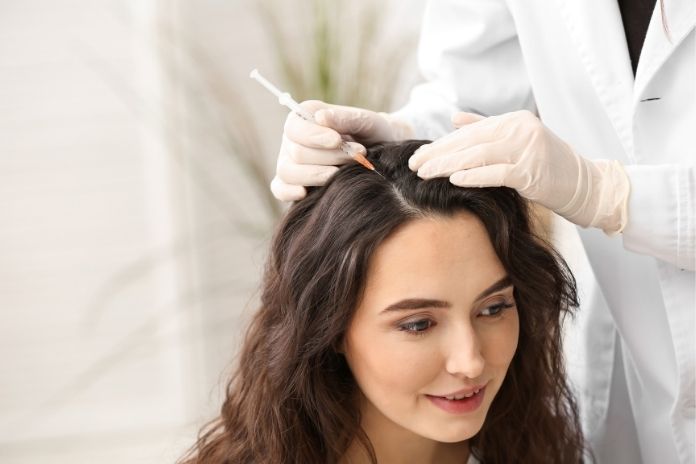
Professional assistance is often essential, even though natural therapies and some lifestyle modifications can slow age-related hair loss. You can prevent hair loss from getting out of control by knowing when to visit a dermatologist. Here are eight key indicators that you need to get evaluated by a specialist.
“It is a good idea to check with your dermatologist if you notice a significant amount of hair loss,” says Shoshana Marmon, M.D., assistant professor of dermatology at New York Medical College.
Sudden or Rapid Hair Loss: If you are noticing a significant increase in hair loss over a short period, experts recommend visiting a dermatologist for an evaluation. This type of abrupt hair loss, particularly if you notice significantly more hair on your pillow or in your shower drain than usual, often indicates an underlying medical condition or response that requires assessment by a specialist.
How to Identify Scalp Changes: If redness and itching of the scalp accompany your hair loss, an underlying skin issue may be causing it and needs to be treated. They may be indicators of diseases such as scarring alopecia, which requires specific therapeutic modalities. A scalp biopsy, as well as a physical examination performed by your dermatologist, will confirm the diagnosis of scarring alopecia.
Hair Loss After Medicine Changes or Illness: Telogen effluvium is frequently indicated by hair loss that starts a few months after beginning a new medicine, having surgery, having a high fever, or recovering from a serious illness. When many hair follicles are forced into the resting phase at once by a stressful event, this temporary loss happens. Even though telogen effluvium usually goes away on its own once the trigger is eliminated, a dermatologist can confirm the diagnosis and rule out alternative causes.
Read More: Healthy Hair, Happy You: Top 8 Hair Growth Supplements for Stronger Locks
Final Thoughts
You don’t have to accept your thinning hair as your fate, just because age-related hair loss is a normal aspect of aging. You can prevent hair loss and maintain thick, vibrant hair well into old age by taking preventative measures and practicing conscious hair maintenance.
Concentrating on your proper diet, considering the right scalp care, and practicing mild hair practices could make a huge difference. Over time, healthier growth and less breakage can result from natural remedies, including enhancing your diet, applying essential oils, and shielding your hair from the sun and heat.
Patience and constancy are crucial. Natural methods take time to see results, but you can achieve great success if you approach your problem consistently and holistically.
References
- https://www.health.harvard.edu/diseases-and-conditions/its-not-too-late-to-save-thinning-hair
- https://health.clevelandclinic.org/your-guide-to-aging-hair
- https://www.ncoa.org/article/age-related-hair-loss-explained-a-guide-for-older-adults/
- https://medlineplus.gov/ency/article/004005.htm
- https://www.uclahealth.org/news/article/your-guide-aging-and-hair
- https://renovemedicalspa.com/is-balding-a-normal-part-of-aging/
- https://www.aad.org/public/diseases/hair-loss/causes/18-causes
- https://www.anchoragedermatology.com/post/5-telltale-signs-of-hair-loss
- https://abcnews.go.com/GMA/Wellness/6-natural-remedies-hair-loss/story?id=104253823
- https://medbox.com/a-comprehensive-guide-to-prevent-hair-loss-as-we-age/
- https://www.goodmorningamerica.com/wellness/story/dr-jennifer-ashton-shes-coping-covid-19-hair-84646121
- https://pmc.ncbi.nlm.nih.gov/articles/PMC6380979/
- https://www.advancedderm.com/about-us/news/thinning-hair-and-hair-loss-when-to-see-a-dermatologist
- https://www.aarp.org/health/healthy-living/postmenopausal-hair-loss/
- https://www.nychealthandhospitals.org/doctors/marmon-shoshana/
- https://www.scripps.org/physicians/5709-daniel-zelac
- https://www.scripps.org/news_items/4467-what-is-the-best-treatment-for-hair-loss
In this Article