














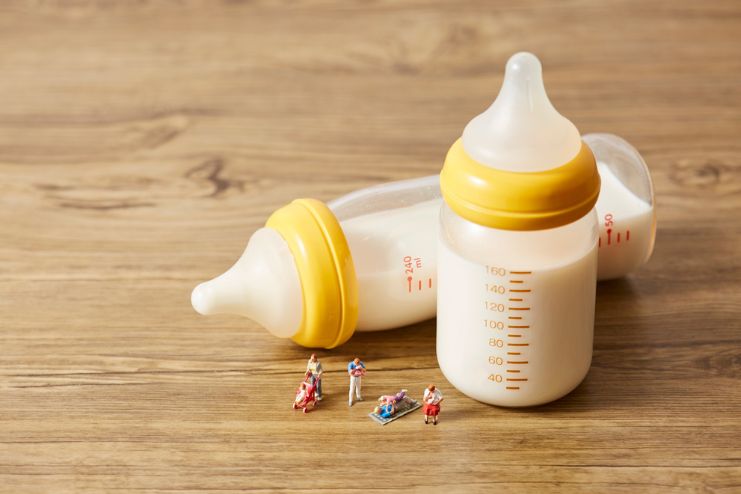
Having your first child may make parenthood both thrilling and daunting. It’s a period when you’re constantly researching what’s best for your unborn child. Don’t worry, that’s relatively common.
One of your most crucial responsibilities is to ensure your infant is eating properly. A vital part of preparing for your baby’s birth is determining how many baby bottles you’ll need. The proper quantity and type of bottles are essential for your baby’s convenience, comfort, and health, regardless of whether you’re formula-feeding, breastfeeding, or a mix of the two.
This article simplifies the process by breaking down the precise number of bottles you’ll need for various scenarios, along with helpful, real-world advice to enable you to choose what’s best for your family. Let’s make purchasing baby bottles easier.
Read More: Rethinking Baby Food: The Hidden Dangers of Ultra-Processed Choices
How Feeding Method Affects Bottle Count
The number of baby bottles you’ll require depends largely on your chosen feeding method.
Each baby is unique. Your baby’s age and whether you breastfeed, use formula, or both will decide how many bottles you need daily.
Peak feeding doesn’t require a set number of bottles. However, consider how often your baby needs to eat and, more crucially, how often you want to clean the bottles.
Typically, feeding your newborn every two to three hours is recommended. Because breast milk is digested faster than formula, breastfed infants often require more frequent feedings.
One to Four Baby Bottles
You won’t need as many bottles if you are nursing your child at home. Likely, you’ll only need to have one to four bottles on hand each day. Of course, if you’re heading out for a quick errand, it’s helpful to keep a few bottles ready to take along. If your partner wants to participate in feedings or if you prefer to bottle-feed your child outside your home, it’s also a good idea to keep a couple of bottles handy.
Three to Six Baby Bottles
Between the ages of two and five months, it is typical for babies to feed five to six times daily. You will likely require fewer than six bottles per day if you are combining breastfeeding with bottle-feeding. Consider how often you need to clean the bottles. You can purchase more bottles if you prefer not to wash them each time your infant needs to eat.
At least Six Infant Bottles
Newborns require six to eight daily feedings of two to four ounces of milk throughout the first month of life. As your baby begins to eat more at once in their second month, you may need to feed them less frequently.
During the first month, the baby will likely require fewer than six to around eight bottles per day, especially if you are also breastfeeding them. It’s best to have extra bottles on hand, especially if you’re a working mother and might be apart from your child for extended periods. You should have enough so that the bottles will last for the entire duration that you might be away.
Daycare or Outings? Adjust Your Bottle Count
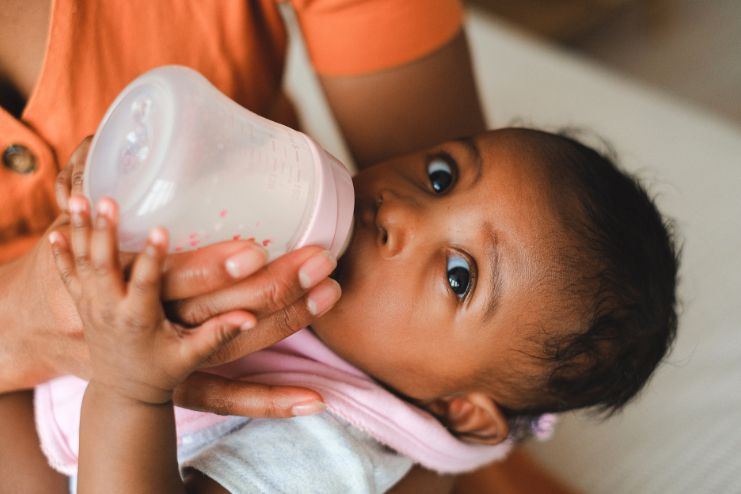
Breastfed Infants (0–6 months)
Keep at least eight bottles on hand for the first month. You will need to wash bottles frequently because newborns typically feed every two to three hours. Six bottles should be sufficient for the first six months of life, when feedings may occur every three to four hours. Nonetheless, keep extras on hand in case one requires cleaning or if there are additional feedings.
For infants aged 0–6 months
Aim for 10 bottles during the first month to enable uninterrupted feeding and cleaning. Preparing a formula takes time. As feedings become less frequent between the ages of one and six months, eight bottles should be plenty. However, consider keeping an extra two on hand for excursions or trips.
Using Daycare (6 months+):
A standard recommendation for full-time daycare is 12 bottles per day. Due to health regulations, most childcare centers require that all bottles and cups be carried home and cleaned daily. Twelve gives you plenty for two full days before you run out. For transportation between home and the daycare, as well as for sporadic excursions outside of childcare hours, factor in an extra two to four bottles.
Combination Nutrition:
Use separate bottles for formula and breastmilk if your infant receives both. Doing so lowers the chances of harmful bacteria contaminating your baby’s feeding bottles and utensils. Keep at least six to eight bottles dedicated solely to store breastmilk. Label these bottles clearly.
Using separate bottles prevents you from accidentally introducing formula to the bottle that contains breast milk. Always set aside at least six to eight bottles for feeding formula milk. Ensure that these bottles are appropriately labeled as “Formula Only” to prevent confusion with breast milk bottles.
Read More: Why More Parents Are Switching to Organic Baby Formula: Is It the Healthier Choice?
How Often Will You Wash the Bottles? (It Matters!)
Your baby’s feeding bottle count is determined by both how frequently they feed and how often you can or want to wash and disinfect the bottle. However, it’s an additional line of defense that can help keep your newborn healthy.
Ultimately, bottled milk creates an environment conducive to bacterial growth. Therefore, your baby’s bottles must be clean and free from bacteria.
- Begin by cleaning bottles and other feeding items thoroughly after every use. Any remaining formula milk after feeding should be thrown away. Even if you store infant formula in the fridge, your child may spread germs from their saliva into the bottle, where they might grow!
- You must wash your baby’s bottle and its parts in hot, soapy water and rinse them under running water before sterilizing. Make sure to clean your hands thoroughly before handling your baby’s feeding equipment.
- Most neonatal health specialists agree that sanitizing bottles every few days is essential. You don’t need to disinfect bottles after each use, as hot water and soap are readily available for cleaning.
- Sanitizing every baby bottle before use is crucial. You never know what germs may be hiding in something clean and fresh from the packaging.
What Types and Sizes of Bottles Should You Buy?
Size and type are key considerations when selecting baby bottles based on your baby’s age and feeding needs.
Newborn Stage (0–3 months)
- The appropriate bottles are 4-ounce (120ml) bottles.
- Newborns usually require smaller feeding amounts.
Infant’s Stage (3-6 months)
- Gradually move to 8-ounce (240ml) bottles.
- Babies begin to drink less frequently but in greater amounts.
Stage of Toddlerhood (6 months and up)
- Use only bottles that are 8 ounces (240 ml) or greater.
- Around this time, some toddlers switch to sippy cups, which reduces the need for numerous bottles.
Elizabeth Meade, MD is a pediatrician and a lactation consultant at Providence Swedish in Seattle. She says, “There are many options, which can be very difficult to narrow down, and assuming the baby has no underlying conditions that would require a specific type of bottle or a feeder.” “As we become more aware of microplastics and their potential health effects, many parents would like to avoid plastic, and the majority of parents want something simple to use and clean.”
The material, size, and nipple are among the critical factors that parents should consider while choosing a bottle, according to Meade. Selecting the appropriate bottle to support both nursing and bottle feeding is particularly crucial for families that are feeding both formula and breastmilk to the baby, she says.
Read More: Preparing for Parenthood: Essential Items for Your Baby Registry
Do You Need Extra Bottles for Night Feeds?
Middle-of-the-night feedings are challenging, especially when you’re running low on sleep and trying to soothe a hungry baby quickly. That’s why so many parents love having bottles ready before bedtime. Prepping and filling a few bottles ahead of time can ease the pressure of nighttime feedings and help you feed your baby more efficiently.
You may have one or two additional bottles of formula saved in reserve, just in case of those late-night feedings, if you are a person who only gives your child formula feedings at nighttime.
What About Bottle Accessories?
Having the right accessories is crucial when preparing to bottle feed your child. Consider them your feeding assistants; they simplify your routine, minimize mess, and improve the comfort of each meal for both you and your child.
Accessories for bottle feeding range from burp towels and bottle brushes to baby bottles and warmers. Every parent should think about the following bottle-feeding essentials:
Bottle Nipples
The sizes and flow rates of bottle nipples vary. As they develop, newborns often begin with slow flow (level 0 or 1) and progress to medium flow (level 2) or fast flow (level 3). It might be time to reassess if your infant is sucking excessively, becoming irritated, or having more sucks than swallows. It’s a good idea to size down if your infant is coughing, choking, or leaking milk during feedings.
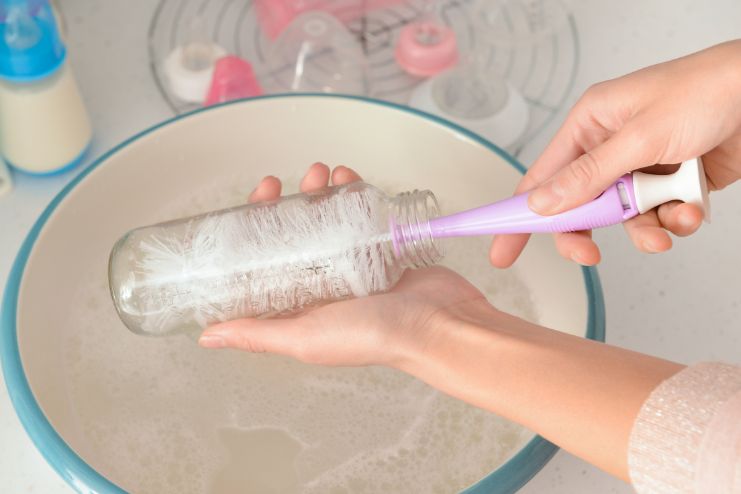
Bottle Brush
For those difficult-to-reach areas, you’ll require a baby bottle brush even if your bottles are dishwasher safe. Look for soft bristles and an integrated nipple cleaner for added convenience. It helps remove milk residue and maintains the cleanliness and safety of bottle feeding equipment. Please don’t use the same brush for all of your dishes; instead, use it specifically for bottles.
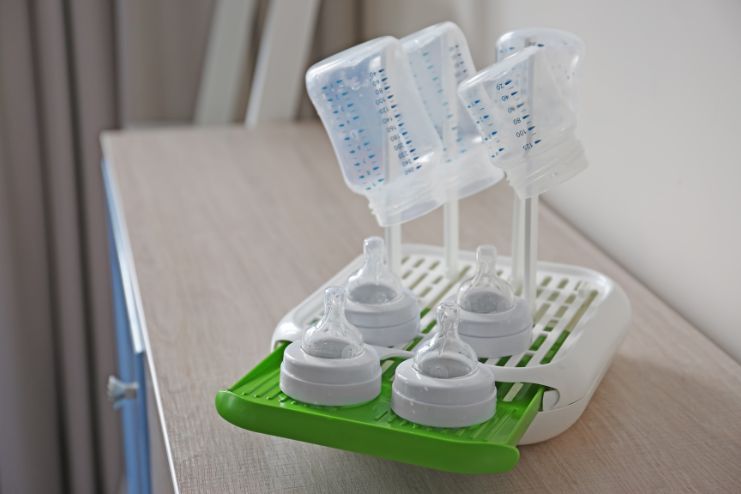
Bottle Drying Rack or Mat
Your bottle accessories stay dry, clean, and upright with a specialized bottle drying rack or mat. Towels may contain bacteria, so it’s best not to rely on them.
Bottle Sterilizer
You should routinely sterilize every component of your bottle if your child is premature or immunocompromised. Sterilizing bottles with an electric or microwave is quick and straightforward, but boiling them in water also works. Depending on the age or health of your child, ask your pediatrician how frequently to sterilize.
Formula Dispenser and Storage Containers
It’s a good idea to portion out your formula in advance, particularly for travel or nocturnal use. You can prepare your portions in advance with a formula dispenser container, saving you from having to scoop powder in the dark.
Bottle Warmer
bottle warmer can be a lifesaver for newborns who prefer warm milk, though not all do. It ensures even heating without creating hot spots and can also be helpful when combining pumped breast milk with prepared formula in one bottle. That said, some babies are perfectly happy drinking milk at room temperature or even cold. It’s absolutely fine to follow their lead.
Read More: Top 9 Baby Products Every New Parent Needs: Essentials for Baby Care
Conclusion
There is no magic number when it comes to how many baby bottles you’ll end up using, but for the average parent, six or eight should suffice. Not taking up too much space in your kitchen, this amount allows plenty of room for everyday use.
How often you sanitize or wash bottles, whether your baby attends daycare, how their needs evolve with age, and whether you breastfeed, formula-feed, or pump, all of these factors will influence how many bottles you’ll need.
The perfect plan? Start with a few and build from there. By doing this, you’re selecting the best types and sizes for your baby’s growth and also minimizing clutter.
A little planning and the proper equipment will prepare you for stress-free home feedings or on-the-go feedings for your baby.
References
- https://www.imperfecthomemaking.com/how-many-baby-bottles-do-i-need
- https://www.cnet.com/health/parenting/how-many-baby-bottles-you-need-to-buy
- https://www.whattoexpect.com/first-year/bottle-feeding/when-and-how-to-sterilize-baby-bottles
- https://www.consumerreports.org/babies-kids/baby-bottles/how-to-choose-the-best-baby-bottle-a6956214297
- https://www.tommeetippee.com/en-us/parent-library/newborn-baby/feeding/newborn-night-feeding
- https://raisingchildren.net.au/babies/sleep/settling-routines/night-weaning
- https://www.shellytaftibclc.com/preparing-for-night-feeds-tips-to-make-nighttime-breastfeeding-and-bottle-feeding-easier
In this Article