
















Joint pain is increasingly becoming a problem for millions of individuals as they get older or struggle with long-term conditions like osteoarthritis. Whether it’s the pain of morning stiffness, mobility loss, or the ongoing throb in your hips or knees, the effect on life can be substantial.
Enter collagen supplements—a popular wellness trend marketed as a natural solution for joint problems. Walk into any health store, and you’ll find collagen powders, capsules, and drinks claiming to restore cartilage, lubricate joints, and ease inflammation. But how much of this is mere hype, and how much is backed by science?
In this article, we’ll learn how collagen functions in the body, what the latest research reveals about its role in joint health, who might benefit the most, and how to choose the right supplement.
Read More: Collagen vs. Gelatin – Which One Should You Take for Skin & Joints?
What Is Collagen and Why Does It Matter for Joints?
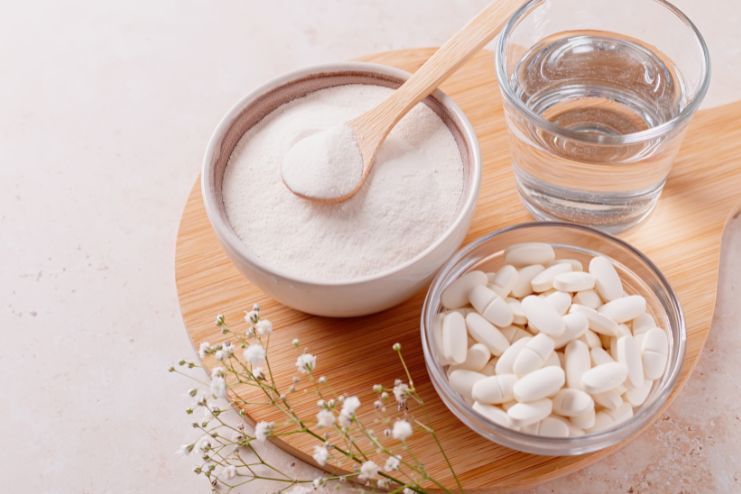
Collagen is the body’s most abundant protein. It’s the “glue” that keeps your body stuck together—beneath the skin, within bones, in muscles, tendons, and cartilage. As a structural protein, collagen contributes to the strength, elasticity, and rigidity of tissues.
When it comes to joint health, collagen is particularly vital since it has a significant proportion of cartilage, the smooth, friction-free tissue that lines bones and enables frictionless motion. With age or wear and tear, collagen levels drop, and cartilage becomes thinner or breaks down. This is where joint stiffness, cracking, and pain tend to manifest.
There are more than 20 forms of collagen, yet the three most important ones for the functioning of joints include:
Type II Collagen: The main building block of joint cartilage.
Type I Collagen: Present in tendons, ligaments, and bone.
Type III Collagen: Functions in conjunction with Type I in the connective tissue, such as skin and blood vessels.
The breakdown of these types of collagen is directly associated with osteoarthritis, which is characterized by cartilage erosion, inflammation, and pain within the joints. This makes collagen beneficial for both preventing joint issues and relieving existing symptoms.
How Collagen Supplements Work
Collagen supplements exist to replace your body’s waning supply of collagen. But not all collagen is the same. Three main varieties can be found in supplements:
Hydrolyzed Collagen (Collagen Peptides):
This form is hydrolyzed to shorter chains of amino acids or peptides, which the body can more easily absorb and use. It’s the most prevalent form used in studies involving the joints.
Undenatured Type II Collagen (UC-II):
This form is not hydrolyzed but maintains its natural structure. It is thought to act by controlling immune responses against joint cartilage.
Gelatin or Native Collagen:
Less commonly used in joint health supplements because it has less bioavailability.
Mechanisms of Action
Well, just exactly how do collagen supplements promote joints? Here’s how they help:
Stimulating Collagen Synthesis:
Collagen peptides can potentially work as signaling molecules that stimulate fibroblasts (cells tasked with producing collagen) to produce more collagen in connective tissues.
Enhancing Cartilage Matrix:
Collagen supplements might accumulate in cartilage and initiate glycosaminoglycan synthesis (such as hyaluronic acid), increasing cartilage density and lubrication.
Anti-inflammatory Effects:
Undenatured Type II collagen might induce immune tolerance, mitigating autoimmune-inflammatory responses in joint tissues, highly applicable to osteoarthritis.
Maintaining Overall Joint Health:
Collagen supplements frequently incorporate other nutrients such as vitamin C, which is essential for correct collagen synthesis.
The bioavailability and absorption also differ based on the form. Hydrolyzed collagen has been found to make it to the blood and accumulate in the joint tissues. On the other hand, UC-II might not be absorbed similarly but is active through an immunomodulatory action in the gastrointestinal tract.
What the Research Says About Collagen and Joint Pain

The medical science community has become increasingly interested in the therapeutic potential of collagen to alleviate joint pain, especially in individuals suffering from osteoarthritis and sports wear and tear.
Osteoarthritis and Joint Pain with Aging:
A double-blind, placebo-controlled study published in 2012 with 250 subjects who had knee osteoarthritis reported that subjects who consumed 10 g of hydrolyzed collagen daily for 6 months showed improved joint pain compared to the control (placebo).
A 2025 randomized controlled trial revealed that 40 days of daily consumption of hydrolyzed collagen resulted in significant decrease in knee pain, morning stiffness, and quality of life.
A study conducted in 2021 concluded that hydrolyzed collagen supplementation had a moderate effect on reducing pain and enhancing mobility in osteoarthritis patients. Nonetheless, the authors suggested larger, longer-duration studies because the sample sizes were small, and the study design varied.
Athletes and Active Individuals:
A 2017 paper in the Journal of Applied Physiology indicated that athletes who consumed collagen peptides before exercise had less joint pain and better mobility after 24 weeks.
According to another review, collagen supplements can be especially effective in reducing exercise-induced joint pain and increasing recovery speed.
Rheumatoid Arthritis (RA):
The case is weaker for inflammatory illnesses such as RA. Although UC-II collagen might help with immune modulation, there have been small and variable studies. A 2022 review by Versus Arthritis said that “there isn’t enough robust data to confirm benefits for rheumatoid arthritis” yet.
Read More: 10 Best Collagen Supplements for Hair Growth
Who May Benefit Most from Collagen Supplements?

Collagen isn’t a one-size-fits-all solution for joint pain, but it seems to help some populations more than others:
- Osteoarthritis patients benefit from the use of collagen. Collagen can slow cartilage breakdown and ease pain and stiffness.
- Middle-aged and older individuals find relief after using collagen supplements. With aging comes decreased production of collagen in the body, so supplements could preserve joint health.
- Collagen is taken by athletes and fitness enthusiasts as well. Collagen can provide resistance to repetitive strain and post-exercise joint aches.
- Collagen especially helps with joint injury recovery. Supplementation can help tissue healing and regeneration.
People with autoimmune arthritis (such as RA) will find little to no benefit, as existing data are sparse.
How to Select the Best Collagen Supplement

With the deluge of collagen products available, selecting the optimal one for joint health involves some cautious selection:
- Collagen Type:
Hydrolyzed collagen peptides are best researched and most commonly used for osteoarthritis and joint health.
Undenatured Type II collagen (UC-II) holds promise for immune regulation and is usually consumed in lower doses (usually 40 mg/day).
- Other Ingredients:
Opt for products that contain:
- Vitamin C – essential for collagen production
- Hyaluronic acid aids in lubricating the joints
- Glucosamine and chondroitin – aid in cartilage repair
- Collagen Source:
- Bovine or porcine is most common.
- Marine collagen might be more easily absorbed, but it will cause shellfish allergies.
- Chicken sternum collagen is high in Type II and utilized in UC-II products.
- Quality Control:
Go for third-party tested products that are NSF, USP, or Informed-Choice certified so that you can be sure you’re receiving a clean and effective product.
Read More: 7 Sleep Supplements That Actually Work—And 3 That Don’t (According to Science)
Who May Benefit Most from Collagen Supplements?
Nearly all studies indicate that collagen supplements will take 8–12 weeks of regular daily use before you notice any differences.
- Some people start feeling relief within 4–6 weeks, particularly when complemented with lifestyle changes.
- Results depend on age, degree of joint complaints, and type of supplement.
- Missing doses or irregular application will retard or reverse gains.
Are There Any Side Effects or Risks?

Collagen supplements are thought to be safe and well-tolerated, particularly when consumed within recommended doses.
Mild side effects include:
- Gas or bloating
- Terrible aftertaste
- Diarrhea (occasional)
- Allergic reactions (notably from marine or egg-derived collagen)
Caution:
- People with autoimmune diseases should consult a doctor before consuming UC-II, since it can modulate immune function.
- Individuals with shellfish or beef allergies must check the source of the collagen used.
Always read labels and opt for credible companies to reduce risk.
Other Lifestyle Tips for Joint Health

Collagen is at its best when supplemented with an overall joint-care program. Here’s how to maximize your joint health naturally:
- Exercise Regularly: Low-impact exercise (such as swimming or yoga) and strength training strengthen the muscles that support joints.
- Anti-inflammatory Diet: Eat omega-3s, turmeric, berries, leafy greens, and reduce processed foods.
- Hydration: Cartilage contains 70–80% water. Stay well-hydrated to facilitate joint lubrication.
- Healthy Weight: Excess weight strains joints, particularly the hips and knees.
- Stretching and Mobility Exercises: Maintain joint flexibility and avoid stiffness.
Supplements in Isolation aren’t enough—actual improvement happens when we pair them with regular, healthy routines.
Conclusion: Are Collagen Supplements Worth It for Joint Pain?
So, is collagen effective for joint pain?
Indeed, for most, but not all. The existing body of research is in favor of the moderate benefits of collagen supplementation, especially for osteoarthritis and exercise-induced joint stress. Both hydrolyzed collagen peptides and undenatured Type II collagen have yielded favorable results in reducing joint pain, enhancing mobility, and perhaps inhibiting cartilage breakdown.
But collagen isn’t a magic bullet. It must be considered within a larger joint wellness plan that incorporates movement, an anti-inflammatory diet, and other evidence-based therapies.
If you are having a hard time with joint pain and contemplating collagen, it’s certainly worth a conversation with your doctor, particularly if you’re already treating a condition like RA or taking medications. Used cautiously, though, collagen could indeed become a helpful tool for you on your journey to natural joint pain relief.
References
- https://www.sciencedirect.com/science/article/pii/S1756464623004383
- https://www.sciencedirect.com/science/article/pii/S2352340923003359
- https://pmc.ncbi.nlm.nih.gov/articles/PMC7222752/
- https://pubmed.ncbi.nlm.nih.gov/18416885/
- https://www.versusarthritis.org/media/23657/msk-research-case-for-support-nov20.pdf
- https://www.mdanderson.org/cancerwise/should-i-take-a-collagen-supplement.h00-159462423.html
In this Article