















Most people don’t start cycle tracking because they are curious about hormones. They start because premenstrual syndrome tracking (PMS) has started interfering with real life, work deadlines feel heavier, emotions feel unpredictable, energy crashes without warning, and the same pattern repeats every month.
At some point, almost everyone thinks that “I’m tracking my cycle, so I should understand my symptoms by now.”
But here’s the uncomfortable truth:
Tracking by itself doesn’t guarantee insight. Many people are tracking regularly, and still missing what their body is actually trying to show them. The problem isn’t a lack of effort. It’s how cycle tracking is being done.
Most PMS cycle tracking mistakes are subtle. They don’t look like mistakes. They look like “doing everything right,” logging dates, opening an app daily, checking predictions, while the real signals go unnoticed.
This article breaks down 7 PMS and cycle-tracking mistakes that quietly block understanding, delay relief, and make PMS feel more confusing than it needs to be.
7 PMS and Cycle-Tracking Mistakes We Wish We’d Fixed Earlier
1. Tracking Only Period Start and End Dates
Many people reduce cycle tracking to one habit: marking the first and last day of bleeding. Dates are useful, but they don’t explain PMS.
Hormonal fluctuations that cause PMS happen before the period starts, often days or even weeks earlier. Tracking only bleeding days ignores:
- Mood changes
- Sleep disturbances
- Bloating patterns
- Breast tenderness
- Anxiety or irritability
- Food cravings
- Energy crashes
Period dates tell you when bleeding happened. They don’t tell you why you felt the way you did. Thus, PMS symptom tracking needs context, not just calendar data.
What actually helps:
- Noting when premenstrual symptoms begin, not just when bleeding starts
- Tracking intensity (mild, moderate, severe)
- Observing changes across the full cycle, not only during periods
Without this, PMS feels random, even when it’s not.
2. Ignoring the Luteal Phase
This is one of the most common PMS tracking mistakes. Most PMS symptoms occur during the luteal phase, the time between ovulation (usually around the 18th day of a normal 28-day cycle) and the next period. This is when progesterone rises, estrogen fluctuates, body temperature shifts, fluid retention increases, and brain chemistry responds differently to stress.
Ignoring this phase leads to confusion, like:
- “I feel fine most of the month, then suddenly everything goes wrong”
- “My mood changes overnight”
- “My body betrays me every cycle”
It’s not sudden. It’s predictable if the luteal phase is tracked.
What many trackers miss:
- Ovulation timing (even roughly)
- Symptom onset after ovulation
- Length of the luteal phase itself
Understanding this phase changes PMS from a mystery into a pattern.
3. Assuming All PMS Is “Normal”

Another silent mistake: normalising everything.
Yes, mild discomfort before periods is common.
No, suffering is not something to automatically accept.
PMS tracking mistakes often happen when people tell themselves:
- “Everyone feels this way”
- “It’s just hormones”
- “I should tolerate this”
Symptoms that deserve attention:
- Mood changes affecting relationships or work
- Intense anxiety, anger, or low mood
- Physical pain that disrupts routine
- Symptoms worsening every cycle
When PMS is considered “normal,” data gets ignored, and help gets delayed. Tracking should clarify what’s common and what’s excessive.
4. Relying Solely on an App’s Predictions
Cycle tracking apps are helpful tools, not decision-makers. Most apps predict cycles using averages. They assume:
- Regular cycles
- Stable ovulation
- Predictable hormone patterns
In reality, individual human bodies don’t run on averages. Problems arise when people:
- Trust predicted ovulation tracking dates blindly
- Assume cycles are “regular” because the app says so
- Ignore physical signals that don’t match the calendar
Period apps’ accuracy drops when:
- Stress levels change
- Sleep patterns shift
- Weight fluctuates
- Illness or travel disrupts routine
Cycle tracking PMS patterns works best when:
- App predictions are combined with real symptoms
- Body signals are trusted over notifications
- Flexibility is allowed month to month
Your body does not follow software updates.
5. Not Tracking Mood, Energy, and Cravings
Many people track physical symptoms only, such as cramps, headaches, and bloating. But PMS is often emotional and cognitive first. As UCLA Health OBGYN Dr. Quy Nguyen explains, hormonal changes across the cycle don’t just affect the body; they affect the brain as well:
“During your menstrual cycle, you experience rising and dropping of both estrogen and progesterone levels. Your body is sensitive to those hormonal changes,” Dr. Nguyen says. “And studies have shown that your menstrual cycle may also influence the neurotransmitters, like serotonin, in your brain.”
These shifts in neurotransmitters can contribute to behavioural symptoms such as anxiety, low mood, emotional reactivity, or difficulty regulating emotions, often before physical PMS symptoms appear.
Hormone-related mood changes show up as:
- Reduced patience
- Mental fog
- Low motivation
- Social withdrawal
- Increased cravings
- Sensitivity to stress
Ignoring these creates incomplete data.
What helps:
- Noting mood shifts in simple words (irritable, flat, anxious)
- Tracking energy levels, not productivity
- Observing craving patterns without judgement
These signals often appear before physical symptoms, acting as early warnings.
6. Expecting Immediate Answers After One or Two Cycles
Cycle tracking is about trends, not instant conclusions. One of the most frustrating PMS tracking mistakes is expecting clarity too fast.
Patterns need repetition. Common expectations:
- “I tracked two cycles. Why don’t I see answers?”
- “Nothing makes sense yet”
- “Maybe tracking doesn’t work for me”
Mistakes made here:
- Changing supplements every cycle
- Adjusting diet weekly based on symptoms
- Declaring tracking ineffective too soon
In reality:
- 3–6 cycles reveal meaningful trends
- Stress or illness can disturb single months
- Consistency matters more than perfection
As Newson Health GP and Menopause Specialist Dr. Clair Crockett explains:
“Sometimes it’s not until you track when your periods are coming and what else you are noticing through your cycle that you realise something might be afoot. Looking back over a period of weeks or months can really help you establish what could be happening so you can feel empowered to reflect on what you have learned through doing this and consider what you might want to do about it.”
This is why cycle tracking works best as a long-term awareness tool, not a quick diagnostic shortcut.
Skipping months, changing tracking styles frequently, or stopping early resets the learning process. Cycle tracking PMS data works like research, not guesswork.
7. Not Adjusting Lifestyle Based on Cycle Data
This may be the most overlooked mistake. Tracking without action turns awareness into frustration. Many people log symptoms faithfully, then change nothing. Cycle awareness is meant to guide decisions:
- Planning demanding work earlier in the cycle
- Reducing exercise intensity during the late luteal phase
- Adjusting nutrition when cravings increase
- Scheduling rest intentionally
Without adjustments:
- PMS feels inevitable
- Tracking feels pointless
- Data stays unused
Menstrual cycle tracking tips only work when they influence real choices.
Read More: How to Tell If You’re Ovulating: Key Signs Your Body Gives You
What Better Cycle Tracking Can Actually Help With
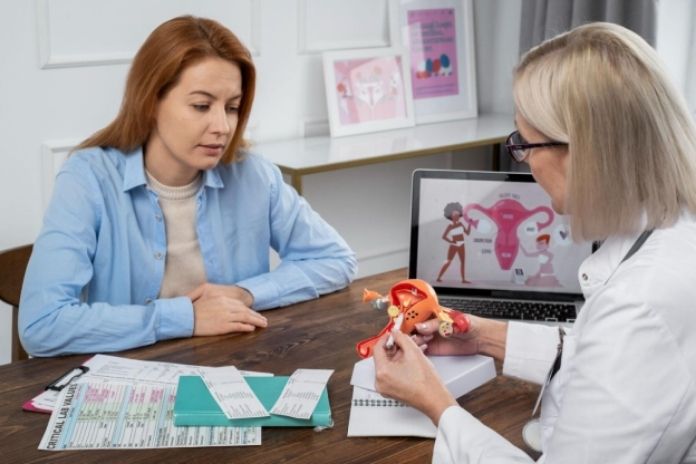
When PMS cycle tracking mistakes are corrected, tracking becomes useful, not obsessive. Better tracking can help with:
- Anticipating PMS instead of being surprised by it.
- Reducing symptom severity through timely adjustments.
- Recognising early signs of disturbed estrogen-progesterone balance.
- Communicating symptoms clearly to healthcare providers.
- Feeling less controlled by monthly changes.
It doesn’t eliminate PMS overnight. It gives predictability and control.
Read More: How to Treat Severe Lower Back Pain During Your Period: Relief Strategies and When…

Tracking also helps identify when PMS is no longer just normal PMS. Medical evaluation is important if you notice:
- Severe mood changes or depressive symptoms
- Anxiety or anger that feels unmanageable
- PMS lasting more than 7–10 days
- Severe fatigue that doesn’t improve with rest
- Headaches or migraines before every cycle
- Digestive upset that repeats monthly
- Patterns suggesting PMDD (Premenstrual Dysphoric Disorder, a similar but severe form of PMS) or other hormonal issues
Cycle data becomes evidence, not complaints.
Read More: 9 Best PMS Supplements That May Help with Mood Swings and Bloating
Final Takeaway
PMS tracking isn’t about becoming perfect at logging data. It’s about refining how you observe your body. Most PMS cycle tracking mistakes come from incomplete methods, not personal failure. When tracking focuses on patterns instead of dates, phases instead of predictions, and action instead of awareness alone, clarity improves.
You’re not bad at tracking. Your system may just need correction.
Key Takeaways
- Most period tracking mistakes come from focusing on dates instead of hormonal phases.
- The luteal phase holds the most useful PMS data, yet is often ignored.
- Emotional and energy changes are early indicators, not side notes.
- Apps predict averages, bodies respond to real life.
- There is limited long-term data on personalised, symptom-based cycle tracking outside app-driven models, especially across varied lifestyles and stress levels.
FAQs
1. How long should I track my cycle to understand PMS patterns?
At least 3–6 cycles are needed to identify reliable trends.
2. Is PMS the same every month?
No. Stress, sleep, diet, and menstrual health changes can shift symptoms.
3. Can cycle tracking reduce PMS symptoms?
Indirectly, yes, by helping you adjust lifestyle choices earlier.
4. Are period tracking apps accurate for PMS prediction?
They offer estimates, not guarantees. Symptoms matter more.
5. When should PMS be considered a medical issue?
When symptoms are severe, worsening, or disrupt daily life.
References
- Apsey, C. J., Di Florio, A., & Stawarz, K. (2024). Developing a Mood and Menstrual Tracking app for people with Premenstrual Dysphoric Disorder: A User-Centered Design Study (Preprint). JMIR Formative Research, 8
- Gudipally, P. R., & Sharma, G. K. (2023, July 17). Premenstrual Syndrome. PubMed; StatPearls Publishing.
- Queensland Government. (2023, March 23). Breaking the cycle: a guide to understanding and managing premenstrual dysphoric disorder (PMDD). Queensland Health.
In this Article