











Wellness trends spread fast on social media. They promise quick fixes amid rampant health misinformation. Many lack scientific evidence and fail long term.
These viral fads often prioritize hype over sustainability, leading to weight fluctuations that undermine real progress. Instead, proven strategies rooted in science offer a reliable path to lasting well-being.
This article explores 12 popular fads that have been tested, why they fell short, and proven alternatives backed by science.
Why Trends Spread Fast
Wellness fads thrive on emotional appeal, offering control, hope, and simplicity in a complex world. Algorithms amplify influencer testimonials and before-and-after photos, creating social proof despite limited evidence.
Not all trends are harmful, but most deliver short-term hype over measurable benefits, such as sustained energy or weight loss.
“Longevity does not come from hacks… Your liver already has a detox system,” said Dr. Peter Attia, US longevity expert and physician.
1. Juice Cleanses for Detoxing
Juice cleanses promise toxin flushes but ignore the liver and kidneys’ natural efficiency in filtering waste.
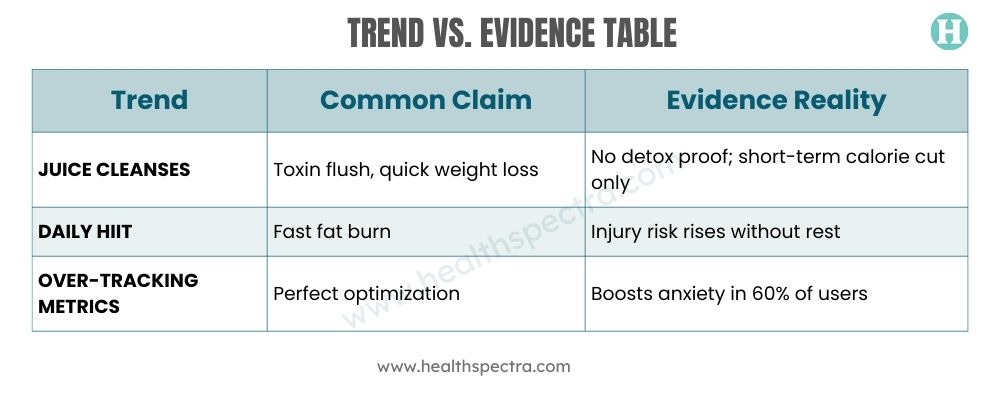
Studies show no scientific support for detox claims. Any weight loss stems from calorie deficits, often leading to rebound gain, fatigue, and nutrient gaps.
What Worked Instead:
Build balanced meals featuring whole fruits, vibrant vegetables, ample hydration, and fiber-rich foods to naturally support your body’s steady detox processes. These nutrient-dense choices enhance digestion, promote toxin elimination through regular bowel movements, and maintain optimal fluid balance for cellular health.
Prioritize varieties like leafy greens, berries, legumes, and water-rich produce for sustained energy and gentle, effective cleansing without extreme measures.
Read More: 6 Popular Detox Trends That Could Be Doing More Harm Than Good
2. Cutting Entire Food Groups
Eliminating carbs or fats feels disciplined but risks deficiencies in magnesium, fiber, and B vitamins, triggering rebound overeating.
Without medical need, this disrupts metabolism and gut health.
What Worked Instead:
Tailor nutrition plans to your unique needs, lifestyle, and preferences for true flexibility and adherence. Emphasize variety through diverse whole foods like rotating proteins, grains, and produce to prevent boredom and ensure broad nutrient coverage.
This approach fosters sustainable habits that adapt as your goals or circumstances evolve.
3. Extreme Morning Routines

Rigid schedules such as 5 a.m. wake-ups and multi-step rituals spike cortisol, increasing stress rather than reducing it.
Consistency trumps complexity for habit formation.
What Worked Instead:
Corporate simple routines such as 10-minute walks to boost circulation and mood with minimal effort. Pair them with gratitude journaling to cultivate mental resilience by simply noting three things you’re thankful for daily.
These low-barrier habits compound over time for lasting well-being without overwhelming your schedule.
4. Supplements for Fatigue or Stress
Pills for hormones or energy often fail without diet fixes, with studies linking persistent use to higher fatigue incidence.
Absorption limits and interactions reduce efficacy.
What Worked Instead:
Prioritize a food-first approach by focusing on nutrient-dense whole foods like fruits, vegetables, lean proteins, and whole grains to meet most nutritional needs effectively. These provide bioavailable vitamins, minerals, fiber, and antioxidants that support overall health and disease prevention.
Reserve targeted supplements only for confirmed deficiencies identified through testing, as recommended by guidelines from sports nutrition and functional medicine experts.
Trend vs. Evidence Table
Popular claims often outpace science: discover the reality check below.
5. Daily Cold Exposure
Cold plunges boost brown fat activity but show inconsistent weight loss or energy gains in humans. Claims exceed evidence for broad benefits.
What Worked Instead:
Prioritize quality sleep with 7-9 hours nightly to recharge your body and sharpen focus. Focus on consistent movement, like brisk walks or yoga, for vitality without exhaustion.
Pair these with proven stress reduction techniques to build resilience and protect long-term health.
6. Over-Tracking Metrics

Constant app checks for steps or HRV turn health into an obsession, raising anxiety via “data doom-scrolling.” Moreove, numbers rarely capture holistic well-being.
What Worked Instead:
Opt for selective tracking, like one weekly weigh-in, paired with intuitive body cues such as energy levels and how clothes fit. This minimizes obsession while providing meaningful feedback on progress.
It fosters a healthier relationship with your body, emphasizing sustainability over constant monitoring.
Read More: 6 Women’s Health Trends to Watch in 2025 (Backed by Data)
7. High-Intensity Workouts Daily
HIIT builds fitness, but daily sessions heighten overtraining, knee or shoulder injuries, and osteoarthritis risk. Recovery drives progress.
What Worked Instead:
Craft balanced plans with 3-4 HIIT days weekly to torch calories and build strength efficiently. Follow with rest or gentle yoga to promote recovery, flexibility, and injury prevention.
This rhythm sustains energy, muscle growth, and long-term adherence without overtraining.
8. Rigid “Clean Eating”

Strict no-sugar or processed rules harm mental health, fostering orthorexia and social isolation. Flexibility prevents nutritional blind spots.
What Worked Instead:
Embrace the 80/20 rule: fuel your body with whole foods 80% of the time for optimal nutrition and energy. Allow 20% for occasional treats to keep things enjoyable and sustainable without guilt.
This balanced approach prevents burnout and supports long-term adherence to healthy habits.
9. Biohacking Basics
Gadgets like red lights, skip sleep, and nutrition foundations where evidence favors fundamentals.
What Worked Instead:
Master the essentials first, including prioritizing quality sleep, nourishing meals, and consistent movement as your foundation for sustainable wellness. These core habits regulate energy, hormones, and metabolism more effectively than any advanced tweak.
Once solid, they amplify everything else you add to your routine.
Read More: Why Mushroom Coffee Is Taking Over Wellness Trends
10. Eliminating Stress
Zero-stress ideals backfire, amplifying anxiety through avoidance.
What Worked Instead:
Incorporate regulation tools like breathwork to calm the nervous system and lower cortisol in moments of stress. Practice mindfulness through short, focused sessions to build emotional awareness and resilience.
These accessible techniques complement daily routines for balanced mental and physical health.
11. Influencer Advice Over Doctors
Social stars often lack medical training and personalization, spreading unverified info that prioritizes trends, sponsorships, or personal anecdotes over evidence.
For instance, influencers may push specific probiotic brands via affiliate links without disclosing financial ties or considering individual risks like preeclampsia associations noted in recent meta-analyses.
This can lead pregnant women to unsafe choices, such as untested supplements, as platforms like Instagram amplify misinformation on fertility, safety, and miracle benefits without scientific backing.
Doctors, by contrast, base recommendations on your health history, lab results, and guidelines from bodies like ACOG, ensuring tailored, low-risk advice amid evolving research on probiotics’ mixed pregnancy outcomes.
What Worked Instead:
Consult MDs (medical doctors) for comprehensive health assessments, medical oversight, and diagnosing underlying issues that impact wellness. Seek RDs (registered dietitians) for expert nutrition guidance, personalized meal plans, and evidence-based strategies to optimize diet sustainably.
Together, they deliver integrated and science-backed care tailored to your unique needs and long-term goals.
12. Fast Lifestyle Results
Physiological changes such as fat loss take a minimum of 4-12 weeks.
What Worked Instead:
Track non-scale wins like sustained energy throughout the day and a brighter mood as true markers of progress. These shifts often precede visible changes and reflect deeper metabolic and hormonal balance.
Celebrate them through journaling or apps to stay motivated on your sustainable wellness path.
Read More: Decoding Wellness Trends: Which Ones Are Worth Your Time?
Why Trends Convince
Wellness trends captivate through emotional marketing that simplifies complex health challenges into appealing quick fixes. Social proof on platforms like TikTok and Instagram amplifies influencer success stories, creating widespread validation despite thin evidence.
These fads often ignore behavior change science, which emphasizes gradual and sustainable shifts over dramatic overhauls for lasting results.
Long-Term Winners

Long-term health thrives on proven fundamentals like 7-9 hours of consistent sleep nightly to regulate hormones and restore energy. Enjoyable movement for 150+ minutes weekly builds endurance without burnout, tailored to personal preferences. Balanced plates featuring vegetables, protein, and fats deliver sustained nutrition for metabolic health.
Mastering stress regulation skills alongside regular medical check-ins ensures personalized and evidence-based progress.
Read More: Top 8 Fitness Trends That Are Revolutionizing Workouts
Key Takeaways
Wellness trends chase quick wins over lasting habits. This often leads to short results and frustrating setbacks.
Focus on Fundamentals:
- Give your body the recovery it deserves with consistent, quality sleep for around 7–9 hours.
- Move often, find forms of activity you genuinely enjoy, and aim for 150+ minutes each week.
- Nourish yourself with a balanced diet packed with vegetables, lean proteins, and healthy fats.
- Support your mental and physical health through effective stress regulation and regular medical check-ins.
Evidence Over Hype
Consult professionals for personalized, evidence-based plans tailored to your life that promote sustainable health over fad pitfalls.
For your next step, consider bringing this article or your questions to your prenatal visit and asking your provider which probiotic or gut-health approach fits your specific pregnancy needs.
References
- Gallop, M. R., et al. (2025). A long-term ketogenic diet causes hyperlipidemia, liver steatosis, and glucose intolerance in mice. Science Translational Medicine.
- Tan, L., et al. (2023). Essential oils for treating anxiety: A systematic review of randomized controlled trials. Complementary Therapies in Clinical Practice.
- Makkapati, S., et al. (2018). “Green smoothie cleanse” causing acute oxalate nephropathy. American Journal of Gastroenterology.
- Allan, R., et al. (2017). Is the ice bath finally melting? Cold water immersion is no greater than active recovery upon local and systemic inflammatory cellular stress in humans. The Journal of Physiology.
- Hamer, O., et al. (2023). Intermittent fasting for the prevention of cardiovascular disease. Cureus.
- National Center for Complementary and Integrative Health. (2023). “Detoxes” and “cleanses”: What you need to know.
- Quach, D., et al. (2016). A randomized controlled trial examining the effect of mindfulness meditation on working memory capacity in adolescents. Applied Developmental Science.
- Schermer, E. E., et al. (2022). Healthy lifestyle over the life course: Population trends and average individual change over 30 years. Preventive Medicine.
- Yankouskaya, A., et al. (2023). Short-term head-out whole-body cold-water immersion facilitates positive affect and increases interaction between large-scale brain networks. Scientific Reports.
- Firth, J., et al. (2019). The efficacy and safety of nutrient supplements in the treatment of mental disorders: A meta-review of meta-analyses of randomized controlled trials. World Psychiatry.
- D’Elia, L., et al. (2020). 100% Fruit juice intake and cardiovascular risk: A systematic review and meta-analysis of prospective and randomised controlled studies. European Journal of Nutrition.
- Panossian, A., et al. (2010). Effects of adaptogens on the central nervous system and the molecular mechanisms associated with their stress-protective activity. Pharmaceuticals.
- Thieme, G. (2013). No benefit adding eleutherococcus senticosus to stress management training. Forschende Komplementarmedizin.
- National Cancer Institute. (2007). Aromatherapy with essential oils.
- National Institutes of Health. (2021). Do detox diets and cleanses work?
- National Center for Biotechnology Information. (2023). The ketogenic diet: Clinical applications, evidence-based mechanisms.
- Ablah, E., et al. (2019). The cons of traditional worksite wellness interventions and a proposed way forward. Preventing Chronic Disease.
- Mujtaba, B. G., et al. (2013). Corporate wellness programs: Implementation challenges. International Journal of Public Leadership.
In this Article