













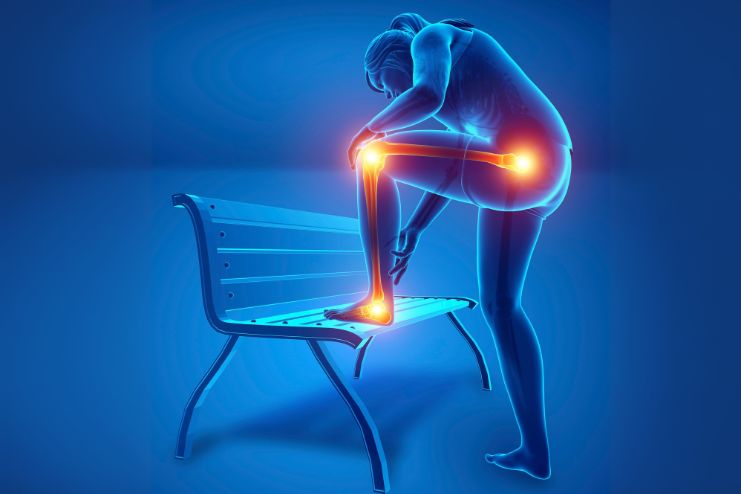
Sciatica is a common condition affecting millions of people worldwide, characterized by pain, numbness, and tingling sensations that radiate along the sciatic nerve pathway from the lower back down through the legs. This debilitating condition often stems from herniated discs, muscle imbalances, spinal stenosis, or prolonged sitting with poor posture.
Fortunately, yoga offers a natural and effective approach to managing sciatica pain. Research has shown that regular yoga practice can improve flexibility, reduce inflammation, strengthen the core and lower back muscles, and help realign the spine—all of which contribute to relieving pressure on the sciatic nerve.
This comprehensive guide explores the causes and symptoms of sciatica before presenting eight of the most effective yoga poses for pain relief and improved mobility. Whether you’re seeking gentle stretches or more targeted poses to address sciatic nerve compression, these carefully selected asanas can serve as a powerful complement to your pain management routine.
Understanding Sciatica: Symptoms and Causes
Common Symptoms of Sciatica Pain
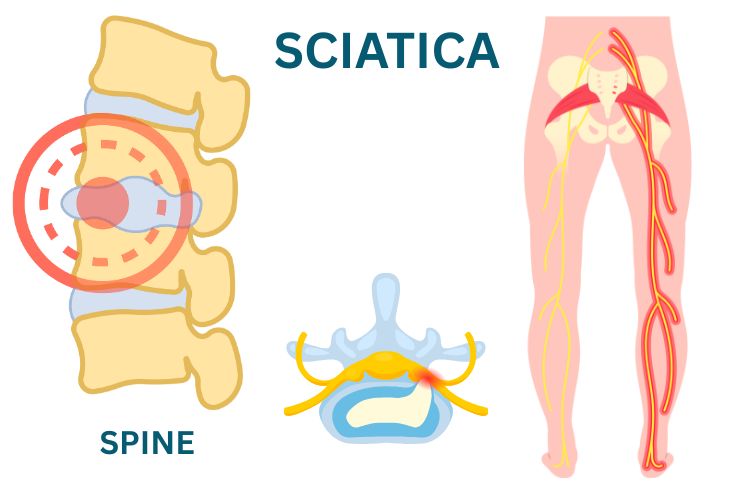
The sciatic nerve, the longest nerve in the human body, extends from the lower back through the hips, buttocks, and down each leg. When this nerve becomes compressed or irritated, it can cause various symptoms including:
- Pain: Sharp, shooting, or burning pain that travels from the lower back through the buttocks and down the back of the thigh, sometimes extending to the calf or foot
- Numbness and tingling: Often described as a “pins and needles” sensation, typically affecting one side of the body
- Muscle weakness: Difficulty lifting the foot (foot drop) or weakness when standing or walking
- Reduced mobility: Stiffness and limited range of motion in the affected leg
- Sensory changes: Altered sensations or reduced reflexes in the knee or Achilles tendon
These symptoms may worsen with certain activities like sitting, bending, coughing, or sneezing. If symptoms persist or worsen, it’s essential to consult a healthcare professional for proper diagnosis and treatment.
Also, Read: Thriving Through Chronic Pain: Advanced Coping Strategies for Improved Quality of Life
Primary Causes of Sciatica
Sciatica typically results from compression or irritation of the sciatic nerve due to various underlying spinal conditions:
Herniated Disc: The most common cause, occurring when the soft inner material of a spinal disc pushes through the outer ring, pressing against the sciatic nerve.
Piriformis Syndrome: A condition where the piriformis muscle in the buttocks becomes tight or inflamed, compressing the sciatic nerve that runs nearby or through the muscle.
Spinal Stenosis: Narrowing of the spinal canal that puts pressure on the nerves, including the sciatic nerve.
Spondylolisthesis: A condition where one vertebra slips forward over the vertebra below it, potentially compressing nerve roots.
Degenerative Disc Disease: Age-related wear and tear of spinal discs that can lead to nerve compression.
Lifestyle Factors: Prolonged sitting, poor posture, lack of exercise, and sudden movements can contribute to sciatic nerve irritation.
How Yoga Helps with Sciatica Relief
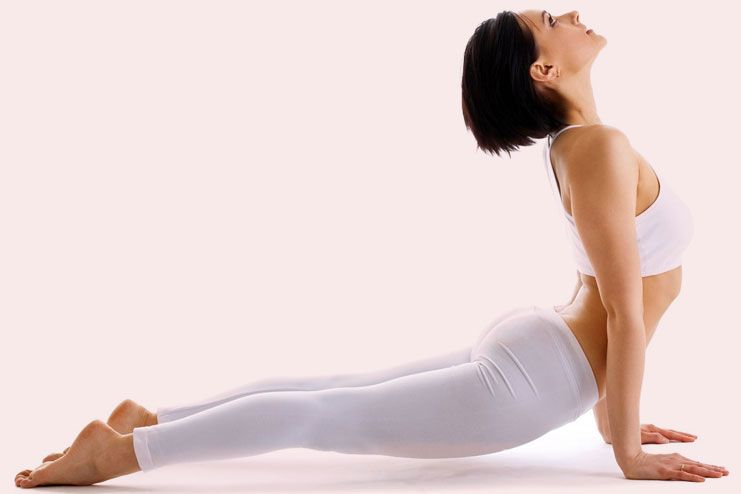 Yoga has been practiced for thousands of years and offers numerous benefits for those suffering from sciatica. Research, including a 2013 study, has found that specific yoga poses such as Cobra Pose and Locust Pose can be useful in improving sciatica symptoms by relieving pain, tenderness, and stiffness.
Yoga poses that involve stretching of the hip flexors, hamstrings, and glutes are especially beneficial for lower back pain and sciatica. The practice works by:
- Improving spinal alignment: Gentle stretches help realign the spine and reduce pressure on compressed nerves
- Strengthening supporting muscles: Core and back strengthening poses provide better support for the spine
- Increasing flexibility: Regular practice improves range of motion and reduces muscle tension
- Promoting relaxation: Mindful movement and breathing techniques help reduce stress and muscle tension
- Enhancing circulation: Improved blood flow aids in healing and reduces inflammation
Also, Read: What Is Somatic Yoga? A Beginner’s Guide to This Gentle Movement Practice
8 Effective Yoga Poses for Sciatica Relief
1. Reclining Big Toe Pose (Supta Padangusthasana)
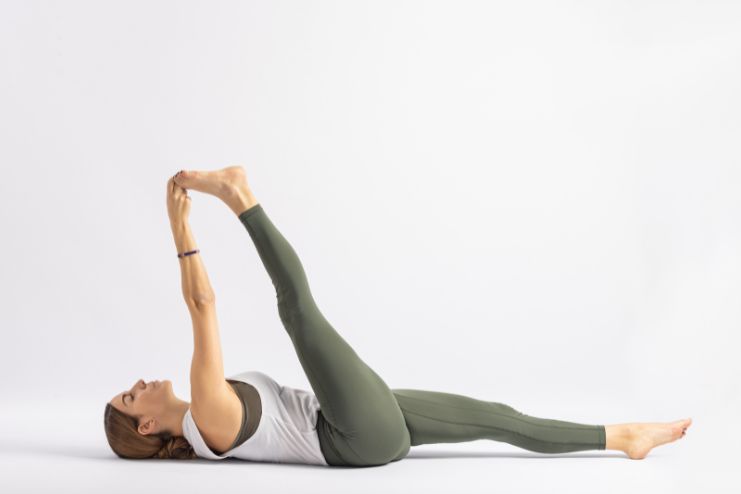
This gentle pose provides an excellent stretch for the hamstrings, calves, and lower back while maintaining complete support for the spine.
How to Practice:
- Lie flat on your back with both legs extended
- Place a yoga strap or belt around the ball of your right foot
- Slowly lift your right leg toward the ceiling, keeping the left leg grounded
- Flex your right foot and press your lower back firmly into the mat
- Hold for 2-3 minutes while breathing deeply
- Bend the right knee to your chest before lowering it down
- Repeat with the left leg
Modification: If you have limited flexibility, slightly bend the raised knee or use a longer strap to prevent strain.
Buy Trideer Stretching Yoga Strap
2. Staff Pose (Dandasana)
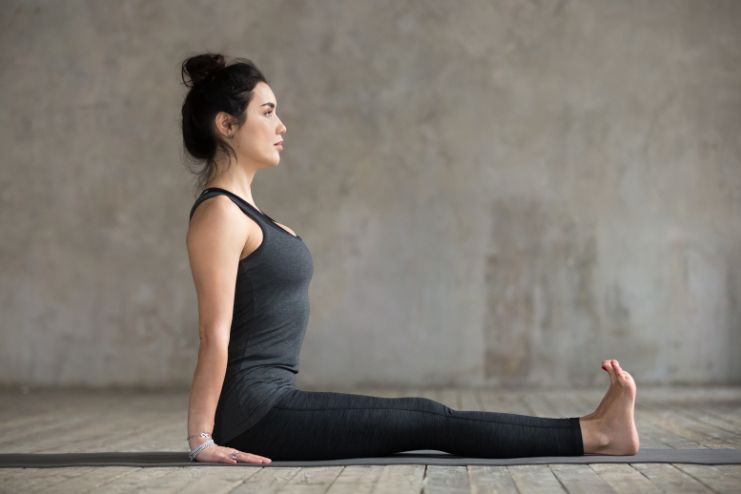
This fundamental seated pose strengthens the lower back, improves posture, and gently stretches the hamstrings.
How to Practice:
- Sit on the floor with legs extended straight in front of you
- Place your palms flat on the floor beside your hips with arms straight
- Flex your feet and engage your thigh muscles
- Lengthen your spine by lifting through the crown of your head
- Relax your shoulders and breathe deeply for 30-60 seconds
Modification: If you experience tightness in the hamstrings or difficulty sitting upright, place a pillow or folded blanket under your hips for elevation.
3. Modified Pigeon Pose (Eka Pada Rajakapotasana)
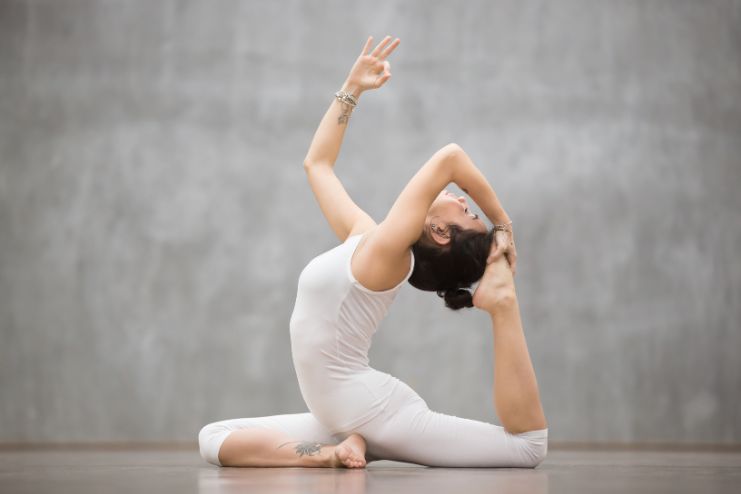
This pose targets the deep piriformis muscle, hip flexors, and lower back, helping to relieve sciatic nerve compression.
How to Practice:
- Begin in tabletop position (hands and knees)
- Bring your right knee forward and place it behind your right wrist
- Extend your left leg straight back, with the top of your foot on the mat
- Square your hips and slowly lower your upper body forward
- Rest on your forearms or extend your arms in front of you
- Hold for 30 seconds to 2 minutes, breathing deeply
- Return to tabletop and repeat on the other side
Modification: Place a folded blanket under your front hip for support if the pose feels too intense.
4. Standing Forward Fold with Chair Support (Uttanasana Chair)

This variation of a standing forward fold provides gentle traction for the spine while stretching the hamstrings and lower back.
How to Practice:
- Stand facing a sturdy chair or table
- Place your hands on the seat of the chair
- Step back until your arms are extended and your torso is parallel to the floor
- Keep your knees slightly bent and your spine long
- Gently shift your weight back toward your heels
- Hold for 30 seconds to 1 minute, breathing deeply
Modification: Adjust the height of the support surface to find your comfortable range of motion.
5. Cow Face Pose (Gomukhasana)
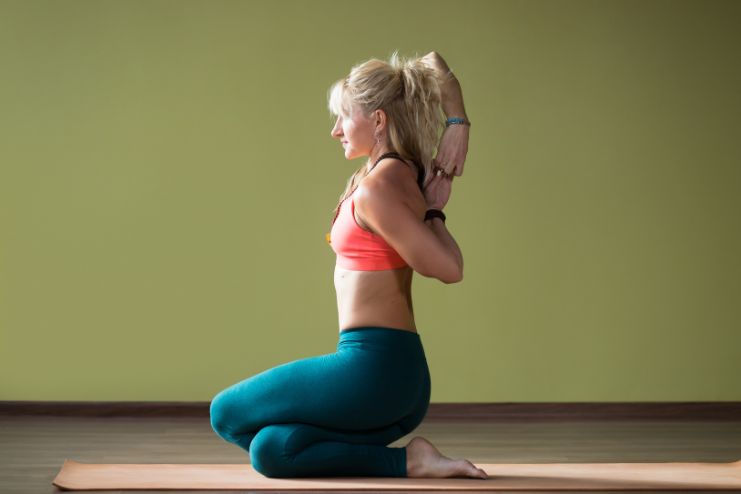
This seated pose opens the hips and stretches the piriformis muscle, which can help alleviate sciatic nerve compression.
How to Practice:
- Sit in Staff Pose with legs extended
- Bend your right knee and place your right foot near your left hip
- Bend your left knee and stack it on top of your right knee
- Bring your left foot toward your right hip
- Sit up tall and place your hands on your feet or shins
- Hold for 30 seconds to 1 minute, breathing deeply
- Release and repeat on the other side
Modification: If stacking the knees is uncomfortable, sit on a folded blanket or keep the bottom leg extended.
6. Gentle Seated Spinal Twist (Ardha Matsyendrasana)
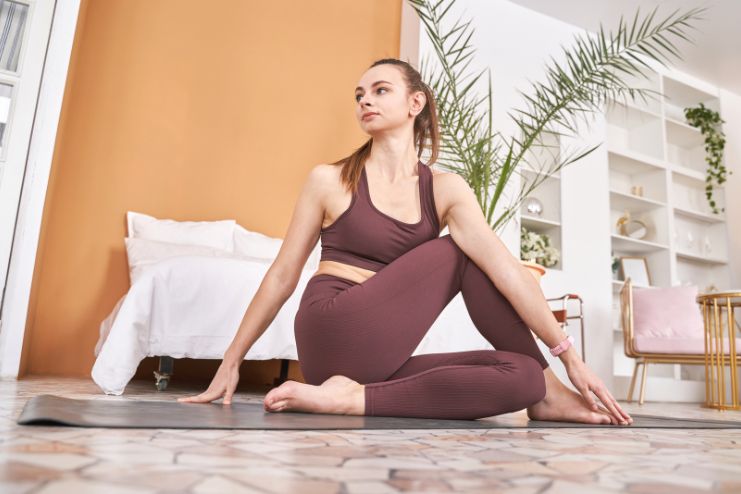
This pose helps decompress the spine and stretch the lower back muscles while improving spinal mobility.
How to Practice:
- Sit in Staff Pose with legs extended
- Bend your right knee and place your right foot flat on the floor outside your left thigh
- Keep your left leg straight and grounded
- Place your left hand on your right knee
- Put your right hand behind you for support
- Gently twist your torso to the right, leading with your chest
- Hold for 30 seconds to 1 minute, then repeat on the other side
Modification: If the twist feels too intense, simply hold your knee with your opposite hand rather than placing your elbow outside the knee.
7. Simple Cross-Legged Twist (Parivrtta Sukhasana)

This gentle twist releases tension in the lower back and increases spinal flexibility without excessive strain.
How to Practice:
- Sit comfortably in a cross-legged position
- Place your right hand on your left knee
- Put your left hand on the floor behind you for support
- Inhale to lengthen your spine
- Exhale and gently twist to the left, keeping the movement controlled
- Hold for 30 seconds to 1 minute, breathing deeply
- Return to center and repeat on the other side
Modification: If sitting on the floor is uncomfortable, perform this twist while seated in a chair with both feet flat on the ground.
8. Supported Standing Hamstring Stretch (Utthita Hasta Padangusthasana)
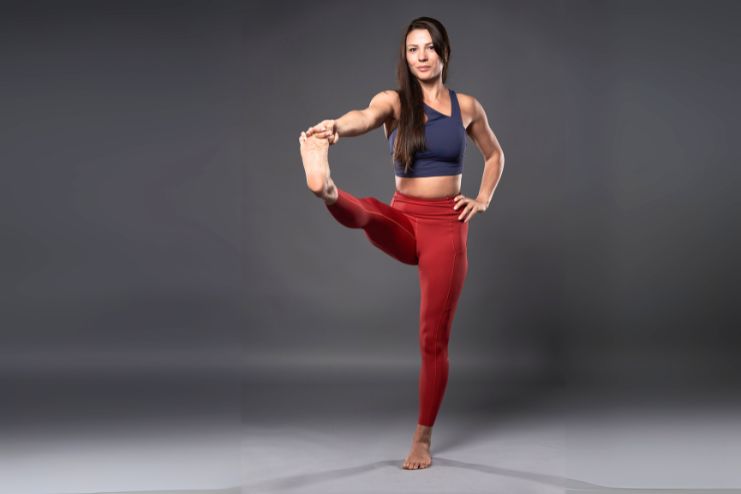
This pose effectively stretches the hamstrings while reducing pressure on the sciatic nerve.
How to Practice:
- Stand tall with your core engaged
- Place your right foot on a table, chair, or other sturdy surface at hip height or lower
- Keep your right leg straight and your hips level
- Place your hands on your waist or the supporting surface
- Gently lean forward with a straight spine
- Hold for 30 seconds to 1 minute
- If needed, use a yoga strap around your foot for support
- Release and repeat with the left leg
Modification: Keep your raised knee slightly bent to prevent strain and adjust the height of the support surface as needed.
Also, Read: Chair Yoga for Seniors: Simple Moves to Improve Strength and Flexibility
Important Safety Considerations
While yoga can be highly beneficial for sciatica relief, it’s crucial to practice safely:
- Listen to your body: Avoid positions that cause discomfort, as yoga poses should provide relief, not increase pain
- Start slowly: Begin with gentle poses and gradually increase intensity as your flexibility improves
- Maintain proper alignment: Focus on correct form rather than deep stretching
- Breathe deeply: Use conscious breathing to help relax muscles and reduce tension
- Consult professionals: Consult a healthcare provider before beginning a yoga practice, especially if you have severe or persistent symptoms
Conclusion
Incorporating yoga into your daily routine can provide significant relief from sciatica pain through natural, gentle methods. Regular practice of these eight carefully selected poses can help reduce nerve compression, improve spinal alignment, and ease muscle tension that contributes to sciatic discomfort.
Remember that consistency is key to experiencing the full benefits of yoga for sciatica relief. Start with shorter sessions and gradually build your practice as your strength and flexibility improve. While yoga can be an excellent complement to conventional treatment, it’s important to work with healthcare professionals to develop a comprehensive approach to managing your sciatica.
With patience, mindfulness, and regular practice, yoga can become a powerful tool in your journey toward reduced pain, improved mobility, and enhanced overall well-being.
References
- Yoga for Sciatica Pain: 10 Exercises for Relief, Plus Poses to Avoid.
- Yoga for Sciatica: 9 Poses for Sciatica Relief & Prevention.
- Yoga for Sciatica: 11 Poses That Might Relieve Your Pain.
- Gentle Yoga Poses for Sciatica Pain Relief.
- Best Yoga Poses for Sciatica Relief.
- Yoga as a treatment for chronic low back pain: A systematic review of the literature.
- Role of Yogic Practice in Sciatica Pain.
- Sciatica – Symptoms and Causes.
- Sciatica.
- Lumbar Spinal Stenosis.
In this Article