














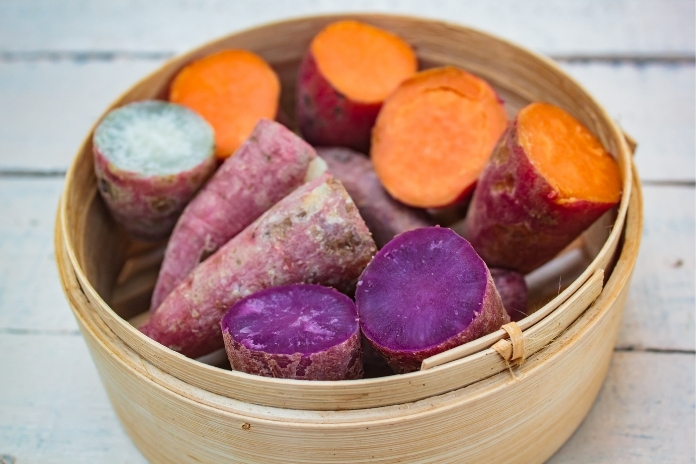
If you’ve ever walked through a grocery store and wondered why those “yams” on the shelf look exactly like sweet potatoes, well, you are not alone. Most of the markets, especially throughout the U.S., use the terms interchangeably, despite these two tubers originating from completely different plant families.
This mix-up causes endless confusion about the difference between yams and sweet potatoes, how each one tastes, and whether their nutrients differ enough to influence your diet. Additionally, we come across one common question: “In the yams vs sweet potato debate, which one should you choose for better health?”
Knowing what you’re actually buying matters for nutrition, flavor, cooking methods, and even cultural authenticity. Whether you’re looking at sweet potato vs yam nutrition, wondering if yams are healthier than sweet potatoes, or trying to understand the sweet potato vs yam carbohydrate differences.
While sweet potatoes contain vitamin A, beta-carotene, yams have a glycemic index. But what actually makes a true yam different from the orange “yam” sold in stores? This article will help in clearing the confusion.
We’ll understand their botanical identities, nutritional profiles, best cooking uses, and how to choose, store, and prepare each one. By the end, you’ll know how to select between yams or sweet potatoes depending on your health goals and culinary needs. Moreover, you’ll be able to identify each one correctly at the store.
Read More: The Sweetest Superfood: 19 Sweet Potato Benefits, Tips & Quick Recipes
Botanical & Culinary Differences
1. What is a Sweet Potato?
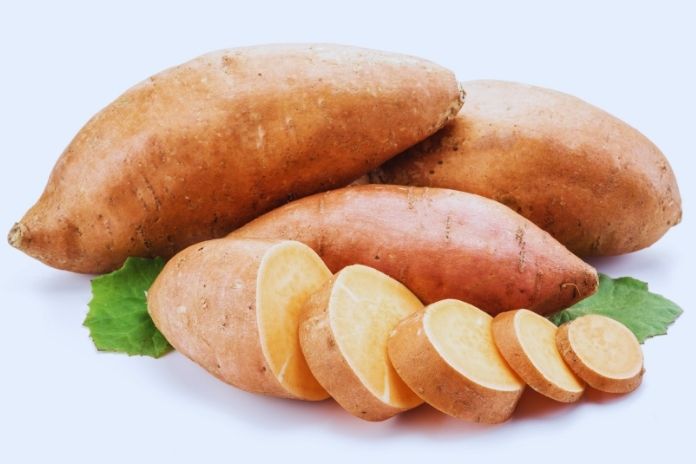
Sweet potatoes (Ipomoea batatas) are members of the morning-glory family and may be found in an orange color. However, they can have different varieties in color. Orange-fleshed varieties dominate the marketplace in the United States. However, white, yellow, and purple sweet potatoes also exist, each having its own level of sweetness and creaminess.
- Orange Sweet Potatoes: This variety is common, and the potatoes are soft, sweet, and rich in beta-carotene.
- White Sweet Potatoes: These sweet potatoes are milder, firmer, and less sweet than the other varieties.
- Purple Sweet Potatoes: This variety is dense, earthy, and packed with anthocyanins.
Their versatility makes them ideal for baking, mashing, roasting, and even desserts. While cooking, they soften easily and caramelize beautifully. This makes them a favorite addition to pies, casseroles, and healthier sweet options.
2. What is a Yam?
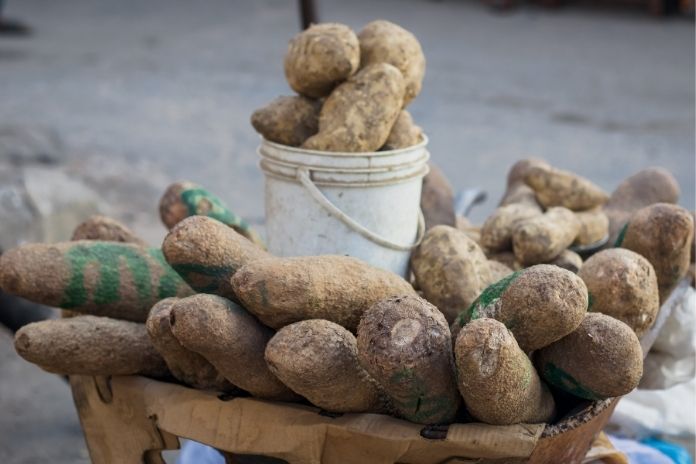
“True” yams belong to the Dioscorea species and are botanically different from sweet potatoes. They are grown in Africa, the Caribbean, and parts of Asia. Yams are known for:
- Their rough, bark-like, and fibrous skin
- A pale, starchy, and dry interior
- It has a neutral flavor, which takes on spice flavors well.
- They have a long, cylindrical shape with an impressive size, with some reaching several feet.
Yams, being starchier and not as sweet, are used just like regular potatoes in many recipes. They are well-suited to savory dishes, stews, or taste great when fried and boiled.
3. Why the Confusion in the U.S.?
It’s a name mix-up that actually began decades ago, when producers wished to differentiate soft, orange sweet potatoes from firmer and paler varieties. They began calling orange ones “yams,” even though they weren’t true yams. Over time, the labels became the norm.
Today, unless you’re shopping in an African, Asian, or Caribbean market, most “yams” in supermarkets are simply sweet potatoes. This labeling confusion complicates the what is a yam vs sweet potato question. This confusion often leads people to assume they’re the same vegetable.
Read More: The Potato Diet: Can Eating Only Potatoes Help You Lose Weight?
Nutritional Comparison: Which One Wins?
To understand sweet potato vs yam nutrition, we must compare the typical nutritional trends per 100 g of each among their varieties and cooking methods.
Nutritional comparison of sweet potato vs yam (per 100 g serving):
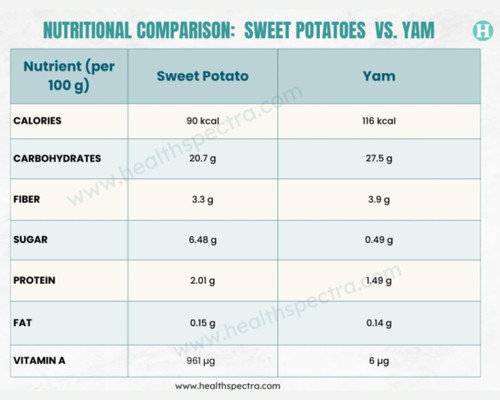 Sweet potatoes generally provide:
- High beta-carotene (vitamin A precursor), particularly in the orange variety
- Vitamin C
- Potassium
- Moderate fiber (depending on type)
- Slightly higher natural sugars
- Higher antioxidant content in orange and purple varieties
Yams Typically Offer:
- Slightly more fiber in some varieties
- Slightly higher potassium
- Lower sugar content
- More resistant starch (supports gut health)
- Often, a lower glycemic index than potatoes and some sweet potatoes
Dr Anthony Puopolo, MD, Chief Medical Officer at RexMD, says, “In general, sweet potatoes tend to be lower in calories than yams, containing slightly more water and slightly more protein than yams.”
Sweet Potato vs Yam Carbohydrate Differences
Both are starchy tubers, but differ in the type of carbohydrate:
- Sweet potatoes have more simple sugars and complex carbs that make them taste sweeter.
- Yams have more complex starches, which means slower digestion and steadier energy.
So, the question remains: are yams healthier than sweet potatoes? It depends on your goals:
- If you need vitamin A or want antioxidant support, choose sweet potatoes.
- If you need steady energy, fewer natural sugars, or slower-digesting carbs, go for yams.
- If you want greater antioxidant variety, choose sweet potatoes because they have beta-carotene or anthocyanins.
- If you want a denser texture for savory dishes, then yams are the way to go.
Health Implications & Best Uses
1. When Sweet Potatoes Might Be the Better Choice
Sweet potatoes are especially a good choice when:
- You are looking for strong sources of vitamin A and beta-carotene, both responsible for immunity and vision.
- You like naturally sweet flavors for baked dishes, purees, smoothies, and desserts.
- You prefer a soft, creamy texture.
- You want a nutrient-dense alternative to regular potatoes.
Specifically, orange sweet potatoes provide one of the richest sources of beta-carotene in foods.
When Yams Might Be the Better Choice
Yams may be the better pick if:
- You want slower-releasing carbohydrates or foods with a lower glycemic response.
- You prefer a more neutral flavor for savory recipes, such as curries, stews, and stir-fries.
- You’re selecting foods that keep you full longer because of the starch-to-fiber balance in them.
- You’re cooking African, Asian, or Caribbean dishes that traditionally use true yams.
1. Cooking Considerations
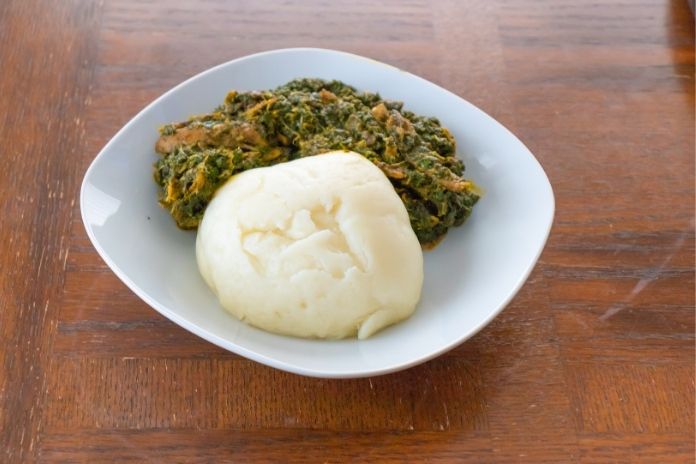
Textures differ significantly because:
- Sweet potatoes bake and caramelize quickly, absorbing less oil.
- Yams remain firmer, and they actually benefit from longer cooking times. They work well in dishes where structure matters.
Cooking techniques affect nutrients:
- Baking sweet potatoes increases their sweetness, but they may also raise glycemic load.
- Steaming preserves more moisture and might help moderate sugar release.
- Yams have denser starch, so they often need longer boiling or braising.
Read More: Foods That Lose the Most Nutrients When Cooked (and How to Preserve Them)
How to Choose, Store & Prepare

1. Choosing Good Quality
To choose good-quality sweet potatoes:
- Pick firm, smooth tubers with bright skin.
- Avoid shriveled, wet, or cracked ones.
- Uniform size helps in even cooking.
To choose good-quality yams:
- It is normal for the yam skin to look rough and bark-like.
- Choose heavier ones for their size that are not moldy or rotten.
- You can find true yams at any international grocery store for authenticity.
2. Storage Tips
- Store both in a cool, dark, dry place (pantry or cabinet).
- Avoid the refrigerator as it can alter flavor and texture.
- Provide ventilation and prevent moisture buildup.
3. Preparation & Cooking Tips
- Scrub well before cooking. You can peel if desired.
- Sweet potatoes can be roasted, baked, steamed, mashed, or air-fried.
- For yams: boil, braise, stew, or sauté for the best texture.
If you want to keep your calories in control, try to reduce heavy glazes, avoid marshmallows, or excess butter. Add herbs, spices, citrus, and/or olive oil for flavor without overpowering nutrients.
Quick Recap
Though often confused, sweet potatoes and yams are in fact very different, everything from the plants they come from to their nutrient profiles. Sweet potatoes excel in vitamin A and antioxidants, while yams boast slower-digesting carbohydrates, a mild flavor, and a firmer texture. Both are nutritious and versatile.
Once you understand the real difference between yams and sweet potatoes, you can confidently choose the right tuber for your cooking style, nutrition needs, and flavor choices.
References
- EatingWell. (n.d.). Sweet potatoes vs. yams: What’s the difference?
- WebMD. (n.d.). Health benefits of yams.
- Metropolis India. (n.d.). Sweet potato benefits, advantages & nutritional value.
- FoodStruct. (n.d.). Sweet potato vs. yam (raw) nutrition comparison.
- VeggiePrimer. (n.d.). Sweet potatoes vs. yams.
In this Article