













- Cravings spike when you restrict sugar: Your brain treats “no sugar” as scarcity, making sweets more appealing.
- It’s brain chemistry, not weak willpower: Dopamine and reward cues intensify desire.
- Flexibility reduces cravings: Allowing small amounts helps break the restrict–crave cycle.
After attempting to give up sweets entirely, many people experience increased sugar cravings. Why does this happen? It’s because both biology and psychology are at play.
The science underlying sugar cravings after restriction will be discussed in this article, along with the brain’s function, the dopamine reward system, and the development of deprivation-induced cravings.
The psychology of food cravings, the restriction binge cycle, and practical strategies to lessen urges without drastic diets will also be covered.
Read More: This One Common Spice Can Curb Sugar Cravings—Here’s How
Why Sugar Cravings Increase After Restriction
Your brain perceives restriction or labeling sweets as “off-limits” as a sign of shortage. From an evolutionary standpoint, shortage triggers survival mechanisms. Restricted meals receive more attention from the brain, which makes them seem more significant and appealing.
Sugar gives you quick energy. In the past, when sweet foods were scarce, people sought them out. Therefore, restricting your diet makes your brain more receptive to sweet foods, thereby increasing your desire for them.
“Macronutrients” include fat, protein, and carbohydrates. To put it another way, they give the body energy. Red blood cells, the brain, and also the central nervous system all depend on carbohydrates. The essential amino acids, which the body needs for growth and repair, are found in protein. Additionally, the creation of hormones and the absorption of fat-soluble vitamins depend on the energy derived from lipids.
“Just like your vehicle runs on gas but still requires oil and battery power to run, your body needs nutrients from different sources,” said Kari Mizgalski, Marshfield Clinic Health System clinical dietitian. “When we cut out foods, the body isn’t working as well as it should, and sugar cravings can arise.”
The Science of Deprivation-Induced Cues

Foods gain psychological worth when they are labeled as “bad” or “forbidden.” This phenomenon contributes to the psychology of food cravings and is well-documented in behavioral science.
An overwhelming urge to consume a specific food is known as a food craving. Energy-dense foods are usually what humans crave, with chocolate and other chocolate-containing foods being the most popular, followed by other high-calorie sweet and savory dishes.
Food cravings usually happen in the late afternoon and evening. It’s interesting to note that while fruit cravings decline throughout the day, the desire to eat high-calorie items increases.
Restricting certain foods causes the brain to respond more strongly to rewards. It means your brain assigns greater importance to sugar after restriction, thereby reinforcing sugar cravings.
Not only does restriction heighten cravings, but it also improves sensory awareness. You might notice that you’re thinking about desserts more frequently, detecting scents, or picturing flavors.
This mental obsession is a crucial component of the restriction-binge cycle and a defining feature of deprivation-induced cravings.
It’s critical to distinguish between hunger and cravings:
- Physical hunger develops gradually, and you can satisfy it with a variety of foods.
- Psychological desires are immediate and specific (sugar, for example).
Read More: Craving Sweets? Try These Delicious Low-Sugar Desserts!
The Role of the Brain’s Reward System
Dopamine and Anticipation of Pleasurable Foods
The dopamine reward system largely influences cravings. Dopamine is involved in anticipation as well as enjoyment. Your brain releases more dopamine in response to the cues related to sugar when you limit it. It makes you crave sweets even before you eat them.
Why Forbidden Foods Feel More Rewarding
The famously acute and all-consuming desires we experience during periods of restriction or dieting are a manifestation of the forbidden fruit effect.
When all you can think about is the typical burger you had on a friend’s birthday the previous year, the ice cream you had while on vacation with your family over the summer, or even just the Christmas chocolate collecting dust in the cupboard’s back.
Portraying these foods as “heavenly” and off-limits makes the urge to eat them feel nearly compulsive.
Short-Term Satisfaction vs. Long-Term Craving Cycles
After restricting sugar intake, there is frequently a brief period of relief followed by more intense cravings. It reinforces the restriction-binge cycle by creating a loop driven by the brain’s reward system.
Cognitive Restriction vs. Physical Restriction
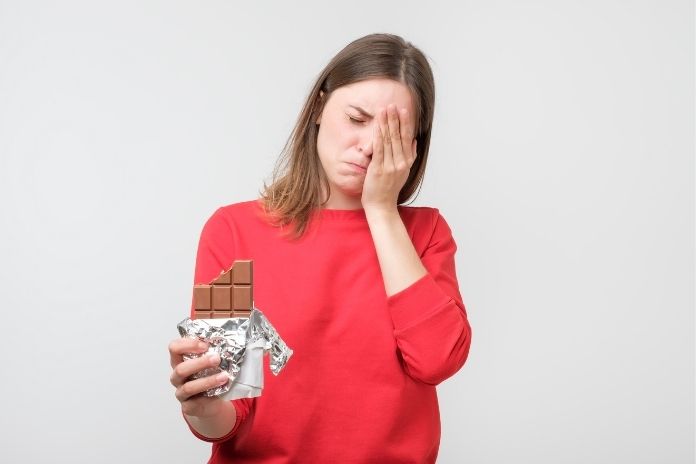
Mental Dieting Rules and Their Effects: Mentally limiting food intake without necessarily cutting calories is known as cognitive restraint. For instance, telling yourself that you shouldn’t consume any sweets makes you crave them more. This mental restriction is a major contributor to why dieting increases sugar cravings.
Skipping Meals vs. Banning Specific Foods: Physical restriction (like skipping meals) affects appetite regulation and blood sugar levels. Cognitive constraint impacts your thoughts and feelings.
How Rigid Control Can Backfire: Pressure is created by strict diets. This pressure eventually leads to a loss of control, particularly with regard to prohibited items.
Read More: Why Am I Craving Carbs? Common Causes and How to Stop the Cycle
The Restrict–Crave–Overeat Cycle Explained
It is the typical pattern of the restriction binge cycle:
- Removing “treats” or sugar
- Heightened awareness of those foods
- Loss of control and intense urges
- Remorse and new limitations
Signs Your Sugar Cravings Are Driven by Deprivation
If you observe any of the following, you might be suffering from deprivation-induced cravings:
Anxiety: Because sugar alters brain chemistry, there is a complicated link between sugar and anxiety. The brain’s synthesis of dopamine, a neurotransmitter closely linked to reward and pleasure, can be significantly impacted by sugar intake.
Irritability: One of the most prevalent withdrawal symptoms for sugar dependence and many other types of addiction is becoming easily agitated. Although irritation is a common human reaction, cutting back on sugar might make it worse.
Fatigue: Our bodies are powered by sugar, most especially by the molecule glucose. Our cells use the simple sugars produced from most of the food we eat as fuel. Our digestive systems don’t have to break down super sugary foods as much, which frequently results in a massive energy boost.
Changes in Mood: Dopamine is a key factor in mood. Mood swings or abnormalities might result from even little changes. Many people who struggle with compulsive sugar consumption will have severe, inexplicable mood swings and exacerbated sadness since abruptly stopping sugar often disrupts dopamine and serotonin levels.
Nausea: Feelings of nausea and queasiness can be strongly influenced by blood sugar levels and chemical balances in the brain.
Biological Factors That Amplify Sugar Cravings
Biological Mechanisms: Sugar triggers the release of the “feel-good” hormone dopamine, which is why eating it feels good. Sugar gives our bodies the quick energy boost they need. Sadly, this creates a cycle in which we always look for sweet foods to enjoy.
Blood Sugar Changes: Eating foods high in sugar or refined carbs can cause blood sugar to rise quickly, then fall. After this crash, we feel tired and angry, which makes us want more sugar to get our energy back.
Habits and Environment: Your brain starts to connect certain times of day, like after meals or in the afternoon when things are slow, with eating sugar. It makes the habit stronger.
Hormonal Changes: Hormonal changes during your period or when you’re very stressed out can affect your hedonic hunger and cravings.
Read More: Why Chocolate Cravings Spike Before and During Your Period
How to Reduce Deprivation-Driven Sugar Cravings
Allowing Some Dietary Flexibility: Allowing small amounts of sugar lessens its psychological power. This plan helps you deal with cravings that come from not having enough.
Avoiding Too Many Strict Food Rules: After a restriction, it’s easier to control sugar cravings because flexible eating makes it easier to think about other things.
Regular Eating Patterns: Eating regularly helps you understand the brain better and the myth of sugar addiction. Cravings are often caused by an imbalance rather than an addiction, and regular eating can help keep you from getting too hungry.
Practical Strategies for Managing Cravings Without Restriction

Instead of giving up sugar, try these things:
Eat More Protein and Fiber: Foods that are high in these nutrients can help you feel full longer and make you want sugar less. Eat more whole grains, vegetables, beans, lentils, nuts, seeds, and lean meats.
Stay Hydrated: Did you know that not drinking of enough water can make you want sugar? Find out how much water you need, and make sure you drink enough every day.
Get Enough Sleep: Not getting enough sleep can throw off your hormones, making you crave sugary foods. Getting seven to eight hours of sleep each night can help you control your hunger and cravings.
Stress and Emotions: Stress and emotional eating are common reasons why people crave sugar. Learning how to deal with these kinds of issues healthily may be necessary to control your sugar cravings.
Stay Away from Sugary Foods: Because people are very sensitive to what they see. If you don’t see sugary foods, you’re less likely to want them. Put healthy snacks close by and unhealthy foods out of sight to help you make better choices.
Get Moving: Regular exercise may help you feel better and lower your stress levels, which can help you want less sugar. Try to work out for at least 30 minutes most days of the week to help reduce your cravings.
When Sugar Cravings May Signal Something Else

Sometimes, cravings can be a sign of something worse:
Sweet Cravings Brought on by a Calcium and Magnesium Deficiency: If you have a craving for sweets, it could indicate a calcium and magnesium deficiency, which can lead to exhaustion and drowsiness.
Not Having Enough Energy for Your Body’s Activities: A lack of chromium can throw off your blood sugar balance, which makes you feel tired and crave sweets.
Chromium and insulin help control blood sugar levels, keep weight in check, and make you feel hungry. If you have hypoglycemia, which is a blood sugar problem caused by a lack of chromium, your body may look for sugary foods.
Lack of B Vitamins: If you don’t get enough B vitamins, you might want to eat sweets when you’re stressed, sad, or moody. B vitamins, like B1 (thiamin), B2 (riboflavin), B3 (niacin), and B5 (pantothenic acid), are needed to make energy.
Stress can make the brain run out of energy, which can make you want to eat more sweets and fats.
Read More: What Is Sugar Withdrawal? Symptoms, Timeline & What to Expect
Conclusion
Understanding sugar cravings after restriction can completely change how you eat healthily. These cravings are normal when you don’t have enough of something, not a sign that you don’t have enough self-control. They are caused by your brain’s need for balance and reward. When foods are limited, they have greater psychological power, which makes people want them more and can lead to cravings that feel strong and out of control.
Instead of fighting your body, a flexible and balanced eating plan will help you deal with these cravings. By eating regularly and letting go of strict diet rules, you can help your body and mind feel safe, happy, and in control.
References
- Shine 365. (November 16, 2022). Why dieting may increase your sugar cravings.
- Jessica Miller. (October 19, 2025). Sugar Withdrawal Symptoms.
- Sutter Health. (September 27, 2024). Tackling sugar cravings.
- Visage Dermatology. Sugar cravings might really mean something else.
- Nutrition Scotland. (March 25, 2025). Why we crave sugar and how to manage it.
In this Article