













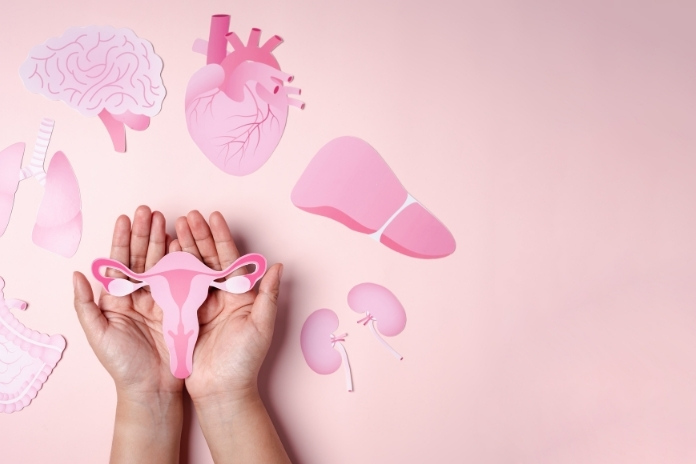
Many women notice new or stronger body odor during menopause and wonder what’s behind it. Suddenly, sweat seems sharper, clothes hold onto odor more stubbornly, or nighttime hot flashes leave sheets with a scent that feels unfamiliar. For some, it’s a subtle shift; for others, it feels like their body chemistry has completely changed.
This isn’t just in your head. Menopause sets off a chain of biological shifts: falling estrogen, changes in how the body regulates temperature, increased episodes of sweating, and even alterations in the skin’s microbiome. Together, these can transform not only how much you sweat but also how that sweat smells once it meets the bacteria on your skin.
The reassuring part is that while these changes can feel disruptive or even embarrassing, they’re not permanent, and they are manageable. Understanding the “why” behind menopausal body odor is the first step. In this article, we’ll unpack the science of how hormone shifts influence odor and share practical, evidence-backed strategies to keep you feeling fresh and confident.
Why Menopause Affects Body Odor
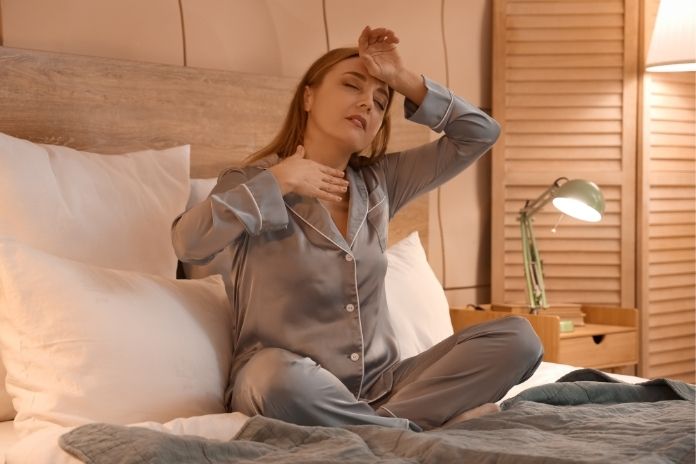
Menopause isn’t just about missed periods and hot flashes; it also reshapes how your body smells. Many women notice that sweat feels stronger, clothes hold onto odor longer, or nighttime sweating leaves sheets with a different scent. These changes aren’t imagined; they’re rooted in real hormonal shifts, temperature regulation changes, and even the skin’s bacterial balance.
Hormonal Changes: The Estrogen Drop
Estrogen is often thought of as a reproductive hormone, but it does far more than that. One of its key roles is regulating body temperature and sweat gland activity. As estrogen levels fall during menopause, the hypothalamus, the brain’s thermostat, becomes hypersensitive to even small changes in temperature. This heightened sensitivity can trigger hot flashes and night sweats, leading to more frequent and intense episodes of sweating.
“Estrogen does far more than regulate reproduction; it also stabilizes the body’s thermostat in the brain. When estrogen levels drop during menopause, the hypothalamus becomes more reactive to minor temperature shifts, which is why women often experience hot flashes and night sweats.” – Dr. JoAnn V. Pinkerton, MD, Professor of Obstetrics & Gynecology, University of Virginia
Hot Flashes and Night Sweats
The North American Menopause Society reports that up to 75% of women experience hot flashes during menopause. While sweat itself is odorless, it becomes noticeable when broken down by skin bacteria, especially in areas like the underarms, groin, and feet.
More sweat means more interaction with bacteria, which intensifies odor. For many women, this can translate into clothes that hold odor longer or sheets that feel stale after a single night of sweating.
Skin Microbiome Shifts
Beyond temperature control, hormonal changes also reshape the skin’s microbiome, the diverse community of bacteria living on the skin. A 2018 study in npj Biofilms and Microbiomes found that estrogen helps regulate which bacterial species thrive. When estrogen declines, odor-producing bacteria such as Corynebacterium may gain the upper hand, leading to sharper or more pungent body odor.
Other Contributing Factors

Menopause-related odor changes aren’t only about estrogen levels. A mix of lifestyle, physiology, and even medications can influence how the body smells during this stage of life. Here are some of the lesser-known contributors:
Slower Metabolism and Toxin Build-Up
As metabolism naturally slows with age, the body processes and eliminates waste less efficiently. While not the primary cause of odor changes, this can add to the overall intensity or persistence of certain smells. Subtle shifts in digestion and detox pathways may also alter how sweat and breath smell over time.
“When there is less collagen surrounding the glands, the glands get squished or compressed against the skin surface and cannot function properly … Sweat becomes foul-smelling when it’s exposed to the (totally normal) bacteria and fungi on the skin’s surface.” – Dr. Hilary Reich, board-certified dermatologist.
Stress and Anxiety
Menopause often brings heightened stress and mood swings. When stress hormones like cortisol and adrenaline spike, they activate apocrine sweat glands, those found in areas like the underarms and groin. This type of sweat is thicker and richer in proteins, which bacteria love to break down. The result? A stronger, sharper odor during stressful moments.
Medications
Certain medications frequently used in midlife can also play a role. Antidepressants, for instance, are known to increase sweating in some women, while hormone replacement therapy may change how the body regulates heat. Even if these treatments help with other symptoms, they can indirectly influence how body odor presents itself.
How Body Odor in Menopause Is Different
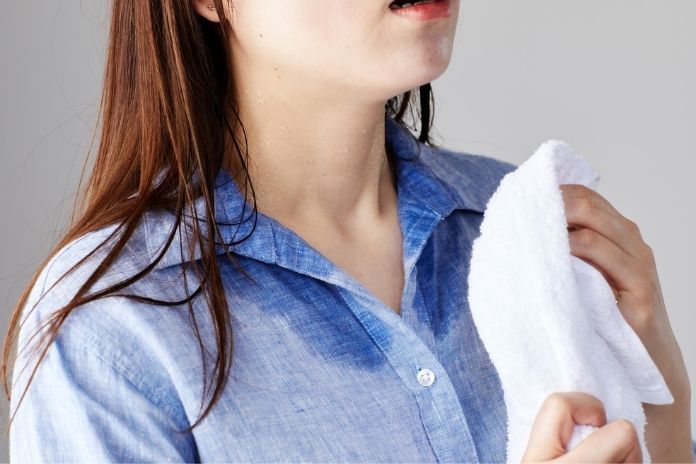
Body odor during menopause doesn’t just feel stronger; it often shows up in new and specific ways. Many women describe it as sharper, harder to wash out of clothes, or simply “different” from before. Here are the most common patterns:
More Intense Underarm Odor
Underarm sweat changes noticeably for many women. Apocrine glands in this area release sweat that’s richer in proteins and fatty acids. When bacteria on the skin break these down, they create stronger, more pungent-smelling compounds. The odor can feel more concentrated than before, even if hygiene habits haven’t changed.
Nighttime Sweating
Hot flashes and night sweats leave clothing and bedding damp more often. Fabrics tend to trap sweat, and over time, this can produce a musty or stale smell that lingers even after washing. For women who never struggled with this before, it can be frustrating to notice their sheets or nightwear holding onto odor more easily.
Changes in Vaginal Odor
A 2020 review reported that declining estrogen levels raise vaginal pH, reduce natural lubrication, and shift the balance of vaginal microbiota. These changes can subtly alter vaginal odor, sometimes making it sharper or less familiar. While often normal, it adds another layer to the sensory changes women notice during menopause
Practical Ways to Manage Menopause Body Odor
While changes in body odor during menopause can be frustrating, there are effective strategies to manage them. From daily hygiene to dietary adjustments and targeted treatments, a combination of approaches can keep odor under control and help you feel confident.
1. Hygiene and Skincare
Showering promptly after hot flashes or sweating episodes helps rinse away bacteria that contribute to odor. Gentle, pH-balanced cleansers are key, as harsh soaps can strip protective oils and disrupt the skin’s natural balance.
Regular exfoliation can also help reduce bacteria buildup, but avoid overdoing it, as excessive scrubbing can irritate the skin and worsen odor.
2. Clothing Choices
The fabrics you wear can make a significant difference:
- Breathable materials such as cotton, bamboo, or moisture-wicking blends allow sweat to evaporate rather than trapping it.
- Frequent clothing and linen changes, especially during peak night sweats, help prevent lingering odor.
- Layering lightweight, moisture-absorbing fabrics can be especially helpful for nighttime comfort.
3. Nutrition and Hydration
Diet and hydration play an often-overlooked role in body odor:
- Hydrate well: Adequate water intake dilutes sweat concentration and supports toxin elimination.
- Limit odor-triggering foods: Garlic, onions, spicy foods, and alcohol contain volatile compounds that exit through sweat.
- Support your microbiome: Probiotic-rich foods like yogurt, kefir, and kimchi can help maintain healthy bacterial balance on the skin. Several studies/reviews show that probiotic supplementation or topical probiotics help with skin conditions by modulating bacteria, reducing inflammation, improving barrier function, etc., though not always with odor outcomes specifically or only in women.
4. Natural and Medical Deodorant Options
- Aluminum-free deodorants: Ingredients like baking soda, zinc oxide, or magnesium hydroxide neutralize odor naturally without blocking sweat glands.
- Antiperspirants: Clinical-strength formulas reduce sweat gland activity and help manage both sweat and odor.
- Medical treatments: A 2023 review, “Treatment of hyperhidrosis with onabotulinumtoxinA,”reports that Botox is effective and improves quality of life in people with excessive sweating.
Key Takeaway
Managing menopause-related odor is rarely about a single solution. Combining gentle hygiene, breathable clothing, mindful nutrition, and appropriate topical or medical treatments can make a noticeable difference. Starting with simple lifestyle changes often provides the greatest improvement and can be tailored based on the severity of symptoms.
When to See a Doctor

While changes in body odor are often a normal part of menopause, not all shifts should be ignored. Certain signs indicate that a medical evaluation is necessary to rule out underlying conditions.
Seek Medical Advice If:
- Odor is sudden, severe, or unusual: A rapid change in smell, especially if it’s strong or foul, may signal an underlying infection or metabolic issue rather than just menopause.
- There are symptoms of infection: Accompanying signs such as itching, burning, unusual discharge, redness, or fever should prompt immediate medical attention. These could indicate bacterial or yeast infections, urinary tract infections, or other conditions requiring treatment.
- Lifestyle changes don’t help: If adjustments in hygiene, clothing, diet, or topical products don’t improve odor over a few weeks, it’s wise to consult a healthcare provider to explore other causes or treatment options.
Why It Matters
Early evaluation can help identify treatable conditions before they worsen, ensure that odor changes aren’t masking something more serious, and provide guidance on safe and effective management strategies. Menopause-related odor is usually manageable, but professional guidance ensures peace of mind and optimal care.
Menopause and the Emotional Impact of Body Odor
Body odor changes during menopause aren’t just physical; they can affect confidence, social interactions, and even intimate relationships. Many women feel self-conscious at work, in public, or around loved ones when noticing stronger or unfamiliar odors. This can lead to stress, anxiety, or withdrawal from social situations.
Recognizing that these changes are a normal part of menopause helps reduce guilt and embarrassment. Practical strategies like keeping a spare set of clothing, using discreet wipes, and applying deodorants or antiperspirants can boost confidence. Combining these with stress-reduction techniques, such as mindfulness or deep-breathing exercises, supports both emotional and physical well-being.
Preventive Measures for Long-Term Comfort

Prevention is key to managing menopause-related body odor effectively. Establishing daily routines that focus on gentle hygiene and skin health is the first step. Use pH-balanced cleansers, avoid harsh soaps that strip protective oils, and shower after episodes of heavy sweating to limit bacterial growth.
Clothing choices also play a critical role: breathable, moisture-wicking fabrics like cotton, bamboo, or technical blends prevent sweat from lingering, and layering can help manage sudden hot flashes. Regularly changing nightwear and bedding is equally important, as trapped moisture can intensify odor overnight.
Supporting the microbiome, both on the skin and in the gut, is another long-term strategy. Consuming probiotic-rich foods such as yogurt, kefir, kimchi, or fermented vegetables helps maintain healthy bacterial balance, which can reduce odor. Adequate hydration and a fiber-rich diet assist the body in flushing out toxins efficiently. Lifestyle factors, including stress management, quality sleep, and regular exercise, further stabilize hormone levels and improve sweat regulation.
Preventive measures don’t have to be extreme to be effective. Small, consistent habits, like keeping a clean change of clothes handy, planning meals with microbiome-friendly foods, and practicing mindfulness, accumulate over time to make a noticeable difference.
Women who implement these strategies often experience fewer odor-related concerns, feel more comfortable in social situations, and gain greater confidence during the menopausal transition. Taking a proactive, comprehensive approach ensures that body odor changes don’t dominate daily life, but are instead manageable and predictable.
FAQs
- Can menopause-related odor last long-term?
Yes, body odor changes can persist throughout menopause, though they often stabilize after the initial years. Hot flashes and night sweats may become less frequent over time, which usually reduces odor intensity. Maintaining consistent hygiene, breathable clothing, and healthy lifestyle habits helps manage odor in the long run. For some women, minor shifts may continue even after menopause due to lingering hormonal or microbiome changes.
- Are there quick fixes for sudden odor spikes?
Sudden increases in body odor often happen during intense hot flashes or stress. Quick fixes include wiping sweat-prone areas with a damp cloth or body wipe, changing into breathable clothing, and using a fast-acting deodorant. Staying hydrated can also help dilute sweat and reduce odor concentration. While these steps don’t solve the underlying cause, they offer immediate relief in social or work situations.
- Can exercise affect menopausal body odor?
Exercise increases sweat temporarily, but regular physical activity actually improves long-term odor management. Sweating during workouts helps flush toxins and supports a healthy microbiome. Wearing moisture-wicking workout clothes and showering promptly afterward minimizes odor buildup. Consistent exercise can also reduce stress-induced sweating and improve overall hormonal balance, indirectly reducing odor intensity.
- How can I balance odor control with skin health?
Over-cleansing or harsh products can strip oils and worsen odor in the long run. Use gentle, pH-balanced cleansers and avoid excessive scrubbing. Applying moisturizers helps maintain the skin barrier, which keeps the microbiome balanced and odor under control. Rotating between natural deodorants and clinical antiperspirants can provide a balance between comfort, skin health, and effective sweat management.
- Are there lifestyle factors beyond diet that influence odor?
Yes, stress, sleep quality, and clothing choices all play a role. Stress hormones trigger sweat glands, while inadequate sleep can worsen hot flashes and sweating. Choosing breathable fabrics, changing sheets regularly, and managing stress with meditation or relaxation techniques can all reduce odor intensity. Combining these approaches with diet and hygiene strategies gives the best overall results.
Conclusion
Menopause brings a host of changes, and shifts in body odor are one of the less-discussed but very real experiences for many women. Hormonal fluctuations, hot flashes, night sweats, and changes in the skin and vaginal microbiome all play a role, sometimes leaving women feeling self-conscious or frustrated. The key takeaway is that these changes are normal, not a reflection of poor hygiene or something “wrong” with your body.
Fortunately, body odor during menopause is highly manageable. Simple daily strategies, gentle, pH-balanced hygiene, breathable and moisture-wicking clothing, staying well-hydrated, maintaining a balanced diet, and using deodorants or clinical antiperspirants can make a substantial difference. Proactive attention to stress management, sleep, and microbiome-supporting foods further enhances control and comfort.
When lifestyle approaches aren’t enough, or if you notice sudden, severe, or unusual odor changes, seeking medical guidance is essential. Healthcare providers can identify underlying infections, adjust medications, or recommend targeted treatments like prescription-strength antiperspirants or Botox for excessive sweating.
The broader message is empowering: menopause may alter your body’s scent, but with informed strategies and professional support, it doesn’t have to compromise your confidence, comfort, or quality of life.
References
- https://bywinona.com/menopause-symptoms/body-odor
- https://www.degreedeodorant.com/us/en/sweat-zone/menopause.html
- https://onlinemenopausecentre.com/body-odour/
- https://onlinemenopausecentre.com/body-odour/
- https://www.joinmidi.com/post/menopause-body-scent
- https://my.clevelandclinic.org/health/symptoms/17865-body-odor
- https://flo.health/menstrual-cycle/menopause/symptoms/perimenopause-body-odor
- https://www.femmeprex.nl/en/overgangsklacht/veranderingen-lichaamsgeur-overgang-oorzaken-symptomen-behandeling
- https://www.intimaterose.com/blogs/womens-health/menopause-body-odor
- https://gen-m.com/signs/body-odour/
- https://www.medicalnewstoday.com/articles/menopause-and-body-odor
In this Article