












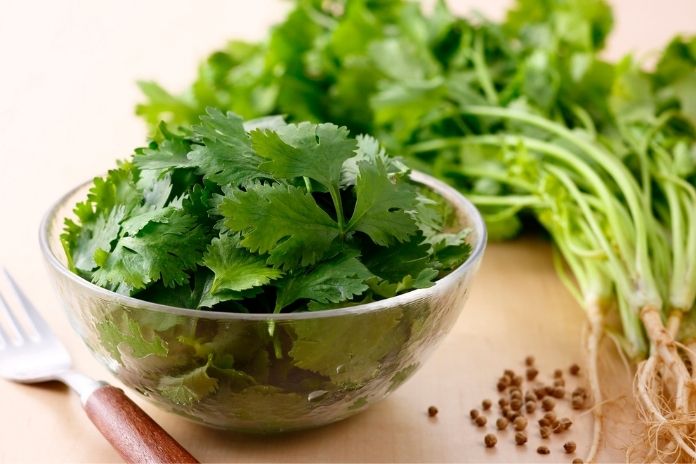
Some people find cilantro bright and citrusy, and some others find it soapy to taste because their DNA makes them unusually sensitive to certain molecules in the herb’s aroma. This is almost always due to differences in smell-related genes, such as OR6A2, and not because of food spoilage, allergies, or picky eating.
The Love–Hate Divide
For many people, cilantro is the perfect finishing touch to salsa, chutney, or salad, but for others, even a small sprinkle can make a dish taste like soap or chemicals and feel inedible. Surveys suggest that about 3–21% of people across different populations experience cilantro as unpleasant or soapy, indicating how common this split is.
Underneath this divide lies a mix of genetics and sensory biology, especially in how the nose detects aldehydes, the aromatic compounds that give cilantro much of its scent. Understanding this explains why some people cannot stand cilantro, while others love it, and why both reactions are normal variations in human biology.
Key Takeaways
- A cluster of odor-related genes, including OR6A2, can make some people extremely sensitive to soap-like aldehydes in cilantro, so they are far more likely to say it tastes like soap.
- Cilantro’s “flavor” comes much more from its scent than from basic tastes on the tongue, which is why smell genes matter so much.
- Cilantro aversion is neither an allergy nor an intolerance; it is a harmless genetic trait that changes how the brain interprets certain smells.
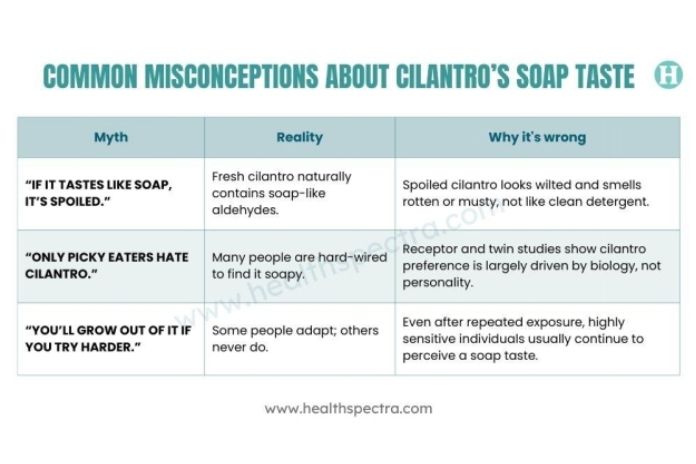
- While repeated exposure or different cooking methods may help some people tolerate cilantro, strong genetic sensitivity often persists throughout life.
- Cilantro is nutritious but not essential; if it tastes like soap, you can safely skip it and choose herbs like parsley, basil, or dill instead.
Read More: Food Swaps to Manage High Cholesterol Without Sacrificing Taste
What “Cilantro Tastes Like Soap” Really Means
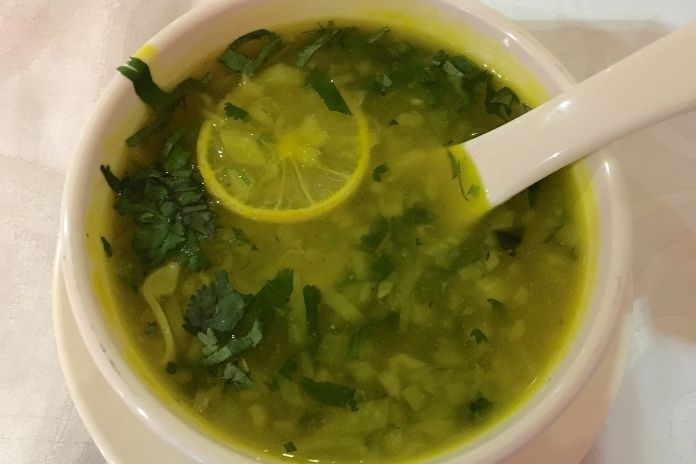
People who dislike cilantro commonly describe its flavor as soapy, metallic, or chemical rather than simply “herbal.” These complaints appear across many cultures and cuisines, suggesting that biology, not just personal preference, drives the reaction.
When someone says cilantro tastes like soap, they are reacting to specific odor molecules that they associate with cleaning products or scented soaps, not to spoiled or old herbs. Because smell and taste are closely linked, that smell is experienced as a powerful, unpleasant “taste” in the mouth.
The Real Reason: It’s Mostly Genetic
The OR6A2 Gene and Other Receptors
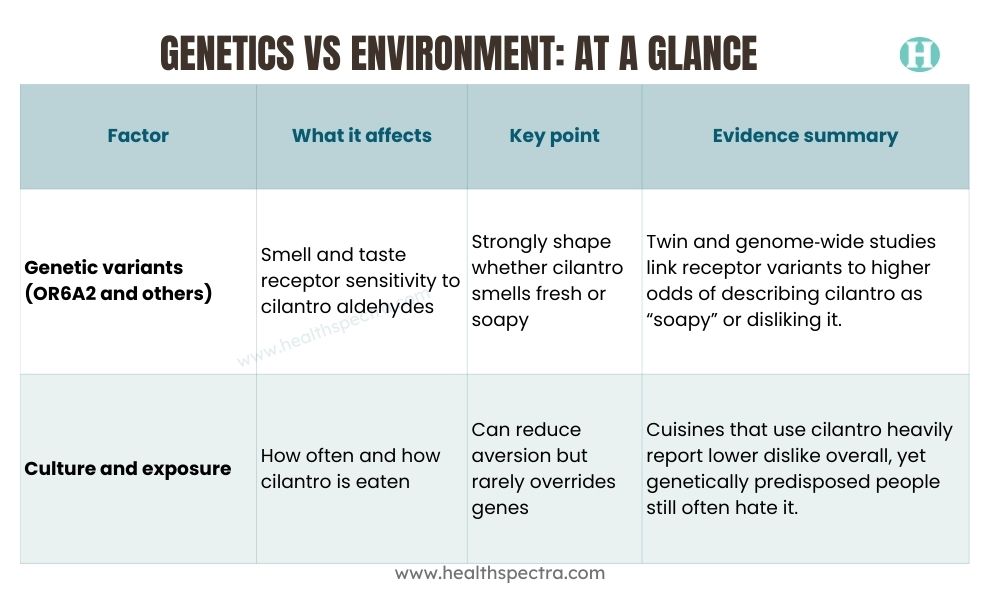
Aversion to cilantro has been linked to variations near olfactory receptor genes, proteins in the nose that detect odor molecules. One primary receptor is OR6A2, which is especially sensitive to aldehydes, a key group of scent compounds found in cilantro.
- People with certain OR6A2 variants are more likely to say cilantro smells and tastes soapy.
- Other receptors, such as OR10A6 and OR10A2, as well as taste-related genes like TAS2R50 and GNAT3, also appear to contribute to the dislike of cilantro and heightened perception of bitterness or pungency.
Twin studies reinforce this genetic role, since identical twins show more agreement in cilantro preference than fraternal twins, even when they share similar environments.
How Prevalent Is the “Soap Gene”?
Genetic and survey data suggest that about 4–14% of people carry variants most strongly linked to cilantro aversion, while 3–21% report disliking the herb or finding it soapy, depending on the population.
People of European ancestry appear more likely to describe cilantro as soapy compared with some East Asian, South Asian, Black, or Latino groups. These differences likely reflect both underlying genetic patterns and the frequency with which cilantro is used in local cuisines and everyday cooking.
Taste Buds vs Olfactory Receptors
“Flavor” is actually a combination of taste, detected by taste buds in the mouth, and smell, detected by olfactory receptors in the nose. Taste buds are tuned mainly to sweet, salty, sour, bitter, and umami, but cilantro’s distinct character comes from aroma chemicals that rise to the nose as you chew.
Genes such as OR6A2 change how strongly these aromas are perceived, so two people can eat the same cilantro-heavy dish and have totally different experiences, one finds it bright and citrusy, the other finds it overwhelmingly soapy.
Why Cilantro’s Smell Dominates
Cilantro contains high levels of volatile compounds that easily vaporize and stimulate the olfactory epithelium. In genetically sensitive individuals, even a tiny amount can trigger an intense soapy or chemical sensation that overwhelms the other flavors in a dish.
This is why simply picking out visible cilantro leaves from a prepared meal often does not help; the aromatic compounds have already spread through the food.
Read More: 14 Remedies To Restore Loss Of Taste And Smell – Regain It The Natural Way!
Aldehydes: The Soap‑Like Culprits
 What Are Aldehydes?
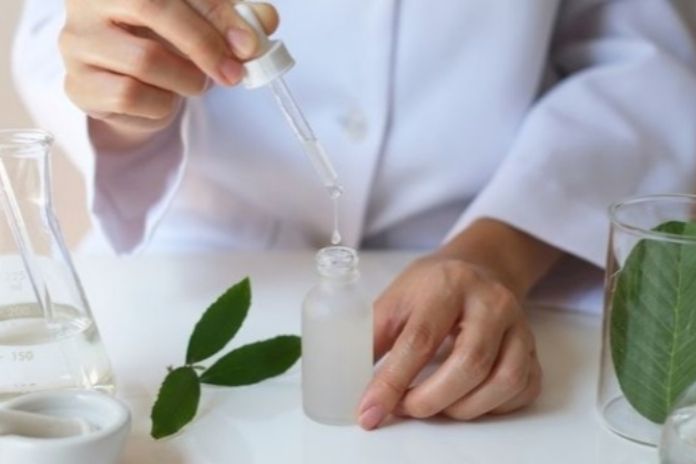
Aldehydes are a group of chemical compounds that often have strong smells and occur in foods, perfumes, and household products. Cilantro leaves naturally contain several aldehydes, including ones similar to those used to scent soaps and laundry detergents.
These aldehydes are not toxic at the amounts used in cooking, but in genetically susceptible people, perception shifts from “fresh” or “herbal” to “soapy” or “chemical.”
Why They Smell Like Soap
- Some of the same or closely related aldehydes appear in both cilantro and fragranced soaps and cleaners.
- In individuals with certain OR6A2 variants, these aldehydes elicit a strong receptor response, reinforcing the mental association between cilantro and the smell of soap or cleaning fluid.
The stronger this sensitivity and association, the more likely someone is to avoid dishes containing cilantro altogether.
Is the “Soap Taste” an Allergy or Intolerance?
Despite the strong dislike it provokes, cilantro’s soap-like taste is rarely related to allergy or classic food intolerance.
- A food allergy is an immune reaction that can cause hives, swelling, or difficulty breathing. It is uncommon with cilantro and is not tied to a soapy taste.
- A food intolerance usually causes digestive symptoms;cilantro’s soapiness comes from how the brain processes smell, not from digestion.
For people who dislike cilantro, the issue is usually a genetically determined preference: their olfactory system and brain handle the herb’s scent differently.
A U.S. doctor summarised it this way: “For people who say cilantro tastes like soap, the experience is very real and mostly genetic. Variants in smell-related genes can make the herb’s natural aldehydes trigger a strong soapy or chemical sensation instead of a fresh, herbal one.”
Read More: Study Suggests Therapeutic Benefits Of Cilantro
Can You Train Yourself to Enjoy Cilantro?
Taste Adaptation: Mixed Evidence
Some people who once hated cilantro report that their dislike faded after repeated exposure, especially when the herb was cooked or used in very small amounts. Learning and new associations can make a strong flavor feel more acceptable over time.
However, when genetic sensitivity is high, the soapy qualities can continue to dominate the flavor experience, and many people never truly enjoy raw cilantro.
Practical Tips If You Want to Try
- Use cooked cilantro in soups, stews, or curries, since heating can break down some volatile aldehydes and soften the soap-like aroma.
- Start with tiny amounts and combine cilantro with bold flavors such as lime, garlic, or chili so it is less noticeable.
If these strategies still leave you grimacing, there is no health benefit to forcing yourself to eat cilantro. Your sensory wiring is simply different.
Do Culture and Exposure Matter?
How Cuisine Shapes Perception
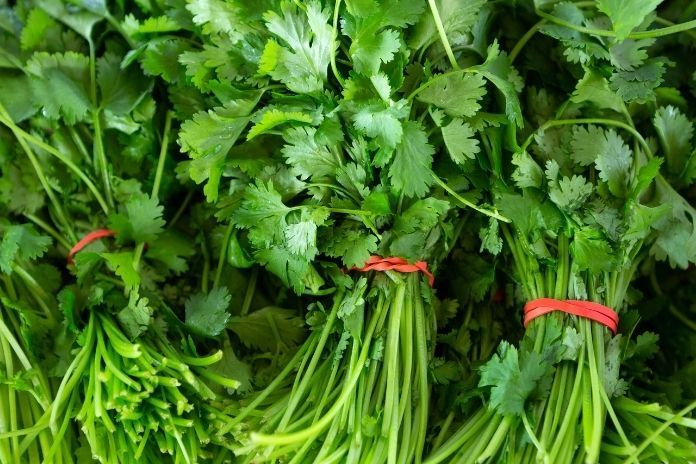
Cilantro is a common ingredient in Mexican, Thai, Indian, Middle Eastern, and many Latin American dishes, where people often encounter it from early childhood. In these cultures, reported dislike of cilantro tends to be lower, suggesting that early and frequent exposure can reduce aversion in some people.
Even so, every cuisine has cilantro‑haters, showing that genes are the baseline and experiences simply fine‑tune how those genes play out.
 Is Cilantro Bad for You When It Tastes Like Soap?
Cilantro is generally safe and provides small amounts of vitamins A, C, and K, as well as minerals such as potassium and manganese. It also contains antioxidant and antimicrobial compounds that may support health when eaten as part of a varied diet.
Because cilantro is usually consumed in small garnish-sized portions, avoiding it will not significantly affect your nutrient intake if you already eat other leafy vegetables and herbs. There is no health reason to keep eating cilantro if it tastes like soap to you.
Read More: Why You Should Chew Your Food 30 Times (According to Science)
Why Cilantro Aversion Is More Common Than You Think
Survey and genetic data indicate that cilantro dislike is widespread rather than rare. Depending on the group studied, anywhere from a few percent to around one in five people report an unpleasant or soapy taste.
Researchers have identified many DNA markers associated with cilantro preference, highlighting the complexity of human flavor perception. Cilantro aversion is just one example of this complexity, similar to the fact that some people are “supertasters” for bitterness and find certain foods far more intense.
 What to Use Instead If You Dislike Cilantro
If cilantro spoils your meals, there are simple herb swaps that keep dishes flavorful without the soapy notes. The best substitute depends on the recipe.
- Parsley: Mild, clean, and visually similar; works well in salads, tabbouleh, and as a garnish.
- Basil: Adds sweet, aromatic notes in Italian, Thai, or fusion dishes in place of cilantro’s sharper flavor.
- Dill: Pairs nicely with fish, yogurt sauces, and some Middle Eastern or Eastern European recipes.
- Green onions (scallions): Provide a fresh, crunchy bite in salsas, stir‑fries, soups, and salads.
Combining these herbs can approximate cilantro’s green look and freshness while avoiding its polarizing aroma.
Read More: 10 Ways To Revive Your Taste Buds
Final Takeaway
When people say cilantro tastes like soap, they are experiencing a genuine, genetically driven response to aldehydes in the herb, especially as detected by receptors such as OR6A2.
Cilantro dislike is not an allergy, a character flaw, or something you are obligated to “push through,” and even though some people adapt, others will always find the taste unpleasant.
If cilantro reminds you of dish soap, you can comfortably leave it off your plate and use other herbs instead without missing out on crucial nutrients or compromising your health.
References
- Eriksson, N., Macpherson, J. M., Tung, J., Hon, L. S., Naughton, B., Saxonov, S., Avey, L., Wojcicki, A., Pe’er, I., & Mountain, J. (2012). A genetic variant near olfactory receptor genes influences cilantro preference. arXiv.
- Jaeger, S. R., Jørgensen, A. S., Axten, N. G., Marsh, K. M., Coolbear, J., Peng, M., Chheang, S. L., Jin, D., Jin, Y., Yan, H., Kemsley, E. K., Appleton, K. M., Methven, L., & Breslin, P. A. S. (2019). A brief review of genetic approaches to the study of food preferences. Appetite, 141, 104313.
- Tepper, B. J., & Nurse, R. J. (1998). PROP taster status is related to fat perception and preference. Annals of the New York Academy of Sciences, 855(1), 802–804.
- Knaapila, A., Tuorila, H., Silventoinen, K., Keskitalo, K., Kallela, M., Wessman, M., Peltonen, L., Cherkas, L. F., Spector, T. D., & Perola, M. (2012). Genetic analysis of chemosensory traits in human twins. Chemical Senses, 37(9), 869–881.
- Knaapila, A., Tuorila, H., Silventoinen, K., Keskitalo, K., Kallela, M., Wessman, M., Peltonen, L., Cherkas, L. F., Spector, T. D., & Perola, M. (2012). Genetic analysis of chemosensory traits in human twins. Chemical Senses, 37(9), 869–881.
- Jaeger, S. R., MacRae, D., Salzman, Y., Peng, M., Jin, D., & Breslin, P. A. S. (2013). Do polymorphisms in chemosensory genes matter for human ingestive behavior? Food Quality and Preference, 33(1), 14–23.
- Chamoun, M., Carroll, G. E., Duizer, L. M., Fediuc, K. S., Duncan, A. M., Valk, E., & El-Sohemy, A. (2013). Genetic variation in putative salt taste receptors and preferences for salt in the Canadian population. Appetite, 64, 167–173.
- Noe, F., Polster, J., Geithe, C., Altmüller, J., Smollich, J., Wollnik, B., & Hatt, H. (2004). A pharmacological profile of the aldehyde receptor repertoire in rat olfactory epithelium. Chemical Senses, 29(6), 545–557.
- Tepper, B. J., & Melis, M. (2014). Identifying flavor preference subgroups. Genetic basis and implications for precision nutrition. Current Opinion in Food Science, 2, 10–17.
- Beauchamp, G. K., & Mennella, J. A. (2009). Genetics of taste and smell: Poisons and pleasures. Physiology, 24(6), 314–320.
- Ferdenzi, C., Venturi, S., & Prescott, J. (2010). Odor detection by humans of lineal aliphatic aldehydes and helional as gauged by dose-response functions. Chemical Senses, 35(4), 289–299.
- Bufe, B., Breslin, P. A., Kuhn, C., Reed, D. R., Tharp, C. D., Slack, J. P., Kim, U., Drayna, D., & Meyerhof, W. (2005). The molecular basis of individual differences in phenylthiocarbamide and propylthiouracil bitterness perception. Current Biology, 15(4), 322–327.
- Segovia, C., Hutchinson, I., Chilibeck, P. D., & Mirwald, R. L. (2006). Heritability and genetic covariation of sensitivity to PROP, SOA, quinine HCl and caffeine. Chemical Senses, 31(5), 445–456.
- Hon, C. C., Cheung, Y. C., Lam, H. Y., & Leung, A. K. C. (2024). Genetic determinants of food preferences: A systematic review. Nutrients, 16(4), 512.
- Nejad, A. S., Naderi Meshkin, H., & Hashemzadeh Chaleshtori, M. (2022). Chemical composition of fresh leaves headspace aroma compounds of coriander (Coriandrum sativum L.) accessions. Journal of Essential Oil Bearing Plants, 25(1), 1–12.
- Hayes, J. E., Feeney, E. L., & Nolden, A. A. (2020). Genetic differences in taste receptors: Implications for the food industry. Food Quality and Preference, 81, 103861.
In this Article