













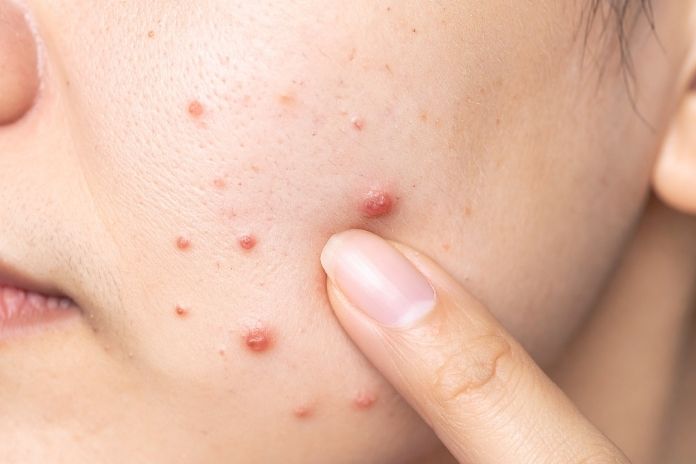
Adult acne may sneak in anytime. It comes quietly, almost politely, and it is what makes it so unnerving. A couple of deep pimples along the jaw. A breakout that won’t settle down the way it used to. Skin that looks oilier, more reactive, or stubborn against routines that used to work for years.
Most people don’t immediately freak out. They think it’s stress, a bad week, or perhaps something wrong with the skin. But as that pattern repeats itself month after month, it starts to feel as if something has shifted in the deep.
If you are asking, “Why am I getting acne as an adult?” then you are asking the right question. Adult acne is not some kind of late-stage teenage skin, and it usually does not occur due to bad skincare choices. For women, in particular, it is most often the skin’s response to hormonal fluctuation, not due to an excess of hormones.
A ‘second puberty’ is a real concept, not just a diagnosis. It’s the period of time when your body renegotiates hormonal balance, and your skin reacts well before anything else looks significantly different. In this article, we’ll break down why hormonal acne shows up during this phase, the patterns it tends to follow, and what it is really telling you about your hormones.
Read More: Acne Scars 101: How to Treat Different Types of Scars Effectively
Is “Second Puberty” a Real Reason for Adult Acne?
Clinically, no one is diagnosed with “second puberty.” However, disregarding the possibility completely misses the point. The term persists because a large number of women notice the same pattern at roughly the same life stage. Women may experience acne in their late 20s through early 40s, often with the absence of any major health event.
What’s going on is not a replay of puberty. During puberty, hormones rise in a fairly linear manner. In adulthood, hormones swing and drift. Peaks and valleys become less predictable. Timing matters more than absolute levels.
However, skin is particularly sensitive to this instability. Oil glands, inflammatory pathways, and cell turnover all depend on hormonal signals. When those signals occur suddenly, the skin loses its balance. Acne becomes one of the first visible results.
This is the reason why adult acne feels different. It isn’t just cosmetic; it can feel systemic and persistent. It does not usually go away despite making efforts.
Why Adult Acne Commonly Breaks Out When the Flow of Hormones Becomes Messy
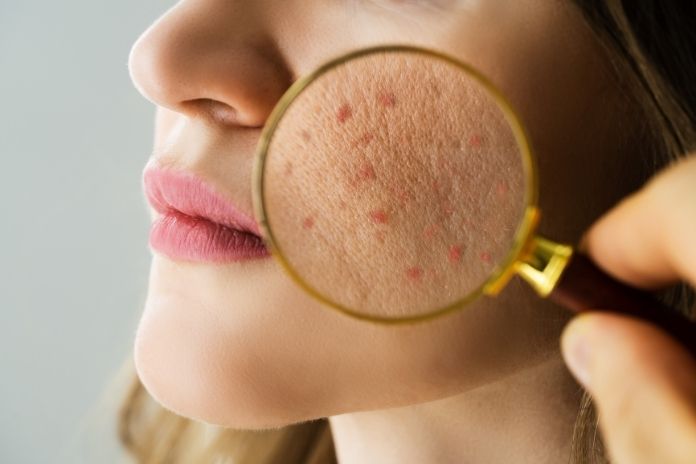
Another misconception about hormonal acne is that people need to have abnormally high or low test results to have it. The thing is, many women who suffer from acne in adulthood have normal test results for hormones. Moreover, it’s not the amount of hormones in a person’s body that causes adult acne, but the rhythm.
If the levels of estrogen, progesterone, and androgens go up and down together, the skin can adjust. If this synchronization doesn’t happen, even if it’s just slightly, the skin can struggle with oil production. The oil becomes thicker. It takes longer for pores to unclog. It takes longer for the inflammation to go down. Then skin breakouts occur seemingly from nowhere.
The Role of Estrogen and Progesterone
Estrogen helps maintain the stability of the skin. It has an oil-regulating effect, supports the barrier functions of the skin, and decreases inflammation. During early adulthood, estrogen levels follow a predictable cycle, which helps maintain the stability of the skin.
When women enter their late 20s and 30s, their estrogen can become more erratic before reaching the final stages of their decline. Progesterone, which starts increasing after ovulation, can thicken the oils in the body, which in turn can reduce the exfoliation of the skin cells in the pores. If the estrogen and progesterone hormones are imbalanced, even for a short while, the skin gets affected.
This is why many women experience skin breakouts just before their menstrual cycle, but not necessarily on any sort of schedule. This also applies to women who experience worsening skin but think their menstrual cycles are right on schedule. It’s not that women’s hormones are unbalanced but that their rhythms are irregular.
Adult acne is commonly attributed to testosterone, but this is not a complete explanation because several women with acne have normal levels of androgen hormones.
Androgens Trigger Breakouts Even Without “High Testosterone”
Estrogen protects the oil glands from androgens. When estrogen is not stable, the oil glands will excessively respond to androgen messages that they didn’t respond to before. The result is thick sebum, a slower turnover of pores, and deeper, more irritated blemishes.
This is why several indicative symptoms of adult acne may appear in the following ways:
- Sudden breakouts following years of clear skin.
- Clusters on the chin & jaw area.
- Not merely skin issues, but deep and tender lesions.
The hormones aren’t out of control. The skin’s reaction to them has changed.
Cortisol and the Silent Role of Chronic Stress
Cortisol does not primarily cause acne, but it worsens it. When the body is under chronic stress, this triggers the production of more cortisol, resulting in inflammation. All of which disrupts the regulation of oils and affects the body’s ability to repair the skin.
What is critical is the duration, not the acute severity. It is the stresses of adulthood, such as long hours at work, emotional distress, poor sleep, and constant mental multitasking. It is the creation, over time, of an environment within the body in which acne is more readily provoked and more difficult to resolve. This explains why adult acne tends to flare up during stressful periods of life, as long as skin care practices, as well as dietary habits, remain unchanged.
Read More: Acne Around the Mouth? Here’s What Your Skin Is Trying to Tell You
Adult Acne Patterns That Point to Hormonal Changes
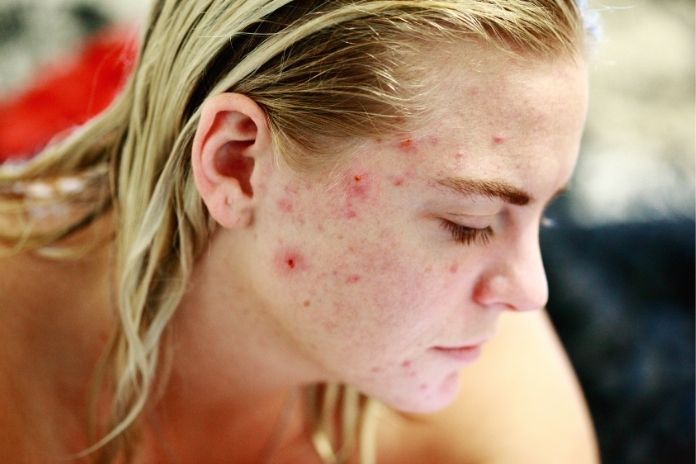
Certain patterns are too consistent to miss. When adult acne is hormonal, it often crops up on the bottom half of your face with deep or tender lesions. It always flares up before your period, even when your cycle is regular.
Is this perimenopause, stress acne, or something else entirely? This is the crossroads where many get stuck, because several different transitions can look the same on the skin.
Important Note: Regular periods don’t exclude hormonal acne. A regular reproductive cycle doesn’t promise hormonal balance at a skin level.
Acne in Perimenopause
Perimenopause doesn’t always start with skipped periods. Early on, estrogen swings before it trends downward, and even progesterone can drop earlier. During this phase, cycles may still appear normal. However, you may notice that acne is worsening or appearing for the first time.
For many women, acne is the first visible sign that hormonal coordination is changing.
Acne Caused by Stress
Stress-related acne is not in a category outside of hormonal acne. Cortisol affects insulin sensitivity and inflammatory signals that, in turn, impact oil production and how pores behave. This overlap helps explain why adult acne often feels multifactorial, not caused by one single factor.
Dr. Lisa A. Garner, MD, FAAD, a clinical professor of dermatology at the University of Texas Southwestern Medical Center, says, “When you already have acne, and you get into a stressful situation, that seems to be when your acne really flares up.”
When Acne Signals Something Else
In a few cases, acne is accompanied by other signs. These may include hirsutism, loss of scalp hair, or significant menstrual irregularity. Under these circumstances, medical investigation provides clarification, not cause for concern.
Why Treating Adult Acne Like Teen Acne Often Backfires
One pattern that is all too familiar in cases of adult acne is going too far. Consequently, when acne problems tend to linger, it’s only a matter of time before resorting to stronger products and treatments.
However, this is not how adult skin responds. Stripping the natural barrier will only irritate it further and cause it to heal more slowly. Claimed empowerment will end up prolonging the situation.
Read More: Skincare Mistakes That Make Acne Worse (And How to Avoid Them)
What Actually Helps Adult Hormonal Acne Calm Down
Hormonal acne is best addressed through stability, not aggression. Gentle skin care that maintains the barrier, promotes a gentle cell turnover, and prevents a constantly irritated canvas allows the skin time to accommodate. Beyond the treatment, maintaining a routine of rest, avoiding stress, and having regular meals are a few effective ways to balance hormones.
It has been observed that prescription medications help some, but they are more efficient as an additive in a stable baseline, as opposed to the reset switch.
There are instances where adult acne must be checked by a healthcare provider. These include:
- In cases of painful, scarring, rapidly progressive, or mentally distressing acne.
- Acne accompanied by systemic symptoms such as thinning hair, changes in the menstrual cycle, or weight.
Key Takeaway: Adult Acne Isn’t a Failure—It’s a Hormonal Shift
This does not mean that your skincare and self-care practice is a failure, since it occurs due to hormonal changes that the skin detects early.
Knowing this, the approach should be adjusted. Rather than fighting your skin, you learn to work with it. Rather than escalating, you stabilize. Sometimes this holistic skincare shift is all it takes to finally make a change.
References
- Ipsy. (n.d.). What is stress acne?
- Encyclopaedia Britannica. (n.d.). Estrogen.
- Clinikally. (n.d.). Progesterone and acne: Fact vs. fiction unveiled.
- Clinikally. (n.d.). Progesterone and acne: Fact vs. fiction unveiled.
- Clearblue. (n.d.). What is second puberty?
- Brincat, M. P., Baron, Y. M., & Galea, R. (2001). Estrogens and the skin. Climacteric, 4(2), 110–123.
In this Article