












It may look like child’s play to stand on one leg, but studies have found that everyday balance training can actually foretell longevity. Poor balance is a significant risk factor for falls, which are some of the top causes of injury and mortality in old age. The best news is that only ten minutes a day of balance training can make a significant difference.
Research has shown that a mild boost in everyday activity, such as an additional ten minutes of moderate exercise, can increase longevity by up to 7%. Extending this activity by twenty or thirty minutes can increase the benefit even further.
Regular movement will not only strengthen your heart, muscles, and bones, but it will also help control weight, enhance mood, improve mental well-being, and decrease the risk of chronic diseases such as diabetes, heart disease, high blood pressure, arthritis, and certain types of cancer.
Balance training, however, helps stabilise the body, reducing the likelihood of falls that often result in major injuries and health problems. You don’t require a gym or any equipment.
Read More: Yoga Strategies to Manage Asthma Effectively
Why Balance Matters for Longevity
As we age, we naturally lose muscle mass, our joints become stiffer, and our coordination slows down. This results in our body being less capable of making adjustments, meaning we take longer to react quickly and prevent a fall.”
Poor balance can become a serious problem; if you stumble or slip, you risk fractures, experience long recovery times, and even a loss of independence. In older adults, a fall can trigger a cascade of consequences: broken bones, hospitalization, and prolonged recovery.
One striking finding connects balance directly to life expectancy: older adults who can’t hold a one-leg balance for 10 seconds face roughly double the risk of death compared to those who can. This highlights the power of balance training—not only in preventing falls, but also as an indicator of overall health.
How Balance Declines with Age
With age, muscles shrink (a process called sarcopenia), joints lose flexibility, and sensory systems (eyes, inner ear, nerves) slow in sending feedback to the brain. All of these changes weaken your ability to stay upright and stable.
Balance control is complex: it draws upon vision, inner ear signals, muscle strength, and fine coordination. When any link in that chain weakens, the risk of stumbling increases.
Why Falls Are So Dangerous
When someone falls, the injuries are often severe, including hip fractures, head injuries, broken wrists, and more. After a fall, recovery is often slow and incomplete, especially in older adults.
The trauma from the fall, surgeries, immobilization, and complications can themselves shorten life or reduce the quality of life.
Howard J. Luks, MD (Orthopaedic Surgeon/Sports Medicine) said, “Combined with resistance exercise, balance exercises help you prevent falls, which are a common cause of frailty, loss of independence and serious injuries …” Dr Luks highlights balance work as a vital component of a longevity exercise program.
Balance Training and Longevity
Because balance is closely associated with physical resilience, training balance becomes a pathway to longer living. Improving balance strengthens muscles, sharpens coordination and reflexes, and helps your body respond faster to slips or shifts.
Many health sources recommend balanced work, especially for older adults, to reduce the risk of a fall. Combining balance with strength and flexibility work boosts those effects even more.
Simple Steps to Start
You don’t need fancy tools. You can begin at home with exercises such as standing on one leg (with support nearby), walking heel-to-toe, shifting weight side to side, or doing gentle tai chi or yoga moves.
Studies suggest trying balance moves two or more times a week and building up slowly. Over time, challenge yourself more, stand longer, reduce support, or add movement to force your balance to adapt and grow.
In short, balance is more than a fitness add-on; it’s a foundation of health. Keeping and improving your balance helps prevent falls, protects your body, and offers a way to support a longer, healthier life.
Read More: The Ultimate Guide to Yoga Blocks
Health Benefits of Balance Training
Balance training isn’t just for athletes. It’s important for everyone, especially as we age. Simple balance exercises can lower the risk of a fall and promote a longer, healthier, and more active life by enhancing stability, posture, joint health, and cognitive function.
Increases Stability and Mobility → Lowers the Risk of Falls
Your capacity to maintain your upright posture when standing, walking, or changing positions is strengthened by balance exercise. It is less probable that you may trip or fall if you have better balance.
Because falls frequently result in significant injuries, this becomes even more crucial as we age. Your body responds to minor slips and falls more quickly when you practice balance. Combining strength, flexibility, and aerobic training with balance exercises yields the greatest overall physical development, according to a study.
Strengthens Standing and Core Power
It’s not only about your legs and feet; your core, which includes your hips, lower back, and stomach, is crucial to having good balance. Your posture and overall body function improve when your core is solid and strong.
One study claims that core stability is essential to preserving equilibrium. According to another study, balance exercises improve posture by enhancing trunk alignment and control.
Helps Maintain Flexibility and Joint Health
Exercises for balance also keep joints (ankles, knees, and hips) strong and flexible. Careful weight shifting teaches those joints to tolerate varying ranges of motion.
Poorer balance is linked to weak muscles or a limited range of motion, according to research; addressing these issues promotes joint health and mobility. Good joint health eventually results in less stiffness, less pain, and improved mobility.
Dr. David Araujo (Gerontology/Balance Research) says, “Balance can always be improved by specific training. Ideally, static balance should be trained both barefoot and when using regular or sport shoes.” He gives practical advice for improving balance and underscores that balance is trainable at any age.
Enhances Focus and Motor Coordination in the Brain
The brain also benefits from balance training. In order for your brain to determine your body’s location in space, it must integrate inputs from your muscles, inner ear (vestibular system), and vision. Coordination, reaction time, and focus are all improved by that procedure.
The intricate process of balance control combines motor reaction and sensory information. According to a study, one of the main advantages of balancing training is improved neuromuscular control, or the brain-muscle connection, which is linked to increased mortality.
Read More: Yoga Nidra for Faster Recovery of Athletes
10-Minute Daily Balance Routine (At Home)
This is a short routine you can perform every day at home to improve your strength, stability, and balance. If you are initially apprehensive, use a chair or wall for support.
1. One-Leg Stand – 30 Seconds per Side
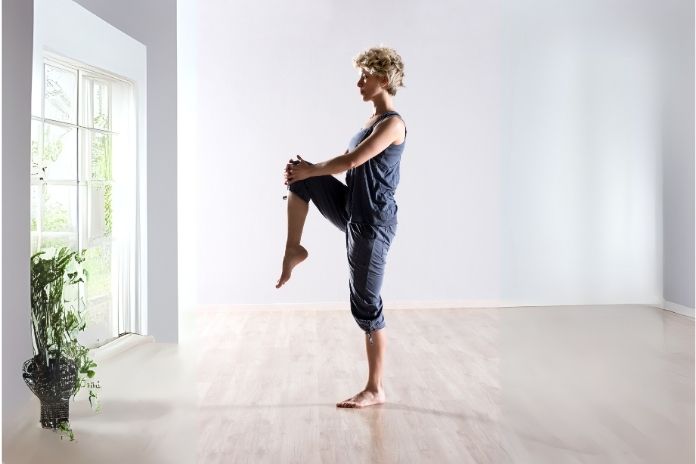
Place your feet hip-width apart and stand tall. Balance on the opposite leg while slowly raising one foot off the ground. Aim for 30 seconds of holding. Next, move on to the opposite leg. As their balance improves, beginners can progressively lessen the use of support.
2. Heel-to-Toe Walk – Like Walking on a Line
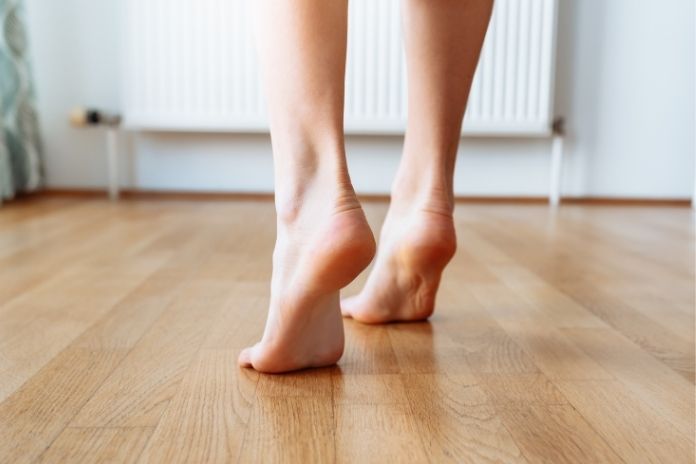
On the floor, visualize a straight line. Take a step forward until your front foot’s heel contacts your rear foot’s toes. For ten to twenty steps, keep moving softly in this heel-toe motion, and then turn around. Maintain a forward stare and, if necessary, use a chair or wall for balance. This tests your ability to balance and simulates “tightrope walking.”
3. Chair Stand with Balance Hold
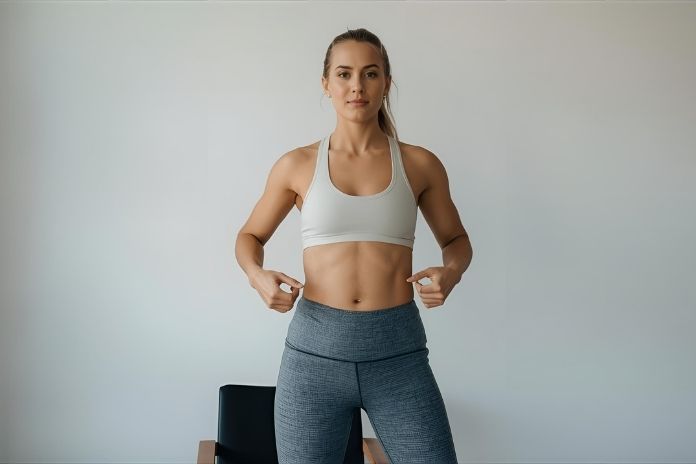
Place your feet flat on the floor. Sit in a stable chair. Without using your hands, steadily rise to a standing position (or softly touch for support). After standing, raise one leg just a little bit off the ground and keep it there for five to ten seconds. Go back to your seat. After that, repeat with the opposite leg. Five to ten times, repeat. If necessary, use wall support or chair arms.
4. Side Leg Raises – Standing
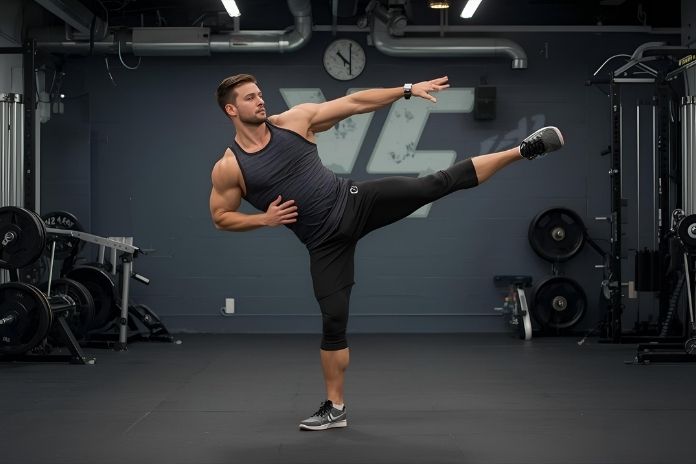
For support, stand next to a wall or chair. Hold one leg out to the side with the toes facing forward, then slowly drop it. After 8–12 repetitions, switch legs. Balance-supporting hip and leg muscles are strengthened as a result.
5. Tai Chi or Yoga Pose (Tree Pose)

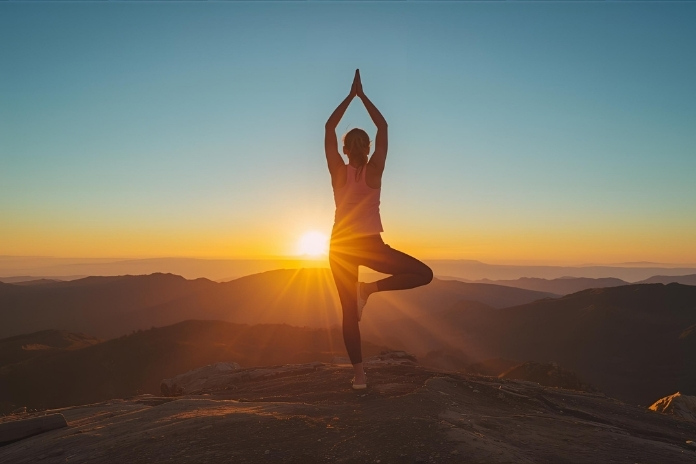
Place the sole of your foot on your inner calf, shin, or thigh (avoid the knee) while standing on another foot or lightly touching a support. Keep your arms at chest level or raise them above your head. Hold for up to 30 seconds if you can. Change sides. This pose enhances balance, core stability, and body awareness. This is adapted from the yoga “tree pose.”
Tips and Modifications for Beginners
- Always perform these exercises close to a sturdy surface, such as a wall, countertop, or chair, so you can steady yourself if necessary.
- Begin with fewer repetitions and shorter hold periods (10–15 seconds). As you feel more stable, gradually increase your activity.
- To increase foot stability, practice barefoot or in non-slip shoes.
- Move slowly and with control, breathe steadily, and keep your eyes forward.
- Try to complete this task at least five times a week, if not every day. Gradually increase the duration or reduce the support to push yourself.
Even ten minutes at home can help you strengthen your legs, increase stability, enhance coordination, and lower your chance of falling by performing these daily balance exercises. More important than intensity is consistency. Be cautious, start slowly, and gain confidence in your movement each day.
Read More: A Beginner’s Guide to Somatic Yoga
Who Should Prioritize Balance Training
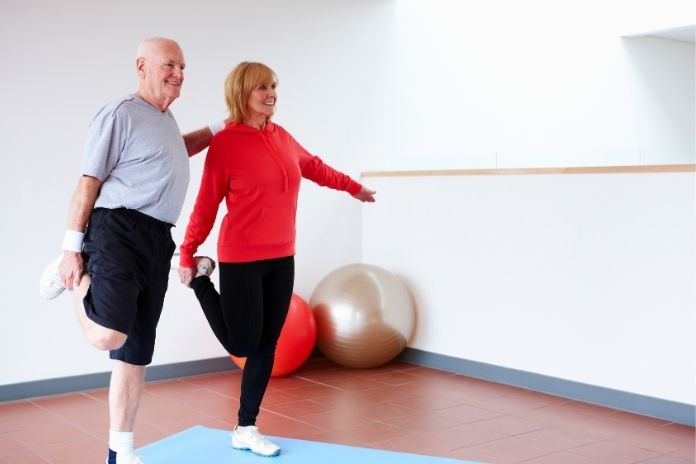
Everyone benefits from balance training; it’s not just for elders. Regular balancing exercises assist in preserving strength, stability, and confidence at every stage of life, from reducing the risk of falls in elderly persons to increasing athletic performance and coordination in sedentary professionals.
Adults Over 40 → Prevention
Our bodies gradually start to lose muscle strength, flexibility, and coordination around the age of forty. Little declines accumulate if you don’t pay attention.
Early balance training slows that loss, maintains steady movement, and lays the groundwork before issues arise. It’s best to begin before a significant deterioration occurs, according to several specialists.
Seniors → Fall Prevention
Because falls are a major risk in later life, older persons in particular need to improve their balance. Due to falls, there can be longer recovery times, head injuries, and broken bones. By strengthening muscles, joints, reflexes, and awareness, balance training reduces the likelihood of slips.
To increase stability, a study suggests basic balancing exercises like raising one leg for ten seconds. Numerous studies also demonstrate that systematic balance training lowers injuries and fall rates among older adults.
People with Sedentary Jobs → Restore Coordination
Sitting for extended periods, whether while driving, working at a desk, or using a screen, can damage your muscles, balance systems, and coordination.
By reminding your muscles how to respond, retraining your nerves to detect changes, and reestablishing a connection between your brain and body, balance training helps “wake up” those systems. You’ll feel more stable as you stand, walk, and change directions over time.
Athletes → Improve Agility and Performance
Balance training is beneficial, even for athletes and fit individuals. Improved balance results in increased control in unstable circumstances, smoother direction changes, faster reactions, and fewer injuries.
A strong balance provides you with an advantage in any activity, including dancing, martial arts, sports, and running. Stability during dynamic movements is enhanced by the neuromuscular synergy that balancing work fosters.
Read More: Chair Yoga for Seniors to Improve Flexibility
Conclusion
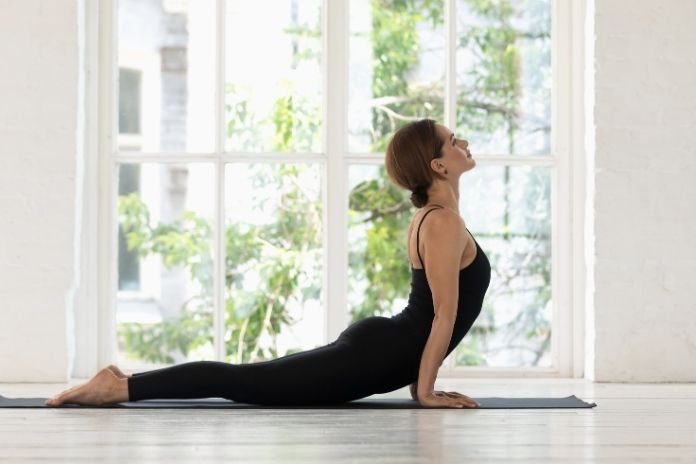
Only ten minutes of balance training daily can positively impact your body and mind. A study by multiple sources indicates that balance exercises build muscle strength, enhance coordination, and also prevent falls, a leading cause of injury among the elderly.
Balance training helps maintain flexible joints, keeps the posture strong, and even promotes improved concentration and brain function. Simple exercises such as standing on one leg, walking heel to toe, or performing simple yoga poses can easily be incorporated into your everyday routine at home. The actual secret is regularity: a few minutes per day consistently create strength, stability, and resilience that pay off in the long run.
So don’t delay until balance issues appear; begin today with a simple exercise. Your future self will reward you with reduced falls, enhanced mobility, and the ability to remain active and independent for years to come.
References
- https://www.health.harvard.edu/staying-healthy/adding-10-extra-minutes-of-daily-activity-linked-to-a-longer-life
- https://www.mayoclinic.org/healthy-lifestyle/fitness/in-depth/exercise/art-20048389
- https://www.bhf.org.uk/informationsupport/heart-matters-magazine/activity/balance-exercises
- https://www.myhealthteam.com.au/blog/Add-Years-to-Your-Life-with-Balance-and-Strength-Training
- https://www.webmd.com/fitness-exercise/balance-training
- https://www.mayoclinic.org/healthy-lifestyle/fitness/in-depth/balance-exercises/art-20546836
- https://www.physio-pedia.com/Balance_Training
- https://www.acefitness.org/continuing-education/certified/december-2024/8760/balance-and-stability-unlocking-the-keys-to-health-and-longevity
- https://health.clevelandclinic.org/10-second-balance-test
- https://www.xopt1.com/blog/balance-training/
- https://eaglepointseniorliving.com/why-should-seniors-perform-balance-exercises
- https://www.goodrx.com/well-being/movement-exercise/exercises-improve-balance-poses-stability
- https://specializednj.com/enhancing-stability-the-best-exercises-for-seniors-to-prevent-falls
- https://betterme.world/articles/top-10-balance-exercises-for-seniors-at-home/
- https://www.bhf.org.uk/informationsupport/heart-matters-magazine/activity/balance-exercises
In this Article