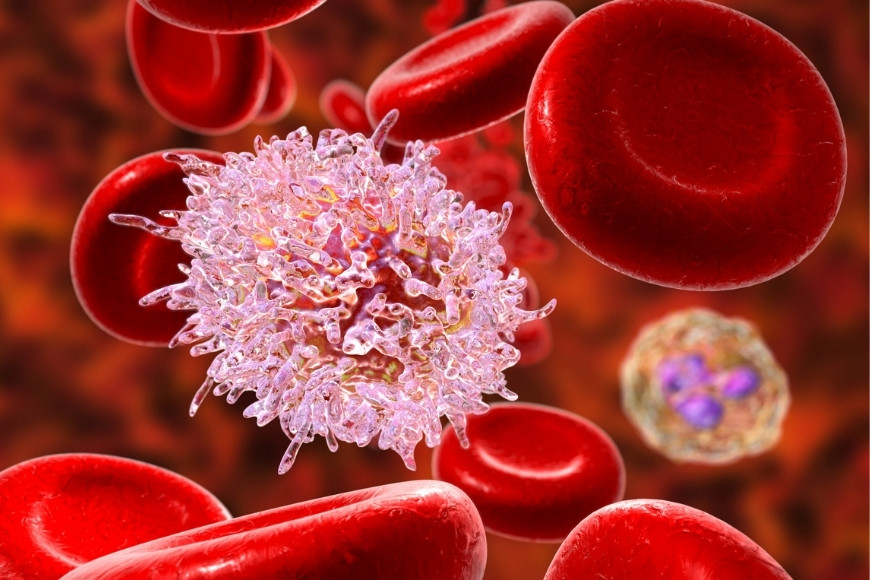












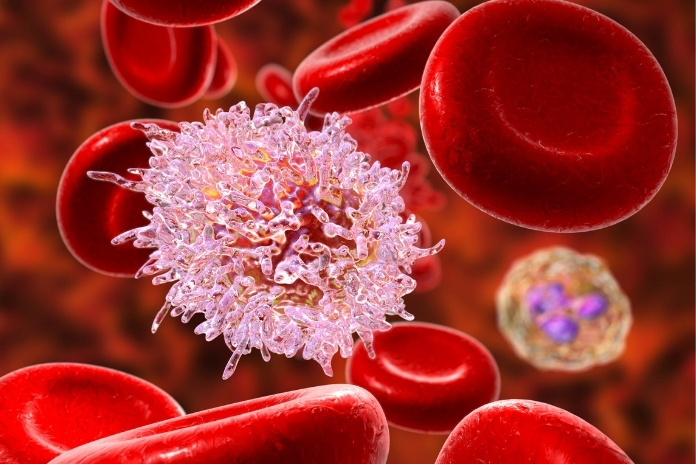
A rare, slowly progressive leukemia that begins in B cells (also known as B lymphocytes) is called hairy cell leukemia (HCL). B cells are the white blood cell that plays a very crucial role in the body’s immune system and help fight infections. The small, hair-like projections on these abnormal cells are what give the disease its name.
Although HCL is an uncommon form of leukemia, it is diagnosed in about 1,200 people each year in the United States. While there is currently no cure, advances in the treatment have greatly improved survival and long-term disease control. People with HCL are typically cared for by a hematologist-oncologist, a specialist in blood cancers.
In the following sections, we examine who is most likely to develop HCL, the most potent known predictors of the disease, and, just as importantly, the factors that are not linked to its development.
Read More: Leukemia – Causes, Symptoms, Treatment
How Common Is Hairy Cell Leukemia?
About 2% of all adult leukemia cases are caused by the rare condition hairy cell leukemia (HCL). Leukemic reticuloendotheliosis, a condition caused by mutations similar to those in HCL, was first recognised in 1923.
Dr. Bertha Bouroncle described this disease in 1958, following the treatment of several individuals with these cell mutations. The disease, hairy cell leukemia, was termed a lymphoproliferative disorder in 1958. The survival rate for patients at that time was barely four to five years after diagnosis.
Thankfully, several clinical trials were conducted in the 1980s, leading to the discovery of numerous therapies, the first of which was interferon alpha. Researchers later discovered that pentostatin and cladribine effectively treat HCL, allowing many patients to achieve a near-normal life expectancy.
Men are diagnosed with hairy cell leukaemia four times as often as women, and in the US, there are between 600 and 800 new diagnoses every year. The Asian, Arab, and African communities have lower rates, but are often underdiagnosed. Several other environmental factors, including exposure to diesel, pesticides, and ionising radiation, can further increase the risk.
“Hairy cell leukemia is an uncommon diagnosis and can occasionally be mimicked by other B cell cancers,” says Smilow Cancer Hospital oncologist Dr. Scott Huntington, MD, MPH, MSc. “We now have excellent molecular testing—as in BRAF mutation testing—that not only helps with making the diagnosis, but can also inform treatment selection. Fortunately, available treatments for hairy cell leukemia are highly effective, and the selection of the optimal therapy for a given patient requires discussion of individual preferences and potential side effects.“
The Hairy Cell Leukemia Risk Factors
Numerous variables affect your chance of getting cancer. It covers topics like eating a balanced, healthy diet and smoking. In addition to environmental and genetic influences. The following are risk factors for hairy cell leukemia:
Age: Adults under 30 are rarely diagnosed with hairy cell leukemia. Children are seldom diagnosed with it. The majority of people with HCL are middle-aged or older; the median age at diagnosis is approximately 58.
Gender: Men are more likely than women to have hairy cell leukemia. Men receive diagnoses four times more frequently than women.
Ethnicity: White people are more likely than Black and Asian persons to have hairy cell leukemia.
Family History: Having a parent, sibling, or child with hairy cell leukemia slightly increases your risk of developing the disease. However, the risk is still very low, and the majority of persons with a family history of hairy cell leukemia do not have it themselves.
What are Hairy Cell Leukemia Symptoms?

Doctors sometimes discover hairy cell leukemia by coincidence during blood tests done for another reason in patients who have no symptoms at the time of diagnosis.
The majority of patients experience symptoms gradually as the quantity of abnormal cells increases. These cells frequently accumulate in your bone marrow, taking up space that might otherwise be available for the development of healthy blood cells.
It implies that you may experience low blood counts due to your body’s inability to produce enough blood cells, including:
- Low red blood cells, or anemia, may cause fatigue, dyspnea, or lightheadedness.
- Low platelet counts (thrombocytopenia) increases risk of bleeding and bruising.
- Low neutrophil counts, a type of white blood cell, can cause neutropenia, which can make it harder to fight off infections and may increase the likelihood of infection.
- Low monocytes, another type of white blood cell, are known as monocytopenia, and they can raise your risk of infection.
Additionally, unusual cells frequently accumulate in the spleen, an immune system organ. Your spleen may swell as a result, which may result in pain, discomfort, or an abdominal fullness sensation. Bloating may also result from liver swelling. With symptoms including fevers, night sweats, weight loss, and acute exhaustion, you may feel generally ill.
Read More: Persistent Cough vs. Lung Cancer: When to Worry
Race and Ethnicity Differences
The incidence of hairy cell leukemia (HCL) varies significantly across racial and ethnic groups. Black Americans seem to have the lowest risk of having leukemia. In contrast, white people seem to be the most at risk, according to several studies on childhood leukemias in the United States.
Furthermore, some studies have indicated that Hispanic Americans may have a comparatively higher risk of infantile leukemia and that those of Asian heritage are more likely to acquire acute myeloid leukemia (AML).
Leukemia seems to be less common in Black Americans. However, compared to Asian and Pacific Islander, Hispanic white, or non-Hispanic white Americans, non-Hispanic Black Americans had the lowest survival rates across all leukemia subtypes, according to a study published in Scientific Reports.
Genetic Factors: The Role of BRAF Mutation

The underlying genetic lesion of hairy cell leukemia (HCL), a unique clinicopathological entity, has remained unknown for more than 50 years. Since the BRAF V600E mutation is somatic, present in the entire tumor clone, detected in nearly all cases at diagnosis (covering the full spectrum of the disease), and stable at relapse, it is now known to be the causative genetic event in HCL.
The primary event in the molecular pathophysiology of HCL is the constitutive activation of the RAF-MEK-extracellular signal-regulated kinase (ERK) signaling pathway caused by BRAF V600E.
Mutations in KLF2 and CDNK1B (p27) may work in concert with BRAF V600E to promote leukemic transformation. Sensitive molecular testing that identifies the BRAF V600E mutation clearly differentiates HCL, which is exceptionally responsive to purine analogs, from HCL-like illnesses that require different treatment.
Environmental and Occupational Risk Factors
Specific factors may elevate your risk of hairy cell leukemia. There is disagreement among research papers regarding the factors that raise your risk of contracting the disease. According to some studies, the following factors increase your chance of hairy cell leukemia:
Radiation Exposure: Although the evidence is conflicting, those who are exposed to radiation, such as those who work near X-ray machines without wearing the proper protective gear or those who have had radiation therapy for cancer, can be more susceptible to hairy cell leukemia.
Chemical Exposure: The contribution of agricultural and industrial pollutants to the development of hairy cell leukemia has been the subject of conflicting research.
Read More: Can Lung Cancer Be Silent? What “No Symptoms” Really Means
Hairy Cell Leukemia Diagnosis

To diagnose HCL, your doctor does a physical examination and inquires about your medical history. They may find that your spleen is larger than it should be. In about 90% of people with HCL, splenic enlargement occurs.
Tests could consist of:
Blood Tests: These ascertain how many red blood cells, white blood cells, and platelets are present in your blood sample. Blood tests aid in analyzing kidney and liver function and detecting infection and inflammation.
Peripheral Blood Smear: To examine the blood cells under a microscope, lab professionals place a blood sample on a slide. Once they leave the bone marrow and enter the blood, “hairy” white blood cells could emerge.
Bone Marrow Aspiration or Biopsy: Your physician takes tiny samples of bone marrow or bone tissue for examination using a thin, hollow needle. This test detects hairy, abnormal B cells in the bone marrow. This test is the most popular and trustworthy technique for diagnosing HCL.
Imaging: Identifies cancers and affected lymph nodes. Additionally, it enables medical professionals to gauge the size of enlarged organs, such as the liver or spleen.
Imaging tests could consist of:
- CT scans, or computed tomography.
- Scans using magnetic resonance imaging (MRI).
- Ultrasounds (US).
Genetic Testing: This test confirms the diagnosis of HCL by detecting the V600E BRAF mutation. Your doctor’s treatment recommendation is based on the results.
Hairy Cell Leukemia Treatment Options
Doctors base your treatment on your current symptoms, the rate at which the HCL is progressing, and your response to therapy. Options for treating HCL include:
Observe and watch: Your physician may advise you to keep an eye on your problem rather than treat it right away. Since HCL progresses slowly, the doctor begins treatment as soon as symptoms appear. This technique postpones detrimental therapeutic side effects.
Chemotherapy: Chemotherapy medications destroy cancer cells. This medication is administered to you as an injection into a vein, muscle, or beneath the skin, or as a pill.
Immunotherapy: This treatment modality strengthens your immune system’s capacity to combat cancer. Monoclonal antibodies are immunotherapy medications used to treat HCL recurrence (the cancer’s reappearance).
Targeted Therapies: A brand-new class of medications that block or reduce specific HCL pathways. Researchers have developed more targeted treatments to treat HCL.
Splenectomy: Although it is uncommon, surgeons remove the spleen if it is uncomfortable or overly big. Following this procedure, some patients may experience long-term remission.
Bone Marrow Transplant (stem cell transplant): Your physician can recommend a bone marrow transplant. Healthy stem cells replace the unhealthy ones. These bone marrow cells produce blood and are usually obtained from a donor, although doctors can sometimes use your own healthy cells.
Read More: Lung Cancer in Non-Smokers: How It’s Different
In what ways are medications now used to treat Hairy Cell Leukemia?
Doctors give a brief intravenous (IV) infusion of pentostatin every 2 to 3 weeks until the patient achieves remission. Since the kidneys are responsible for excreting pentostatin from the body, it is crucial to verify that renal function is normal before administering the medication. Patients should have anti-nausea medication on hand in case they experience nausea, which can occur up to 72 hours following the infusion.
Clodribine may be given as a subcutaneous injection over five days, a daily IV infusion for two hours for five doses, a weekly IV infusion for six doses, or a seven-day continuous IV infusion (which may require hospitalization). All methods have proved effective. Doctors provide most treatments on an outpatient basis and decide on the approach together with the patient.
While people usually do well on either of these meds, they can cause a temporary dip in normal blood counts. These blood levels generally need to be monitored (weekly initially) until the counts return to normal. Some people take longer to recover blood levels than others, but the blood levels will generally recover eventually.
Medical Conditions That Don’t Increase HCL Risk

Given the rarity of hairy cell leukemia (HCL), it is particularly critical to clear up prevalent misconceptions regarding what raises a person’s risk:
- Alcohol Use: There was no association between alcohol use and HCL in early research.
- Common Drugs: Regular use of tranquilizers or aspirin did not raise the risk.
- Migraines: Not linked to an increased risk of HCL.
When to See a Doctor
Serious infections could strike. If you have any of the following symptoms, get in touch with your healthcare provider:
- A persistent fever that is higher than 100.4 degrees Fahrenheit (38 degrees Celsius).
- A painful throat that worsens or persists for more than a few days.
- Abdominal pain that persists or worsens.
Read More: Can Tattoos Cause Cancer? Separating Myth from Evidence
Conclusion
As a slow-growing, uncommon leukemia, hairy cell leukemia (HCL) has specific demographic trends but no known lifestyle or genetic cause. White people and men are most likely to experience it.
Nevertheless, anyone can be affected by HCL, and most cases lack a known cause. As the disease progresses slowly, doctors often discover it by accident during a routine blood test before symptoms appear.
HCL does not appear to be caused by smoking, alcohol, food, exercise, illnesses, stress, or family history,” which unfortunately means that the people who get HCL disease should not think they had anything to do with its emergence.
Awareness of the established risk patterns and the other unresolved issues supports early detection as researchers continue to investigate the causes of HCL.
References
- Mayo Clinic. (2024, March 8). Hairy cell leukemia
- Blood Cancer United. Hairy cell leukemia (HCL)
- Yale Medicine. Hairy cell leukemia.
- Hairy Cell Leukemia Foundation. Understanding hairy cell leukemia: Diagnosis, treatment and beyond.
- Leukemia Research Foundation. Hairy cell leukemia.
- Cancer Research UK. (2024, October 14). Risks and causes of hairy cell leukaemia.
- Lymphoma Action. Hairy cell leukaemia.
- Moffitt Cancer Center. Hairy cell leukemia.
- Augusta Health. (2020, March 26). Hairy cell leukemia.
- Eli Sachse, RN. (2022, January 28). Are race and ethnicity risk factors for leukemia?
- The Ohio State University Comprehensive Cancer Center – James Cancer Hospital and Solove Research Institute. Hairy cell leukemia prevention and risk factors.
In this Article