













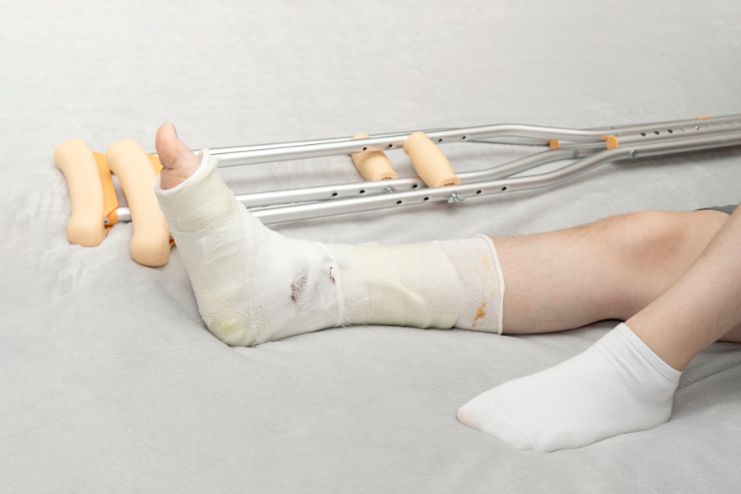
People usually think of immobility or a deformity when they hear of a “broken bone.” However, some fractures are unclear. Stress or hairline fractures may not be noticeable immediately.
We all fall, trip, and take hits during sports—it’s part of the game. Although, occasionally these falls can result in fractured bones. One in five falls causes a head or bone injury, according to the CDC. The number is crucial. Thus, it is best to know when and where to seek medical assistance for a broken bone is best.
These types of fractures can be misleading, as you might still be able to walk, move, or put weight on the limb. However, the absence of pain or swelling doesn’t necessarily mean the injury is minor. Unfortunately, many people ignore warning signs and continue with their everyday routines. Knowing you can walk on some shattered bones is crucial because mobility doesn’t necessarily guarantee the bone is intact. Listening to the body can significantly enhance your healing process.
Read More: 9 Smart Ways to Prevent Falls and Fractures: Expert Tips for Home Safety and Balance Exercises
Common Signs You Might Have a Fracture
Persistent Pain After Injury:
Persistent pain that persists over time is one of the most apparent symptoms of a fracture. While sprains or muscular discomfort usually subside in a day or two, shattered bone pain typically lasts longer and can worsen with pressure or activity. Usually deep, throbbing, or severe, this pain can worsen as you attempt to use the affected area.
For instance, it may be a sign of something other than a soft tissue injury if you have injured your foot and it continues to hurt even days later when you walk. Likewise, you shouldn’t disregard pain that gets worse when you touch the area or put any weight on it.
Swelling, Bruising, or Discoloration:
Although swelling is a normal reaction to an injury, it may indicate a fracture if it lasts longer than 24 to 48 hours. Swelling is a common side effect of fractures, albeit it might take hours for some types of fractures to develop and can be exceptionally mild.
Muscular spasms may cause additional pain as the muscles around the wounded area attempt to hold a shattered bone in place.
When bleeding occurs beneath the skin, bruises develop. The source of the bleeding could be nearby tissues or blood vessels within the broken bone. The bruise is initially purplish-black in colour, but when the blood is broken down and reabsorbed into the body, it gradually turns green and yellow in colour. A large bruise, or one that appears far from the injury site, can occur when blood travels away from the fracture.
But the reabsorption of the blood may take several weeks. The surrounding structures may experience transient pain and stiffness as a result of the blood. For example, a fracture in the shoulder can lead to discomfort in the wrist and the elbow, along with bruising on the arm.
It’s a warning sign that something more serious might be happening beneath the surface if the swelling continues to grow or becomes more uncomfortable to touch. You can determine if you have a fracture by consulting a medical professional.
Loss of Function or Weakness:
Unusual weakness or a rapid loss of function in the affected area is another prominent indicator of a potential fracture. If healing progresses properly, the bone will gradually regain its ability to bear weight. Be on the lookout for limited movement that does not improve despite physical therapy and following your doctor’s recommendations, especially if the affected bone is not a weight-bearing bone.
For example, someone with a fractured wrist might have trouble lifting things or twisting their forearm, but someone with a shattered leg might limp or be unable to stand. These symptoms suggest a condition more severe than a sprain or strain. It’s critical to have the limb examined for a fracture if your strength or range of motion doesn’t return in a day or two, or if you experience instability in it.
Deformity or Visible Bump:
Your bone was once straight, but it has since become crooked, one of the first indications that a fracture may not have healed properly.
Visible deformity, whether it is a limb or joint that looks out of place, bends abnormally, or has a strange bump or lump, is one of the most apparent signs of a fracture.
It is especially common for fractures in areas where the bone is closer to the skin, such as the fingers, wrist, or collarbone. The deformity can be a minor bump, such as a small bump that wasn’t there before, or it can be more severe, showing a bone protruding or moving underneath the skin.
If you see an apparent visible deformity or if your limb doesn’t look quite right, stop using the injured area immediately and seek medical attention.
Can You Walk on a Broken Bone? (Yes, But That’s a Problem)

Even though you may feel some pain from your foot or ankle injury and can still walk on it, you might assume it isn’t broken. However, that may not be the case, it’s possible to have a fracture without being aware of it.
A fracture is a fractured or cracked bone. Compound fracture occurs when a bone breaks and becomes dislocated. Damage to the soft tissue, like the ligaments and tendons, can also occur in conjunction with fractures. Ankle and foot injuries can become quite complex and necessitate specialist care that emergency facilities are typically ill-equipped to provide.
Although many people believe that being able to walk means your foot isn’t severely damaged, this belief is incorrect. So, how can you determine whether you have a foot fracture? So, what steps should you take if you think you’ve fractured your ankle, foot, or toe? It is what you should know!
Walking may become difficult if your foot is fractured. In other situations, it may not feel difficult. Although foot fractures can be quite painful, most don’t make walking entirely impossible. As a result, just because you are walking on your foot does not mean that you have not had a fracture.
Additionally, you run the risk of aggravating your injury if you are walking on a fractured foot. Doing so may end up extending the duration of your healing process. In actuality, you increase your risk of requiring surgery when you ignore any injury and attempt to live with the discomfort.
Any bone in the body can fracture, but the most common ones are the hip, wrist, ankle, collarbone, and spinal vertebrae, according to Nicholas Sama, MD, director of orthopedic trauma at the HSS Florida in West Palm Beach. As an orthopedic trauma specialist, he possesses in-depth training and considerable experience in managing fractures.
Read More: 12 Best Knee Scooters To Support Your Fractured Leg
When to Seek Medical Attention Immediately
You should get a professional evaluation as soon as you suspect a fractured bone because untreated fractures can either heal improperly or worsen as you continue using the injured bone.
The likelihood that you may need to visit the emergency room increases with the severity of the fracture. However, there are other factors to consider, such as the location of the break, your age, and any previous medical conditions.
If you have a minor fracture, like a stress fracture or a break in an arm, an urgent care clinic can assist. For more severe fractures, such as open wounds or complete breaks, it’s important to seek immediate care at the emergency room.
You should consult a doctor right away if you believe you have a bone fracture. Seek emergency care if you experience any of the following symptoms:
- Excruciating pain
- One part of your body is immobile
- Something on your body appears notably altered or out of place
- Through your skin, you can see your bones
- Swelling
Unless you need to move them to prevent more harm, keep the injured person motionless while you wait for emergency assistance. Do not attempt to clean open wounds, realign a broken bone, or force a bone that’s sticking out back into position.
X-Ray and Diagnosis: What to Expect at the Clinic
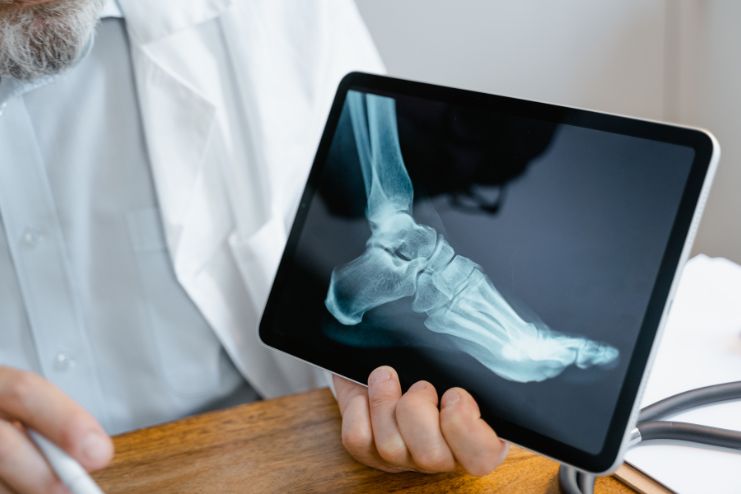
An X-ray is a quick and non-invasive imaging method used to capture internal views of the body, particularly the bones.
Beams of X-rays travel through the body. The density of the substance these beams go through determines how much of them are absorbed. On X-ray images, dense substances such as bones and metal appear as bright white regions. The lungs’ air appears black. On a X-ray machine, the muscles and the fat appear in varying shades of gray.
The numerous little bones that make up the ankle and foot are brittle. An X-ray may not always detect fractures or ligament injuries, although it may show some breaks. In an emergency room, technicians typically follow established x‑ray procedures that don’t require weight‑bearing images and capture them from a specific angle.
Several x-ray views, including weight-bearing images, are necessary to diagnose some foot and ankle problems. In certain circumstances, an MRI may be necessary to diagnose an injury accurately.
Read More: 8 Best Products for Supporting Bone Health and Density
Treatment Options for Different Types of Fracture
Hairline or Stress Fractures:
A hairline fracture is a tiny break or severe bruising inside a bone. People sometimes refer to it as a stress fracture. Athletes are most likely to sustain this kind of injury, particularly those who participate in sports that require running and jumping. Individuals who are having osteoporosis are also at a higher risk of developing hairline fracture.
Hairline fractures are often a result of the repetitive motions or the overuse that gradually cause tiny cracks to form in the bone. The likelihood of sustaining this injury is commonly increased by not giving oneself adequate time to recover between activities.
If the patient avoids activities that strain the injured area, most hairline fractures will heal on their own.
Elevating the injured area and applying ice can aid in the healing process during the first 24 to 48 hours. Reintroducing weight-bearing activities gradually is beneficial as the edema and soreness go down over the first two weeks.
Non-weight-bearing exercise, such as swimming or cycling, are also recommended because they help accelerate the healing process.
Displaced Fractures:
Broken bones that are displaced require more precise care, as the ends of the broken bone are separated or not aligned. A doctor aligns the ends of the fractured bones and moves them back into their original positions as part of the reduction process, which is the primary treatment for this type of fracture.
If the fracture is very complex or involves multiple pieces, doctors typically perform a closed reduction (manual) or an open reduction (surgical) to realign the bone. Immobilization of the bone after realignment to its proper position is with a cast, splint, or brace.
In severe cases, surgeons internally stabilize the bone using hardware such as plates, screws, or rods. Healing takes from weeks to a few months, depending on the bone treated and the patient’s overall health.
Fractures in Children vs Adults:
After a bone break or fracture, adults and children heal differently. Why? It depends on our bone strength, structure, and the type and intensity of the fracture. Youngsters wear casts more than adults, but their bones mend faster.
Most adults need months to mend their bones, whereas youngsters heal in weeks. Children’s bones are still growing; thus, they can more easily tolerate damaged or fractured bones.
However, children who break bones must receive immediate treatment. You should replace the bone as quickly as possible before it heals. Pediatric orthopedic experts use splints or casts to treat such fractures and monitor recovery with imaging. Doctors rarely perform surgery, but they may need to do so for severe or dislocated fractures.
Due to osteoporosis or inadequate bone density, adults may heal more slowly. They may need physical therapy and extended immobilization.
What Happens If You Don’t Treat a Fracture?

A fracture requires medical attention, so the answer is always “yes”. Avoiding treatment for even the tiniest bone fractures might cause:
Improper Healing:
Bones shatter and move when fractured. Without a cast or brace, your bone may heal poorly and permanently misalign. Malunions can cause deformity, pain, and functional restriction.
Reduced Mobility:
Incomplete healing fractures can result in long-term misalignment, swelling, and pain because a malunion or nonunion (when the bone fails to heal) can prolong the injury. Early treatment can prevent mobility problems and promote healing, helping you regain a full range of movement.
Painful Chronicity:
A fracture is painful, but waiting to treat it can exacerbate the condition. Malunions and swelling, which can lead to nerve injury, can cause chronic pain after the bone has healed. Stabilizing appliances and ongoing rehabilitation can help facilitate healing and relieve pain.
Read More: Top 5 Orthopedic Knee Pillows to Alleviate Discomfort and Improve Sleep
Conclusion
Even with little pain or movement, a break can still occur, so even if you can move or walk, it doesn’t mean you’re fine. For instance, hairline or stress fractures might still permit normal movement, making the injury seem less severe than it is.
That’s why it’s crucial to mention ongoing symptoms like bruising, swelling, or persistent pain. You must diagnose the injury promptly to allow for proper healing and prevent long-term effects, such as joint disorders, bone misalignment, or persistent pain.
A visit to the doctor can involve imaging studies, such as MRIs or X-rays, which confirm the injury, based on which the proper treatment is recommended. Delaying will only delay the healing process and worsen the injury.
References
- https://www.cdc.gov/falls/data-research/facts-stats/index.html
- https://my.clevelandclinic.org/health/diseases/15841-stress-fractures
- https://www.mayoclinic.org/diseases-conditions/broken-foot/symptoms-causes/syc-20355492
- https://my.clevelandclinic.org/health/diseases/15241-bone-fractures
- https://www.mayoclinic.org/diseases-conditions/stress-fractures/symptoms-causes/syc-20354057
- https://pmc.ncbi.nlm.nih.gov/articles/PMC9406150/
- https://osteoporosis.ca/after-the-fracture/table-of-contents/general-information-about-pain-after-a-fracture
- https://www.upmc.com/services/orthopaedics/conditions/fractures-and-breaks
- https://www.msdmanuals.com/home/injuries-and-poisoning/fractures/overview-of-fractures#Symptoms_v829677
- https://www.verywellhealth.com/do-i-have-a-broken-bone-4143129
- https://raleighboneandjoint.com/news/broken-bone-not-healing-signs
- https://www.mayoclinic.org/diseases-conditions/broken-foot/symptoms-causes/syc-20355492
- https://louettafootandankle.com/educational-resources/if-i-can-walk-does-that-mean-my-foot-isnt-broken/
- https://www.mayoclinic.org/tests-procedures/x-ray/about/pac-20395303
- https://www.healthline.com/health/hairline-fracture
- https://www.medicalnewstoday.com/articles/319822#treatment
- https://www.rch.org.au/fracture-education/anatomy/Anatomic_differences_child_vs_adult/
- https://www.toc.md/2019/04/19/how-fractures-in-kids-are-different-from-fractures-in-adults/
- https://share.upmc.com/2024/11/fracture-doesnt-heal-properly
- https://www.californiasportsandspine.com/when-fractures-go-untreated-understanding-the-risks-and-long-term-consequences
- https://gfclinic.com/the-hidden-dangers-of-ignoring-a-fracture
In this Article